


























I. Why HPHT vs CVD Matters More Than Ever
As lab grown diamonds continue to reshape the fine jewelry industry, more buyers are asking deeper questions. Not just “Are they real?” — but how are they made? And more specifically: what is the difference in the HPHT vs CVD debate?
At first glance, all diamonds may look identical. Whether mined from deep underground or grown in a laboratory, every diamond is made of pure carbon arranged in a precise crystal structure. The carbon atoms bond in a repeating lattice pattern, creating the hardness and brilliance diamonds are known for.
But while the chemistry is the same, the growth process is not.
Natural diamonds form over billions of years under extremely high pressure and high temperatures within the Earth’s mantle. Lab grown diamonds replicate these conditions using advanced diamond manufacturing techniques — primarily the HPHT process and CVD technology.
Understanding how diamonds form — and how the HPHT vs CVD methods differ — helps buyers make more informed decisions, especially when choosing an engagement ring or investing in fine jewelry.
Because when it comes to diamonds, the sparkle begins long before the cut.

II. How Natural Diamonds Form Under Extreme Pressure
To understand HPHT vs CVD, we first need to understand how natural stones are created.
Natural diamonds form deep within the Earth’s mantle, approximately 90 to 120 miles below the surface. In this environment, pure carbon is subjected to extreme pressure and high temperatures exceeding 2.000 degrees Fahrenheit. Under these intense conditions, carbon atoms bond tightly together, forming the rigid crystal structure that defines a diamond.
This growth process takes place over billions of years. The combination of high pressure, high temperatures, and geological movement eventually pushes these mined stones closer to the surface through volcanic eruptions.
Several important characteristics result from this natural formation process:
Diamonds are composed of pure carbon.
Their hardness comes from the carbon atoms bond arrangement.
The crystal structure is formed under extremely high pressure.
Natural stones may contain inclusions due to environmental impurities.
Because natural diamonds form in unpredictable geological environments, variations are common. Inclusions, strain patterns, and subtle color differences occur naturally.
When we compare HPHT vs CVD diamonds, we’re essentially comparing two different methods of recreating these Earth-like conditions inside a laboratory.
III. How Lab Grown Diamonds Replicate Nature
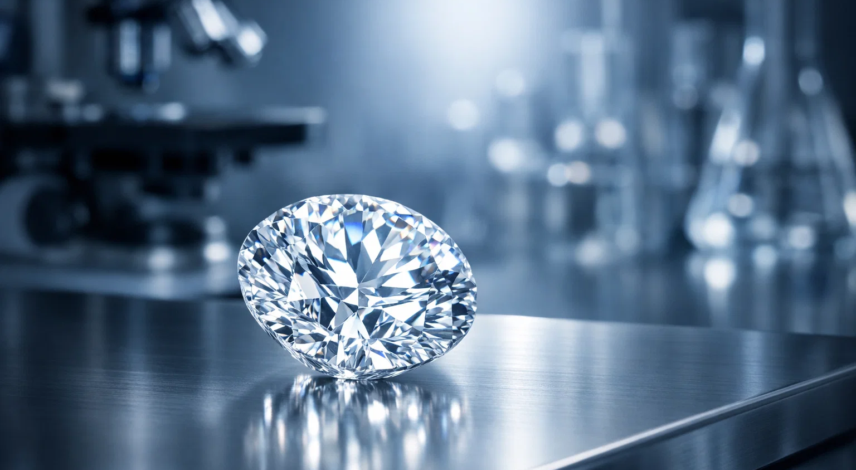
Lab grown diamonds are not imitation stones. They are real diamonds created using advanced diamond manufacturing methods that simulate natural conditions in a controlled environment.
Instead of forming in the Earth’s mantle, lab diamonds grow inside highly specialized chambers — often measured by production capacity per square inch of growth surface. Scientists use either extreme pressure and high temperatures (HPHT process) or carbon rich gases in a vacuum chamber (CVD method) to replicate the natural growth process.
In both cases:
The material is still pure carbon.
Carbon atoms bond into the same crystal structure.
The final product is chemically and physically identical to a natural stone.
The key difference lies in how the growth process is controlled.
Unlike mined stones, lab grown diamonds allow manufacturers to monitor:
Temperature stability
Pressure consistency
Growth speed
Structural purity
This control often results in fewer unpredictable inclusions and more consistent quality — especially for engagement ring center stones and high-end fine jewelry applications.
However, the HPHT vs CVD distinction becomes important because each method creates diamonds under different laboratory conditions, which can influence growth patterns, potential inclusions, and scalability.

IV. The HPHT Process: Recreating Earth’s Extreme Conditions
The HPHT process — short for High Pressure High Temperature — was the first successful method used to produce gem-quality lab grown diamonds.
In the HPHT vs CVD discussion, HPHT is often described as the technique that most closely mimics how natural diamonds form.
How the HPHT Process Works
Inside an HPHT lab, a small diamond seed is placed into a chamber along with a carbon source. The system then applies extreme pressure — similar to conditions found in the Earth’s mantle — combined with high temperatures that can exceed 2.500°F.
Under this intense environment:
Pure carbon begins to melt.
Carbon atoms bond to the diamond seed.
A larger diamond crystal gradually forms.
The combination of high pressure and high temperatures forces the growth process to occur much faster than it would naturally underground.

Because HPHT diamonds form under such extreme pressure, the process requires specialized equipment capable of maintaining stable structural conditions per square inch of chamber space. Even small fluctuations can affect the crystal structure.
Characteristics of HPHT Diamonds
HPHT diamonds are known for:
Strong structural integrity
High clarity potential
Effective production of colorless diamonds
Ability to treat or improve color post-growth
However, the HPHT process may occasionally introduce metallic inclusions. This is because certain metal catalysts are used to help dissolve carbon during growth. While these inclusions are typically microscopic and do not affect durability, they are a technical distinction often mentioned in the HPHT vs CVD debate.
From a durability standpoint, HPHT diamonds are identical to natural stones. The carbon atoms bond in the same crystalline lattice, meaning hardness and brilliance remain unchanged.
In fine jewelry — including engagement ring center stones — HPHT diamonds perform exactly like mined stones.

V. The CVD Method: Layer-by-Layer Precision Growth
While HPHT recreates deep-Earth pressure, CVD technology takes a different scientific approach.
CVD stands for Chemical Vapor Deposition, and in the HPHT vs CVD comparison, this method is often described as more controlled and scalable.
How the CVD Method Works
In the CVD process, a diamond seed is placed inside a vacuum chamber filled with carbon rich gases. These gases are heated into plasma, causing carbon atoms to separate and settle onto the seed.
Rather than growing under extreme pressure, the diamond forms layer by layer as carbon atoms bond vertically to the surface.
Key features of the CVD method:
Lower pressure environment compared to HPHT
Precise control of growth process
Uniform crystal development
Minimal use of metallic catalysts
Because CVD diamonds grow gradually in layers, manufacturers can closely monitor the crystal structure throughout production. This allows for detailed adjustments during diamond manufacturing.

Characteristics of CVD Diamonds
CVD diamonds tend to:
Have fewer metallic inclusions
Show cleaner growth patterns
Be highly scalable for commercial production
Allow post-growth refinement using HPHT treatment if needed
The growth process is often slightly slower than HPHT, but the ability to regulate temperature and gas composition gives CVD technology strong consistency advantages.
In the HPHT vs CVD conversation, many industry experts note that CVD diamonds have become increasingly popular for engagement ring applications due to their structural clarity and production efficiency.

VI. HPHT vs CVD: What Actually Matters to Buyers?
From a scientific perspective:
Both methods produce real diamonds.
Both consist of pure carbon.
Both replicate how natural stones form.
Both create identical hardness and brilliance.
The difference lies not in authenticity, but in the growth process.
HPHT relies on extreme pressure and high temperatures to simulate the Earth’s mantle.
CVD uses carbon rich gases and advanced plasma environments to build diamonds layer by layer.
For consumers shopping for fine jewelry or an engagement ring, the visible differences are minimal. Most distinctions are technical rather than aesthetic.

VII. HPHT vs CVD Diamonds: Side-by-Side Comparison
When comparing HPHT vs CVD diamonds, it helps to focus on what actually matters to buyers rather than just technical terminology.
Below is a simplified breakdown:
| Category | HPHT Diamonds | CVD Diamonds |
|---|---|---|
| Full Name | High Pressure High Temperature | Chemical Vapor Deposition |
| Growth Environment | Extreme pressure + high temperatures | Carbon rich gases in vacuum chamber |
| How Diamonds Form | Carbon melts under high pressure and bonds to seed | Carbon atoms bond layer by layer onto seed |
| Pressure Level | Extremely high pressure (Earth-like conditions) | Lower pressure environment |
| Metallic Inclusions | Possible (from metal catalyst) | Rare |
| Crystal Growth Pattern | Rapid, bulk growth | Controlled, vertical layer growth |
| Scalability | Technically complex equipment | More scalable with cvd technology |
| Post-Growth Treatment | Sometimes used to improve color | Often refined using hpht process |
| Ideal For | Colorless diamonds, certain industrial uses | Engagement ring center stones, fine jewelry |
| Authenticity | Real diamond (pure carbon) | Real diamond (pure carbon) |

What This Means in Practical Terms
Both HPHT and CVD diamonds are real diamonds.
Both are composed of pure carbon with identical crystal structure.
Both can produce gem quality diamonds suitable for fine jewelry.
The difference lies in the growth process — not the final durability.
For someone choosing an engagement ring, the visual difference between HPHT and CVD stones is typically negligible when cut quality is high.
In the hpht vs cvd conversation, cut, clarity, and certification matter more than the manufacturing method alone.
VIII. Conclusion: HPHT vs CVD Is About Process — Not Authenticity
The debate around HPHT vs CVD diamonds often sounds more dramatic than it needs to be.
Here’s the reality:
Natural diamonds form under extremely high pressure and high temperatures within the Earth’s mantle. Lab grown diamonds recreate those conditions using advanced diamond manufacturing methods — either through the HPHT process or CVD method.

Both approaches:
Use pure carbon.
Rely on carbon atoms bond to form crystal structure.
Produce real diamonds that are chemically and physically identical to mined stones.
Are suitable for engagement ring and fine jewelry use.
If you are choosing between hpht and cvd diamonds, focus on:
Certification and grading
Cut quality
Clarity and color
Overall craftsmanship
Technology affects how diamonds grow — not how they sparkle.
For most buyers, the smartest decision is choosing a reputable jeweler who discloses whether the stone is HPHT or CVD and provides proper documentation.
In 2026. the question is no longer whether lab grown diamonds are “real.”
It’s about understanding the growth process — and selecting the stone that aligns with your values, budget, and design preference.

HPHT vs CVD Diamonds FAQs:
What is the difference between HPHT and CVD diamonds?
The difference lies in the growth process. HPHT diamonds form under extreme pressure and high temperatures, while CVD diamonds grow using carbon rich gases in a controlled vacuum chamber. Both are real diamonds made of pure carbon.
Are HPHT diamonds better than CVD diamonds?
Neither method is inherently better. HPHT and CVD diamonds can both produce gem quality diamonds suitable for engagement rings and fine jewelry. Cut quality and grading are more important than the growth method.
Do HPHT and CVD diamonds look different?
To the naked eye, HPHT vs CVD diamonds look the same. Any differences are usually detectable only with specialized gemological equipment.
Can CVD diamonds be treated with HPHT?
Yes. Some CVD diamonds undergo post-growth HPHT treatment to improve color or remove strain patterns. This is a common and accepted practice in diamond manufacturing.
Are HPHT and CVD diamonds real diamonds?
Yes. Both HPHT and CVD diamonds are real diamonds with the same crystal structure, hardness, and brilliance as natural stones.