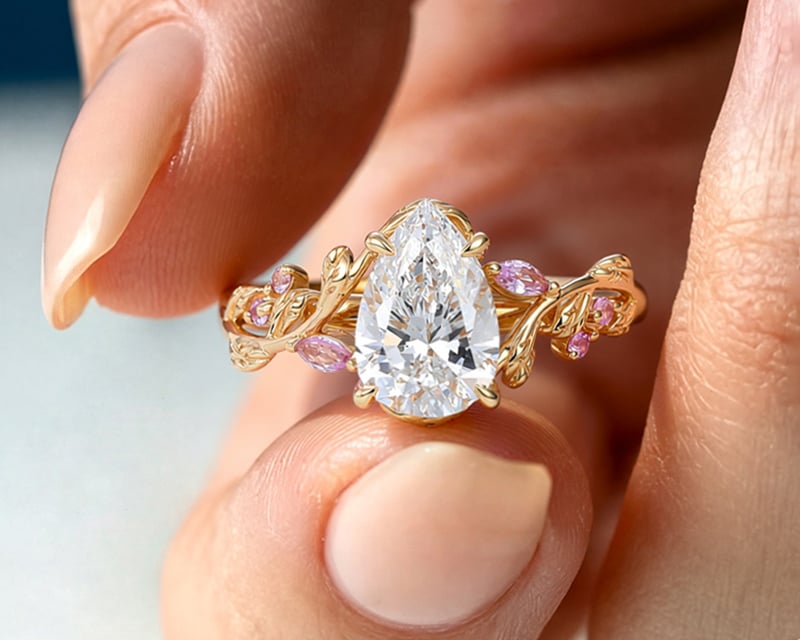
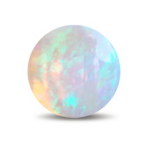
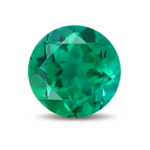
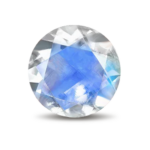
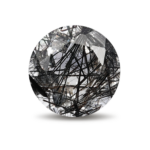
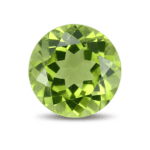
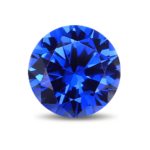
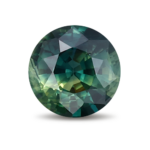
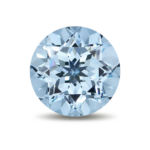
Jewelry is more than adornment—it is one of the oldest forms of personal symbolism. Across civilizations, individuals have chosen materials, shapes, and especially colors to communicate status, devotion, emotion, and identity. When it comes to gemstone jewelry, the color we are drawn to is rarely accidental. Color has the ability to speak directly to the subconscious mind, influencing mood, perception, and even our sense of self.
Modern psychology suggests that color affects both emotional response and decision-making. This means the colors of gemstones we choose—and the gemstones we feel connected to—often reflect something about our internal landscape. Whether the calm depth of blue, the courageous heat of red, or the grounded stability of black, gemstones act as extensions of our emotional world.
In this sense, gemstone jewelry is not simply decorative; it is a personal language. The choice of gemstone color can reveal inner desires, personality traits, emotional needs, or the image one wishes to project outward. Understanding this emotional and symbolic dimension is the essence of gemstone psychology.
This guide explores the gemstone color meaning behind different hues, and what your gemstone preferences might reveal about you—from emotional patterns to personal strengths and the symbolic identity carried in everyday jewelry.
II. The Emotional Language of Color
Color carries universal psychological associations that transcend culture. While cultural variations exist, the emotional core of color perception is deeply rooted in the human nervous system. This is why colors can evoke mood before thought, instinct before language.
When we examine gemstone color meaning, we are looking at two intertwined layers:
Physiological Response Colors interact with the nervous system in measurable ways. Warm tones (reds, oranges, yellows) stimulate energy; cool tones (blues, greens, violets) calm and regulate emotional rhythms.
Symbolic & Mythological Associations Gemstones have been linked to spiritual protection, healing, love, leadership, intuition, and identity in nearly every ancient tradition—from Egyptian amulets and Greek talismans to Hindu chakra philosophy and medieval European regalia.
Together, these layers form what we describe as gemstone jewelry symbolism: the union of emotional resonance and cultural meaning.
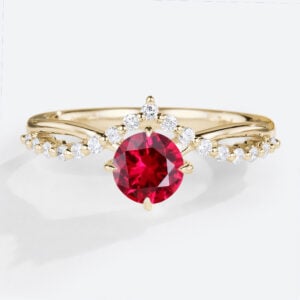
Round Cut Lab Ruby Timeless Engagement Rings
How This Connects to Personal Choice
People often believe they choose jewelry based on aesthetics alone, but color preference typically reveals one of three internal drivers:
Personality Expression: The gemstone reflects qualities they already identify with.
Emotional Aspiration: The gemstone represents qualities they wish to cultivate.
Energetic Balance: The gemstone fills a psychological or emotional gap—calming, energizing, grounding, or clarifying.
For example, someone drawn to blue gemstones may not simply “like blue”; they may be seeking calm, clarity, or emotional steadiness. Someone attracted to red may be drawn toward passion, strength, or a rekindling of personal power.
In other words, gemstone preference is often intuitive—but never random.
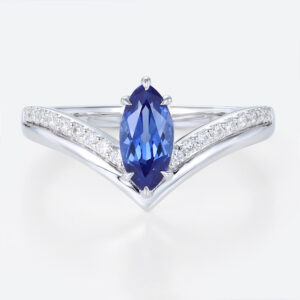
Marquise Cut Lab Sapphire Chevron Pavé Engagement Ring
III. The Deeper Symbolism Behind Gemstone Psychology
If color is the first impression, then symbolism is the story that follows. Every gemstone carries layers of meaning formed through centuries of myth, ritual, and human longing. Long before gemstones became fashion, they were talismans—held close to the skin for protection, clarity, devotion, and remembrance.
In ancient cultures, gemstones were chosen not by appearance, but by the inner life they were believed to awaken:
Sailors wore aquamarine for safe passage.
Warriors carried garnet close to the heart for courage.
Royals adorned themselves with sapphires to symbolize divine judgment and truth.
Lovers exchanged rose quartz to seal tenderness and emotional openness.
These beliefs were not arbitrary. They are deeply tied to how colors and minerals resonate with our emotional and psychological states.
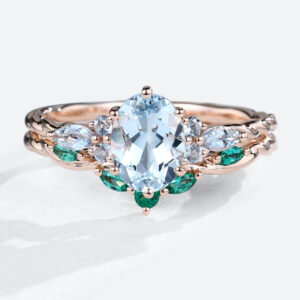
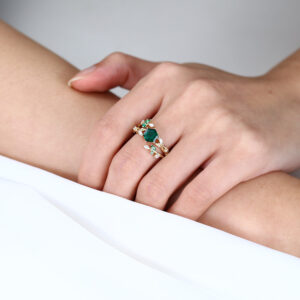
2PCS Rose Gold Oval Cut Aquamarine Engagement Ring with Curved Emerald Wedding Band Set
This is why, even today, when someone reaches for a gemstone, it often reflects:
The story they believe about themselves
The energy they hope to strengthen
The chapter of life they are currently navigating
Jewelry, in this way, becomes a quiet mirror. Not loud. Not obvious. But undeniably intimate.
IV. What Your Gemstone Color Choice Reveals About You
Each gemstone shade speaks differently, like variations of voice and mood.
Red Gemstones — Fire, Desire, Courage
Red burns with initiation energy.
It is movement, pulse, instinct, and the urge to live vividly.
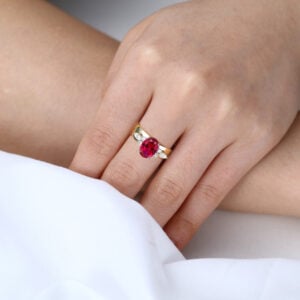
Oval Cut Lab Ruby Cluster Engagement Rings
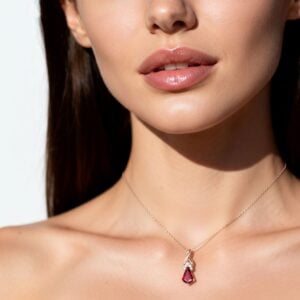
Kite Cut Garnet Pendant Necklace
If you’re drawn to ruby or garnet, you may be someone who:
Feels deeply and loves intensely
Values honesty, even when it’s fierce
Seeks to experience life fully rather than watch from the sidelines
Red gemstones belong to those who act from the heart and are unafraid to feel.
Blue Gemstones — Calm, Insight, Inner Voice
Blue is the color of oceans, dusk skies, and quiet rooms where thoughts settle.
Trust your instincts even when you cannot explain them
Purple is chosen by the seekers, the artists, the ones who notice what others overlook.
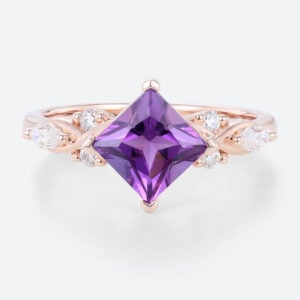
Rose Gold Princess Cut Amethyst Cluster Engagement Ring
Baguette Cut Lab Alexandrite Necklace Irregular Beauty Pendant
Yellow Gemstones — Joy, Openness, Light
Yellow is the color of laughter echoing in a room where you feel safe.
Carry optimism even through challenge
Offer warmth generously
Find meaning in simple, bright moments
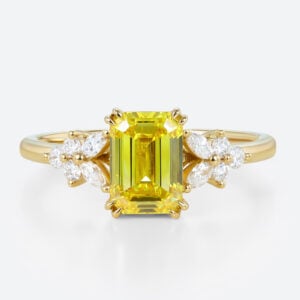
Emerald Cut Lab Grown Yellow Diamond Ring
Yellow gemstones are for those who are sunlight to others.
Black Gemstones — Depth, Boundaries, Quiet Strength
Black is not darkness—it is depth. A universe unlit, but full.
If black onyx, obsidian, or spinel resonates with you, you may:
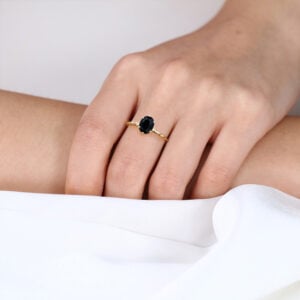
Yellow Gold Oval Cut Black Onyx Twisted Engagement Ring
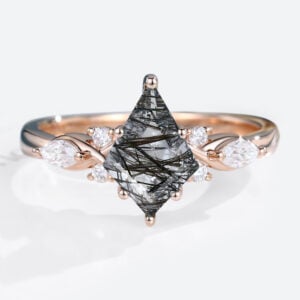
Rose Gold Kite Cut Black Rutilated Quartz Ring
Understand the value of boundaries
Move through life with grounded presence
Seek authenticity over approval
Black gemstones are chosen by those who have known themselves long enough to stand firm.
V. How to Choose the Right Gemstone for Yourself
Choosing gemstone jewelry is not just about color preference—it’s about selecting a piece that aligns with your emotional landscape, lifestyle, and the story you want to tell through what you wear. Here are practical ways to choose gemstones with intention rather than impulse.
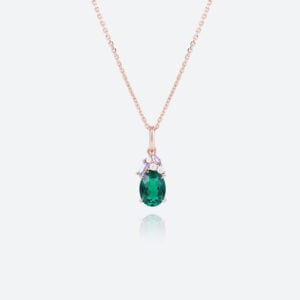
Oval Cut Lab Emerald Necklace
Start with How You Want to Feel
Ask yourself what emotional state you are currently seeking:
Desired Feeling
Color Direction
Example Gemstones
Confidence / Passion
Warm reds
Ruby, Garnet
Peace / Clarity
Cool blues
Sapphire, Aquamarine
Stability / Renewal
Greens
Emerald, Peridot
Love / Openness
Soft pinks
Rose Quartz, Morganite
Imagination / Depth
Purples
Amethyst, Alexandrite
Strength / Grounding
Deep black tones
Onyx, Obsidian
Tip: If you’re unsure what you need, notice which color you keep returning to—your intuition is often ahead of your logic.
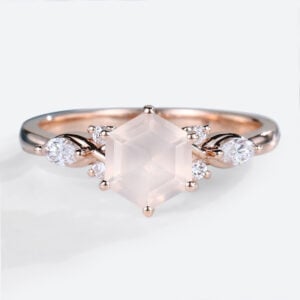
Rose Gold Hexagon Cut Rose Quartz Engagement Ring
Consider Your Daily Wardrobe
Your gemstone should feel natural in your everyday life.
If you wear neutrals, rich gemstone colors will stand out beautifully.
If your wardrobe is already bold, softer gemstone tones (pink, white, pale blue) can balance it.
If you dress minimalist, choose one piece with clear presence (like a ring or pendant) to create an anchored focal point.
Jewelry should not fight your clothing—it should complete it.
Think About How You Wear Jewelry
Your habits tell you what gemstone format works best:
You Prefer…
Then Choose…
Everyday subtle jewelry
Stud earrings, slim stacking rings
One signature piece
Cocktail rings or statement pendants
Effortless coordination
Multi-stone or mixed-tone pieces
A gemstone you actually wear is always more meaningful than one that stays in a box.
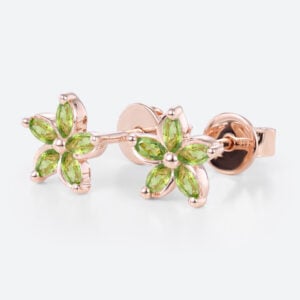
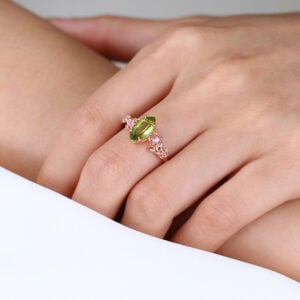
Marquise Cut Peridot Petals Engagement Ring
Let Your Personal Story Lead
Sometimes the right gemstone is tied to memory, heritage, birth month, or a chapter of personal growth.
A first job → a gemstone symbolizing independence
A healing period → stones associated with renewal
A promise to yourself → a stone that anchors inner beliefs
When a gemstone aligns with who you are becoming, it becomes more than jewelry— it becomes a companion.
VI. How to Gift Gemstone Jewelry Meaningfully
Gemstone jewelry makes a meaningful gift because it carries both emotional expression and personal symbolism. When chosen thoughtfully, it becomes something the recipient feels connected to—not just something they own, but something they live with.
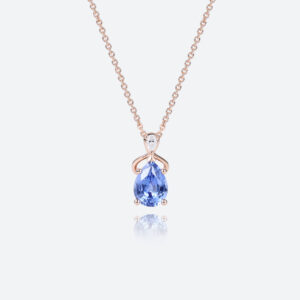
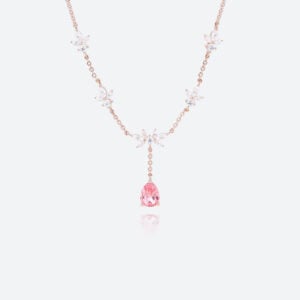
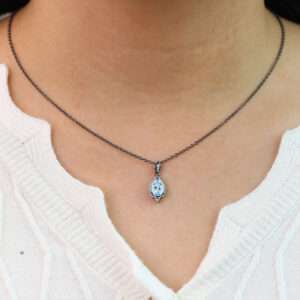
Pear Cut Birthstone Halo Pendant Vintage Charm Necklace
Think About the Relationship, Not the Occasion
Instead of choosing based on the holiday or celebration itself, begin with the connection:
For a partner → choose a gemstone that reflects your emotional language together
For a close friend → choose something that acknowledges their growth or inner strength
For family → choose gemstones that honor heritage, memory, or shared sentiment
A gift becomes unforgettable when it feels seen and felt.
Let Their Personality Guide the Color
Observe how they express themselves:
Personality Vibe
Gemstone Color Direction
Symbolic Essence
Warm, loving, gentle
Pink gemstones
Emotional openness, tenderness
Calm, introspective
Blue gemstones
Clarity, honesty, inner balance
Strong, steady
Black or deep-toned gemstones
Grounding, depth, presence
Creative, expressive
Purple gemstones
Imagination, vision, intuition
You’re not just choosing a stone—you’re choosing a reflection.
A gemstone gift should fit their rhythm, not reshape it.
If they wear minimal jewelry → choose smaller stones, soft silhouettes
If they love statement pieces → bolder cuts and richer tones will suit them
If they cherish sentiment → opt for something timeless and skin-close (like a pendant or ring)
If you want to explore gemstone pieces that balance symbolic meaning with refined, wearable design, the gemstone collections from LisaJewelryUS offer timeless silhouettes suitable for everyday wear and meaningful gifting. The emphasis is not on trend, but on jewelry that becomes part of someone’s personal story.
VII. Conclusion: Jewelry as a Quiet Mirror
The gemstones we choose—and the colors we return to—are often reflections of who we are, who we have been, or who we are becoming.
They mark emotional seasons, inner conversations, moments of courage, quiet healing, and the desire to express love in its many forms.
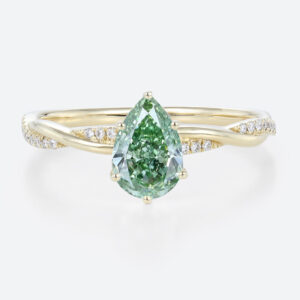
1ct Pear Shaped Lab Grown Green Diamond Ring
Gemstone jewelry is not merely decoration. It is:
A fragment of memory
A language without words
A companion to identity
A form of emotional self-recognition
So the next time a gemstone calls to you, pause for a moment. Ask not “Does this look good?” But “What is this color saying to me?”
Because somewhere between color and feeling, meaning becomes visible.
Hint: The password should be at least eight characters long. To make it stronger, use upper and lower case letters, numbers, and symbols like ! " ? $ % ^ & ).