















I. Introduction
From ancient traditions to modern style, birthstones are more than mere gemstones – they are personal emblems infused with meaning and memory. Each birthstone carries a legacy of stories and emotions, connecting us to generations past and reflecting our own journey. These storied gems hold a timeless appeal, serving as symbols of identity and celebration for those who wear them.
As spring awakens each year, nature’s rebirth mirrors the spirit of May. This month’s birthstone, the emerald, captures the essence of fresh growth and enduring beauty. Its lush green hue evokes the world coming alive – the soft rustle of new leaves, the warm caress of sunshine on dewy grass. In the same way, an emerald gemstone can feel like a piece of spring itself, carrying a promise of renewal and hope.
II. What Is the Birthstone for May?
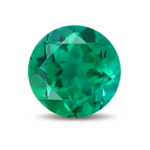
May’s birthstone is the emerald: a gem prized for its vibrant green color and timeless elegance. Imagine the rich, deep green of emeralds, the color of a sun-dappled forest or the velvety shade of a spring meadow. This brilliant hue, born of trace chromium and vanadium within the crystal, gives emeralds their instantly recognizable glow. As a variety of the beryl mineral family, emerald is hard enough for fine jewelry (around 7.5–8 on the Mohs scale) yet it often contains tiny natural inclusions. Gem experts affectionately describe these as the stone’s “jardin” (garden), a delicate tapestry of nature that adds charm and authenticity to every emerald, making each gem one-of-a-kind.
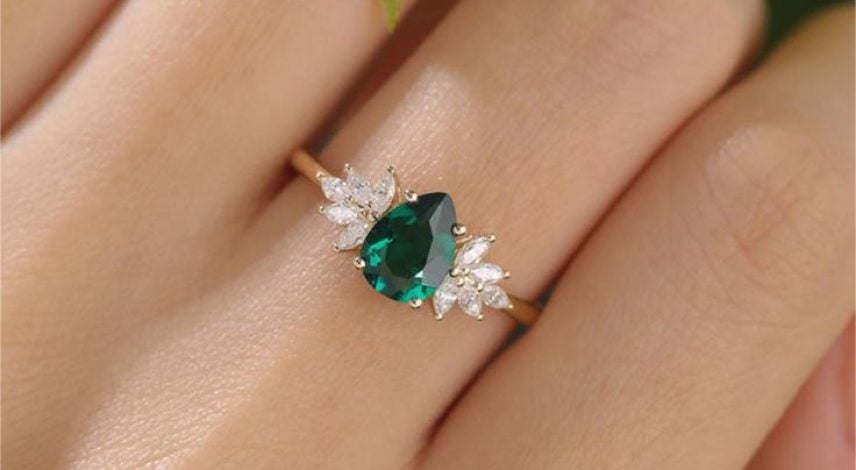
Emerald has long been associated with prestige and refinement. Celebrated by royalty and visionaries through the ages, it was treasured by the likes of Cleopatra and other historical figures who adored its lush color and aura of mystery. Today, this precious green gem remains beloved among those who appreciate both classic luxury and modern style. Its deep green tone pairs beautifully with warm gold or cool platinum, and it complements both vintage-inspired and contemporary designs. Worn in a simple pendant or a bold statement ring, an emerald always carries a sense of elegance and renewal that endures far beyond the spring in which it blooms.
III. The History and Cultural Significance of Emeralds
Emeralds have captivated civilizations for thousands of years. One of the earliest known sources of emeralds was ancient Egypt, where they were mined as early as 330 BC. Cleopatra, the legendary queen of Egypt, was famously passionate about emeralds. She adorned herself with them, gifted them to foreign dignitaries, and even claimed ownership of the country’s emerald mines. For the Egyptians, emeralds symbolized fertility, rebirth, and protection in the afterlife.
The allure of emeralds didn’t stop in Egypt. In ancient Rome, emeralds were associated with Venus, the goddess of love and beauty, and were believed to promote fertility and loyalty. Roman scholars also believed that gazing into an emerald could soothe the eyes and calm the mind—a sentiment that persisted through the Middle Ages.
In South America, the Muzo people of what is now Colombia treasured emeralds long before the Spanish conquest. When the Spanish arrived in the 16th century, they were astonished by the abundance and quality of emeralds in the region. These Colombian emeralds soon made their way into the treasuries of European monarchs, sparking a global fascination that continues today.
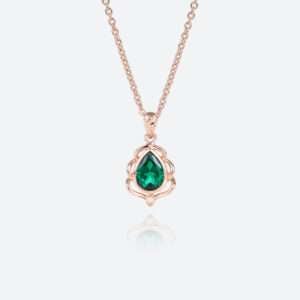
Across cultures and centuries, emeralds have stood for love, renewal, clarity, and eternal life. Their deep green color connects them symbolically with nature, growth, and the heart chakra in spiritual traditions. Whether worn as amulets or royal adornments, emeralds have always conveyed prestige and deeper meaning.
IV. Emerald Mineralogy and Formation
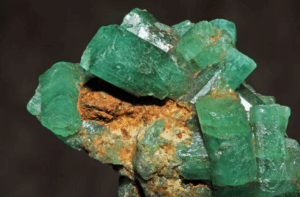
These natural beryl (Be₃Al₂(SiO₃)₆) crystals grow in a six-sided prismatic shape; trace amounts of chromium and vanadium in the crystal lattice give the stone its rich green color. Emeralds are the green variety of beryl, whose chemical formula is Be₃Al₂(SiO₃)₆. In pure beryl the stone would be colorless; emerald’s signature green comes from tiny amounts of chromium (Cr³⁺) and sometimes vanadium (V³⁺) replacing some of the aluminum in the crystal structure. This substitution alters the way the crystal absorbs light, yielding an intense green hue. Each emerald crystal forms in a hexagonal (six-sided) prism shape, as seen in the photo. The hexagonal beryl framework gives emerald a hardness of about 7.5–8 on the Mohs scale, making it sturdy enough for fine jewelry (though natural cleavages and inclusions make it more prone to chipping than harder gems like diamond).
Emeralds grow under very specific geological conditions. Typically, beryllium-rich, silica-laden fluids (often related to granitic magma or hydrothermal activity) percolate through chromium- or vanadium-bearing host rocks (for example ultramafic rocks or black shales). When these fluids cool slowly in veins or pegmatites, emerald crystals can form over millions of years. Tectonic uplift and erosion eventually expose the emerald-bearing rock to the surface. Famous sources include Colombia’s Muzo and Chivor mines, which have produced some of the world’s finest, vividly green emeralds. Other major deposits are found in Brazil, Zambia and Zimbabwe. Stones from different localities often carry subtly different hues (for example, Colombian emeralds tend to be pure green with a slight bluish tone), but all share the same beryl chemistry and hexagonal crystal structure.
V. Grading Emeralds: The Four Cs
Gemologists evaluate every fine emerald by the Four Cs: Color, Clarity, Cut and Carat weight. Each of these factors is important, but emeralds have special standards compared to other gems. Below is how the Four Cs apply to emeralds:
- Color: Color is the most important quality factor for emeralds. The ideal emerald has a strong, pure green hue with vivid saturation. Too light or too dark a tone is less desirable, and any yellowish or brownish tinge will lower the value. Uniform color distribution throughout the stone is prized. (Unlike diamonds, where “colorless” is best, emeralds are valued for the intensity of their green.) In practice, grading considers hue, tone and saturation; top-quality emeralds often exhibit a medium-dark, slightly bluish green that is very bright and even.
- Clarity: Emeralds almost always contain inclusions (often called jardin, French for “garden”) and small fractures. These internal features can look like mossy or fern-like patterns. Unlike other gems, emerald clarity grading is more forgiving: completely inclusion-free emeralds are virtually nonexistent. Some inclusions are even seen as a hallmark of natural emerald. However, heavy inclusions or cracks can weaken the stone and visibly cloud its color. In general, the fewer and finer the inclusions, the higher the value. To improve clarity, most fine emeralds are treated by filling surface-reaching fissures with colorless oils or resins. (This is standard in the trade – over 90% of commercial emeralds receive such treatments.) Laboratories report whether an emerald is “oiled” or “resin-filled,” but these treatments are expected and help the stone appear clearer without changing its inherent color.
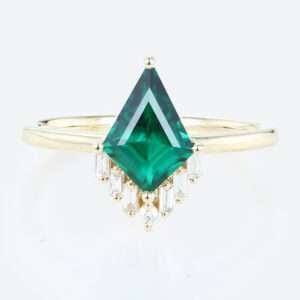
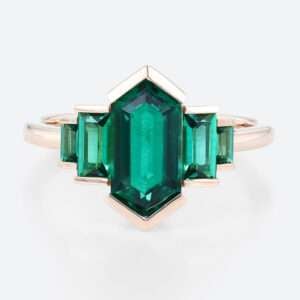
- Cut: Emerald’s brittleness influences how it is cut. The classic emerald cut (a rectangular step cut with truncated corners) was actually developed for this gem. Its broad, flat facets maximize the face-up color and depth of the stone while protecting its vulnerable corners. Other faceting styles (like oval, pear or cushion cuts) are used too, but cutters always aim to highlight the rich green and minimize light leaks. A well-cut emerald will have excellent symmetry and proportions so it reflects light evenly and looks lively. Because emeralds have fewer facets than a brilliant-cut diamond, any dullness or uneven facet is more noticeable; precision cutting is critical to give an emerald a bright, glassy luster.
- Carat: Like all gems, size (carat weight) affects an emerald’s value. However, extremely large emeralds in top color/clarity are extraordinarily rare. A smaller emerald with superb color and good clarity can be far more valuable than a larger stone that appears dull or heavily included. The market premiums on color and clarity mean that buyers often favor smaller, high-quality stones. That said, fine emeralds are prized when they do occur in large size – for example, famous museum gems of many carats in vivid green are celebrated and carry huge value. In practical terms, an emerald’s per-carat price generally increases with size, but only if the other Cs (especially color) are also exceptional.
VI. Origin and Enhancements
Today’s gemological reports often note an emerald’s origin and any clarity treatments. Colombia remains the traditional benchmark for fine emeralds: stones from Muzo or Coscuez are famed for their deep green tones. Zambia, Brazil and other sources each produce emeralds with characteristic hues (for example, Zambian emeralds often have a bluish cast). Because almost all emeralds have natural fissures, gem labs indicate whether an emerald has been clarity-enhanced. In practice, most emeralds are oiled or resin-filled to improve transparency, and this is accepted industry practice. These disclosures allow buyers to understand a gem’s true quality. Ultimately, the Four Cs (particularly color and clarity) – considered alongside origin and treatment – determine the beauty and value of an emerald in high-end jewelry.
- Sources: Authoritative gemology and geology resources have been used, including GeologyScience (emerald properties and formation) and industry-standard grading guides.
VII. The Meaning of Wearing Emeralds and When to Gift Them
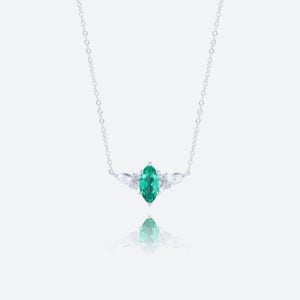
Wearing an emerald is more than just a style choice—it’s a personal statement rich with emotional and symbolic meaning. Traditionally, emeralds are believed to bring wisdom, growth, harmony, and protection. Their connection to the heart chakra makes them a symbol of love, compassion, and emotional balance.
Emeralds are often gifted as meaningful tokens to celebrate life’s most important moments. As the birthstone of May, they make a thoughtful birthday gift for anyone born during this month. But their appeal goes beyond birth dates. Here are some ideal occasions to give (or wear) an emerald:
- Mother’s Day – Representing nurturing and growth, emeralds are a beautiful way to honor a mother’s love and devotion.
- Anniversaries – Particularly the 20th and 35th wedding anniversaries, for which emeralds are traditional gems.
- Graduation Gifts – Emeralds can symbolize new beginnings, wisdom, and future success—making them perfect for celebrating academic milestones.
- Romantic Gestures – Given their connection to Venus and the heart, emeralds are powerful symbols of enduring love and loyalty.
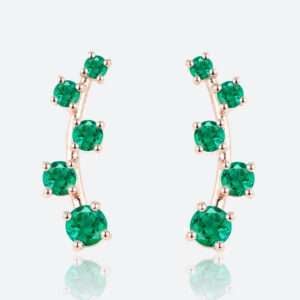
Fashion-wise, emeralds are incredibly versatile. Their rich green hue complements both warm and cool skin tones and pairs elegantly with gold, silver, or platinum settings. Whether set in a minimalist pendant or a statement cocktail ring, emerald jewelry adds a luxurious, timeless touch to any outfit.
For those interested in energy and healing properties, emeralds are believed to encourage emotional clarity, creativity, and inner peace—making them a favorite among crystal enthusiasts as well.
Conclusion
A Gemstone of Timeless Elegance and Deep Meaning
The emerald isn’t just the birthstone for May—it’s a gem that has enchanted humanity for millennia with its breathtaking beauty and powerful symbolism. From Cleopatra’s treasures to modern-day heirlooms, emeralds have remained a symbol of love, vitality, and spiritual depth.
Whether you’re celebrating a birthday, honoring a loved one, or simply drawn to the lush green glow of this iconic stone, wearing an emerald connects you to a tradition as rich and enduring as the gem itself.
Let the emerald remind you of renewal, beauty, and strength—not just in May, but all year round.