


























Choosing a diamond is exciting.
Choosing the metal that holds it? That’s often where the real questions begin.
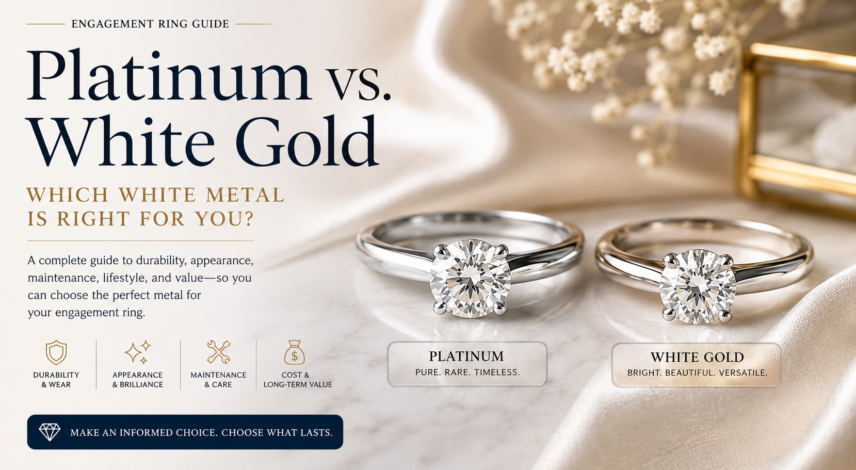
For many engagement ring shoppers, the decision eventually comes down to two timeless favorites: platinum and white gold.
At first glance, they appear almost identical.
Both offer a beautiful white finish that complements diamonds perfectly. Both have been trusted by jewelers for generations. And both can create stunning engagement rings that last for decades.
So why is there still so much debate about platinum vs white gold?
The answer lies beneath the surface.
Although these metals may look similar when they’re brand new, they behave very differently over time. They differ in weight, durability, maintenance, and even the way they age after years of everyday wear.
One of the most common questions buyers ask is:
“Does white gold turn yellow?”
The short answer is yes—but probably not for the reason you think.
Likewise, many people assume platinum never scratches or always looks brighter than white gold. In reality, both of those beliefs are only partially true.
If you’re trying to decide the best white metal for ring settings, understanding these differences can help you choose a ring that fits not only your style today, but also the way you’ll wear it for years to come.
In this guide, we’ll compare platinum and white gold from every practical angle—including appearance, maintenance, durability, comfort, and cost—so you can confidently decide which precious metal belongs on your hand.
Platinum vs. White Gold: What's the Real Difference?
Walk into a jewelry store and place a platinum engagement ring next to one made from freshly polished white gold.
Most people would struggle to tell them apart.
That’s completely normal.
The biggest differences aren’t immediately visible—they reveal themselves through years of wear.
To understand why, it helps to know what each metal is actually made of.
Platinum Is Naturally White
Platinum is a naturally white precious metal.
Unlike white gold, it doesn’t rely on surface treatments or coatings to achieve its color.
Most platinum engagement rings are made from approximately 95% pure platinum, combined with a small amount of other metals to improve strength and durability.
Because the metal itself is naturally white, its appearance remains consistent throughout its lifetime.
Over time, platinum develops what’s known as a patina—a soft, satin-like finish created by tiny surface scratches.
Some people love this understated look because it gives jewelry character and vintage appeal.
Others prefer to have the ring professionally polished to restore its original shine.
The important point is that platinum doesn’t change color.
Its appearance evolves, but the metal itself remains naturally white.
White Gold Is a Gold Alloy
White gold begins as yellow gold.
To create its cooler appearance, pure gold is mixed with naturally white metals such as palladium, silver, or nickel, forming an alloy that’s lighter in color than traditional yellow gold.
Even after alloying, however, white gold still isn’t completely white.
That’s why most white gold jewelry receives a final coating of rhodium, a rare precious metal from the platinum family.
This brilliant rhodium finish creates the bright, mirror-like appearance that many people associate with new white gold engagement rings.
When shoppers compare platinum vs white gold in a jewelry store, what they’re often seeing is platinum beside a freshly rhodium-plated surface—not the natural color of the white gold underneath.
Why They Look Almost Identical at First
It’s easy to understand why so many shoppers assume platinum and white gold are the same.
Freshly polished platinum has a bright, neutral white appearance.
Freshly rhodium-plated white gold also reflects light beautifully, often appearing even brighter because of rhodium’s highly reflective surface.
Viewed from above, most people wouldn’t notice any meaningful difference.
That’s why choosing between these metals shouldn’t be based solely on their appearance in a showroom.
Instead, think about how they’ll look after one year, five years, or even twenty years of daily wear.
💎 Expert Tip
When comparing engagement rings in person, don’t just examine the top view.
Ask to see each ring from the side and inquire about how it will age over time. Understanding long-term maintenance is often far more valuable than judging how the metal looks under bright showroom lighting.
Does White Gold Turn Yellow?
If you’ve spent any time researching engagement rings online, you’ve almost certainly come across this question:
Does white gold turn yellow?
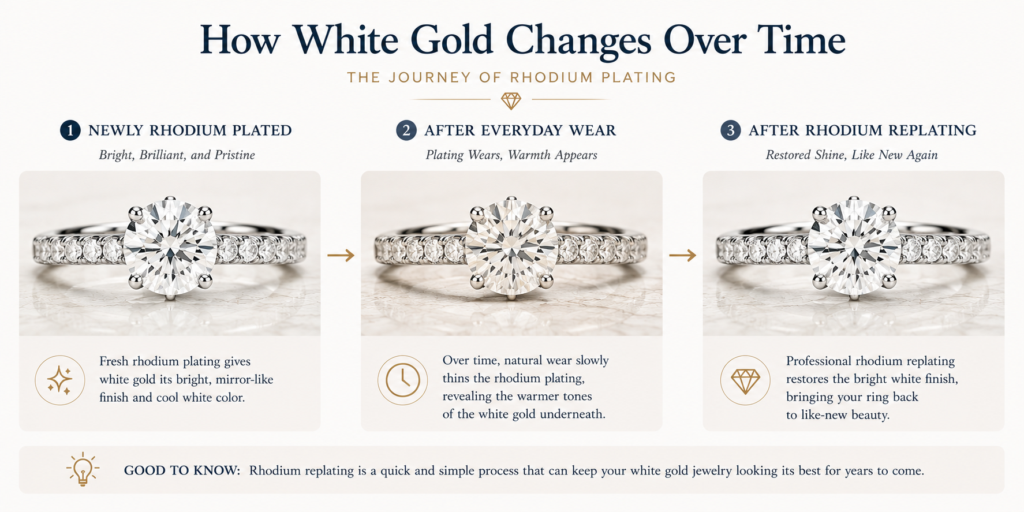
The answer is yes—but not because the white gold itself is changing color.
Instead, what you’re seeing is the gradual wearing away of the rhodium plating that gives white gold its brilliant white finish.
This process happens gradually, so many owners don’t notice it until they compare their ring with a newly polished piece.
Understanding why this happens—and how easily it can be corrected—helps many buyers feel much more confident choosing white gold.
Why Rhodium Plating Wears Away
Rhodium is extremely bright and highly reflective, but like any surface coating, it experiences friction over time.
Daily activities such as:
- Washing your hands
- Gripping steering wheels
- Typing on a keyboard
- Exercising
- Carrying shopping bags
- Wearing gloves during winter
all create tiny amounts of wear.
Little by little, the rhodium coating becomes thinner, revealing more of the natural white gold alloy beneath.
This is completely normal and expected.
It doesn’t mean your ring is damaged or poor quality.
It’s simply part of owning white gold jewelry.
How Long Does Rhodium Plating Last?
There’s no single timeline because every person wears jewelry differently.
For most engagement rings, rhodium plating typically lasts one to three years before owners begin noticing subtle changes in brightness.
Someone who removes their ring during exercise and household chores may go much longer between replating appointments.
Someone who wears the ring constantly—including during physical work—may choose to refresh the finish more frequently.
Fortunately, rhodium replating is a routine jewelry service that restores the ring’s bright white appearance.
Which Metal Is Better for Everyday Wear?
When comparing platinum vs white gold, many buyers naturally focus on appearance.
But once the ring becomes part of your everyday life, comfort and durability often become even more important.
From commuting and working to traveling and exercising, your engagement ring experiences hundreds of small impacts every week.
The way each metal responds to those moments is where their personalities begin to differ.
Platinum Is Dense, Durable, and Built for the Long Term
One of platinum’s defining characteristics is its density.
Even when two rings look identical, the platinum version usually feels noticeably heavier in your hand.
That extra weight isn’t a flaw—it’s one reason platinum has earned a reputation for exceptional longevity.
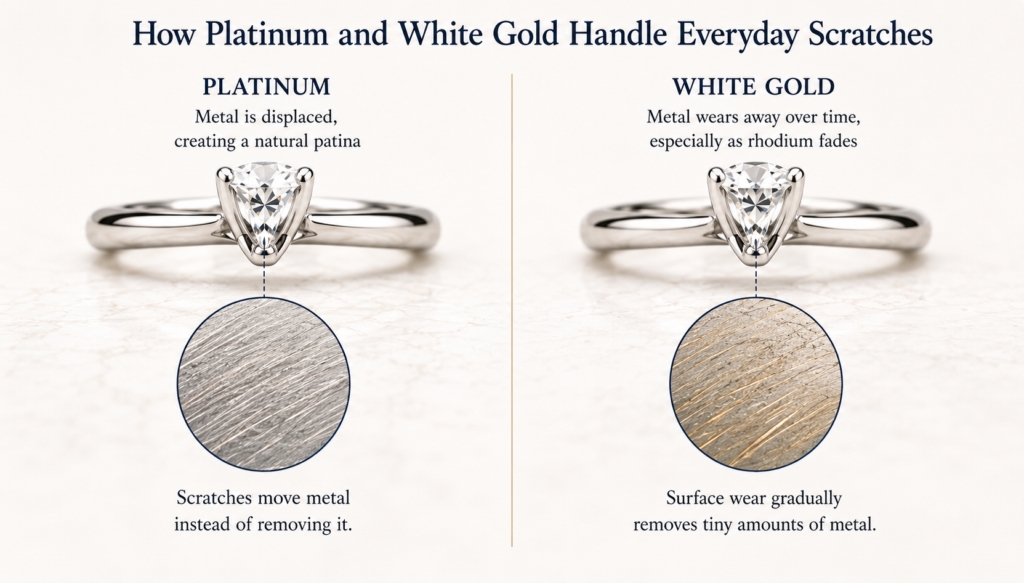
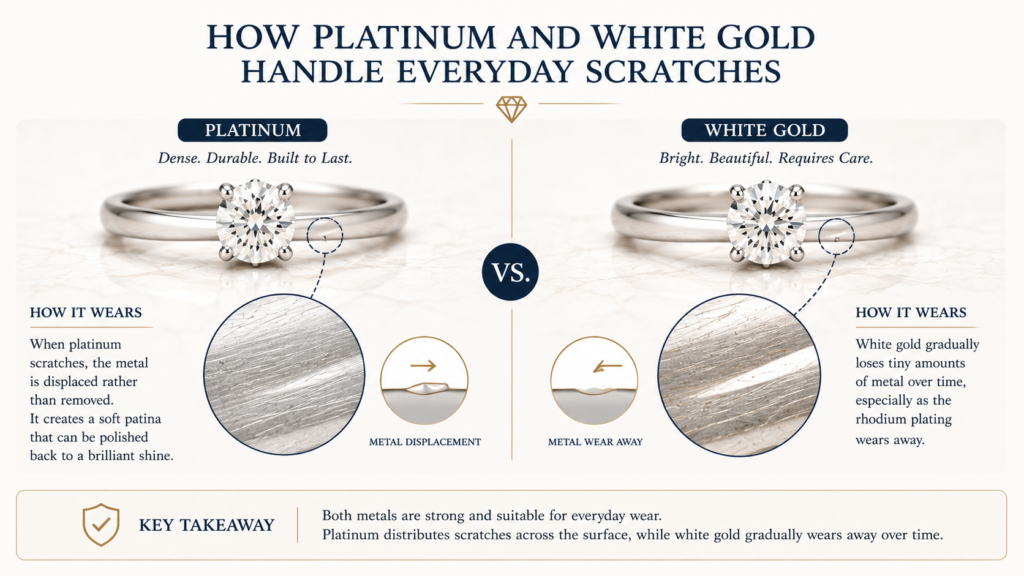
When platinum scratches, the metal doesn’t disappear.
Instead, it moves slightly across the surface, creating the soft patina that many jewelry lovers appreciate.
Over decades of wear, the ring retains almost all of its original metal.
For heirloom jewelry, that’s an important advantage.
White Gold Feels Lighter on the Hand
Not everyone enjoys the substantial feel of platinum.
Some people prefer jewelry that’s lighter and less noticeable throughout the day.
That’s one reason white gold remains incredibly popular.
A white gold engagement ring generally feels easier to wear, especially for people who aren’t accustomed to heavier jewelry.
Combined with its lower purchase price, it offers an excellent balance of beauty and practicality.
Which Metal Scratches More?
This is one of the most misunderstood topics in jewelry.
Many people assume platinum is “scratch-proof.”
It isn’t.
Both platinum and white gold develop surface scratches over time.
The difference lies in how they wear.
With platinum, the metal is displaced rather than lost.
With white gold, tiny amounts of metal gradually wear away over years of polishing and everyday friction.
Neither metal is fragile.
They simply age differently.
Which Metal Makes a Diamond Look Better?
Many buyers expect one metal to make a diamond sparkle more than the other.
In reality, the difference is far smaller than most people imagine.
Both platinum and white gold beautifully complement colorless diamonds.
The choice is usually less about brilliance and more about personal preference.
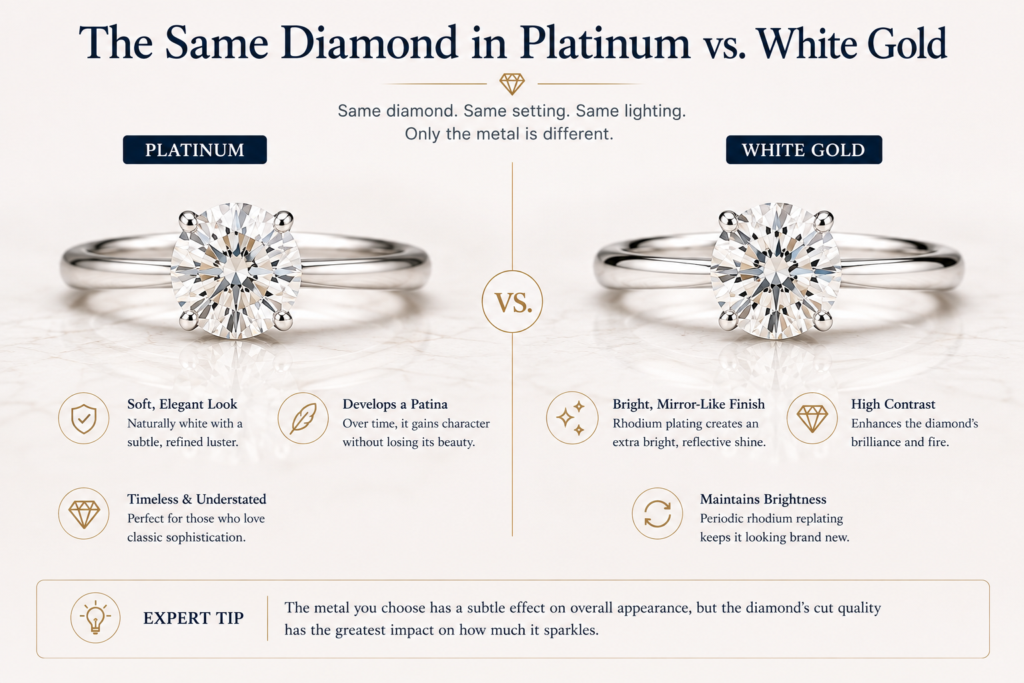
Platinum Offers a Soft, Elegant Appearance
Platinum has a naturally neutral white tone.
As it develops a patina over time, many people feel it gains character rather than losing beauty.
Its understated appearance is especially popular among those who appreciate quiet luxury and timeless design.
White Gold Creates a Bright, Mirror-Like Finish
Fresh rhodium plating gives white gold an exceptionally bright appearance.
Some buyers even perceive it as “whiter” than platinum when new.
That brilliant finish creates crisp contrast around diamonds, making them appear fresh and vibrant.
Cut Quality Matters More Than Metal
If your goal is maximum sparkle, neither platinum nor white gold should be your first consideration.
The quality of the diamond’s cut has a much greater influence on brilliance than the metal holding it.
A beautifully cut diamond in white gold and the same diamond in platinum will perform almost identically.
This is why experienced jewelers encourage buyers to prioritize cut quality before debating metal choices.
💎 Expert Tip
If you’re deciding between platinum and white gold because of sparkle, focus on the diamond’s cut grade instead.
An Excellent Cut diamond will almost always make a bigger visual difference than the metal surrounding it.
Which White Metal Is Best for Different Lifestyles?
Every engagement ring tells a story.
But the best metal is also the one that fits naturally into your everyday routine.
Rather than asking which metal is objectively superior, ask which one suits the way you live.
Office Professionals
Either metal performs beautifully.
White gold’s lighter weight makes it comfortable for daily office wear, while platinum offers exceptional durability for decades of use.
Healthcare Workers & Teachers
Frequent hand washing and constant activity make durability especially important.
Many professionals appreciate platinum’s naturally white color because it doesn’t rely on rhodium plating.
Frequent Travelers
If minimizing maintenance is your priority, platinum is often the simpler choice.
If keeping initial costs lower matters more, white gold remains an excellent option.
Luxury Enthusiasts
Those who love timeless craftsmanship often gravitate toward platinum.
Its weight, purity, and long-term durability give it a distinctly premium feel.
Myth vs. Fact
| Myth | Fact |
|---|---|
| White gold is naturally white. | White gold gets its bright finish from rhodium plating. |
| Platinum never scratches. | Platinum scratches too, but the metal is displaced rather than worn away. |
| Platinum always looks brighter. | Freshly plated white gold may actually appear brighter than platinum. |
| Platinum is always the better choice. | The best metal depends on your lifestyle, budget, and maintenance preferences. |
Platinum vs. White Gold Cost Comparison
Budget naturally plays an important role when choosing an engagement ring.
Platinum is typically more expensive—not simply because it’s rarer, but because it’s denser.
More metal is required to craft the same ring.
White gold offers a more accessible starting point while still delivering the timeless appearance many buyers love.
The initial price difference should also be balanced against future maintenance, particularly rhodium replating for white gold.

Final Thoughts
The debate around platinum vs white gold doesn’t have a universal winner.
Both metals have earned their place in fine jewelry for good reason.
If you value natural whiteness, exceptional durability, and heirloom-quality craftsmanship, platinum is an outstanding choice.
If you prefer a lighter ring, a lower initial investment, and don’t mind occasional maintenance, white gold remains one of the most beautiful and practical options available.
Ultimately, the best white metal for ring settings is the one that complements not only your diamond—but also your lifestyle, your expectations, and the memories you’ll create while wearing it.