











I. Breaking the Monopoly of Color
For generations, the fine jewelry market has been dominated by a single, monolithic aesthetic: the classic, colorless round brilliant diamond. While clear diamonds offer a timeless appeal, modern buyers, independent capsule-wardrobe collectors, and contemporary brides are increasingly craving something more personal, expressive, and visually arresting. They want color.
Historically, stepping into the world of fancy colored diamonds—like blushing pinks, deep ocean blues, or vivid canary yellows—was a privilege reserved exclusively for museum archives, royal families, and high-end international auction houses. In nature, colored diamonds are geological anomalies. For every 10,000 colorless diamonds mined from the earth, only one will possess a noticeable fancy hue. Because of this extreme rarity, a natural 1.00-carat fancy vivid pink diamond can easily command hundreds of thousands of dollars, placing it entirely out of reach for the everyday consumer.
The arrival of colored lab grown diamonds has shattered this historical barrier. By replicating the exact thermodynamics of the earth’s mantle inside precision laboratory growth chambers, scientists can now cultivate pure carbon crystals with breathtaking, saturated color profiles.
Because these stones bypass the astronomical markups and inflated scarcity of the mining supply chain, they represent the absolute pinnacle of modern affordable luxury. Today, you can design dream-tier affordable colorful engagement rings or build a collection of vibrant pink lab diamond jewelry for a fraction of the cost of mined stones.
If you want to outsmart the traditional retail markup, unlock top-tier value, and express your identity through high-fashion geometry, mastering the colored stone market is your ultimate asset. In this comprehensive guide, we will explore the cutting-edge science behind lab-grown hues and demystify the specialized grading metrics you need to shop like a seasoned diamond distributor.
II. The Science of Color: How Scientists Grow a Rainbow
To truly appreciate the value of a colored lab diamond, you must first understand that these are not artificial simulants, cubic zirconias, or painted stones. Chemically, physically, and optically, they are identical to natural diamonds, registering a solid 10 on the Mohs hardness scale. The gorgeous colors are woven directly into the diamond’s atomic lattice during the growth process.
In the laboratory, technicians utilize two primary methodologies to grow carbon crystals: Chemical Vapor Deposition (CVD) and High Pressure High Temperature (HPHT). By introducing precise trace elements or manipulating the structural matrix during or after growth, scientists can dictate the exact hue of the stone.
The Infusion of Trace Elements: Blue and Yellow
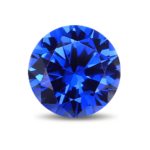
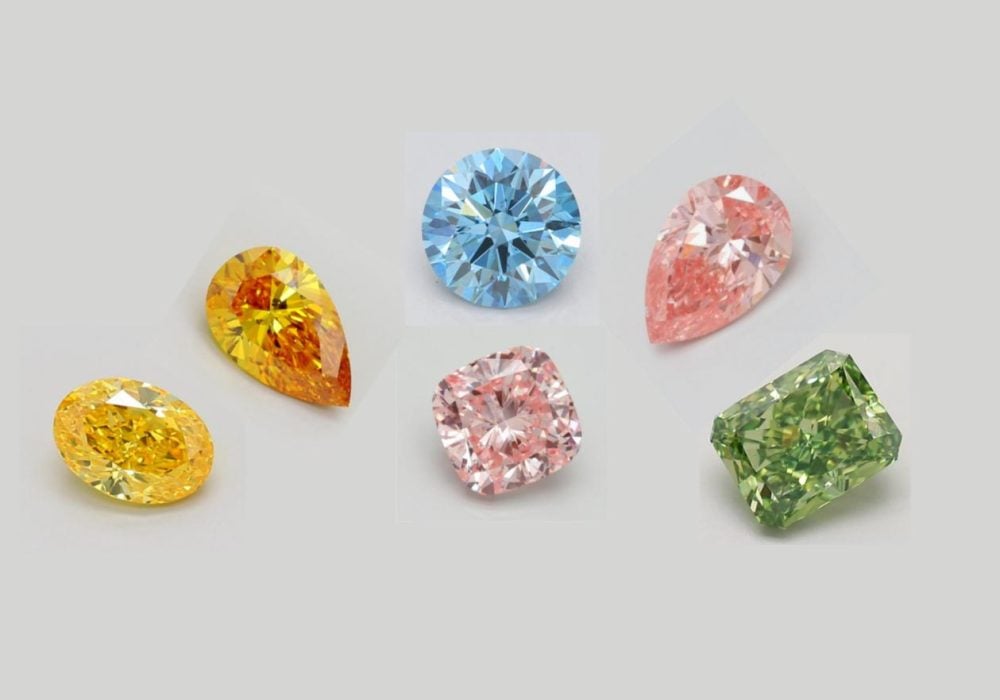
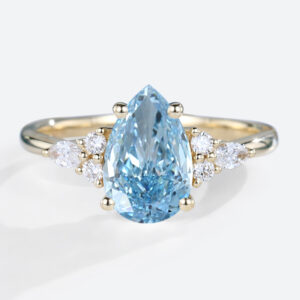
The Blue Lab Grown Diamond: To achieve the serene, deep depths of a premium blue lab grown diamond, scientists introduce an incredibly precise amount of boron gas into the growth chamber. The boron atoms seamlessly substitute themselves for carbon atoms within the diamond’s crystal structure, causing the stone to absorb red, yellow, and green light while reflecting an exquisite, cool blue brilliance.
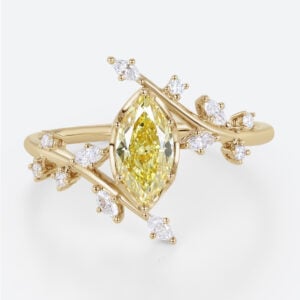
The Canary Yellow Diamond: If the goal is a bright, sun-kissed yellow diamond, nitrogen is introduced. The nitrogen atoms trap light in the blue spectrum, reflecting an intense, warm golden hue.
Physical Distortion: The Pink Diamond Alchemy
Growing pink diamonds is a far more complex, multi-stage art form. Unlike blues or yellows, pure pink tones are not caused by chemical impurities. Instead, they are the result of crystal lattice distortion.
After a raw diamond crystal is grown, it undergoes specialized post-growth treatments involving electron beam radiation followed by high-temperature annealing (HPHT processing). This high-tech atomic tailoring coaxes the carbon atoms to slip slightly out of alignment. This physical distortion changes how the diamond absorbs light, causing it to reflect beautiful hues ranging from delicate cherry blossoms to deep, sultry magentas—forming the raw foundation for high-end pink lab diamond jewelry.
III. Understanding Fancy Color Diamond Grading: The Rules Are Flipped
When shopping for a standard white diamond, the grading metric is simple: you want the absence of color. The GIA and IGI grading scales run from D (completely colorless and most expensive) down to Z (tinted yellow or brown). However, when you step into the territory of fancy color diamond grading, the traditional 4Cs rulebook is completely flipped on its head. In this realm, color is absolute king, and rarity is judged by saturation and purity.
The Saturation Scale (From Faint to Vivid)
Independent grading laboratories like the IGI and GIA evaluate colored diamonds face-up under tightly controlled, neutral-spectrum lighting environments. Rather than using the D-to-Z scale, they categorize stones based on three key color properties: Hue (the primary color), Tone (how light or dark it is), and Saturation (the strength or purity of the color).
The final grade on a certificate is determined by where the stone falls along this specialized spectrum:
Fancy Light / Fancy: These stones possess a soft, pastel-like appearance. They offer excellent everyday wearability and a subtle, understated look for custom jewelry.
Fancy Intense / Fancy Vivid: These are the rarest and most visually striking grades. A Fancy Vivid stone boasts the maximum possible saturation, exploding with rich, concentrated color that commands attention from across a room. In the retail market, Vivid and Intense stones carry the strongest value retention and demand.
By learning how to read these specific laboratory notations on a certificate, you can confidently compare stones online, ensuring you secure the exact tone and visual impact your custom design requires.
IV. The Color Superstars: Pink & Blue Lab Diamonds
When curating a custom jewelry collection, you will find that the colored stone market has its own definitive icons. Among all the choices available, pink and blue tones stand as the undisputed superstars of high-end design, offering distinct personalities and unmatched visual impact.
Pink Lab Diamonds: The Pinnacle of Romantic Luxury
Pink diamonds are the ultimate expression of romance, femininity, and high-fashion elegance. In the natural diamond world, stones like the “Pink Star” break records at tens of millions of dollars, making pink an international symbol of extreme wealth.
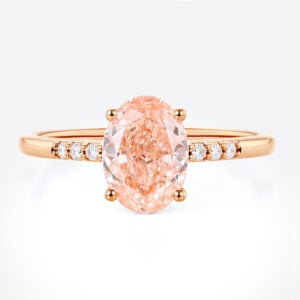
The Aesthetic Palette: Lab-grown technology delivers an incredible spectrum of pinks, running from soft, misty cherry blossom tones to rich, intense bubblegum pink and deep magenta.
Best Jewelry Applications: Because pink is universally flattering against all skin tones, pink lab diamond jewelry is highly coveted. A pair of Fancy Intense pink diamond stud earrings or a delicate pink diamond tennis bracelet adds an instant touch of soft, everyday luxury that outshines standard white diamonds.
Blue Lab Grown Diamonds: The Sovereign Depth
If pink represents romance, a blue lab grown diamond embodies serene majesty, intellectual calm, and elite status. Reminiscent of the legendary Hope Diamond, blue stones project a mesmerizing, deep ocean allure.
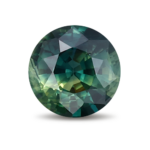
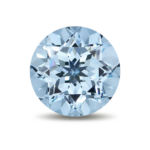
The Aesthetic Palette: Blue lab diamonds typically range from icy aquamarine tints (Fancy Light Blue) to deep, moody teal and striking royal navy (Fancy Vivid Blue).
Best Jewelry Applications: Blue stones possess a sharp, clean architectural presence. They look incredibly striking when set as the centerpiece of a custom ring, providing a cool, aristocratic vibe that pairs beautifully with dark evening wear and minimalist winter wardrobes.
V. The Value Revolution: Transforming the Engagement Ring Market
The real magic of choosing colored lab stones is the profound financial freedom it gives you during the design process. It allows you to execute a “budget drop-down strategy,” where your dollars stretch significantly further than they ever could in the colorless or mined diamond sectors.
Erasing the Rarity Premium
In the mined diamond market, the price curve for fancy colors is exponential. A natural 2.00-carat Fancy Vivid Pink diamond is an investment asset costing upwards of $200,000, making it an impossible dream for a wedding ring.
With lab-grown crystals, the artificial scarcity of the earth is completely removed from the equation. Because scientists can reliably cultivate these stones, a 2.00-carat, top-tier Fancy Vivid pink or blue lab diamond costs only a fraction of that amount—comparable to or even lower than the cost of a standard white lab diamond.
The Rise of Affordable Colorful Engagement Rings
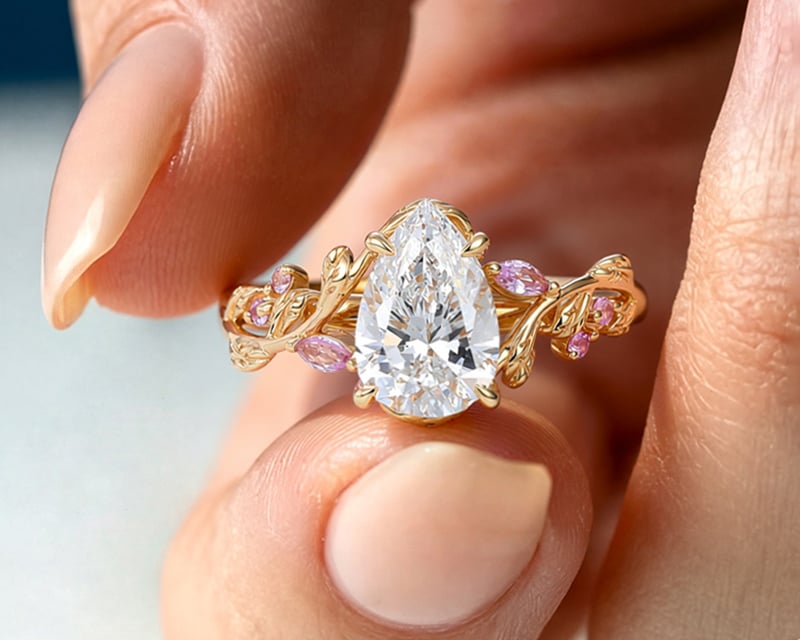
This pricing revolution has triggered a massive shift toward affordable colorful engagement rings. Modern couples realize that instead of buying a traditional, colorless solitaire that looks identical to everyone else’s, they can use their budget to buy an absolute showstopper.
For the exact same price as a modest white diamond, you can secure a massive, highly saturated pink, blue, or yellow lab diamond. This allows you to claim maximum visual real estate on your hand, customize a piece of wearable art, and achieve top-tier luxury value without overextending your financial boundaries.
VI. Metal Matchmaking: Framing Your Colored Masterpiece
Once you have selected your dream hue and saturation level, the next crucial step in designing your affordable colorful engagement rings is choosing the metal setting. The precious metal that cradles a colored diamond acts as a lens, either amplifying the stone’s natural tone or creating a sharp, high-contrast frame.
The Metal Color-Boosting Trick
Master jewelers use a classic insider secret to boost a diamond’s face-up color grade visually. If you choose a metal color that matches the tone of your diamond, the reflections from the prongs will bleed into the stone, making the color look significantly richer.
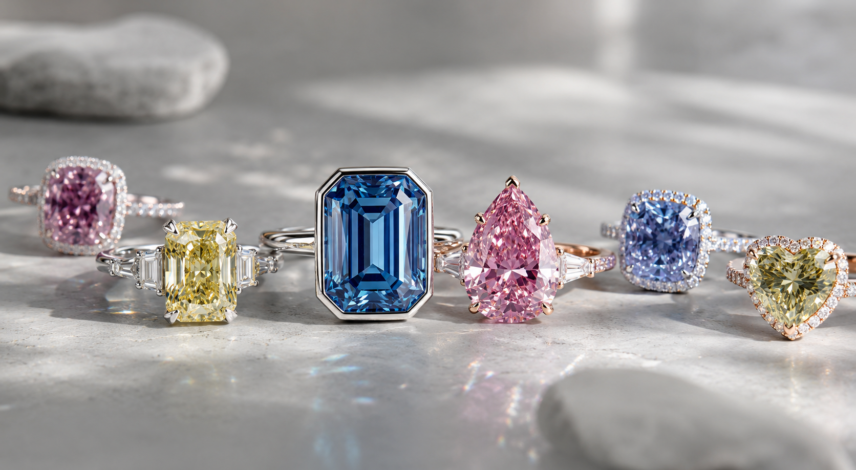
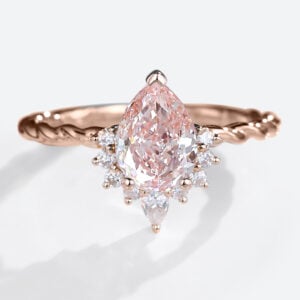
For Pink Diamonds: Always request that the stone be set in a 14K or 18K Rose Gold prong cup. The pink undertones of the metal will mirror through the diamond’s facets, instantly making a “Fancy” pink stone look like a “Fancy Intense.”
For Yellow Diamonds: Mount the center stone in warm Yellow Gold prongs to deepen its golden canary brilliance.
The Platinum Frame for Icy Contrast
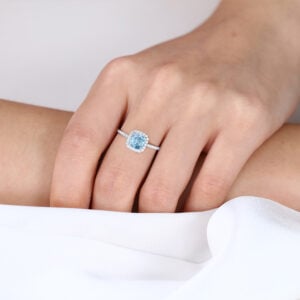
If you have secured a striking blue lab grown diamond, pairing it with a cool Platinum or White Gold band yields a completely different aesthetic. The icy white reflection of the metal creates a crisp, clean border that forces the blue hues to pop forward, defining the stone’s edges with absolute modern clarity.
VII. The Blind Spots: 3 Mistakes to Avoid When Shopping for Lab Colors
Navigating the landscape of fancy color diamond grading requires a sharp eye. To ensure you secure a stone with top-tier value and stunning eye-clean aesthetics, avoid these three hidden pitfalls:
Ignoring Muddy Secondary Undertones
When reading an IGI or GIA grading certificate, the last word in the color description is the primary hue (e.g., Pink). Any word preceding it is the secondary modifying tone.
The Trap: Avoid stones listed as “Brownish Pink” or “Grayish Blue.” These muddy modifiers dull the crystal’s clarity and lower its market value.
The Secret: Target stones with vibrant modifiers like “Purplish Pink” or “Greenish Blue.” A touch of purple adds a vivid, bright pink berry tone, while a splash of green gives a blue stone a gorgeous, high-value teal allure.
Overpaying for Flawless Clarity
In colorless diamonds, inclusions are easily spotted, forcing buyers to pay a high premium for VVS clarity. In colored stones, the rich concentration of color acts as a natural camouflage. You can safely drop down to a VS2 or SI1 clarity grade without fear. As long as the stone is certified as “eye-clean,” the tiny internal markings will be completely invisible beneath the waves of color, allowing you to reallocate your savings into a larger carat size.
Missing the Post-Growth Treatment Notation
Always check the “Comments” section of your grading report. Elite colored lab diamonds achieve their hues through stable, permanent post-growth processes like HPHT annealing or electron beam irradiation. Ensure your retailer provides full transparency regarding these treatments, guaranteeing the color will remain completely stable and will never fade or alter over a lifetime of daily wear.
Conclusion: Embrace Your Identity in Full Color
The true gift of the modern colored lab grown diamonds revolution is the democratization of high-fashion luxury. It frees you from the rigid constraints of traditional jewelry design, turning your investment into an authentic expression of who you are.
By understanding the physics of fancy color diamond grading, utilizing smart metal pairing secrets, and steering clear of muddy undertones, you can curate a collection that stands out. Whether you reward yourself with a romantic piece of pink lab diamond jewelry or commit to a lifetime of love with a magnificent blue lab grown diamond, embrace the power of color. Choose a stone that reflects your unique narrative, claims top-tier value, and flashes with the vibrant brilliance of your personal style.