












I. The Dual Personalities of Rectangular Diamonds
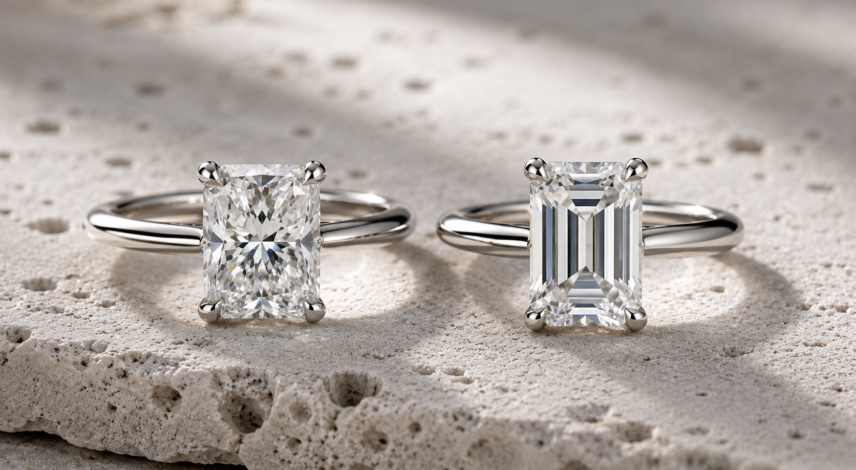
When shopping for an engagement ring, rectangular diamonds offer a distinct, sophisticated silhouette that stands out from classic round brilliants. Their elongated profile creates a flattering, slenderizing effect on the finger while providing exceptional surface area coverage.
However, when comparing the two most popular rectangular diamond shapes—the Radiant cut and the Emerald cut—buyers quickly discover that identical outlines can possess entirely different personalities.
The debate between a radiant vs emerald cut comes down to what you value most in a gem: high-octane sparkle or quiet, architectural elegance.
While a Radiant cut combines the geometric rectangular shape with the intense fire of a round brilliant, an Emerald cut showcases long, parallel facets that create a mesmerizing “hall-of-mirrors” effect.
Whether you are dreaming of a showstopping modern piece or a timeless emerald cut engagement ring, this guide compares both cuts across sparkle, clarity demands, finger coverage, and durability to help you choose the perfect diamond for your personal style.
II. Meeting the Contenders: Cut Characteristics Explained
To understand how these two shapes perform on a ring, you first need to look at how gemologists cut and facet their raw crystal structures.
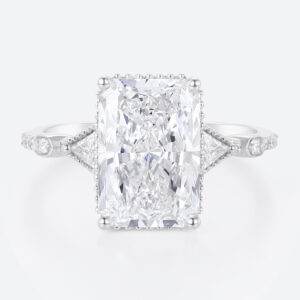
The Radiant Cut: Modern Sparkle & Fire
Created in 1977 by Henry Grossbard, the Radiant cut was designed specifically to bridge the gap between rectangular shapes and brilliant-style sparkle.
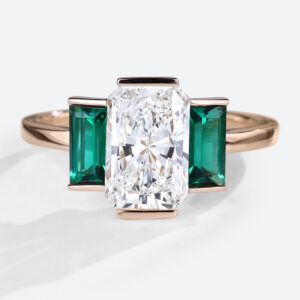
Faceting Style: Brilliant-cut (typically featuring 70 triangular and kite-shaped facets).
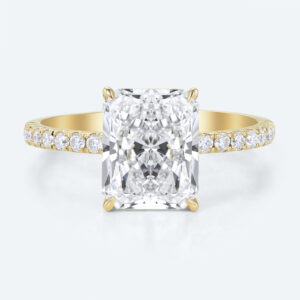
Visual Effect: It produces a brilliant “crushed ice” look—a kaleidoscope of tiny, dancing light reflections.
Key Features: It takes the classic rectangular outline with cropped corners (beveled edges) and packs it with the intense light refraction of a round brilliant diamond.
The Emerald Cut: Vintage Elegance & Transparency
The Emerald cut is one of the oldest diamond shapes, originating from 16th-century lapidary techniques originally used to cut emerald gemstones without cracking them.
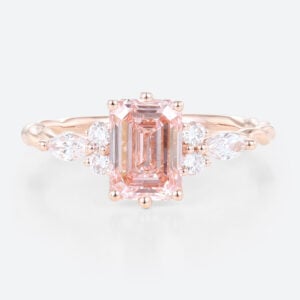
Faceting Style: Step-cut (featuring long, linear facets arranged parallel to the girdle like stair steps).
Visual Effect: It delivers dramatic flashes of light rather than continuous pinpoint sparkle, creating a serene “hall-of-mirrors” effect.
Key Features: It boasts a large, open top facet (the table) that acts like a clear window into the heart of the stone, emphasizing transparency, clean lines, and Art Deco sophistication.
III. Head-to-Head Comparison: Radiant Cut vs. Emerald Cut
While both shapes look sleek and sophisticated in a ring setting, they perform differently in real-world lighting conditions, have distinct budget implications, and require different minimum specifications.
A. Sparkle & Light Performance: Brilliant vs. Step Cut
The most dramatic difference between these two rectangular shapes lies in how they bounce light back to your eye.
Radiant Cut: Features 70 intricate, brilliant-style facets designed to maximize light dispersion. It hides nothing when it comes to brilliance—scattering light into hundreds of tiny, shimmering beams in every direction. Even in dim or candlelight environments, a Radiant cut holds its fire and sparkle exceptionally well.
Emerald Cut: Prioritizes optical transparency over sparkle. Instead of small, twinkling flashes, its broad step-cut facets produce broad, dramatic beams of light (often called “blocky” or “stair-step” flashes). It offers a sleek, understated glow that mimics a mirror rather than a disco ball.
B. Clarity & Color Sensitivity: Hiding vs. Exposing Characteristics
Your choice between a Radiant and Emerald cut will significantly impact how you budget across the 4Cs—especially when evaluating Clarity and Color.
- Radiant Cut (High Forgiveness): The intricate “crushed ice” facet arrangement acts as natural camouflage for internal characteristics and faint body color. Minor inclusions (like clouds, pinpoints, or small feathers) easily disappear into the sea of sparkle.
Buyer’s Tip: You can safely target VS2 or eye-clean SI1 clarity and H or I color without sacrificing visual purity.
Emerald Cut (High Vulnerability): The expansive, flat table facet offers an unobstructed, crystal-clear window directly into the center of the diamond. Any dark crystal, feather, or cloud under the table will be instantly visible to the naked eye. Furthermore, step-cut facets hold onto warmth, making lower color grades easier to spot.
Buyer’s Tip: Stick to VS2 (carefully inspected) or VS1+ clarity and aim for H color or higher to maintain crisp transparency.
C. Finger Coverage & Slenderizing Effect
Both of these rectangular diamond shapes offer an elongating effect that creates a universally flattering appearance on the hand, but they distribute their weight differently.
| Metric | Radiant Cut | Emerald Cut |
| Typical Length-to-Width Ratio | 1.15 to 1.35 (Slightly squarer to elongated) | 1.30 to 1.50 (Distinctly elongated rectangular) |
| Carat Weight Distribution | Deeper pavilion; carries more weight underneath | Shallower profile; spreads weight across the top |
| Visual Size Impression | Compact, punchy, and dense | Appears slightly larger per carat due to surface area |
D. Durability & Daily Wear
When wearing a ring every day, sharp corners are the most vulnerable parts of a diamond, making them prone to chipping if bumped against hard surfaces.
Fortunately, both Radiant and Emerald cuts feature beveled/cropped corners. This structural modification removes fragile points, making both shapes highly durable and resistant to chipping—ideal for active lifestyles and secure prong settings.
IV. Decision Matrix: Radiant vs. Emerald Cut at a Glance
To help you compare your options instantly, use this summary breakdown to align your diamond choice with your priorities.
| Feature | Radiant Cut | Emerald Cut |
| Faceting Style | Brilliant / Hybrid Crushed Ice | Step-Cut / Parallel Lines |
| Primary Visual Draw | Maximum fire, sparkle, & vibrancy | Sleek lines, clarity, & vintage luxury |
| Ideal Clarity Target | VS2 – SI1 (Inclusions hide easily) | VS1 – VS2 (Requires eye-clean vetting) |
| Ideal Color Target | H – I Color (Color masks well) | F – H Color (Retains color in step facets) |
| Optimal L/W Ratio | 1.20 – 1.30 | 1.35 – 1.45 |
| Overall Aesthetic Vibe | Glamorous, energetic, modern | Sophisticated, architectural, “Quiet Luxury” |
V. How to Choose for Your Style: Which Shape Fits You Best?
Choosing between these two rectangular shapes ultimately comes down to your aesthetic personality, your daily lifestyle, and how you want your ring to interact with light.
Choose a Radiant Cut If You:
Refuse to Compromise on Sparkle: You love the elongated shape of a rectangular stone but want the blinding, multi-directional fire of a round brilliant.
Want Maximum Value for Your Budget: You prefer to maximize carat size while dropping to a VS2/SI1 clarity and H/I color without worrying about visible flaws or yellow undertones.
Have an Active Lifestyle: The combination of cropped corners and brilliant faceting hides everyday smudges, oils, and minor dust exceptionally well between cleanings.
Choose an Emerald Cut If You:
Love “Quiet Luxury” and Vintage Elegance: You appreciate Art Deco architecture, clean lines, and an understated aesthetic that exudes timeless, high-end sophistication.
Prioritize Purity Over Pinpoint Sparkle: You prefer broad, dramatic flashes of light and enjoy looking directly into the clear, open depths of a crystal-clean gem.
Want a Sleek, Elongating Silhouette: An emerald cut engagement ring naturally creates a long, graceful line on the hand that flatters any finger shape.
VI. Setting Ideas for Rectangular Shapes
Because rectangular diamonds have clean geometries and beveled corners, choosing the right setting highlights their best features and keeps your stone secure.
Best Settings for an Emerald Cut
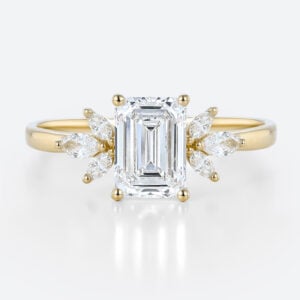
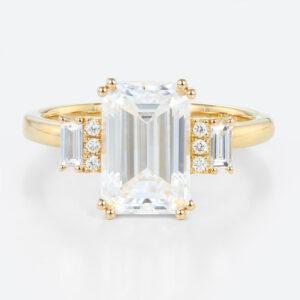
Three-Stone with Tapered Baguettes: A timeless classic. The step-cut side baguettes draw the eye inward toward the center stone, creating a seamless architectural staircase effect.
Sleek Bezel Setting: Encasing the stone in a thin metal frame highlights its clean, geometric frame, offering a modern, low-profile look with ultimate daily protection.
Classic Four-Prong Solitaire: Keeps the focus entirely on the clear table and dramatic light flashes, allowing light to enter from all angles.
Best Settings for a Radiant Cut
Pavé Band Solitaire: A delicate band lined with tiny brilliant diamonds complements the central “crushed ice” sparkle without competing for attention.
Hidden Halo Setting: Placing a subtle collar of diamonds underneath the main center stone adds a surprise sparkle from the side profile while keeping the top view clean and focused.
Split-Shank Setting: Adds structural width near the center stone, perfectly balancing longer length-to-width ratios for larger carat weights.
Conclusion: The Fire vs. The Mirror
When deciding between a Radiant cut and an Emerald cut, remember that there is no single “superior” option—only the shape that speaks to your personal style.
By understanding how each cut interacts with light, clarity, and color, you can select your dream center stone with absolute confidence.
The Radiant cut is the ultimate choice for those who demand maximum fire, modern vibrancy, and budget flexibility.
The Emerald cut remains the undisputed king of elegance, transparency, and vintage sophistication.
Ready to Find Your Ideal Rectangular Diamond?
Whether you are drawn to the fiery brilliance of a Radiant or the timeless allure of an emerald cut engagement ring, our team at LisaJewelryUS is here to guide you. We provide high-definition 360° virtual inspections to ensure your center stone is perfectly eye-clean and proportioned for maximum brilliance.