











The “Old Mine” & “Old European Cut” Comeback: Antique Cuts in Modern Rings
by Lisa Jewelry US 0 comments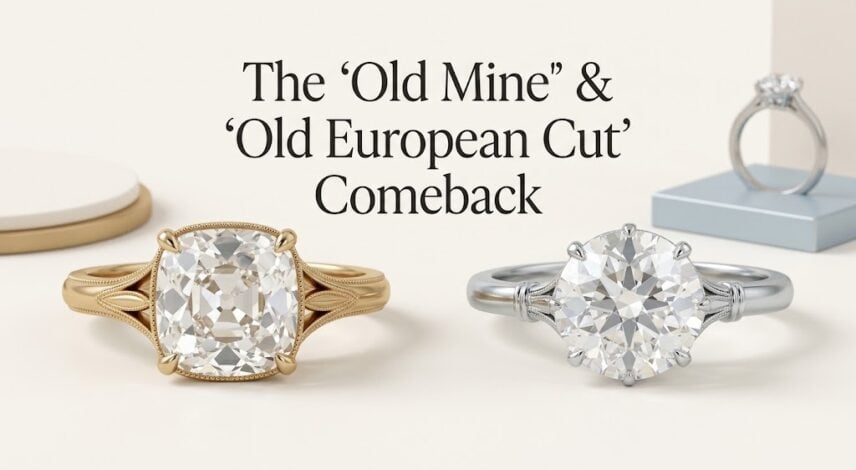
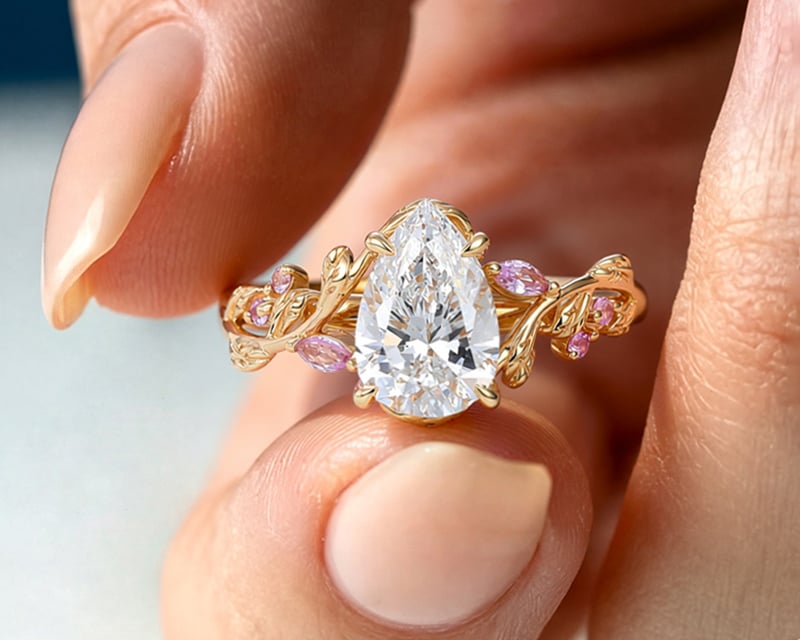
For decades, the modern round brilliant was the default choice for engagement rings. Today, many couples are looking for something less standardized: a diamond with broader flashes, a visible culet, a softer outline, and a sense of history—even when the ring itself is newly made.
That renewed interest has brought antique diamond cuts back into the conversation. Old Mine Cut and Old European Cut diamonds offer a different kind of beauty from modern brilliant cuts. Instead of emphasizing perfectly uniform sparkle, they are known for distinctive proportions, larger facets, high crowns, and a more individual visual character.
The appeal is not that these diamonds imitate modern cuts imperfectly. Their charm comes from the fact that they were designed according to an earlier way of seeing light, shaping rough diamonds, and valuing craftsmanship.
In this guide, we explore the history and differences between Old Mine and Old European Cuts, explain what an old mine cut lab diamond actually means, and show how antique-inspired diamonds can be used in a modern vintage style engagement ring.
The Quick Answer: Why Are Antique Diamond Cuts Returning?
Old Mine and Old European Cut diamonds appeal to modern shoppers because they offer a visual identity that standard modern brilliant cuts do not always provide.
Their defining features may include:
- Broader, more easily recognizable facets;
- Higher crowns;
- Smaller tables;
- Deeper proportions;
- Visible culets;
- Softly irregular outlines;
- A warmer, more candlelit style of sparkle.
A modern round brilliant is generally designed with precise proportions and symmetry to maximize light return. Antique cuts were shaped according to the rough crystal, available tools, and the cutting practices of their time. As a result, each original stone can have its own personality.
That individuality is especially attractive to people who want an engagement ring that feels personal rather than mass-produced. Antique cuts also work beautifully with modern settings, allowing shoppers to combine vintage character with contemporary comfort, security, and customization.
However, “antique-inspired” does not automatically mean “historically old.” A newly cut natural diamond or a laboratory-grown diamond can use an Old Mine or Old European-inspired cutting style. The cut describes how the diamond was shaped; it does not, by itself, prove the stone’s age or provenance.
Where Did Old Mine and Old European Cuts Come From?
Understanding the history behind these cuts makes it easier to appreciate why they look different from modern diamonds.
Old Mine Cut: Softly Square and Handcrafted
The Old Mine Cut was one of the most common diamond cuts from the early 18th century through the late 19th century. It is often associated with Georgian and Victorian jewelry.
Its typical characteristics include:
- A squarish or cushion-like outline;
- Rounded corners;
- A small table;
- A high crown;
- A deep pavilion;
- A relatively large culet;
- Broad, chunky facets.
Early cutters shaped these diamonds primarily by hand, often following the natural form of the rough crystal rather than forcing every stone into a standardized outline. This helps explain why original Old Mine Cut diamonds can vary considerably in shape, symmetry, depth, and facet arrangement.
The name “Old Mine Cut” is also connected to the diamond trade’s changing geography. Earlier diamonds often came from Brazil, which later became known as an “old mine” source after large diamond deposits were discovered in South Africa.
An Old Mine Cut is often chosen by people who love:
- Soft cushion shapes;
- Romantic Victorian styling;
- Warm yellow or rose gold;
- Broad flashes of light;
- Slight asymmetry and one-of-a-kind character.
Old European Cut: A Rounder Antique Style
The Old European Cut emerged as diamond-cutting technology advanced in the late 19th century. It is generally rounder than an Old Mine Cut and is commonly associated with late Victorian, Edwardian, and Art Deco jewelry.
Typical features include:
- A round outline;
- A high crown;
- A very small table;
- Greater total depth than a modern round brilliant;
- Broad facets;
- A visible open culet.
The development of machinery such as the bruting machine helped cutters create more consistently round girdles. This marked an important step toward the modern round brilliant cut, while the Old European Cut still retained the deep proportions and hand-cut appearance of earlier diamonds.
An old european cut engagement ring may suit someone who wants the outline of a round diamond but prefers a softer, more historical type of brilliance. It can also work particularly well with platinum, milgrain, filigree, and geometric Art Deco-inspired details.
Lisa Jewelry Expert Note:
Old Mine and Old European Cuts are historical cutting styles, not simply alternative names for cushion and round brilliant diamonds. Their proportions and visual behavior are part of what gives them their antique character.
From Old Mine to Old European to Modern Brilliant
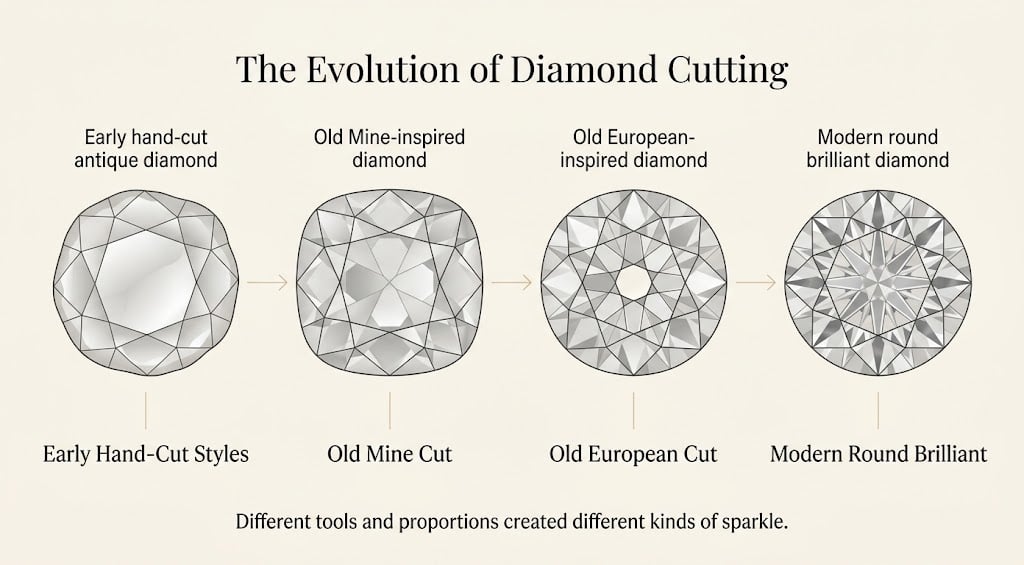
The development of antique diamond cuts was closely connected to changes in tools, technology, and the way cutters approached the rough crystal.
Early cutters often removed as little material as possible and worked around the natural shape of the rough. This helped preserve carat weight but resulted in deeper, less standardized proportions.
As cutting tools improved, cutters gained more control over:
- Roundness;
- Facet alignment;
- Symmetry;
- Pavilion and crown angles;
- Weight distribution;
- Light performance.
The Old European Cut represents an important transition in this history. It kept some of the visual qualities associated with older cuts—such as a high crown, small table, and visible culet—while moving toward a more consistently round outline.
The modern round brilliant eventually placed greater emphasis on standardized proportions and precision. This does not make it universally better. It simply reflects a different design goal: maximizing brightness, scintillation, and consistency through carefully controlled geometry.
Old Mine Cut vs. Old European Cut: How to Tell Them Apart
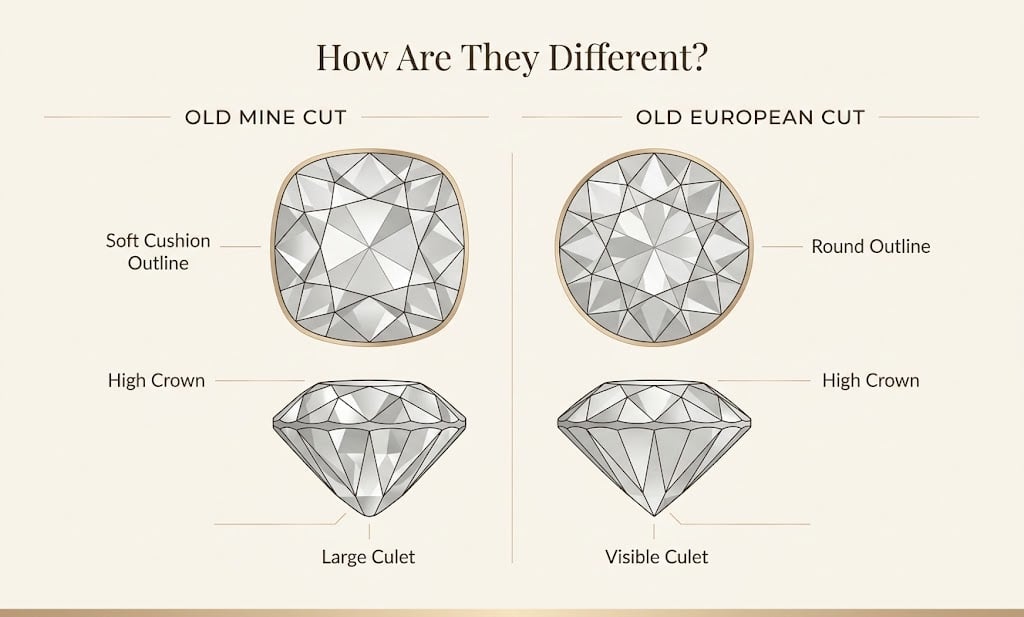
The easiest first distinction is the outline. An Old Mine Cut is usually softer and more cushion-like, while an Old European Cut is generally more circular.
| Feature | Old Mine Cut | Old European Cut |
|---|---|---|
| Typical outline | Squarish, cushion-like, or softly rectangular | Predominantly round |
| Historical association | Georgian and Victorian jewelry | Late Victorian, Edwardian, and Art Deco jewelry |
| Table | Small | Very small |
| Crown | High and often steep | High and rounded |
| Culet | Often larger and more visible | Visible, often smaller than an Old Mine Cut |
| Overall depth | Typically deep | Typically deep |
| Visual character | Romantic, soft, and individual | Rounder, refined, and historically elegant |
| Common modern pairing | Yellow gold, cushion halo, ornate prongs | Platinum, round halo, milgrain, and geometric details |
These are general characteristics rather than rigid rules. Antique diamonds were often hand cut, so original stones can fall between categories or show unusual combinations of proportions.
Which One Is Better for You?
An Old Mine Cut may be a good fit if you:
- Prefer cushion or softly square shapes;
- Like warmer, broader flashes;
- Want a more visibly individual diamond;
- Prefer Victorian or romantic jewelry;
- Are drawn to yellow or rose gold.
An Old European Cut may be more suitable if you:
- Want a round diamond with antique character;
- Prefer a visible culet and high crown;
- Like Edwardian or Art Deco styling;
- Want to combine historical proportions with a classic outline;
- Prefer platinum or white-metal settings.
The distinction matters, but it should not become a strict checklist. The individual diamond’s transparency, symmetry, color, and overall appearance still matter more than the label alone.
Antique Diamond or Antique-Inspired Lab Diamond?
The term “antique” can describe more than one aspect of a piece of jewelry, so it is important to understand what you are buying.
A Genuine Antique Diamond
A genuine antique diamond may have:
- Been cut more than a century ago;
- Been used in an older ring or piece of jewelry;
- A documented or likely historical setting;
- Hand-cut proportions and slight irregularities;
- Previous repairs, resizing, or resetting.
In jewelry terminology, “antique” generally refers to jewelry more than 100 years old. “Vintage” usually describes older, non-contemporary jewelry that may not be old enough to qualify as antique, while “estate” describes pre-owned jewelry and does not automatically indicate a particular age.
A Modern Antique-Inspired Diamond
A modern antique-inspired diamond may be:
- Newly cut from a natural diamond crystal;
- Newly grown in a laboratory;
- Cut with Old Mine or Old European proportions;
- Set in a newly made vintage-style setting;
- Designed for modern sizing, comfort, and security.
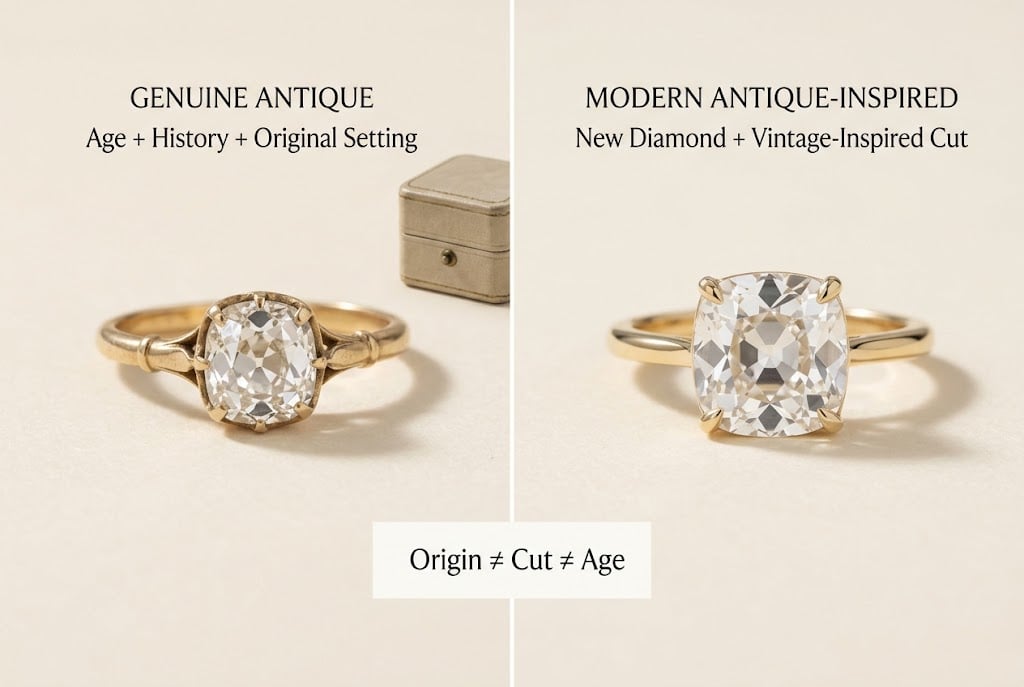
An old mine cut lab diamond is a laboratory-grown diamond cut in an Old Mine-inspired style. “Lab-grown” describes the diamond’s origin, while “Old Mine Cut” describes the cutting style.
In simple terms:
- Origin = Where the diamond came from
- Cut = How the diamond was shaped and faceted
- Age = When the diamond or jewelry was made
These are three different descriptions and should not be used interchangeably.
Modern reproductions can offer practical advantages, including more consistent sizing, stronger girdles, contemporary setting options, and easier customization. GIA notes that modern Old Mine-inspired diamonds may benefit from improved cutting precision and more durable girdles compared with some original antique examples.
Important Buying Note:
A newly cut or laboratory-grown Old Mine-style diamond can have antique character without having historical provenance. If age, origin, or ownership history matters to you, ask the jeweler to describe the stone and setting separately.
Do Antique Diamond Cuts Sparkle Differently?
Yes. Antique diamond cuts often create a different visual rhythm from modern brilliant cuts.
Old Mine and Old European Cut diamonds typically have larger facets, higher crowns, smaller tables, and deeper proportions than modern round brilliant diamonds. These features can create broader flashes of light and a softer, more candlelit appearance rather than the fast, finely distributed scintillation many shoppers associate with modern brilliant cuts.
Old Mine Cut Sparkle
An Old Mine Cut often produces:
- Broad, chunky flashes;
- A warm, flickering glow;
- Strong contrast between light and shadow;
- A visible culet at the center;
- A more individual appearance caused by hand-cut or antique-inspired proportions.
Its softly rounded cushion outline can also make the diamond feel romantic and substantial, even when the stone is not perfectly symmetrical.
Old European Cut Sparkle
An Old European Cut generally offers:
- A rounder face-up outline;
- Broad flashes under the crown;
- A visible open culet;
- A softer center than a modern round brilliant;
- A refined, old-world appearance.
Its round outline makes it easier to recognize as a relative of the modern round brilliant, but its higher crown, smaller table, and deeper proportions create a noticeably different look. GIA describes the Old European Cut as a precursor to today’s modern brilliant cut, while noting its distinct antique proportions and softer visual character.
How Modern Round Brilliant Cuts Compare
Modern round brilliant diamonds are generally designed with more standardized proportions and symmetry. Their visual effect often emphasizes strong brightness, crisp scintillation, and consistent facet patterning.
That does not make modern cuts universally better. It simply means they are designed around a different aesthetic goal.
Antique cuts are often chosen for personality, broad flashes, and historical character. Modern brilliant cuts are often chosen for precision, brightness, and consistency.
The most important question is not which cut produces “more” sparkle, but which type of sparkle you prefer.
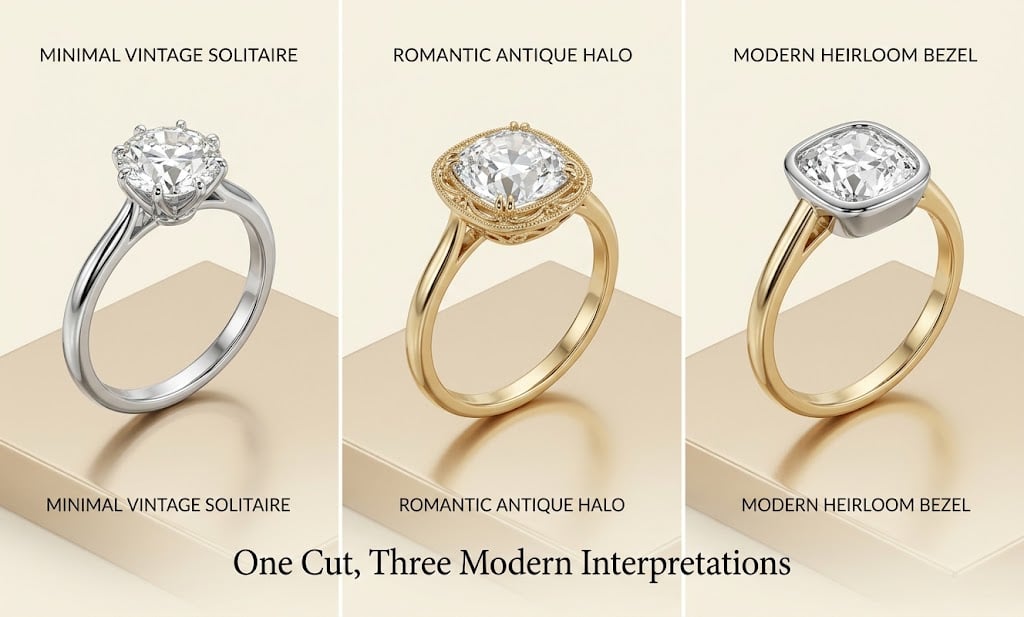
How Antique Cuts Work in Modern Rings
An antique-inspired diamond does not have to be placed in a historically accurate ring. One of the reasons these cuts are returning is that they can be combined with modern construction, contemporary proportions, and personalized design.
Solitaire Settings
A solitaire setting allows the Old Mine or Old European Cut to remain the visual focus. This is especially effective when the diamond has:
- A distinctive outline;
- A visible culet;
- A high crown;
- Noticeable facet contrast;
- Slightly irregular antique-inspired proportions.
A simple six-prong setting can provide a classic appearance, while a low-profile bezel can give the same style a more modern and architectural feel.
Halo Settings
A halo can increase the visual presence of a smaller center stone and reinforce the romance of a vintage style engagement ring.
Old Mine Cut diamonds pair naturally with soft cushion halos or rounded frames. Old European Cut diamonds can work well with round halos, geometric halos, or milgrain borders inspired by Edwardian and Art Deco jewelry.
The halo should follow the center stone’s actual outline. A cushion-like Old Mine Cut may look awkward in a perfectly circular halo, while an Old European Cut may lose some of its historical character if surrounded by a frame that is too angular or contemporary.
Bezel Settings
A bezel setting can create a striking contrast between an antique-inspired cut and a clean modern structure.
The metal border emphasizes the diamond’s outline and can offer additional protection around the girdle. This makes the design attractive to shoppers who appreciate vintage proportions but want a smoother, more contemporary ring for daily wear.
A bezel can also make a warm-toned Old Mine Cut appear more intentional, especially when paired with yellow or rose gold.
Milgrain, Filigree, and Engraving
Small details such as milgrain, filigree, engraved shoulders, and decorative galleries can strengthen the historical mood of the ring.
However, more detail does not always mean a better design. The metalwork should frame the center diamond rather than compete with it. Intricate galleries and delicate milgrain may also require more careful cleaning and periodic inspection.
Mixed-Metal Designs
Mixed metals can help antique cuts feel current:
- Old European Cut with platinum;
- Old Mine Cut with yellow gold;
- White-gold halo with a yellow-gold shank;
- Rose-gold setting with a warm antique-inspired diamond.
The contrast between metal colors can emphasize the difference between historical diamond proportions and modern jewelry construction.
Antique Diamond or Antique-Inspired Lab Diamond?
When shopping, ask whether the diamond is genuinely antique or newly cut in an antique-inspired style.
A genuine antique diamond may have been cut more than 100 years ago and may have a history of being worn, repaired, reset, or resized. GIA generally defines antique jewelry as jewelry made more than 100 years ago, while vintage describes older non-contemporary jewelry and estate describes pre-owned jewelry without automatically indicating a particular age.
By contrast, an old mine cut lab diamond is a laboratory-grown diamond cut in an Old Mine-inspired style.
The two descriptions refer to different parts of the diamond:
- Origin = Where the diamond came from
- Cut = How the diamond was shaped and faceted
- Age = When the diamond or jewelry was made
A modern laboratory-grown diamond can therefore have an antique-inspired cut without having historical provenance.
Modern reproductions may offer several practical advantages:
- More consistent sizing;
- Stronger or more durable girdles;
- Greater control over symmetry;
- Modern setting options;
- Easier customization;
- Better compatibility with contemporary ring sizes and lifestyles.
GIA notes that modern Old Mine-inspired diamonds may retain the historic look while benefiting from improved cutting precision and more durable construction than some original antique examples.
Important Buying Note:
A newly cut or laboratory-grown Old Mine-style diamond can have antique character without being an antique diamond. If age, provenance, or historical ownership matters to you, ask the jeweler to describe the stone and the setting separately.
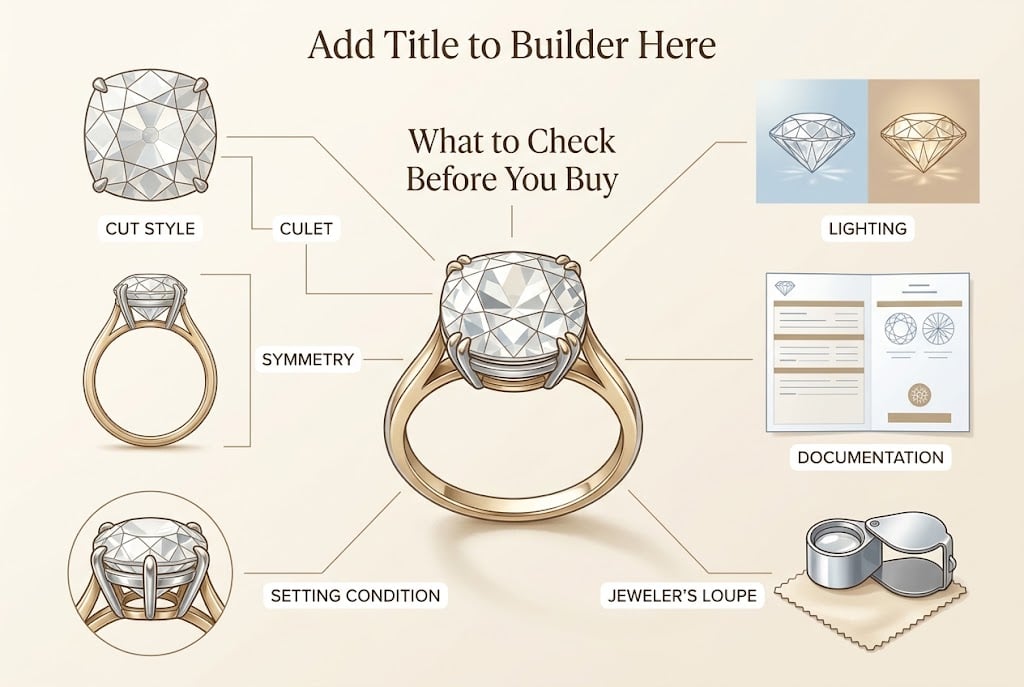
What to Look for Before Buying an Antique-Inspired Ring
Antique-inspired diamonds reward careful comparison. Before choosing a ring, consider the following points.
Confirm the Cut Style
Ask whether the stone is:
- An original antique Old Mine Cut;
- A modern Old Mine-inspired cut;
- An Old European Cut;
- A transitional cut;
- A modern cushion or round brilliant inspired by an antique style.
The product name alone may not tell you enough.
View the Diamond in More Than One Lighting Environment
Old cuts can look particularly different under warm, dim, and natural lighting. Try to view the diamond under:
- Daylight;
- Indoor lighting;
- Warm evening light;
- Diffused lighting;
- Video with natural movement.
GIA recommends viewing antique and vintage diamonds under different lighting conditions because their appearance can change significantly depending on the environment.
Look at the Culet
A visible culet is a characteristic feature of many Old Mine and Old European Cut diamonds. It should not automatically be considered a defect.
Instead, ask whether its size and shape contribute to the look you prefer. Some shoppers enjoy a clearly visible central point, while others prefer a more subtle culet.
Evaluate Symmetry Without Expecting Modern Perfection
Original antique diamonds may show slight irregularity as part of their character. However, obvious asymmetry, an unstable girdle, or a distorted outline can affect how the stone performs and how easily it fits into a setting.
A modern antique-inspired cut may offer a more controlled balance between historic appearance and contemporary precision.
Inspect the Setting
For an antique or estate ring, ask about:
- Prong wear;
- Girdle protection;
- Shank thickness;
- Previous resizing;
- Repairs or replacements;
- Chips or abrasions;
- Whether the stone has been reset.
GIA recommends obtaining an independent appraisal for antique and vintage jewelry so that the piece’s condition, period, and value can be assessed separately.
Review Documentation
For a larger stone or significant purchase, ask for:
- An independent grading report;
- Natural or laboratory-grown origin disclosure;
- Treatment disclosure;
- An appraisal;
- Resizing and repair information;
- Return and warranty terms.
Who Should Choose an Antique-Inspired Cut?
An Old Mine Cut may suit you if you prefer:
- Soft cushion or rounded-square shapes;
- Warm, broad flashes;
- Yellow or rose gold;
- Victorian or romantic styling;
- A diamond that feels visibly individual.
An Old European Cut may be a better fit if you prefer:
- A round outline with antique character;
- A high crown and visible culet;
- Edwardian or Art Deco influence;
- Platinum or white-metal settings;
- A balance between historical proportions and classic shape.
A modern round brilliant may be more appropriate if you prioritize maximum brightness, standardized proportions, and a crisp, consistent scintillation pattern.
There is no universally correct choice. The best cut is the one whose shape, sparkle, and setting feel right when you see it in person or in high-quality video.
The Comeback Is About Character, Not Nostalgia Alone
The return of Old Mine and Old European Cuts is not simply a return to the past. It reflects a growing appreciation for individuality, visible craftsmanship, and diamonds that look different from every angle.
Old Mine Cuts bring soft cushion outlines and broad flashes. Old European Cuts offer round silhouettes, high crowns, and recognizable open culets. Modern antique-inspired designs allow these historic visual qualities to be paired with contemporary settings, laboratory-grown diamonds, personalized details, and everyday comfort.
Whether you choose an original antique diamond or a modern old mine cut lab diamond, the most important question is not whether the stone looks perfectly modern. It is whether its character feels meaningful to you.
Explore LisaJewelryUS vintage style engagement rings and antique-inspired diamond designs, or contact our jewelry team for help comparing cut style, sparkle, setting, and proportions.
Frequently Asked Questions
An Old Mine Cut is an antique-style brilliant cut typically recognized by its softly square or cushion-like outline, high crown, small table, deep proportions, and relatively large culet. It is associated with Georgian and Victorian jewelry but can also be recreated in modern natural or laboratory-grown diamonds.
An Old European Cut engagement ring features a generally round antique-style diamond with a high crown, small table, deep proportions, broad facets, and a visible culet. It became especially popular in late Victorian, Edwardian, and Art Deco jewelry.
Yes. “Lab-grown” describes the diamond’s origin, while “Old Mine Cut” describes the cutting style. A newly grown diamond can be shaped using Old Mine-inspired proportions without being an antique diamond.
They are different rather than automatically less brilliant. Antique cuts usually create broader, softer flashes, while modern brilliant cuts often emphasize brighter and more finely distributed sparkle. The best choice depends on your preferred visual style.
Yes. Old Mine and Old European Cuts can be paired with solitaire, halo, bezel, three-stone, mixed-metal, and vintage-inspired settings. The setting should be chosen according to the diamond’s outline, proportions, durability, and intended daily wear.