
























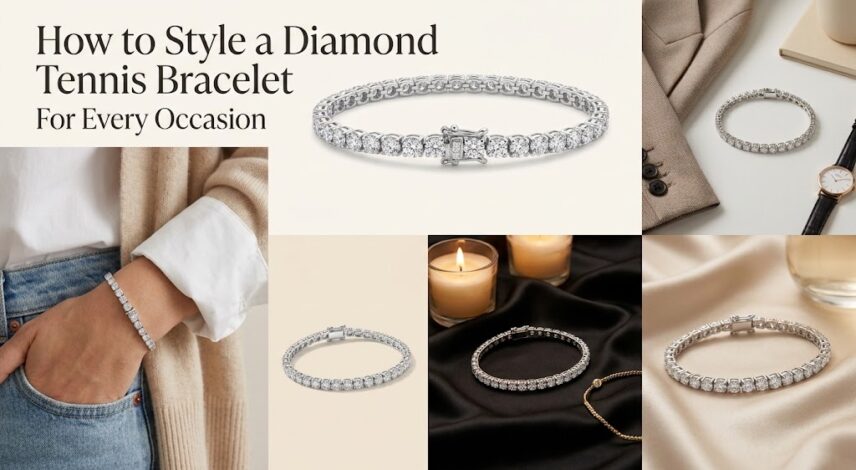
A diamond tennis bracelet may look like a special-occasion piece, but its clean, continuous line makes it one of the most versatile designs in a fine-jewelry collection. It can add polish to jeans and a white T-shirt, bring understated brilliance to professional tailoring, or become the focal point of a formal evening look.
The difference lies in how you style it.
Worn alone, a tennis bracelet feels timeless and refined. Paired with a slim gold chain, it becomes relaxed and modern. Placed beside a watch or structured bangle, it takes on a more professional character. Layered with additional diamonds, it can deliver the visual impact expected at a wedding or black-tie event.
Learning how to style a tennis bracelet is therefore less about following a fixed set of rules and more about balancing proportion, texture, metal color, and occasion. This guide explains how to wear the same bracelet in different settings, build comfortable stacks, and protect your jewelry while making it part of your everyday style.
The Quick Answer: How Do You Style a Tennis Bracelet?
The simplest way to style a diamond tennis bracelet is to wear it alone and let its uninterrupted line of diamonds become the focus. This approach works with almost any outfit and gives you a useful starting point before experimenting with additional pieces.
When you want more dimension, use the tennis bracelet as the anchor of a small, intentional stack. Add one piece with a contrasting texture—such as a polished gold bangle, fine chain bracelet, watch, or colored gemstone design—rather than surrounding it with several nearly identical pieces.
A few reliable formulas include:
- Everyday: Tennis bracelet worn alone or with one delicate chain;
- Office: Tennis bracelet beside a classic watch or slim bangle;
- Date night: Diamonds paired with warm gold or a colored gemstone;
- Wedding guest: Tennis bracelet coordinated with earrings or a pendant;
- Formal event: One statement tennis bracelet or two graduated diamond bracelets;
- Bridal look: A refined bracelet that complements the engagement ring and wedding band.
The surrounding jewelry should support the bracelet rather than compete with it. If your wrist carries the strongest sparkle, keep your necklace, earrings, and rings relatively restrained.
Lisa Jewelry Expert Note:
A successful stack should look intentional even when the bracelets move. If the pieces constantly cover one another, twist together, or collide, the stack is too crowded or the proportions are too similar.
Why a Tennis Bracelet Works for Every Occasion
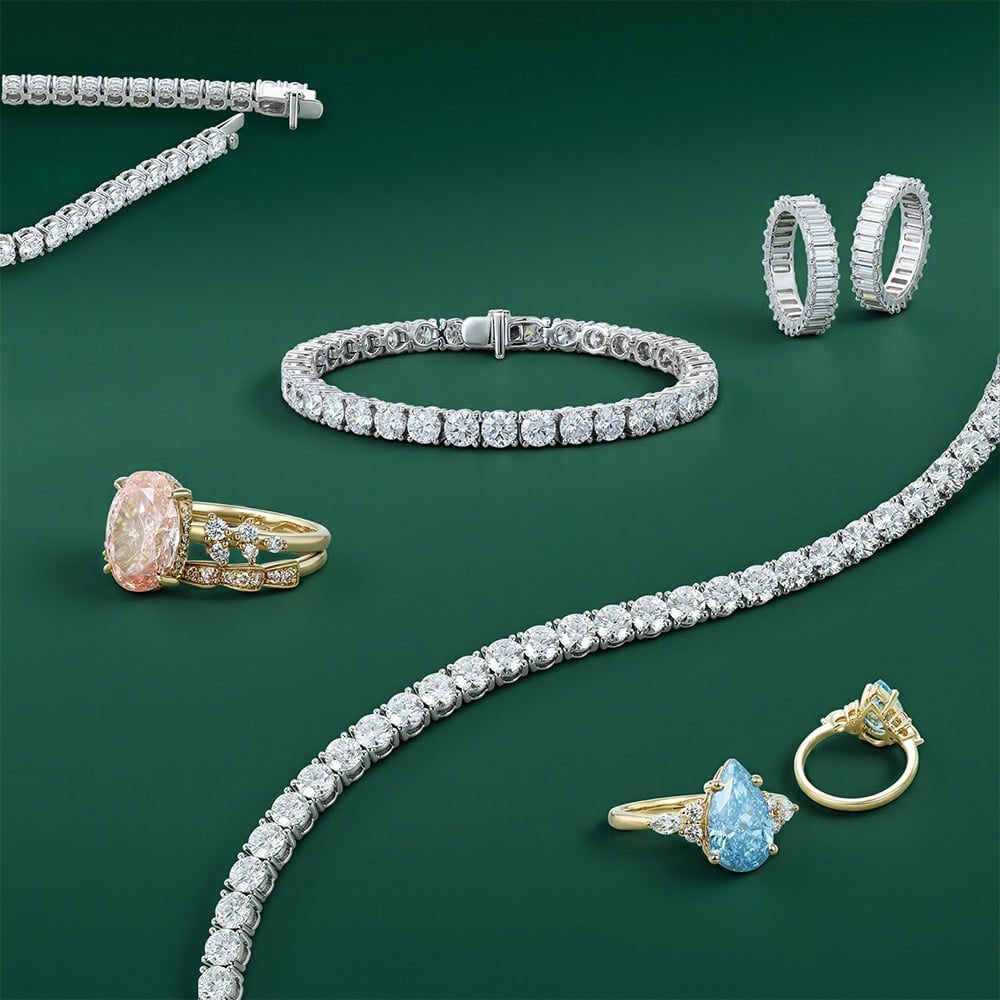
A tennis bracelet is exceptionally versatile because its design is visually consistent. Rather than building the piece around one large center stone, it uses a flexible line of individually set diamonds to create even brilliance around the wrist.
That symmetry allows it to behave almost like a neutral accessory. It adds light and refinement without introducing a dominant shape that must be coordinated with the rest of an outfit.
Several design characteristics influence how formal or understated the bracelet appears.
Diamond Size
Smaller diamonds generally create a finer, quieter line that is easy to incorporate into casual and professional outfits. Larger diamonds produce greater contrast and visual presence, making the bracelet more likely to function as a statement piece.
However, total carat weight alone does not tell you how bold the bracelet will look. The same total weight can appear different depending on the bracelet length, number of stones, diamond shape, setting style, and amount of visible metal.
Bracelet Width
A slim bracelet tends to blend easily with chains, watches, and bangles. A wider design occupies more space on the wrist and may need fewer surrounding pieces.
The goal is not to match the width to a particular dress code. Instead, consider how much of the wrist you want the diamonds to occupy.
Metal Color
White gold and platinum create a cool, continuous look that can make the metal seem to disappear behind the diamonds. Yellow gold adds warmth and more clearly defines the setting. Rose gold offers a softer contrast that can feel especially romantic.
Any metal can work for casual or formal styling. The difference comes from how it relates to your watch, rings, clothing, and other bracelets.
Setting Profile
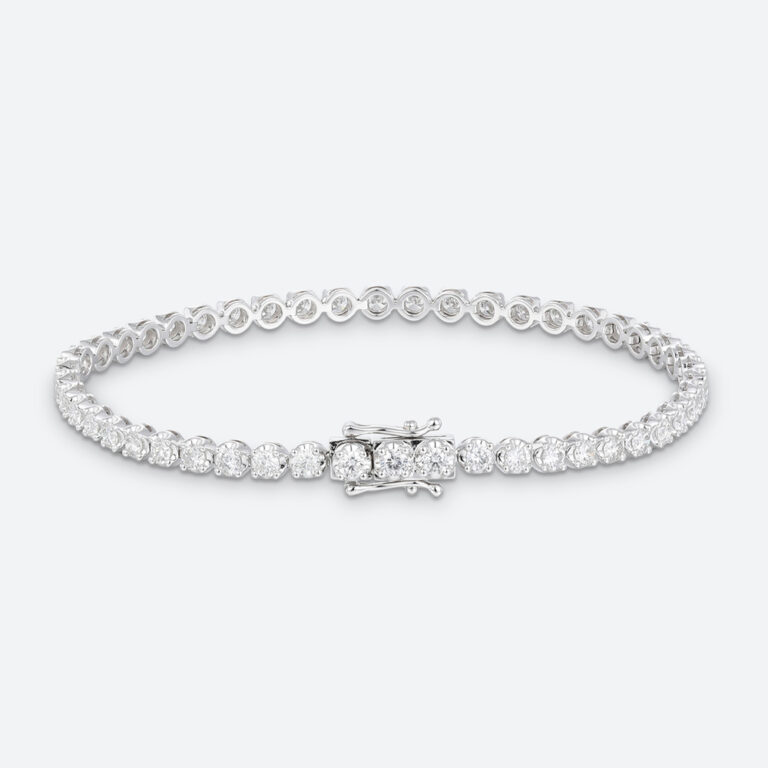
A lower-profile setting can feel smoother and more practical for frequent wear, while a more elevated design may reveal more of each diamond from the side. Setting height also affects how easily the bracelet slides beneath sleeves and whether it catches on delicate fabrics.
These details explain why two tennis bracelets with similar total carat weights can create very different impressions. One may feel subtle enough for daily wear, while the other naturally becomes the focal point of an evening outfit.

How to Wear an Everyday Tennis Bracelet
An everyday tennis bracelet works best when it feels like a natural extension of your wardrobe rather than jewelry reserved for formal events.
Wear It Alone with Casual Basics
Pairing diamonds with a white T-shirt, denim, knitwear, or a relaxed button-down shirt creates an appealing contrast. The clothing remains effortless while the bracelet introduces a clean point of light.
Because the tennis bracelet has no large center element, it can add refinement without overwhelming simple clothing. Wearing it alone also allows the diamonds to remain visible when sleeves move or the bracelet shifts around the wrist.
Add One Delicate Chain
If a single bracelet feels too minimal, add a fine gold chain. Choose one with a noticeably different texture, such as:
- A cable chain;
- A small paperclip chain;
- A rope-style chain;
- A fine box chain;
- A slim beaded bracelet.
The contrast between a flexible diamond line and a textured metal chain creates depth without making the combination feel heavy.
Try to avoid choosing a chain that is exactly the same width as the tennis bracelet. Slightly different proportions help the eye distinguish each piece.
Consider Your Sleeves
Long sleeves influence how a bracelet looks and wears. A tennis bracelet can disappear beneath a loose cuff, while a bracelet that is too large may repeatedly slide over the hand.
With fitted knitwear or delicate fabrics, check that the clasp and prongs do not catch on fibers. A lower-profile design with smoothly finished settings is generally easier to wear with sweaters, silk, or lace.
Keep the Stack Light
For a relaxed daytime look, two or three pieces are usually enough. A crowded stack can make the diamonds feel more formal and may increase friction between the bracelets.
A useful everyday formula is:
Tennis Bracelet + Fine Gold Chain + Sentimental Bracelet
The tennis bracelet provides sparkle, the chain introduces texture, and the sentimental piece adds personality.
Everyday Styling Tip:
Place the most delicate or sentimental bracelet where it is least likely to become trapped beneath the heavier pieces. After putting on the stack, move your wrist naturally to check whether the bracelets remain distinct.
Styling a Tennis Bracelet for the Office
In a professional setting, a tennis bracelet should add polish without distracting from the overall look. Its simple geometry works particularly well with tailored blazers, silk shirts, structured dresses, fine knitwear, and neutral color palettes.
The Classic Solo Look
A tennis bracelet worn by itself is the easiest office option. It adds enough brilliance to feel intentional while maintaining a clean, composed appearance.
Complete the look with:
- Small diamond studs;
- Simple gold hoops;
- A solitaire pendant;
- A slim wedding stack;
- A classic watch worn on the opposite wrist.
The jewelry does not need to match exactly. Repeating one detail—such as metal color, diamond shape, or overall scale—is usually enough to create visual continuity.
Pair It with a Watch
A tennis bracelet and watch can form a polished professional combination when one piece clearly acts as the anchor.
If the watch is substantial, choose a relatively slim tennis bracelet. Place the bracelet on the side of the watch farthest from the hand so it is less likely to slide beneath the case or interfere with the crown.
You can also wear the watch and bracelet on opposite wrists. This reduces direct contact and creates a more balanced look when both pieces have noticeable visual weight.
Add a Structured Bangle
Another office-friendly formula is:
Tennis Bracelet + Slim Polished Bangle
The rigid bangle gives the stack structure, while the flexible tennis bracelet softens the overall line. This combination works best when the pieces are similar in visual scale but different in texture.
Think About Your Daily Tasks
If you spend much of the day typing, writing, or working at a desk, a loose bracelet may repeatedly strike the keyboard or work surface. Wearing it on your non-dominant wrist can reduce unnecessary impact.
Avoid stacking several loose bangles that produce noise or constantly move over one another. In most professional settings, one or two carefully selected pieces appear more polished than a large collection of similar bracelets.
Office Styling Tip:
Before leaving home, rest your wrist on a desk and type for a few minutes. If the bracelet catches, presses against the wrist, or repeatedly contacts the surface, adjust the stack or move it to the other wrist.
How to Style a Tennis Bracelet for Date Night
Date-night styling offers more freedom to introduce warmth, color, and contrast. The goal is not necessarily to add more diamonds, but to give the bracelet a different mood from its everyday or office presentation.
Mix Diamonds with Warm Gold
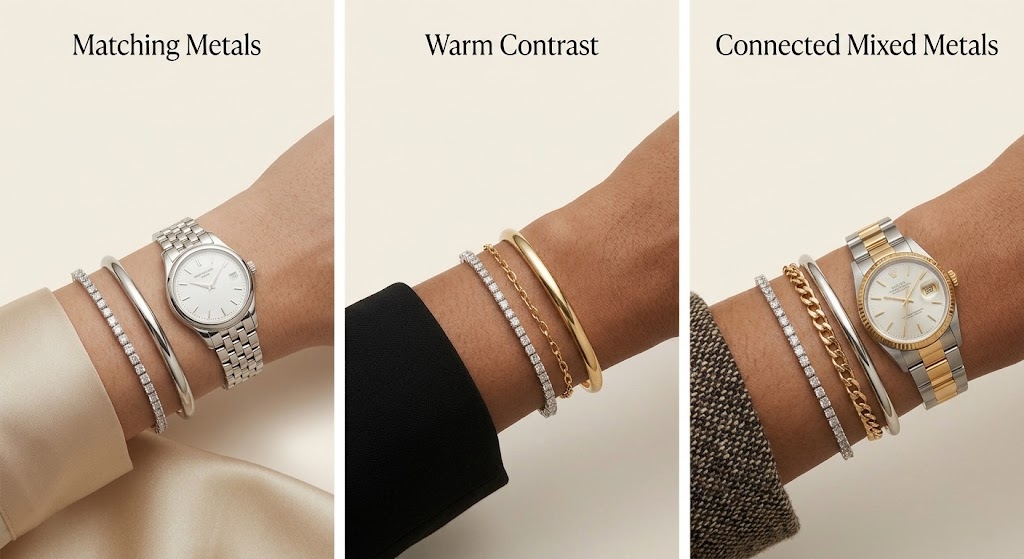
A white gold or platinum tennis bracelet paired with a yellow gold chain creates a modern mixed-metal look. The warm gold softens the cool brilliance of the diamonds and can coordinate with neutral, black, red, navy, or jewel-toned clothing.
To make the mixed metals feel deliberate, repeat the yellow or white metal elsewhere in the outfit through a ring, earring, necklace, or watch detail.
Add a Colored Gemstone
A sapphire, ruby, emerald, or tourmaline bracelet can introduce color without competing with the diamond line. Keep one bracelet visually lighter so the combination maintains a clear hierarchy.
For example:
Diamond Tennis Bracelet + Slim Sapphire Bracelet
or:
Tennis Bracelet + Delicate Ruby Chain Bracelet
Coordinate the Rest of the Jewelry
If the wrist is already the primary focal point, choose smaller earrings or a fine necklace. If you are wearing statement earrings, consider wearing the tennis bracelet alone.
A black dress, silk blouse, or monochromatic outfit provides a simple background that allows the diamonds to stand out without requiring a large stack.
Date-Night Styling Tip:
Instead of matching every piece, repeat one element—such as a gemstone color, metal tone, or diamond detail—to make the entire look feel connected.
Styling a Tennis Bracelet for Weddings and Formal Events
Weddings and formal events allow a tennis bracelet to take on a more prominent role. The ideal approach depends on whether you are attending as a guest, styling a bridal look, or dressing for a black-tie occasion.
As a Wedding Guest
A single tennis bracelet can add refinement without competing with the outfit. Coordinate it with one other element—such as diamond earrings, a pendant, or the metal hardware of a clutch—rather than trying to match every accessory.
For romantic or garden weddings, consider pairing the bracelet with pearls, rose gold, or a delicate colored gemstone. For evening ceremonies, white gold or platinum diamonds can create a cooler, more defined look beside navy, burgundy, emerald, or black clothing.
For a Bridal Look
A bridal tennis bracelet should complement the engagement ring and wedding band without making the entire jewelry look feel overly coordinated.
Matching the metal color creates an easy sense of continuity, but the diamonds do not need to be the same size or shape. A bracelet with a fine, even line of diamonds can balance a larger engagement-ring center stone.
If the dress has intricate beading, lace, or an embellished neckline, wear the bracelet alone and keep other accessories restrained. With a simple gown, the bracelet can be paired with diamond earrings or a fine pendant for additional brilliance.
For Black-Tie Events
A formal evening is an opportunity to increase visual weight. You might choose:
- One substantial tennis bracelet worn alone;
- Two diamond bracelets with different widths;
- A tennis bracelet beside a structured diamond bangle;
- A diamond bracelet paired with sapphire, ruby, or emerald accents.
When layering diamonds, create a clear hierarchy. One piece should be the focal point, while the others provide support. Several bracelets with identical widths and stone sizes can blend into one heavy line rather than creating intentional layers.

How to Stack Diamond Bracelets
When stacking diamond bracelets, begin with an anchor piece. This is the bracelet that carries the most visual or emotional importance and determines the direction of the rest of the stack.
The anchor might be:
- A diamond tennis bracelet;
- A watch;
- A solid gold cuff;
- A diamond bangle;
- A colored gemstone bracelet;
- A sentimental or personalized piece.
Once the anchor is selected, add bracelets that contrast with it in a controlled way.
Vary the Textures
A tennis bracelet has a flexible, continuous surface. Pairing it with a different texture makes each piece easier to see.
Useful contrasts include:
- Polished gold;
- Fine chain links;
- Rope or cable textures;
- Rigid bangles;
- Colored gemstones;
- Engraved or personalized metal.
Avoid making every bracelet identical in width, diamond size, and surface texture. Without variation, individual pieces may disappear into the stack.
Build Visual Hierarchy
Decide which piece should attract attention first. If the tennis bracelet has larger diamonds, keep the surrounding chains and bangles slim. If the bracelet is delicate, it can support a stronger watch or cuff.
A balanced stack often contains:
- One focal piece;
- One contrasting texture;
- One personal or transitional element.
This creates variety without making the wrist feel crowded.
Check the Movement
Bracelets do not remain perfectly arranged once the wrist moves. Before committing to a stack, bend your wrist, reach forward, and rotate your hand.
Check whether:
- One bracelet repeatedly covers another;
- Thin chains become trapped beneath a heavier bangle;
- Diamonds strike the watch case;
- Clasps catch on neighboring links;
- The pieces twist into an uncomfortable position.
The best stack should continue to look intentional even after the bracelets shift naturally.
Five Easy Tennis Bracelet Stack Formulas
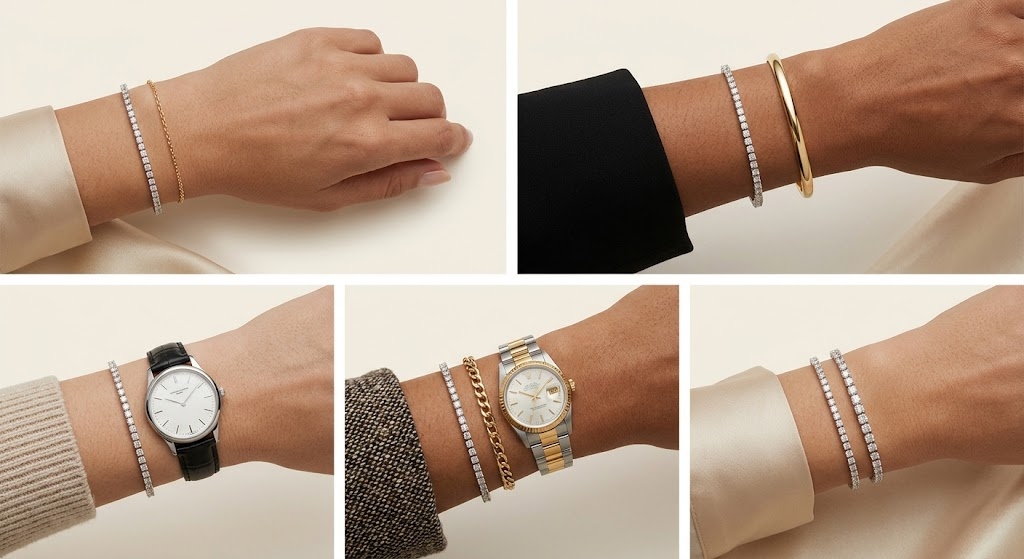
1. Classic Minimal
Tennis Bracelet + Thin Gold Chain
This combination is easy to wear with casual clothing, office outfits, and simple evening looks. The chain adds warmth and texture without competing with the diamonds.
2. Structured Contrast
Tennis Bracelet + Solid Gold Bangle
The bangle creates a defined outline beside the flexible diamond bracelet. Choose a bangle with smooth edges and enough space to prevent constant pressure against the stone settings.
3. Professional Watch Stack
Watch + Slim Tennis Bracelet
Allow the watch to act as the anchor. Place the tennis bracelet on the side farthest from the hand, or wear the two pieces on opposite wrists if the watch case is large.
4. Intentional Mixed Metal
White Gold Tennis Bracelet + Yellow Gold Chain + Two-Tone Watch
The two-tone watch connects the white and yellow metals. Repeating each metal color makes the mixture feel planned rather than accidental.
5. Graduated Diamonds
Slim Tennis Bracelet + Wider Diamond Bracelet
Using different widths creates a natural order. The wider bracelet becomes the focal point, while the slimmer design adds a second line of sparkle.
Should You Match or Mix Metals?
Matching metals is the simplest way to create a cohesive jewelry look. A white gold tennis bracelet beside a white gold watch or bangle feels streamlined and classic. Yellow gold creates a warmer effect, while rose gold offers a softer and more romantic appearance.
However, your bracelet does not have to match every ring, necklace, or watch.
Mixed metals can make a traditional tennis bracelet feel more contemporary. The key is repetition. If you introduce yellow gold beside a white gold bracelet, repeat the yellow tone in another piece, such as a chain, ring, earring, or watch detail.
A two-tone watch can serve as a visual bridge between different metals. Another option is to choose a bracelet that already combines gold colors.
Use these guidelines:
- Repeat each metal color at least once when possible;
- Keep the overall jewelry style consistent;
- Use one two-tone piece to connect the palette;
- Avoid introducing too many metal colors at once;
- Let one metal remain visually dominant.
The goal is coordination rather than exact matching.
Balance the Rest of Your Jewelry
A strong wrist stack should not compete with equally bold jewelry everywhere else.
If you are wearing multiple bracelets, consider:
- Small diamond studs instead of statement earrings;
- A delicate chain instead of a large necklace;
- Fewer rings on the same hand;
- Simple metal shapes rather than additional pavé surfaces.
If statement earrings or a dramatic necklace are the main focus, wear the tennis bracelet alone. It will add light without creating another competing area.
You also do not need to match the diamond size across every piece. Repeating the metal tone, setting style, or general level of refinement is usually enough to make the jewelry feel connected.
Styling Principle:
Choose one primary statement area and allow the rest of the jewelry to support it.
Styling Starts with the Right Fit
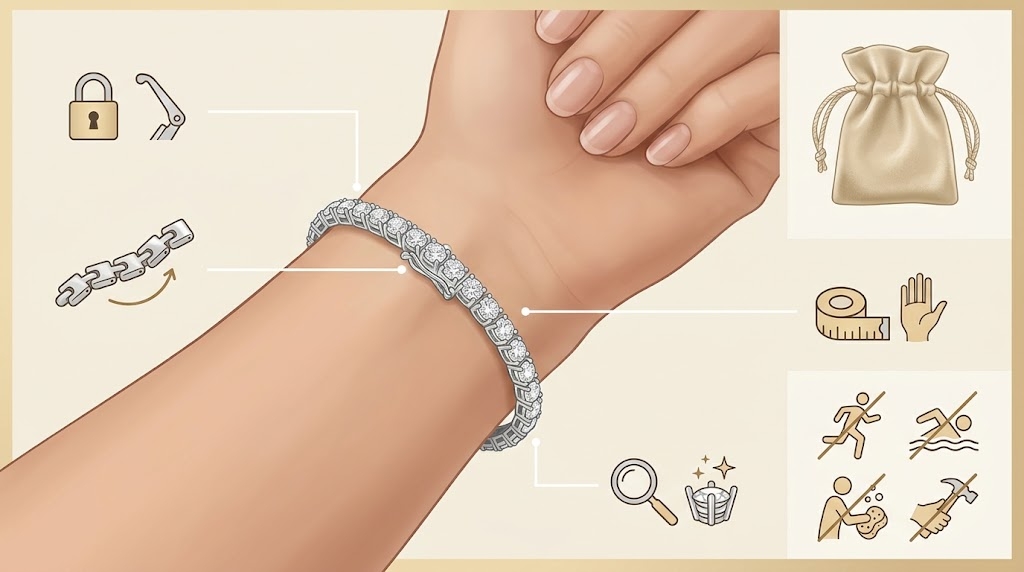
Even a carefully planned bracelet combination will not look polished if the tennis bracelet is constantly sliding, flipping, or falling over the hand.
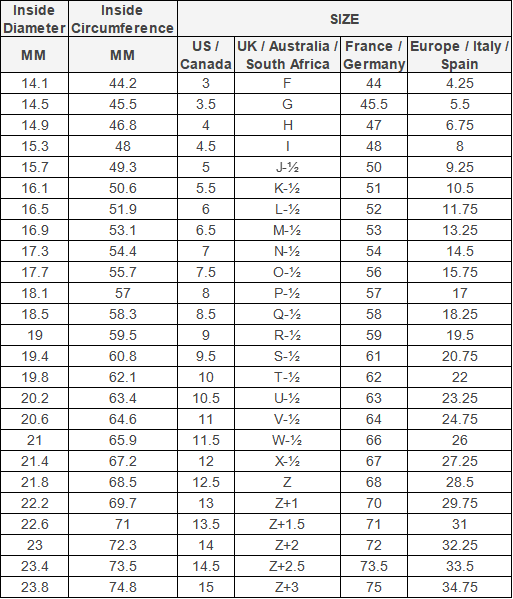
The bracelet should sit close enough to the wrist to remain controlled while allowing comfortable movement. It should not press into the skin, but it should also not travel far up the arm or down over the hand.
A bracelet that is too loose may:
- Rotate excessively;
- Strike desks and other surfaces;
- Become tangled with neighboring bracelets;
- Catch on clothing;
- Put additional stress on the clasp.
A bracelet that is too tight may:
- Restrict movement;
- Press the settings against the skin;
- Feel uncomfortable during temperature changes;
- Place unnecessary tension on the links.
The bracelet’s flexibility should also be checked. Each link should move smoothly without creating stiff sections or visible twists.
If you plan to wear the bracelet with a watch or other bracelets, test the complete combination when checking the fit. A tennis bracelet that feels comfortable alone may behave differently when surrounded by heavier pieces.
Final Verdict: Make the Tennis Bracelet Your Own
The easiest way to style a tennis bracelet is to begin simply. Wear it alone, observe how it works with your wardrobe, and then add one complementary piece at a time.
For everyday wear, pair it with a delicate chain or sentimental bracelet. In the office, combine it with a watch or polished bangle. Add warm gold or colored gemstones for date night, and increase the diamond presence for weddings or formal events.
There is no single correct stack. The best combination balances texture, metal color, visual weight, comfort, and movement while allowing the tennis bracelet’s continuous diamond line to remain visible.
A tennis bracelet becomes truly versatile when it feels natural with both your most casual outfit and your most important occasion.

Frequently Asked Questions
Yes. A tennis bracelet can be worn regularly when it fits securely and the clasp, links, and settings remain in good condition. Remove it before exercise, swimming, sleeping, cleaning, gardening, or activities that may expose it to impact or pressure.
Yes. Use the watch as the anchor and choose a bracelet that does not overwhelm it. Leave enough space to reduce repeated contact between the diamonds and the watch case, or wear the pieces on opposite wrists.
Yes. Mixed metals look most intentional when each metal color is repeated or connected by a two-tone piece. Keep the general style and proportions consistent even when the colors differ.
There is no fixed number. Two or three pieces are usually enough for everyday wear, while a formal or statement stack may include more. Stop adding bracelets when the pieces begin to cover one another, restrict movement, or create constant friction.
Either wrist can work, but the non-dominant wrist may experience less contact during writing, typing, and other daily tasks. Comfort, watch placement, and personal habit should determine the final choice.
Yes. Choose different widths, diamond sizes, metal colors, or setting styles so each bracelet remains distinct. Two nearly identical bracelets can create a bold continuous effect, while graduated designs produce more visible layering.