


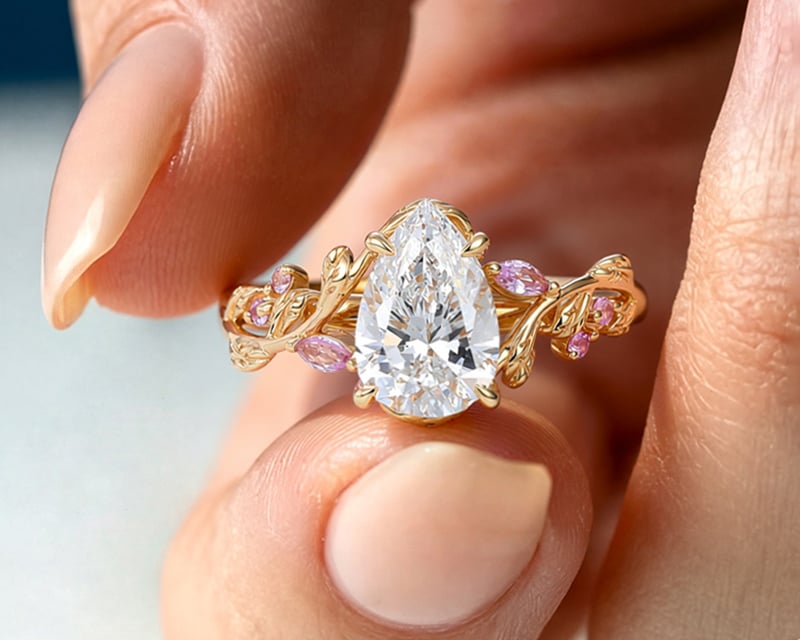






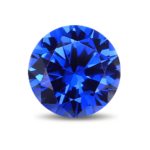
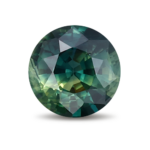


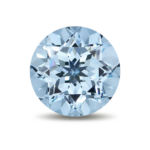





Choosing between lab diamonds vs moissanite has become one of the most common dilemmas for modern couples shopping for engagement rings. Both stones are brilliant, ethical, and more affordable than mined diamonds—but they are not the same.
While lab grown diamonds are chemically identical to mined diamonds, moissanite is a distinct gemstone made from silicon carbide, known for its fiery sparkle and durability. Understanding the key differences between these two options can help you choose a ring that truly matches your values, lifestyle, and budget.
In this guide, we’ll break down the real differences between lab diamonds and moissanite, from composition and appearance to price and long-term value—so you can make a confident, informed decision.

I. What Are Lab Grown Diamonds and Moissanite?
Before comparing moissanite vs lab diamonds, it’s important to understand what each stone actually is—and what it isn’t.
1. What Are Lab Grown Diamonds?
Lab grown diamonds (also known as lab diamonds or lab created diamonds) are real diamonds grown in a laboratory rather than extracted through diamond mining. They share the same chemical composition, crystal structure, and optical properties as mined diamonds.
From a gemological perspective, a lab diamond is a diamond—just created in a controlled environment using advanced technology instead of geological pressure over millions of years. This process avoids many environmental and ethical concerns associated with traditional mining, which is why lab-created diamonds are increasingly popular in lab diamond engagement rings.
Key characteristics of lab grown diamonds:
Made of pure carbon (same as natural diamonds)
Identical hardness (10 on the Mohs scale)
Certified and graded like mined diamonds
Often priced lower than mined diamonds, though lab diamond price varies by size and quality
In short, if you want a diamond in every scientific sense—but without mining—lab diamonds are the closest possible alternative.
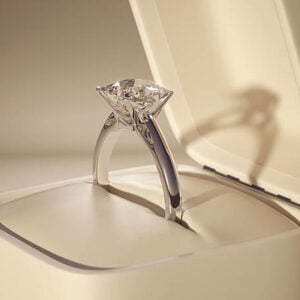
2. What Is Moissanite?
Moissanite is not a diamond. It is a gemstone composed of silicon carbide, originally discovered in nature but now almost exclusively produced in labs. Most jewelry uses natural moissanite’s lab-created equivalent, ensuring consistency and affordability.
Unlike diamonds, moissanite has a different crystal structure, which affects how it reflects light. This gives moissanite its signature “rainbow fire,” making it visually distinct from both lab grown diamonds and mined diamonds.
Key characteristics of moissanite:
Made from silicon carbide
Slightly softer than diamond (9.25 on Mohs scale)
More fire and sparkle than diamonds
Generally more affordable than both mined and lab diamonds
Because of its durability and brilliance, moissanite is widely used in moissanite engagement rings, especially for buyers prioritizing size and sparkle over traditional diamond appearance.
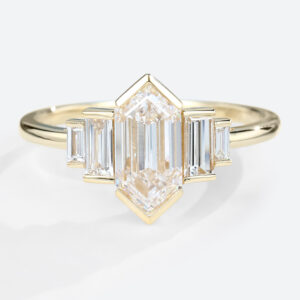
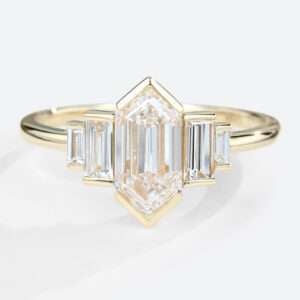
3. Lab Diamonds vs Moissanite: A Quick Foundation Comparison
At a fundamental level, the difference between lab diamonds vs moissanite comes down to identity:
- Lab grown diamonds are diamonds (just not mined)
- Moissanite is a diamond alternative gemstone
This distinction is crucial when comparing moissanite and lab diamonds, especially for buyers who care about long-term value, resale perception, or traditional symbolism.
II. Appearance & Sparkle — How Moissanite vs Lab Diamonds Really Look Different
When comparing moissanite and diamonds, appearance is often the first—and most emotionally charged—factor buyers consider. Although both stones are colorless, brilliant, and eye-catching, the way they handle light is fundamentally different.
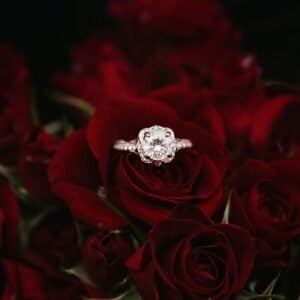
1. Brilliance vs Fire — A Visual Difference You Can Actually See
Both lab grown diamonds and moissanite score high in brilliance, but they achieve sparkle in different ways.
Lab diamonds reflect white light more evenly, producing a clean, crisp sparkle that closely matches mined diamonds.
Moissanite gemstone reflects more colored light, creating stronger rainbow flashes, especially under direct sunlight or spot lighting.
This is why many people describe moissanite as “more sparkly,” while diamonds—both mined and lab created—are seen as more subtle and classic.
From a purely visual standpoint:
If you prefer a traditional diamond look, lab diamonds will feel more familiar.
If you love bold sparkle and maximum fire, natural moissanite’s lab-created form may appeal more.
This distinction is one of the most important factors when deciding between moissanite vs lab stones.
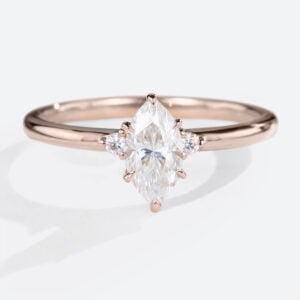
2. Color and Clarity — Lab Diamonds vs Moissanite in Everyday Wear
In controlled lighting, both stones can appear colorless. However, differences become more noticeable over time.
Lab created diamonds are graded using the same color and clarity standards as mined diamonds. This means you can choose a specific grade (D–F color, VS clarity, etc.) and know exactly what you’re getting.
Moissanite, on the other hand:
Does not follow diamond grading standards
Can show slight warmth (yellow or gray tones) in larger sizes
May display more color dispersion, especially in oval, pear, or marquise cuts
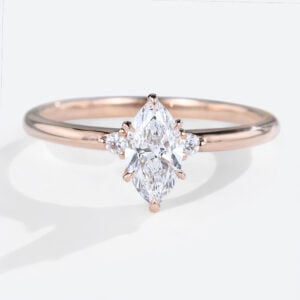
When comparing moissanite and lab diamonds, buyers seeking predictable, standardized quality often lean toward lab diamonds—especially for solitaire engagement rings where the center stone is the main focus.
III. Durability & Daily Wear — Which Stone Holds Up Better Over Time?
An engagement ring is meant to be worn every day, so durability matters just as much as beauty.
1. Hardness and Scratch Resistance
Lab grown diamonds rank 10 on the Mohs scale—the hardest material used in jewelry.
Moissanite gemstone ranks around 9.25. making it extremely durable but still slightly softer than diamond.
In real-world terms, both stones are suitable for daily wear. However, diamonds—whether mined or lab created—are more resistant to scratching over decades of use.
This is why many buyers still choose lab diamond rings for long-term, heirloom-style pieces.
2. Stability and Long-Term Appearance
Another overlooked factor when comparing moissanite vs lab diamonds is how each stone ages visually.
Lab diamonds maintain their brilliance and clarity indefinitely with proper care.
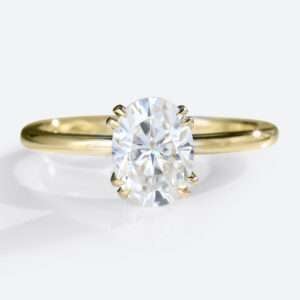
Moissanite is highly stable, but its strong fire can sometimes exaggerate inclusions or internal reflections in larger stones.
For buyers prioritizing a timeless look that mirrors traditional diamond jewelry, lab diamonds often feel like the safer long-term option.
IV. Price & Value — Lab Diamond Price vs Moissanite Cost
Price is where the difference between lab diamonds and moissanite becomes most obvious.
1. Upfront Cost Comparison
In general:
Moissanite engagement rings are significantly more affordable
Lab diamond price is lower than mined diamonds but higher than moissanite
For the same visual size, moissanite typically costs less, allowing buyers to choose a larger center stone without increasing budget.
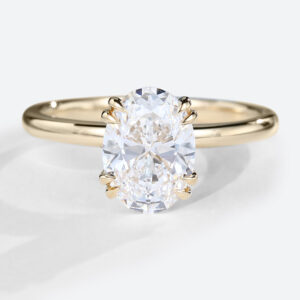
However, lab created diamonds retain more perceived value because they are still diamonds—just grown rather than mined.
2. Resale, Perception, and Emotional Value
Neither moissanite nor lab diamonds should be viewed as financial investments. That said, perception still matters.
Lab diamonds are widely accepted as real diamonds and are clearly distinguished from simulants.
Moissanite is recognized as a diamond alternative, not a diamond itself.
When comparing moissanite and lab diamonds, couples who care about tradition, symbolism, or resale transparency often lean toward lab diamonds, while those prioritizing cost-efficiency and visual impact prefer moissanite.
V. Which Is Better for Engagement Rings?
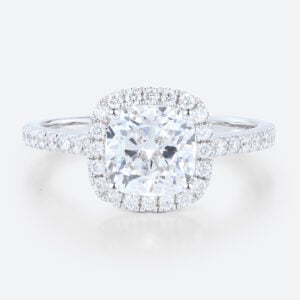
So, when it comes to moissanite vs lab diamonds, there is no universal “better” choice—only the better choice for you.
Choose lab grown diamonds if you:
Want a real diamond without mining
Prefer classic sparkle over rainbow fire
Value standardized grading and long-term wear
Choose moissanite engagement rings if you:
Want maximum sparkle at a lower price
Prefer larger stones within budget
Love bold, eye-catching brilliance
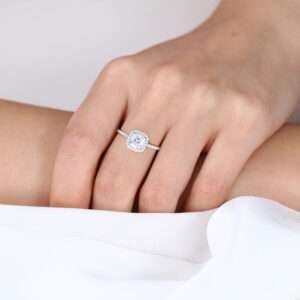
Understanding these key differences allows you to choose a ring that aligns with your lifestyle, values, and aesthetic—without compromise.
Lab Diamonds VS Moissanite FAQs:
Is moissanite better than lab diamonds for engagement rings?
Moissanite is not objectively better than lab diamonds—it depends on what you value most. Lab grown diamonds are real diamonds with traditional sparkle and grading, while moissanite offers stronger fire and a lower price point. Both are durable enough for daily wear.
Are lab grown diamonds real diamonds or synthetic diamonds?
Lab grown diamonds are real diamonds. They are sometimes referred to as synthetic diamonds, but chemically and physically, they are identical to mined diamonds—only the origin is different.
Can you tell the difference between moissanite and lab diamonds?
To the untrained eye, the difference is subtle. However, moissanite tends to show more rainbow fire, while lab diamonds reflect more white light. Under certain lighting, the distinction becomes more noticeable, especially in larger stones.
Which sparkles more, moissanite or lab grown diamonds?
Moissanite generally sparkles more due to higher light dispersion. Lab grown diamonds have a more classic brilliance similar to mined diamonds. This is one of the key visual differences when comparing moissanite vs lab diamonds.
Is moissanite as durable as lab diamonds?
Moissanite is extremely durable and suitable for everyday wear, but lab grown diamonds are harder and more scratch-resistant. Over decades of use, diamonds tend to maintain their surface better.
Why is lab diamond price higher than moissanite?
Lab diamond price is higher because lab diamonds are real diamonds with standardized grading, higher production costs, and stronger market recognition. Moissanite is a diamond alternative gemstone and is priced accordingly.
Do moissanite engagement rings last a lifetime?
Yes. Moissanite engagement rings can last a lifetime with proper care. The stone is stable and resistant to chipping, making it a popular choice for daily wear.
Are lab created diamonds better than mined diamonds?
Lab created diamonds are not inherently better, but they offer ethical and environmental advantages. In terms of appearance and durability, lab diamonds and mined diamonds are the same.
Is moissanite considered a fake diamond?
No. Moissanite is not a fake diamond—it is a distinct gemstone made from silicon carbide. While it looks similar to diamonds, it is not marketed as one.
Should I choose moissanite or lab diamonds for a solitaire ring?
For solitaire engagement rings, lab diamonds are often preferred due to their classic sparkle and diamond identity. Moissanite is a great option if you want a larger stone or more dramatic brilliance within budget.