



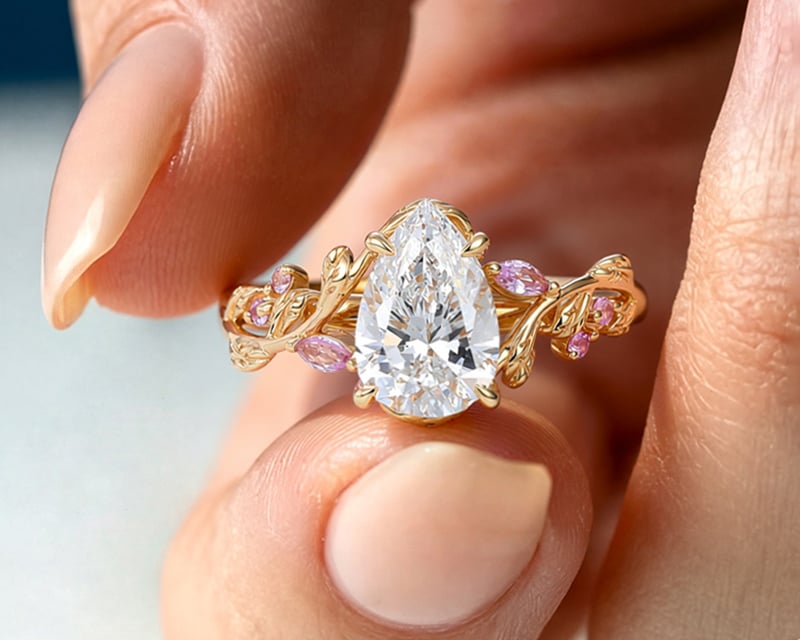










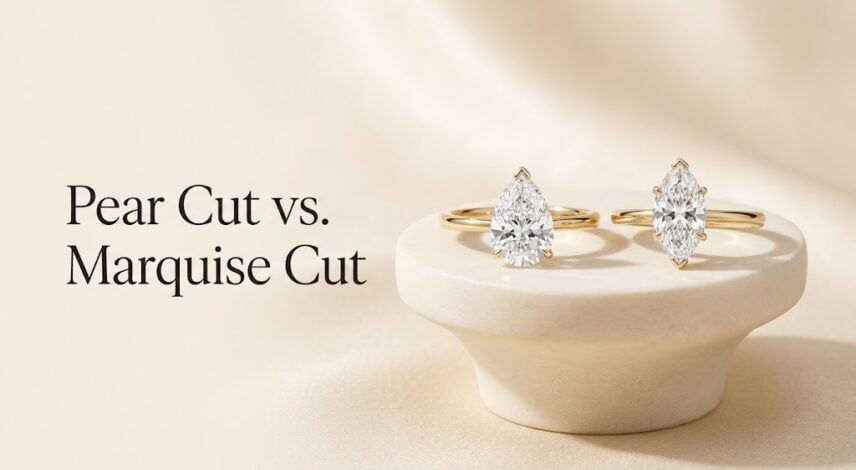
Pear and marquise diamonds are both known for their elegant, elongated silhouettes. Each can create a graceful line along the finger, offer noticeable face-up presence, and bring more individuality to an engagement ring than a traditional round center stone.
Yet the two shapes do not create the same visual impression.
So, in the pear vs. marquise cut comparison, which shape is more flattering?
There is no universal answer. The final effect depends on the individual diamond’s proportions, orientation, setting, band width, and how its silhouette looks on your hand. Rather than following a strict rule about finger shape, it is more helpful to decide whether you prefer the pear’s soft taper or the marquise’s stronger point-to-point length.
LisaJewelryUS Expert Note: You do not need a particular hand or finger shape to wear either diamond. “Flattering” is ultimately about visual balance and personal style—not correcting the appearance of your hand.
Quick Answer: Pear or Marquise?
Choose a pear-shaped diamond if you prefer a softer, romantic silhouette with a graceful taper. Choose a marquise diamond if you want a longer, more symmetrical shape with bolder finger coverage.
Both shapes can make an elegant center stone for an elongated diamond engagement ring, but they emphasize different qualities:
- Pear-shaped diamond: Soft, directional, asymmetrical and romantic
- Marquise-cut diamond: Long, symmetrical, distinctive and dramatic
A marquise often produces the stronger north-to-south line, while a pear provides a gentler transition from a rounded base to a pointed tip. However, the shape name alone cannot tell you which diamond will look better. Length-to-width ratio, outline, symmetry, light return and setting style can significantly change the final appearance.
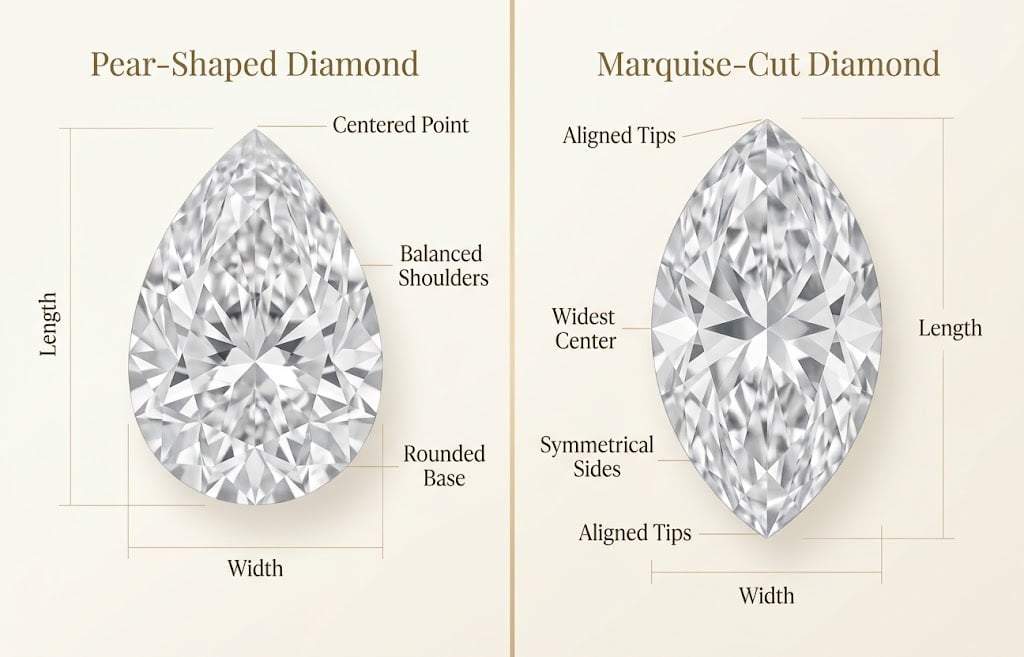
Pear vs. Marquise Cut at a Glance
Before looking at each shape in detail, here is a quick comparison of their most recognizable visual and practical differences.
| Feature | Pear-Shaped Diamond | Marquise-Cut Diamond |
|---|---|---|
| Outline | Rounded base with one pointed tip | Curved sides with two pointed tips |
| Symmetry | Balanced shoulders around a centered point | Mirrored sides with aligned tips |
| Overall style | Romantic, graceful and softly dramatic | Bold, regal and highly distinctive |
| Visual elongation | A soft, directional taper | A stronger point-to-point line |
| Finger coverage | Elongated with more fullness at one end | Often provides greater visible length |
| Orientation options | Point toward the nail, wrist, or east-west | North-south or east-west |
| Point protection | One pointed tip to protect | Two pointed tips to protect |
| Personality | Organic and expressive | Geometric and statement-making |
These are general visual tendencies rather than fixed rules. A full-bodied marquise may look softer than an extremely slender pear, while a halo, bezel or wide band can change the apparent proportions of either shape.
Understanding Pear and Marquise Diamond Shapes
Pear and marquise diamonds belong to the broader family of fancy-shaped diamonds. Unlike a round brilliant, their beauty cannot be summarized by diameter alone. Their outline, length, width, shoulders, tips and facet pattern all contribute to the way they appear on the hand.
Although shoppers commonly use phrases such as “pear cut” and “marquise cut,” an IGI report may describe the stone through its shape and cutting style, such as Pear Brilliant or Marquise Brilliant. “Pear” and “marquise” describe the outline, while “brilliant” describes the general faceting style used to return light.
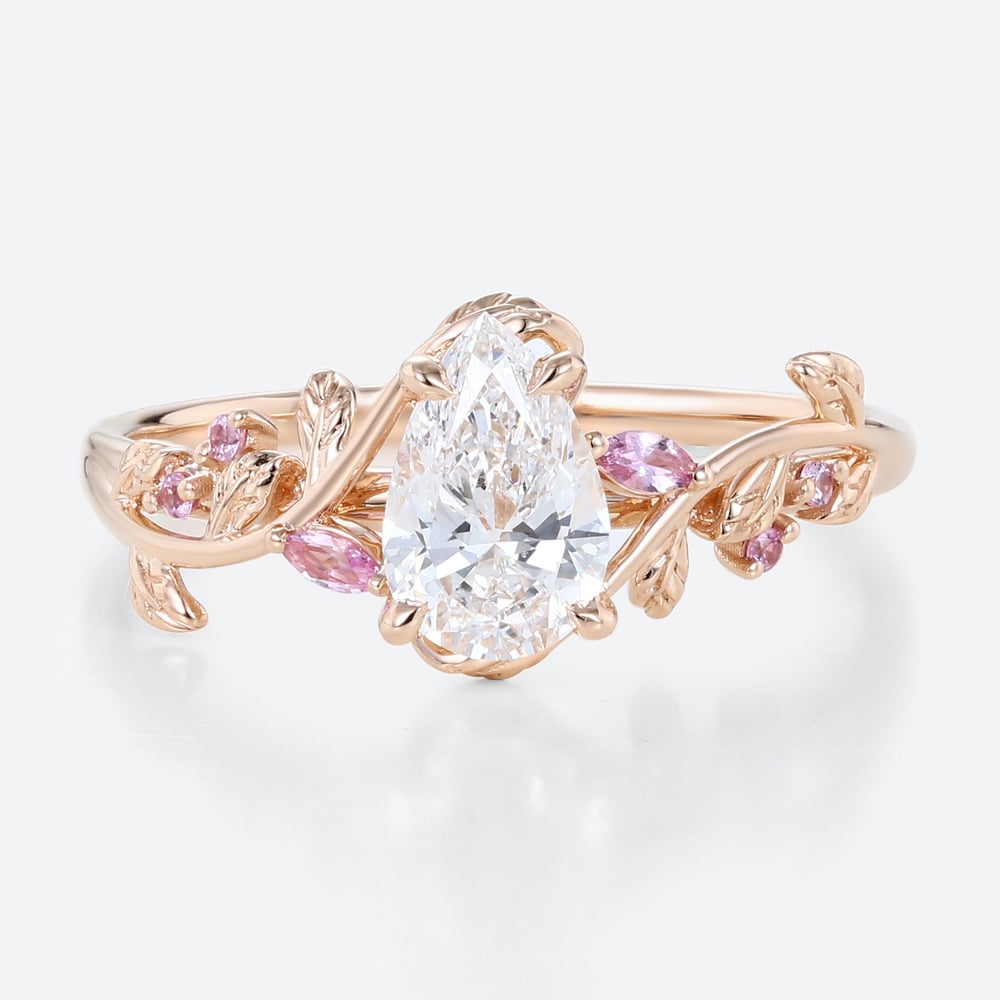
What Is a Pear-Shaped Diamond?
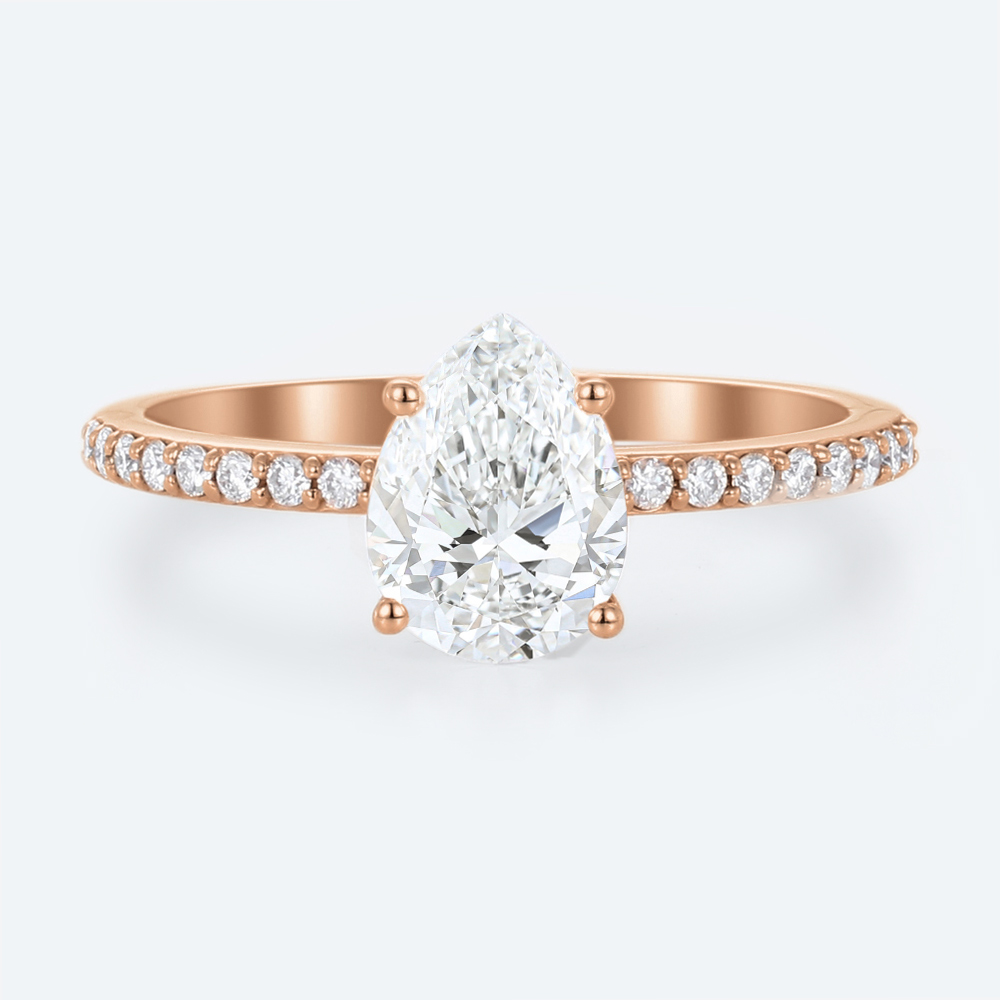
Sometimes called a teardrop diamond, a pear-shaped diamond combines a rounded lower section with one pointed tip.
This combination gives the pear a distinctive visual duality. The rounded end feels soft and classic, while the point adds direction and a more contemporary edge. The result is an asymmetrical silhouette that can look romantic, elegant or fashion-forward depending on the setting.
When the point is worn toward the fingernail, the diamond creates a tapered line that visually continues along the finger. This is the most traditional orientation and usually produces the strongest impression of length.
The point can also face the wrist for a less expected look. In an east-west setting, the pear lies across the finger, emphasizing asymmetry and creating a more modern profile.
The beauty of a pear shaped diamond ring depends heavily on the individual outline. Important features include:
- A smoothly rounded base;
- Balanced shoulders;
- Even curves on both sides;
- A point that appears centered rather than leaning;
- A pleasing transition from the wider body to the tip.
One pear may look full and softly rounded, while another may appear narrow and highly elongated. Neither outline is automatically better; the choice depends on the visual effect you prefer.
What Is a Marquise-Cut Diamond?
A marquise diamond has an elongated central body with two pointed ends. Its outline is sometimes described as navette, the French word for “little boat,” because of its curved, boat-like silhouette.
Unlike the pear’s one-directional taper, a marquise creates a continuous line from one tip to the other. When set north-south along the finger, this point-to-point structure can make the diamond appear especially long and prominent.
Symmetry is an important part of marquise beauty. The two tips should appear aligned, the widest part should feel visually centered, and the curved sides should mirror one another. A marquise that leans to one side or has mismatched curves may look unbalanced once it is set.
Marquise diamonds can express several different styles:
- A slender marquise may feel dramatic and fashion-forward;
- A fuller marquise may appear softer and more vintage-inspired;
- A north-south solitaire emphasizes length;
- An east-west marquise feels modern and architectural;
- A halo can add width and reinforce a vintage or regal character.
Because the shape uses two pointed tips and a relatively narrow body, it often creates more visible length than a rounded diamond of comparable weight. However, exact millimeter measurements should always be considered before assuming one diamond will look larger than another.
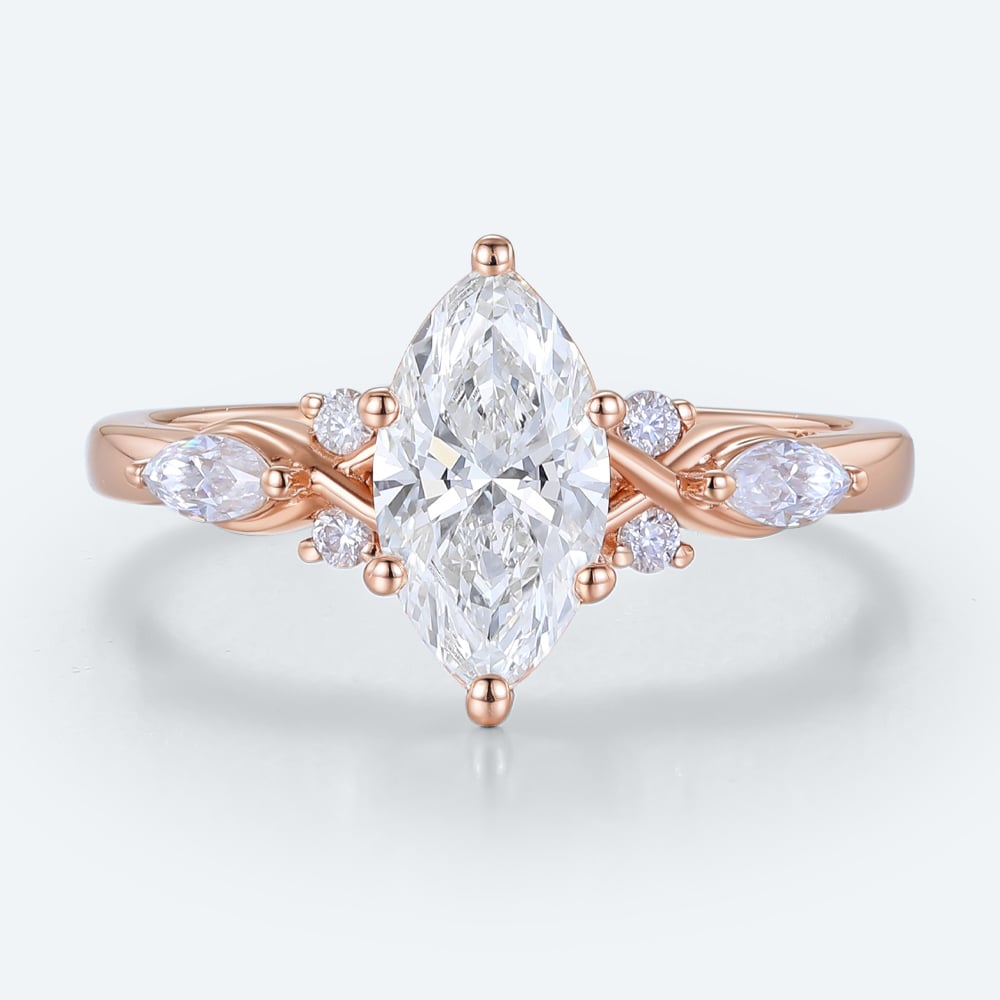
Which Shape Is More Flattering on the Finger?
The word “flattering” can mean different things to different shoppers. Some want a ring that creates a longer visual line. Others prefer softness, balance, finger coverage or a shape that feels proportional to the hand.
Rather than asking which diamond is universally more flattering, consider what kind of effect you want the ring to create.
Pear Diamonds Create a Softer Taper
A pear-shaped diamond moves from a rounded base toward one narrow point. Because its width is concentrated at one end, the shape does not create the same continuous linear effect as a marquise.
Instead, it forms a gentler visual transition.
When the point faces the fingernail, the eye naturally follows the diamond upward. This can create a graceful sense of length without making the entire ring feel sharply geometric. The rounded base adds softness and gives the design more visual weight near the center of the hand.
A pear may be especially appealing if you want:
- An elongated look with softer curves;
- A balance of classic and contemporary style;
- A center stone with asymmetrical character;
- A shape that can change personality when rotated;
- Visual length without two pointed ends.
Fuller pear shapes generally appear softer, while more slender pears create a stronger tapered effect. The surrounding setting also matters. A delicate solitaire preserves the clean outline, while a halo can make the pear appear wider and more ornate.
Marquise Diamonds Create a Stronger Line
A marquise diamond narrows toward two opposing tips, allowing the entire stone to form one continuous north-to-south line.
For this reason, a marquise often produces a more pronounced lengthening effect than a pear. It can occupy a substantial amount of space along the finger without requiring the same width as a round, cushion or square-shaped center stone.
A marquise may be especially appealing if you want:
- Maximum visual length;
- Strong north-to-south finger coverage;
- A symmetrical elongated shape;
- A center stone with vintage or regal character;
- A more dramatic alternative to an oval diamond;
- An engagement ring that feels distinctive from a distance.
The effect can vary considerably with proportion. A very narrow marquise looks sharp and dramatic, while a broader marquise creates more balance between length and width.
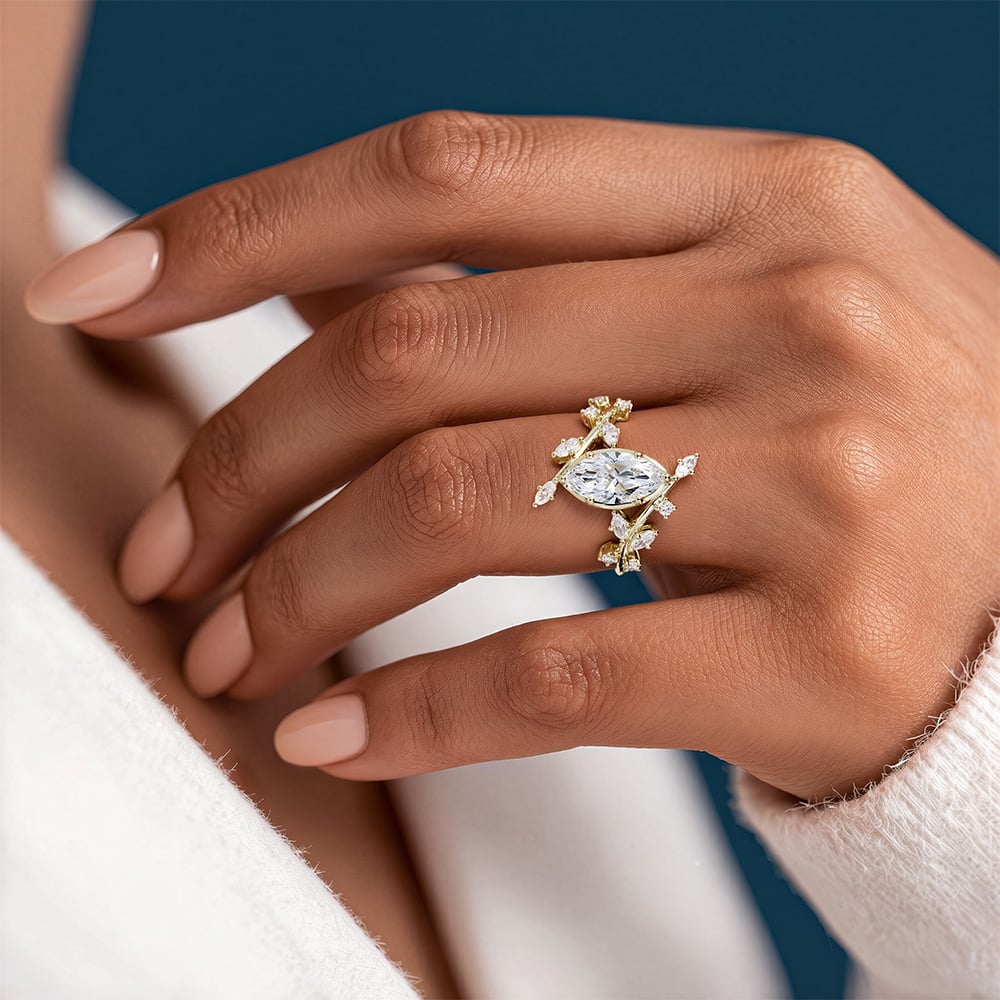
Your Finger Shape Does Not Create a Rule
Traditional jewelry advice sometimes assigns certain diamond shapes to specific finger types. These recommendations can be useful as visual starting points, but they should not be treated as restrictions.
If you want to emphasize a vertical line, either shape can work. A slender marquise will generally create the most obvious point-to-point elongation, while a pear offers a softer version of the same effect.
If your fingers are already long and you prefer greater visual balance, you might consider a fuller pear or a broader marquise rather than the most elongated proportions available.
Band width can also change the effect. A very thin band makes the center diamond appear more prominent, while a wider band adds horizontal visual weight. Side stones, halos and split shanks can similarly influence whether the overall design feels delicate, balanced or dramatic.
The most reliable comparison is therefore not “pear for one finger type and marquise for another.” It is seeing both shapes on your own hand under similar conditions.
Which Diamond Looks Larger: Pear or Marquise?
Both pear and marquise diamonds are often chosen for their face-up presence. Their elongated outlines can cover more visible space on the finger than some more compact shapes of the same carat weight.
However, carat is a measurement of weight, not visible size.
Two one-carat diamonds can have different lengths, widths and depths. A diamond with more of its weight concentrated below the girdle may appear smaller from the top, while another with a wider face-up footprint may appear more prominent. This does not mean that the shallower-looking stone is automatically better cut; visual size and light performance must be considered together.
Marquise diamonds often appear especially large in the north-to-south direction because their weight is distributed across a long, narrow outline. Pear diamonds can also look substantial, but their rounded base usually creates a different balance between width and length.
When comparing the two, review:
- Carat weight;
- Length in millimeters;
- Width in millimeters;
- Overall depth;
- Length-to-width ratio;
- Outline and symmetry;
- Light performance;
- How the stone looks in its intended setting.
The measurements listed on an IGI report are therefore essential. Instead of comparing only “1.5-carat Pear vs. 1.5-carat Marquise,” compare their actual dimensions and watch how each diamond performs as it moves through different lighting environments.
LisaJewelryUS Expert Note: A larger-looking outline is valuable only if you also enjoy the diamond’s shape, brightness and balance. Do not sacrifice an appealing light pattern simply to gain an extra fraction of a millimeter in visible spread.
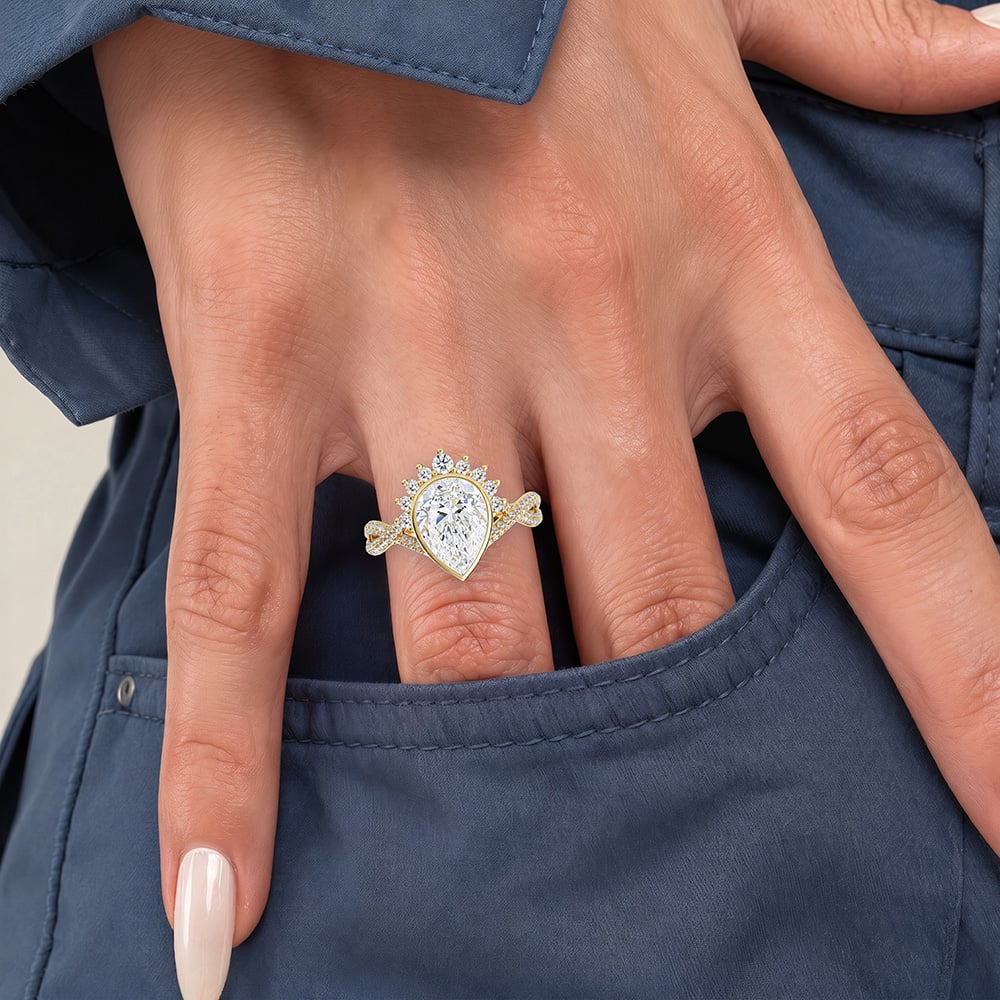
Length-to-Width Ratio: The Detail That Changes Everything
Two pear diamonds—or two marquise diamonds—can have the same carat weight and still look remarkably different. One of the measurements responsible for that difference is the length-to-width ratio.
The calculation is simple:
Length-to-width ratio = diamond length ÷ diamond width
A higher ratio generally creates a longer, narrower outline. A lower ratio produces a fuller, wider shape. However, the ratio should be treated as a description of the silhouette rather than a universal score for beauty.
Pear Diamond Length-to-Width Ratio
Pear diamonds with lower length-to-width ratios tend to have fuller bodies and softer outlines. As the ratio increases, the shape becomes more slender and the taper toward the point appears more pronounced.
IGI’s fancy-shape cut guidelines list a length-to-width ratio of approximately 1.40:1 to 1.75:1 among the criteria considered for a Pear Brilliant to qualify as a candidate for an Excellent cut grade.
That range is not a guarantee that every diamond within it will be equally attractive. IGI also evaluates factors such as symmetry, polish, outline, bow-tie visibility and overall light return.
As a visual guide:
- Fuller pear: Softer, wider and more rounded
- Balanced pear: A noticeable taper without appearing extremely narrow
- Slender pear: Longer, sharper and more dramatic
The transition between the rounded base and the tip also matters. A pear can have attractive numerical proportions but still look uneven if one shoulder is higher than the other or if the point appears off-center.
Marquise Diamond Length-to-Width Ratio
Marquise diamonds naturally have higher length-to-width ratios because their outlines extend between two pointed tips.
IGI’s fancy-shape cut guidelines include approximately 1.70:1 to 2.25:1 as a candidate range for an Excellent Marquise Brilliant cut grade. As with pear diamonds, the ratio is only one part of the evaluation.
In general:
- Broader marquise: Fuller, softer and often more vintage-inspired
- Balanced marquise: Distinctly elongated without looking overly narrow
- Slender marquise: Sharp, dramatic and highly directional
An extremely narrow marquise may provide impressive length, but it can also appear visually thin or show less balanced light return. A very broad marquise may feel substantial but lose some of the point-to-point elegance that defines the shape.
LisaJewelryUS Expert Note: There is no single “perfect” length-to-width ratio for every pear or marquise diamond. Use the ratio to narrow your search, then compare the actual outlines in photos and videos.
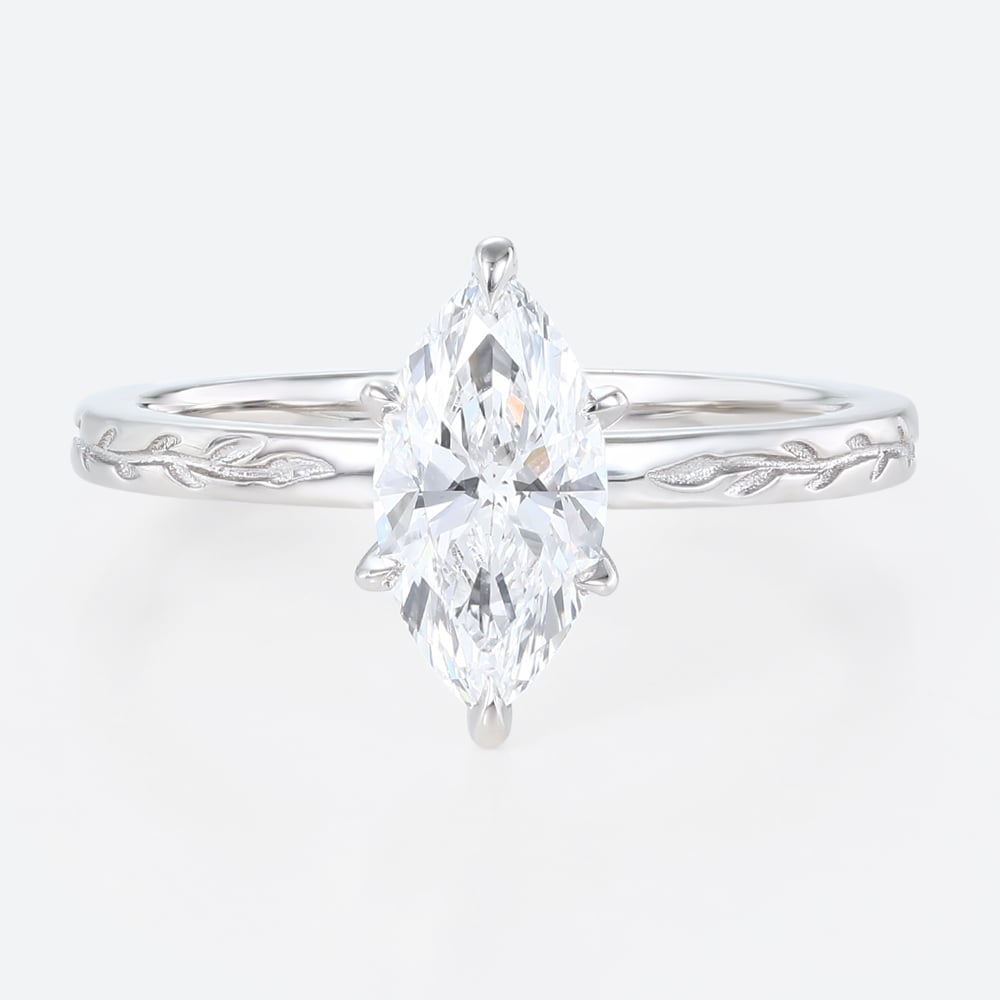
Pear vs. Marquise Sparkle: Does One Shine More?
Neither shape is automatically more brilliant than the other.
Pear and marquise diamonds are generally cut with brilliant-style facets designed to reflect light through the top of the stone. However, the amount and pattern of sparkle depend more on the individual diamond’s facet arrangement, proportions, symmetry, polish and light return than on whether it has one pointed tip or two.
A well-cut pear may produce lively flashes throughout its rounded base and tapered tip. A well-cut marquise may create bright movement along its elongated body. In both cases, areas of light and dark will shift as the diamond, wearer or light source moves.
This contrast gives the diamond dimension. The goal is not for every facet to remain bright at every angle, but for the light pattern to feel balanced and dynamic.
What Is the Bow-Tie Effect?
Pear and marquise diamonds may display a darker shape across the center that resembles a bow tie. This phenomenon can also appear in other elongated shapes, including oval diamonds.
A small or moderate bow tie is not automatically a defect. Some degree of contrast may contribute to the diamond’s pattern and personality. The concern is a bow tie that remains noticeably dark, broad or distracting across multiple viewing angles.
When examining either shape, ask:
- Does the center become brighter as the diamond moves?
- Does the bow tie blend naturally into the surrounding facet pattern?
- Are there large areas that remain dark in normal lighting?
- Does the diamond appear lively from the center to the ends?
- Is one side noticeably brighter than the other?
A still image may not reveal the full pattern. Whenever possible, review a high-resolution video that shows the diamond rotating slowly in more than one lighting environment.
An IGI report provides valuable information about the diamond’s identity, measurements and grading characteristics, but a report cannot replace visual evaluation. Two diamonds with similar report details may still display very different light patterns.
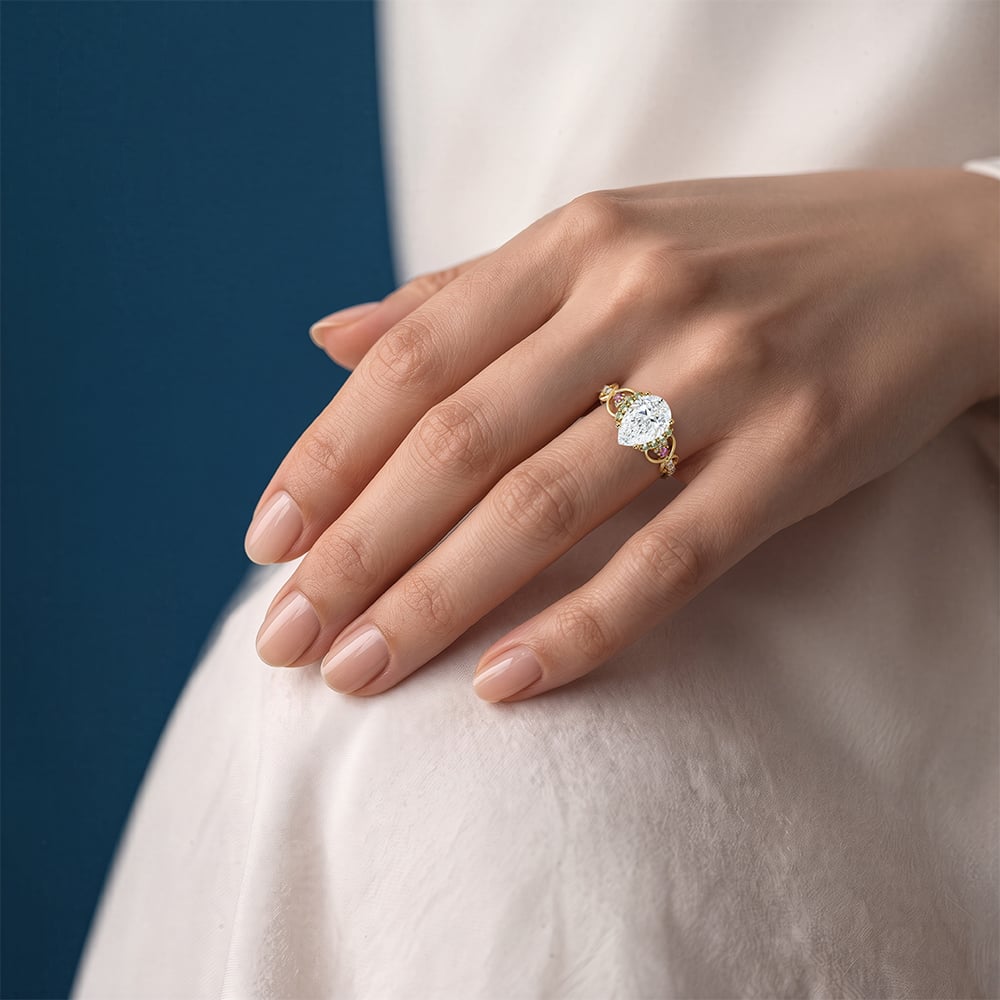
Which Setting Looks Best for Pear and Marquise Diamonds?
The center diamond is only one part of an engagement ring’s final appearance. Setting style, band width, orientation and side-stone design can make either shape look softer, longer, wider or more dramatic.
Solitaire Settings
A solitaire keeps attention on the diamond’s natural outline.
For a pear shaped diamond ring, a delicate solitaire highlights the transition from the rounded base to the point. A simple four-, five- or six-prong design can preserve an airy appearance, provided the tip receives appropriate protection.
A marquise solitaire emphasizes uninterrupted length. A fine band can make the diamond appear especially prominent, while a slightly wider band may create more visual balance for a long, slender stone.
Setting height is also important. A higher basket may allow a straight wedding band to sit closer to the engagement ring, but it can create a more elevated profile. A lower setting may feel more streamlined for daily wear, although it may require a curved or contoured wedding band.
Halo Settings
A halo surrounds the center stone with smaller diamonds and can enhance both visual size and outline.
Around a pear diamond, a carefully shaped halo reinforces the teardrop silhouette and adds width around the rounded base. Around a marquise, a halo can soften the pointed outline and create a more ornate, vintage-inspired look.
The halo should follow the center diamond evenly. Unequal spacing may make a pear look off-center or exaggerate asymmetry in a marquise.
Three-Stone Settings
Side stones add horizontal coverage and can balance the vertical length of an elongated center diamond.
A pear center may be paired with:
- Round side stones;
- Smaller pear-shaped diamonds;
- Tapered baguettes;
- Trapezoid diamonds.
A marquise center may work well with:
- Round diamonds;
- Pear-shaped side stones;
- Tapered baguettes;
- Smaller marquise accents.
The side stones should support the center shape without competing with its points or making the ring feel crowded.
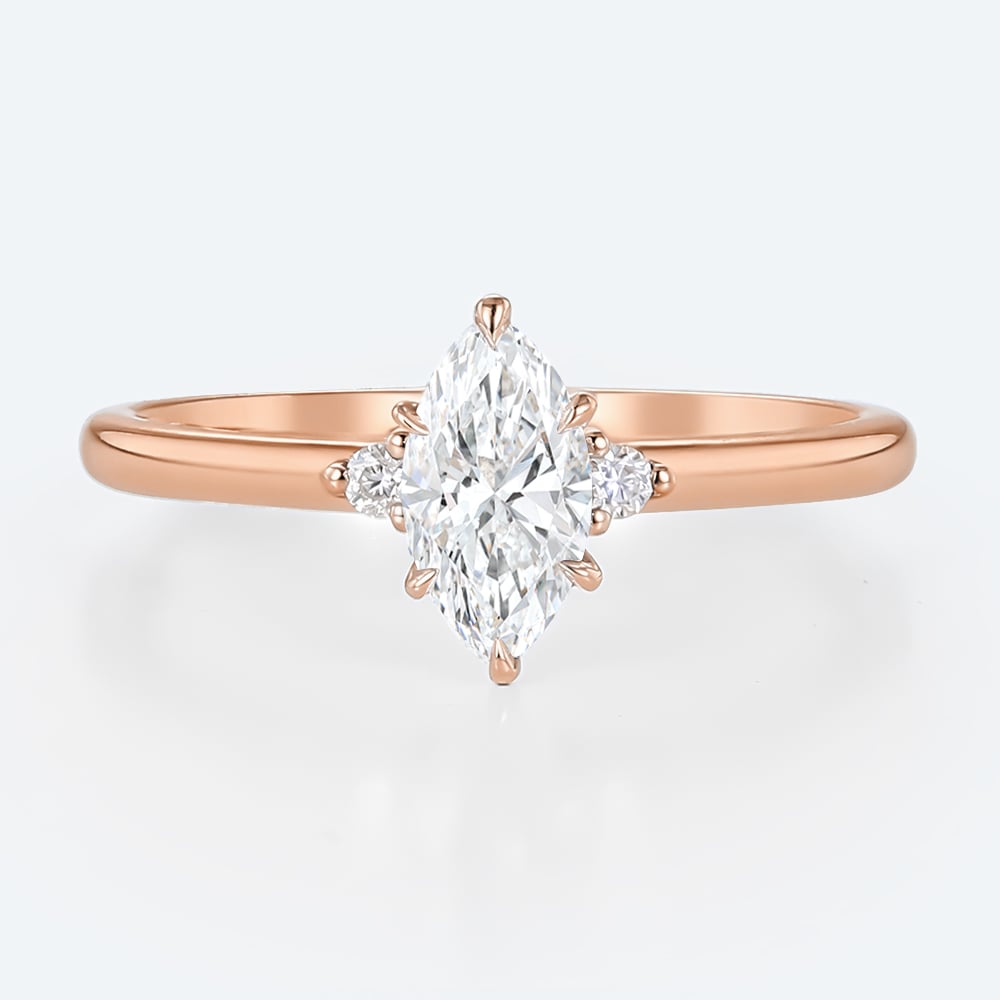
East-West Settings
An east-west setting rotates the diamond so its length runs across the finger rather than toward the fingernail.
An east-west pear looks modern and deliberately asymmetrical. It also places greater emphasis on the rounded body and curved outline.
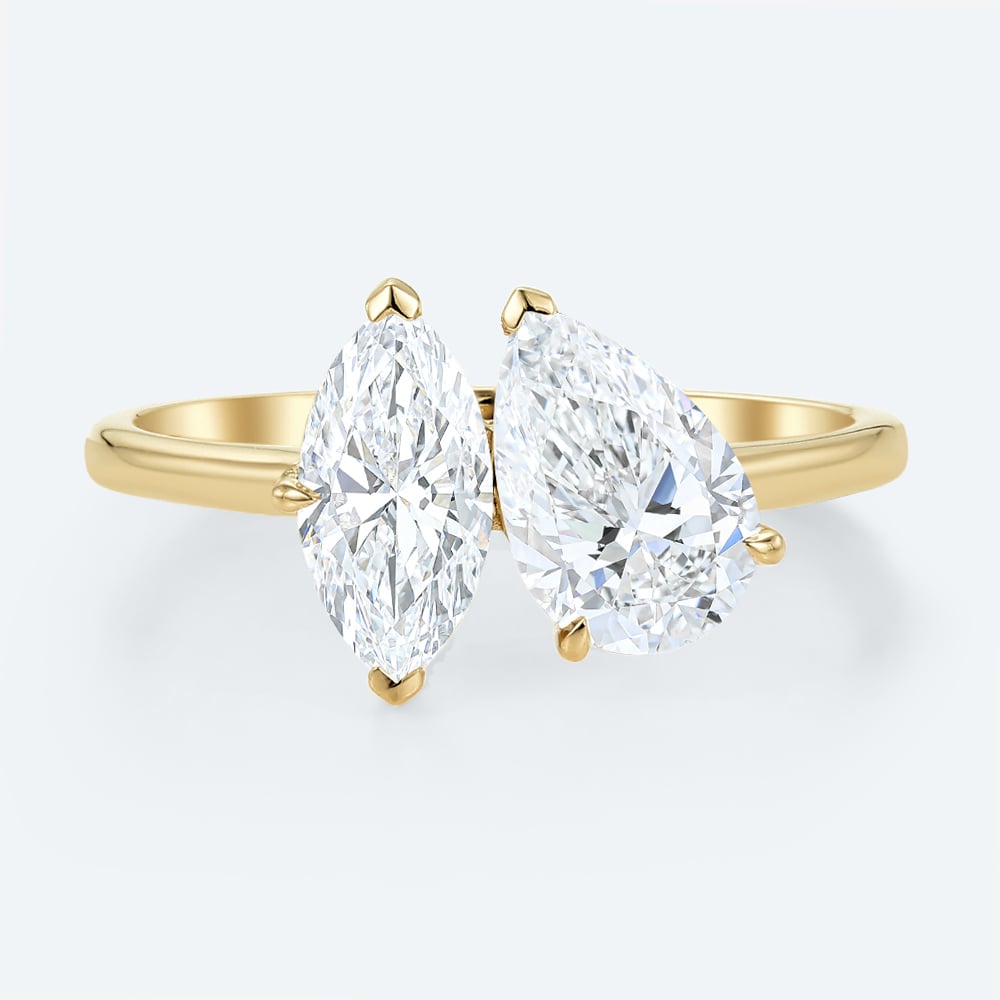
An east-west marquise creates a distinctive eye-shaped or navette silhouette. The result feels more architectural and less traditionally bridal than a north-south marquise.
This orientation reduces the vertical lengthening effect but increases horizontal finger coverage. It can be an excellent choice for someone who loves an elongated diamond but wants a less conventional design.
Consider the Wedding Band Early
Before selecting a setting, think about how the engagement ring will sit beside a wedding band.
Depending on the basket, prongs and setting height, a straight band may not sit completely flush. This is not necessarily a flaw, but it should be an intentional design choice.
Possible options include:
- A curved wedding band;
- A contoured band;
- An open-gap band;
- A custom-fitted band;
- A straight band worn with a deliberate space.
If you plan to wear the rings together every day, evaluate them as a complete set rather than choosing the engagement ring in isolation.
Point Protection and Everyday Wear
Pear and marquise diamonds can both be suitable for everyday engagement rings, but their pointed tips deserve thoughtful protection.
The pear has one pointed end, while the marquise has two. These tips are narrower than the rounded areas of the diamond and may be more vulnerable if left exposed to repeated impacts.
A properly designed setting may use:
- A V-shaped prong around each point;
- A protective bezel or partial bezel;
- A shaped end prong;
- A halo that provides additional surrounding protection.
The prongs should protect the tips without covering so much of the diamond that the outline becomes difficult to see.
Lifestyle should also influence the setting. Someone who works frequently with their hands may prefer a lower-profile design or additional edge protection. Regardless of setting style, the prongs should be inspected periodically for wear, movement or snagging.
Avoid framing the comparison as “pear is safer because it has one point.” Overall durability depends on the setting, exposure, craftsmanship and wearing habits—not simply the number of pointed ends.
Pear vs. Marquise Cut: Which One Should You Choose?
Both shapes offer an elongated alternative to traditional round and square diamonds. The right choice comes down to the type of line, balance and personality you want to see on your hand.
Choose a Pear-Shaped Diamond If You Want…
- A romantic and softly tapered silhouette;
- One rounded end balanced by one elegant point;
- An asymmetrical shape with visual movement;
- A blend of classic and contemporary style;
- The option to change the look through orientation;
- An elongated ring that does not feel overly sharp;
- A design that transitions easily between solitaire, halo and three-stone settings.
A pear may be the stronger choice if you want individuality but still prefer curves and softness.
Choose a Marquise-Cut Diamond If You Want…
- A stronger point-to-point line;
- Dramatic north-to-south finger coverage;
- A symmetrical elongated shape;
- A distinctive alternative to an oval diamond;
- Vintage, regal or fashion-forward character;
- A center stone that appears visually prominent;
- A striking east-west setting option.
A marquise may be the stronger choice if visible length and a bold silhouette are your priorities.
Before Making the Final Decision
Compare individual diamonds rather than choosing from generic shape illustrations alone.
For each diamond, check:
- The actual length and width in millimeters;
- The length-to-width ratio;
- The balance of the outline;
- Shoulder and side symmetry;
- Point alignment;
- Light return through the center and ends;
- The visibility of the bow tie;
- How the diamond looks in motion;
- How much of the outline will be covered by the setting;
- How the finished ring looks on your hand.
If you are comparing lab-grown diamonds, remember that lab-grown describes the diamond’s origin, while pear and marquise describe its shape and cutting style. The same outline, proportion, symmetry and light-performance considerations apply.
Final Verdict: Soft Elegance or Dramatic Length?
In the pear vs. marquise cut comparison, neither shape is universally more flattering.
Pear diamonds create a soft, directional taper that feels romantic and expressive. Marquise diamonds create a longer, more symmetrical line with greater visual drama. Both can provide elegant finger coverage, and both can look beautiful across a wide range of hand proportions.
The most flattering diamond is not the one that follows a rigid hand-shape rule. It is the one whose proportions feel balanced on your finger and whose personality still feels unmistakably yours.
Frequently Asked Questions
A pear diamond creates a softer, tapered look, while a marquise produces a longer, more symmetrical line. Neither is universally more flattering—the best choice depends on the diamond’s proportions, setting and how it looks on your hand.
A marquise often appears longer, while a pear may look fuller through its rounded base. Since carat measures weight rather than visible size, compare the diamonds’ actual millimeter dimensions on their IGI reports.
Pointing the diamond toward the fingernail creates the most traditional, elongated look. It can also face the wrist or be set east-west for a more unconventional style. Orientation is a personal design choice, not a quality standard.
Both shapes may show a darker bow-tie pattern across the center. A mild bow tie is not necessarily a problem, but one that remains broad and dark can be distracting. Review videos of the diamond in different lighting conditions.
Yes, provided the pointed tip is securely protected. Look for a V-prong, shaped prong or bezel-style setting, and have the ring inspected periodically for worn or loose prongs.
Not necessarily. A marquise has two pointed tips instead of one, but durability depends mainly on how well those tips are protected. A thoughtfully designed setting can make either shape suitable for regular wear.
Choose based on the finished diamond rather than its growth origin alone. Compare the IGI report, millimeter dimensions, proportions, symmetry, bow-tie visibility and videos before deciding which shape offers the look and value you prefer.