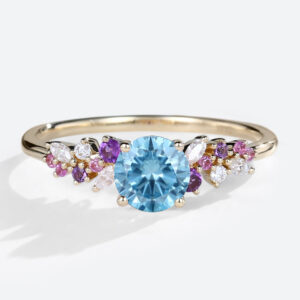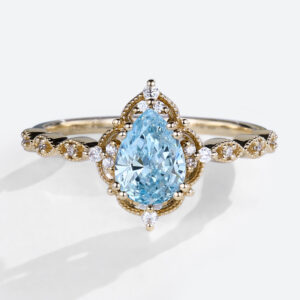










I. Is Lab Blue Diamond Worth Buying The Honest Answer
If you’re asking is lab blue diamond worth buying, you’re already thinking like a smart buyer.
The short answer is: yes—for the right reasons.
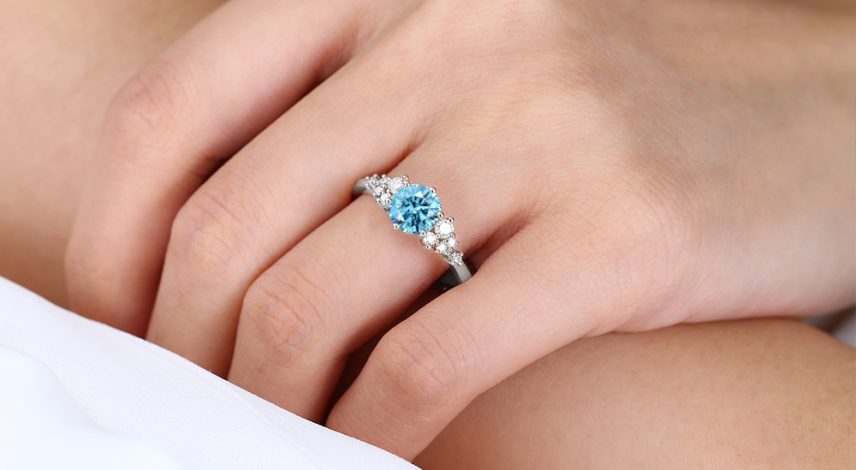
A lab grown blue diamond ring offers the same brilliance, durability, and visual appeal as natural blue diamonds, but at a fraction of the cost. For many people, that alone makes it worth considering.
However, value isn’t just about price.
When it comes to blue diamond rings, what really matters is what you expect from your purchase. If you’re looking for a rare investment piece, natural diamonds still hold stronger long-term value due to their scarcity. But if your goal is beauty, size, and everyday wear, lab created blue diamonds can deliver exceptional results.
Today’s buyers are also more open to alternatives. Instead of focusing only on tradition, they care about design, affordability, and meaning. That’s why lab grown blue diamonds are becoming a popular choice in modern engagement rings and fine blue diamond jewelry.
So, is it worth buying?
👉 If you want a stunning blue gemstone, strong sparkle, and better value for your budget—the answer is yes.
👉 If you’re buying purely for rarity or resale, the answer becomes more nuanced.
II. What Is a Lab Grown Blue Diamond Ring
Before deciding whether it’s worth buying, it’s important to understand what a lab grown blue diamond ring actually is—and how it compares to traditional options.
How Lab Grown Blue Diamonds Are Created
Lab grown blue diamonds are real diamonds formed using advanced technology that replicates the natural process. Instead of forming deep within the earth over millions of years, they are created in controlled environments using high pressure and heat or other methods.
Structurally, they are identical to natural diamonds. They share the same hardness, brilliance, and durability, making them suitable for long-term wear in engagement rings.
The blue color comes from trace elements or structural changes during formation, resulting in a wide range of tones—from soft blue hues to intense shades like fancy deep blue or even fancy vivid blue.
Because the process is controlled, these diamonds often have fewer inclusions and more consistent quality compared to some mined diamonds.
Lab Blue Diamonds vs Natural Blue Diamonds
The biggest difference between lab blue diamonds and natural blue diamonds is rarity.
Natural blue diamonds are among the most rare blue diamonds in the world. Their formation requires extremely specific conditions, which is why they are often associated with some of the most famous blue diamonds ever discovered.
This rarity drives up price significantly.
In contrast, lab-created diamonds offer a more accessible option. You still get the same appearance and performance, but without the scarcity factor.
Visually, both types are nearly identical—even experts sometimes need specialized tools to tell them apart. To the average person, especially in a blue diamond engagement ring, the difference is almost impossible to detect.
That’s why many buyers today are shifting toward lab-grown options: they offer the same beauty without the traditional limitations.
III. Lab Blue Diamond Ring Pros and Cons
When deciding if a lab blue diamond ring is worth buying, the smartest approach is to look at both sides—what it does exceptionally well, and what you should be aware of.
Pros of Lab Blue Diamond Rings
One of the biggest advantages of lab created diamonds is value.
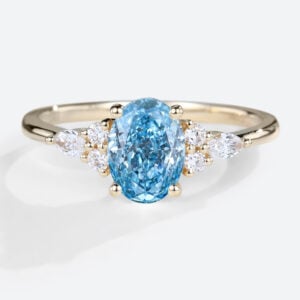
Compared to rare natural blue diamonds, lab-grown options allow you to access stunning blue gemstones with rich color and strong brilliance—without the extreme cost. Whether you prefer soft blue hues or more saturated tones like fancy vivid or fancy intense, lab diamonds offer a wide range of options.
Another major benefit is quality. Because these diamonds are created using modern technology, including processes like chemical vapor deposition, they often feature fewer inclusions and more consistent structure. This results in a cleaner, more refined look—especially important for a visible center stone.
Durability is also a strong point. Like all diamonds, lab-grown versions are extremely durable, making them ideal for everyday wear in engagement rings and fine jewelry.
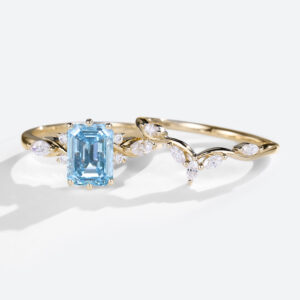
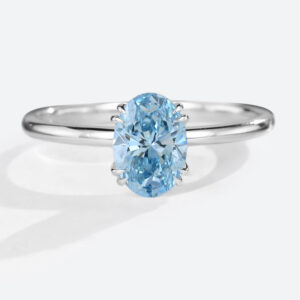
Additionally, they provide more design flexibility. From classic solitaires to more intricate shapes and settings, lab diamonds make it easier to create a personalized piece without budget constraints.
Cons You Should Consider Before Buying
Despite their advantages, lab diamonds are not perfect for every buyer.
The biggest concern is resale value. Unlike rare natural stones, lab diamonds do not carry the same scarcity-driven pricing. This means they may not hold value in the same way as traditional diamonds over time.
Another factor is perception. Some buyers still associate diamonds with rarity and tradition, and may feel that lab-created stones lack the prestige of real diamonds.
There is also the emotional aspect. For those who value history, origin, or the uniqueness of rarest color diamonds, lab options may feel less meaningful.
So while lab blue diamonds excel in practicality, they may not fully replace the symbolic appeal of mined stones for every buyer.
IV. Lab Blue Diamond vs Natural Blue Diamond Which Is Better
To truly answer whether it’s worth buying, you need to compare lab blue diamonds directly with their natural counterparts.
Price Difference and Accessibility
The price gap is significant.
Natural blue diamonds are among the rarest gems in the world, which is why they often reach extremely high price points. In contrast, lab created diamonds offer a far more accessible entry into the world of colored diamonds.
This makes it possible to choose a larger carat weight or a more vibrant blue color without dramatically increasing your budget.
Appearance and Color Performance
Visually, the differences are minimal.
Both lab-grown and natural diamonds share the same diamond structure and optical properties. This means they display similar brilliance, fire, and light reflection.
Lab diamonds can even offer more consistency in color intensity, whether you’re looking for a subtle tone or a bold fancy vivid shade. Some stones may exhibit striking contrast between light and depth, enhancing their visual appeal.
To the naked eye, especially in a finished ring, it is nearly impossible to distinguish between the two.
Rarity and Long Term Value
This is where the biggest difference lies.
Natural blue diamonds are extremely rare due to unique trace elements and formation conditions. This rarity contributes to their long-term value and collectability.
Lab diamonds, while beautiful and practical, do not carry the same scarcity. Their value comes more from design, craftsmanship, and personal meaning rather than investment potential.
V. Are Lab Blue Diamonds a Good Investment
When people ask is lab blue diamond worth buying, they’re often really asking one thing:
- 👉 Will it hold value over time?
The honest answer is—it depends on what you mean by investment.
Financial Investment vs Personal Value
From a traditional financial perspective, natural diamonds—especially rare blue ones—tend to hold value better due to scarcity.
Lab diamonds, on the other hand, are more accessible. As modern technology improves, production becomes more efficient, which can affect long-term resale prices.
However, that doesn’t mean they lack value.
If your definition of investment includes:
Getting a larger stone at the same price
Enjoying exceptional brilliance and highlight clarity
Wearing a beautiful piece daily without overpaying
Then lab diamonds offer real, immediate value.
Cost Efficiency and Smart Buying
One of the biggest advantages is cost efficiency.
At the same price, a lab grown blue diamond ring can often be:
Bigger in size
Higher in clarity
More vibrant in diamond’s color
This means you’re maximizing what you get for your budget.
For many modern buyers, especially those prioritizing lifestyle and design, this is a smarter form of investment—one focused on enjoyment rather than resale.
VI. Who Should Buy a Lab Blue Diamond Ring
Not every diamond is for every person. So who is a lab blue diamond ring actually perfect for?
Modern Buyers Who Value Style and Value
If you care about:
Stunning color and visual impact
Wearing diamonds with everyday outfits
Getting maximum beauty without overspending
Then lab diamonds are a strong match.
They deliver maximum brilliance and vibrant tones without the limitations of traditional pricing.
Couples Choosing Engagement Rings
For engagement rings, priorities are changing.
Today’s couples are less focused on tradition and more focused on:
Meaning
Budget balance
Personal expression
A lab grown blue diamond ring allows couples to choose a more unique and colorful alternative to traditional white diamonds—while still keeping the emotional value of the piece.
Buyers Who Want Bigger Visual Impact
If your goal is presence, lab diamonds win.
Because they cost less, you can opt for:
- Larger stones instead of smaller diamonds
- Designs with more detail or multiple stones
- Stronger color intensity and richer tones
This creates a more eye-catching piece without increasing your budget.
VII. Final Verdict Is a Lab Blue Diamond Ring Worth Buying
So—is lab blue diamond worth buying?
👉 Yes, for most modern buyers.
If your priorities are:
- Beauty and exceptional brilliance
- Better size and quality at the same price
- Everyday wear and versatility
- A modern, practical approach to diamonds
Then a lab grown blue diamond ring is absolutely worth it.
However, if your focus is:
Long-term resale value
Rarity and collectability
Traditional prestige
Then natural diamonds may still be the better fit.
Final Thought
At the end of the day, diamonds are not just about rarity—they’re about what they mean to you.
And for many people today, choosing lab-grown is not a compromise.
It’s simply a smarter, more modern choice.