


Will Moissanite Pass a Diamond Tester?
0 comments
SHOP BY STYLE ✧
SHOP BY SHAPE ✧
![]()
![]()
![]()
![]()
![]()
METAL COLOR ✧
SHOP BY STYLE ✧
![]()
![]()
![]()
SHOP BY STONE ✧
SHOP BY METAL ✧
JEWELRY FOR THE BIG DAY
NECKLACES ✧
EARRINGS ✧
BRACELETS ✧
SHOP BY SHAPE ✧
![]()
![]()
![]()
![]()
![]()
![]()
SHOP BY COLOR ✧
SHOP BY CATEGORY✧

FEATURED✧
SHOP BY CATEGORY✧
SHOP BY OCCASION✧
SHOP BY PRICE✧

Birthstone Jewelry

Yes—moissanite can pass a diamond tester.
But the full answer is a bit more nuanced.
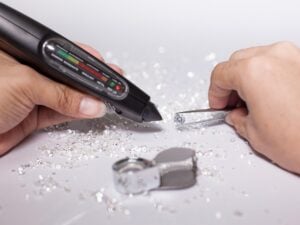
Most basic diamond testers are designed to measure thermal conductivity, which is how well a stone conducts heat. Both diamonds and moissanite have high thermal conductivity, meaning they can produce similar readings on standard testers.
That’s why in many cases, moissanite passes a diamond test—especially when using older or simpler tools.
However, this doesn’t mean moissanite is a diamond.
It simply means that the tester cannot always differentiate moissanite from diamonds based on heat alone.
👉 In short:
Yes, moissanite can pass a diamond tester
No, it is not a real diamond
To fully understand why, we need to look at how diamond testers work.
To understand why moissanite passes a diamond test, you first need to understand what a tester actually measures.
A standard diamond tester works by measuring thermal conductivity.
When the tester touches a stone, it sends heat through it and analyzes how quickly that heat moves.
Diamonds conduct heat extremely well
Most other gemstones do not
Because of this, diamonds stand out clearly when tested.
However, moissanite is different.
It also has high thermal conductivity, which means it can produce a similar reading—causing confusion for many testers.
The key reason moissanite passes a diamond tester is because it behaves similarly to diamonds in one important way:
👉 It conducts heat almost as efficiently.
But here’s where the real difference lies:
Diamonds → conduct heat, but not electricity
Moissanite → conducts both heat and electrical conductivity
This is why newer tools, such as a dual tester, can more accurately identify moissanite.
A dual tester measures:
Thermal conductivity
Electrical conductivity
By combining both readings, it can correctly distinguish between:
Natural diamonds
Not all testers are created equal.
Traditional diamond testers → only measure heat
Advanced testers → measure both heat and electricity
If you use a basic tester, there’s a high chance that:
👉 moissanite will pass as a diamond
That’s why professional jewelers rely on additional tools like:
A jeweler’s loupe
Advanced testers
Experience in identifying visual differences
Although moissanite can pass a diamond tester, the way it behaves is not exactly the same as a real diamond.
Understanding the difference helps explain why confusion happens—and how to avoid it.
The biggest distinction lies in how each stone reacts to heat and electricity.
Diamonds → high thermal conductivity, but do not conduct electricity
Moissanite → high thermal conductivity and measurable electrical conductivity
This is why older tools—designed only to measure heat—can misidentify moissanite.
Modern devices, however, use dual detection methods to improve precision.
👉 In simple terms:
Heat alone = not enough to tell the difference
Heat + electricity = accurate identification
Not all testers are built the same.
Older testers → rely only on thermal readings
Basic tester tools → may show moissanite as a diamond
Dual testers → more reliable and accurate
In many cases, most people using a standard tester at home or even in a small shop may see moissanite “pass” the test.
That’s why results can feel misleading.
On a basic tester, yes—it can appear almost identical.
But that doesn’t reflect reality.
A tester measures only one or two physical properties. It does not evaluate:
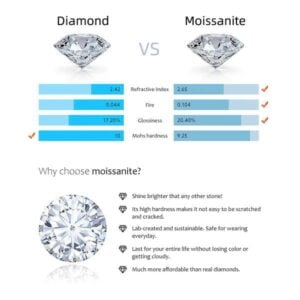
Brilliance
Light performance
Internal structure
So while moissanite may “pass,” it doesn’t mean it behaves exactly like a diamond in every way.
If a diamond tester isn’t always reliable, how can you actually tell the difference?
There are a few practical ways—some you can notice with the naked eye, others require professional tools.
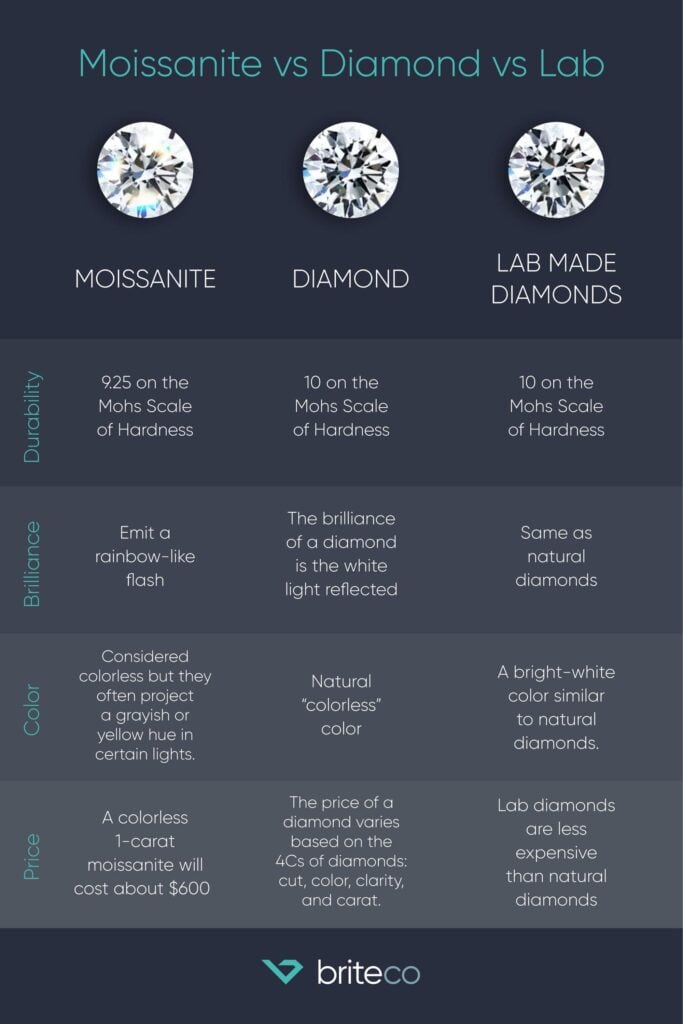
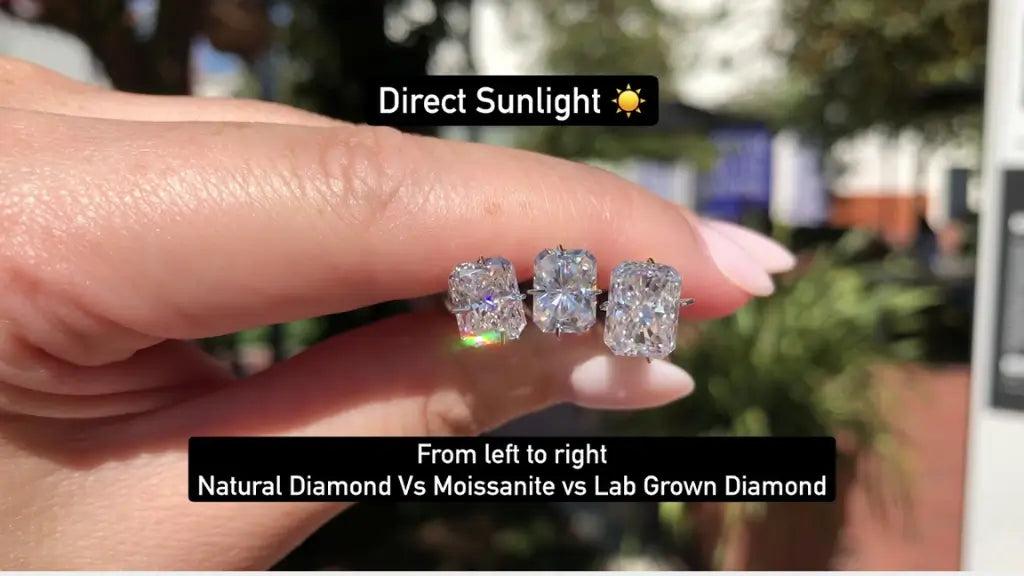
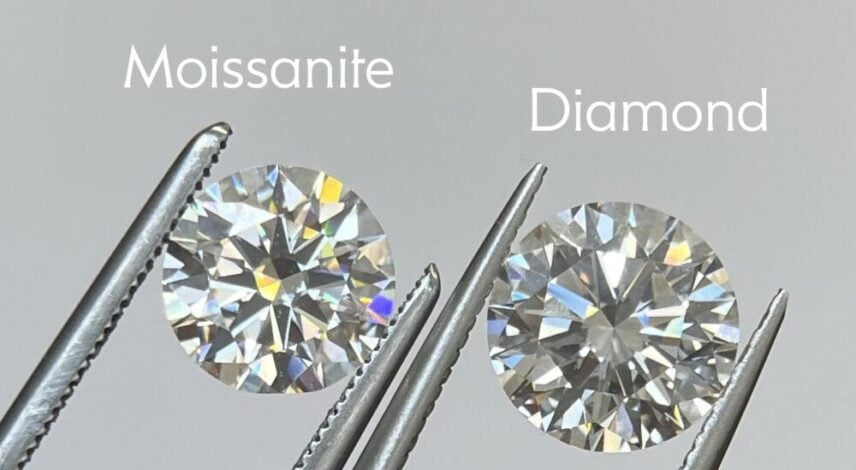
Moissanite and diamonds interact with light differently.
Moissanite → produces stronger rainbow fire
Diamonds → display more white light and balanced sparkle
Under certain lighting, moissanite may appear more colorful, while diamonds look more classic and subtle.
Another key detail is facets.
Moissanite shows a phenomenon called double refraction, meaning light splits slightly as it passes through the stone. This can create a softer or slightly “duplicated” look under magnification.
For accurate identification, professionals use more advanced tools.
A jeweler may rely on:
A dual tester (thermal + electrical conductivity)
A jeweler’s loupe to inspect internal structure
Specialized devices designed for gemstone identification
These tools provide much higher precision than basic testers.
In some cases, yes—but not always.
If you compare two stones side by side:
Differences in sparkle, light, and fire become easier to notice
Larger stones make the difference more visible
However, for smaller stones or casual observation, even experienced buyers may find it difficult.
One of the most common questions is what happens in real-world situations—especially at a pawn shop.
So, will moissanite pass a diamond tester there?
👉 Sometimes, yes.
Many pawn shops and small jewelry stores still use basic tester tools that rely only on thermal conductivity. Since both diamonds and moissanite conduct heat well, the result can show a “pass.”
However, experienced professionals usually don’t rely on a single test.
A trained jeweler will often:
Use more advanced devices
Check the stone under magnification
Compare visual characteristics like sparkle and fire
So while moissanite might pass an initial test, it rarely fools a professional for long.
If you’re asking whether moissanite passes a diamond test, you’re probably also wondering:
👉 Should you choose moissanite or a lab diamond?
Even though both are lab-created, they are completely different materials.
Moissanite → made of silicon carbide
Lab grown diamonds → made of pure carbon, just like natural diamonds
This leads to differences in:
Brilliance and light behavior
Internal structure
Market perception
A lab diamond is considered a real diamond, while moissanite is a different gemstone.
The right choice depends on your priorities.
Choose moissanite if you want:
Lower price
Stronger fire and rainbow sparkle
A budget-friendly option
Choose lab grown diamonds if you want:
A real diamond
Classic sparkle
Long-term value perception
Both are durable and suitable for daily wear, so the decision comes down to preference—not performance.
Let’s return to the original question:
👉 Will moissanite pass a diamond tester?
Yes—but not always accurately.
Moissanite can pass many standard testers because it shares similar thermal conductivity with diamonds. However, it behaves differently when additional factors like electrical conductivity are measured.
A diamond tester alone is not enough to confirm whether a stone is a real diamond.
To properly identify a stone, you need:
Advanced testing tools
Professional evaluation
Or a trusted source when purchasing
Yes, moissanite can pass many diamond testers, especially those that only measure heat.
Because it has high thermal conductivity, similar to diamonds.
Only advanced testers that measure electrical conductivity can reliably differentiate them.
No, moissanite is a different gemstone made of silicon carbide.
Yes, most professional jewelers can identify moissanite using proper tools and experience.