Diamonds are often associated with value, beauty, and long-term meaning—but not every stone that looks like a diamond is actually real.
With so many alternatives on the market, from cubic zirconia to moissanite, it’s becoming increasingly important to understand the difference between a real vs fake diamond. At first glance, many of these stones can look almost identical, especially to the untrained eye.
So how can you tell if a diamond is real?
The good news is that you don’t always need professional equipment to get a basic answer. There are simple ways to evaluate a diamond at home, as well as more reliable methods used by experts.
In this guide, we’ll walk you through both—starting with the key differences between real and fake diamonds, and then moving into practical tests you can actually use.
I. Real vs Fake Diamond What Is the Difference
Before testing a diamond, it helps to understand what you’re actually looking for.
A real diamond is made of pure carbon formed under extreme heat and pressure. It has a unique crystal structure that gives it exceptional durability, brilliance, and a high hardness rating—making it one of the hardest natural materials on Earth.
A fake diamond, on the other hand, refers to any material designed to imitate the appearance of a diamond without having the same composition. Common examples include cubic zirconia, moissanite, and even glass.
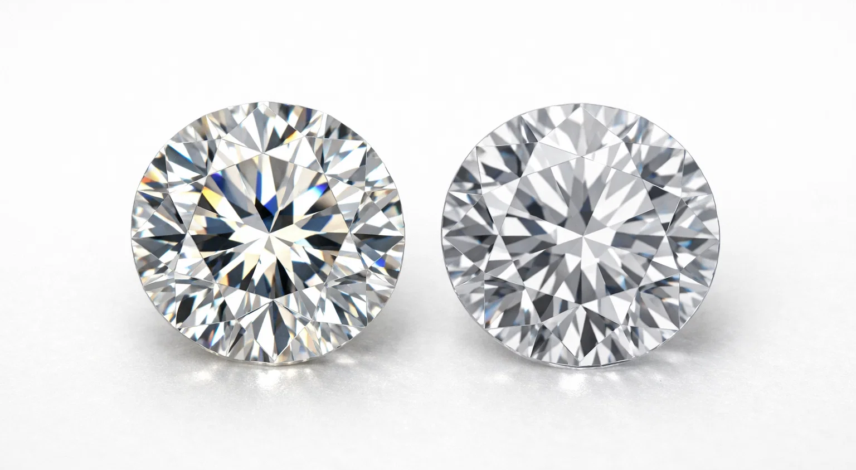
Real Diamonds vs Fake Diamonds in Appearance
One of the biggest challenges is that fake diamonds can look very convincing.
However, there are subtle differences:
Real diamonds reflect light in a more balanced way, producing a mix of white light and colored flashes
Fake stones often appear overly bright or “rainbow-like”
Lower-quality imitations may lack depth and look slightly dull under natural light
These differences are not always obvious, but they become clearer when you know what to look for.
Durability and Hardness Differences
A key distinction between real and fake diamonds is durability.
Real diamonds rank at the top of the Mohs scale of hardness, meaning they are highly resistant to scratching. Most fake diamonds are softer and can show wear over time.
This doesn’t always help with quick identification, but it explains why real diamonds maintain their appearance for years.
Price as an Indicator
Price can also be a clue—though it’s not always reliable.
If a stone is being sold at a price that seems too good to be true, it’s worth taking a closer look. However, it’s important to note that lab grown diamonds can also be more affordable than natural diamonds while still being real.
This is where many buyers get confused.
Are Lab Grown Diamonds Real or Fake
This is one of the most common questions.
Despite the name, lab grown diamonds are real diamonds. They have the same chemical structure, durability, and visual properties as natural diamonds.
The only difference is how they are created—one forms naturally over millions of years, while the other is produced using advanced technology.
This means lab diamonds should not be confused with fake diamonds like cubic zirconia or glass.
II. How to Tell If a Diamond Is Real at Home
If you don’t have access to professional tools, there are still several simple ways to check whether a diamond might be real.
While these tests are not 100% definitive, they can help you quickly identify obvious differences between a real vs fake diamond.
Water Test Does a Diamond Sink or Float
The water test is one of the easiest methods you can try at home.
Simply drop the stone into a glass of water.
A real diamond will usually sink to the bottom due to its high density
A fake diamond, especially one made of glass or lower-density material, may float or sink more slowly
However, this test is not always reliable. Some fake stones can still sink, so this should only be used as a basic check.
Fog Test Does It Stay Clear or Foggy
The fog test works by using your breath.
Hold the diamond close to your mouth and breathe on it, just like you would fog up a mirror.
A real diamond disperses heat quickly, so the fog disappears almost instantly
A fake diamond tends to stay foggy for a few seconds
This happens because real diamonds conduct heat more efficiently.
Flash Test Sparkle and Light Reflection
Light performance is one of the most noticeable differences between real and fake diamonds.
When exposed to light:
A real diamond reflects a balanced mix of white light and subtle rainbow flashes
Fake diamonds often show excessive rainbow colors or appear overly “glassy”
Pay attention to how the stone reacts under natural light rather than artificial lighting.
Newspaper Test Can You See Through It
This test works best with loose stones.
Place the diamond on top of a piece of printed text.
If you can clearly read the letters through the stone, it is likely fake
A real diamond bends light in a way that makes the text difficult or impossible to read
Note: This test may not work well with certain cuts or mounted diamonds.
Important: Home Tests Are Not Always Accurate
While these methods are helpful, they are not foolproof.
Some high-quality fake diamonds—especially moissanite—can pass several of these tests. That’s why it’s important to combine multiple methods or consider professional verification.
III. Professional Ways to Tell If a Diamond Is Real
If you want a more reliable answer, professional testing is the best option.
Experts use specialized tools and certification systems to accurately identify whether a diamond is real.
Diamond Tester and Thermal Conductivity
A diamond tester measures how well a stone conducts heat.
Real diamonds have high thermal conductivity
Most fake stones do not
This is one of the fastest and most accurate ways to distinguish a real diamond from common imitations.
Check Certification and Laser Inscription
A genuine diamond—especially one used in engagement rings—often comes with certification from organizations like IGI or GIA.
You can also look for:
A laser inscription on the diamond’s girdle
A matching certificate number
This provides strong proof of authenticity and detailed information about clarity, color, and carat weight.
Visit a Professional Jeweler
When in doubt, visiting a trusted jeweler is always a safe option.
Professionals can:
Inspect the diamond under magnification
Verify its authenticity
Provide expert advice
This is especially recommended if you’re dealing with a high-value stone or planning to make a purchase.
IV. Real Diamond vs Fake Diamond Key Differences
While individual tests can help, the easiest way to understand a real vs fake diamond is to compare their key characteristics side by side.
Here are the most important differences:
Hardness
Real diamonds are the hardest known material, while fake diamonds are softer and more prone to scratches.
Sparkle
Real diamonds reflect light in a balanced way, combining white light with subtle rainbow flashes. Fake diamonds often appear either too dull or overly colorful.
Weight and Density
Real diamonds are denser, which is why they typically sink in water and feel slightly heavier compared to similar-sized fake stones.
Price
Real diamonds—especially natural ones—are usually more expensive. However, lab grown diamonds can offer a more affordable alternative without being fake.
Understanding these differences helps you quickly identify obvious imitations and make more informed decisions.
V. Common Fake Diamonds You Should Know
Not all fake diamonds are the same. Some are easy to spot, while others can closely resemble real diamonds.
Cubic Zirconia vs Diamond
Cubic zirconia (CZ) is one of the most common diamond substitutes.
It is much cheaper than real diamonds
It tends to look more “glassy”
Over time, it can lose its clarity and shine
Moissanite vs Diamond
Moissanite is more advanced and often confused with real diamonds.
It has strong brilliance and durability
It produces more rainbow-like sparkle than a diamond
It can pass some basic at-home tests
Because of this, moissanite can be harder to distinguish without professional tools.
Glass and Other Synthetic Stones
Lower-end imitations, such as glass, are easier to identify.
They lack depth and brilliance
They scratch easily
They often feel lighter than real diamonds
These are typically found in low-cost jewelry.
VI. Can Lab Grown Diamonds Be Considered Real
This is where many people get confused.
Despite common misconceptions, lab grown diamonds are real diamonds.
They share:
The same chemical composition
The same hardness rating
The same level of sparkle and durability
The only difference is their origin.
Natural diamonds are formed through mining, while lab diamonds are created using advanced technology in controlled environments.
This means:
👉 Lab diamonds are not fake
👉 They are simply a different way of producing real diamonds
For many buyers, this makes them a practical and cost-effective choice.
VII. Final Thoughts: How to Know If a Diamond Is Real
Knowing how to identify a real diamond doesn’t require expert-level knowledge—it just requires understanding what to look for.
Simple at-home tests can help you spot obvious differences, while professional tools provide more accurate confirmation.
Most importantly, understanding the difference between real vs fake diamond helps you make better buying decisions.
And when you’re ready to purchase, choosing a trusted retailer ensures that what you’re getting is exactly what you expect.
Hint: The password should be at least eight characters long. To make it stronger, use upper and lower case letters, numbers, and symbols like ! " ? $ % ^ & ).