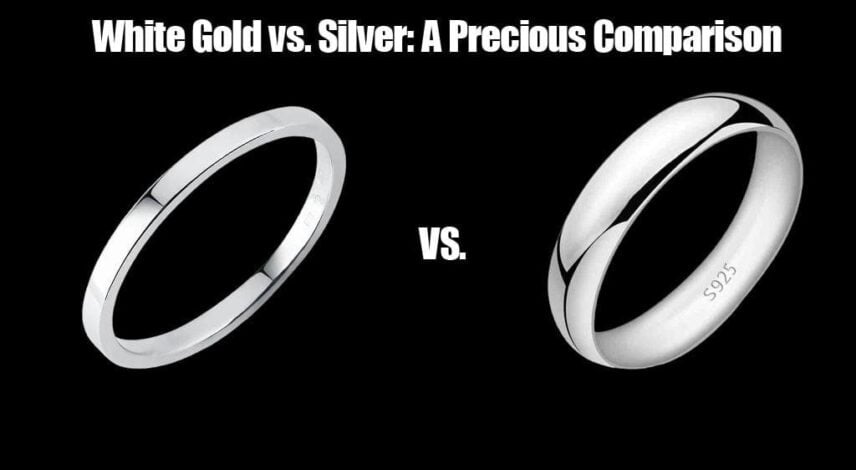
Choosing between sterling silver vs white gold can be surprisingly difficult—especially since they often look almost identical at first glance.
Both metals have a similar bright, silvery appearance. Both are widely used in rings, necklaces, and everyday jewelry. And both can look elegant when paired with gemstones or diamonds.
So what’s the real difference?
The answer goes beyond appearance. It comes down to how the metal wears over time, how much maintenance it needs, how it feels on your skin, and of course—how much you’re willing to spend.
In this guide, we’ll break down sterling silver vs white gold in a simple and practical way, so you can decide which one actually fits your lifestyle and budget.
I. Sterling Silver vs White Gold What Is the Difference
Before comparing performance or price, it helps to understand what these two metals actually are.
What Is Sterling Silver
Sterling silver is a metal made from 92.5% pure silver, mixed with a small amount of other metals (usually copper) to improve strength.
Pure silver on its own is too soft for everyday jewelry, so this alloy makes it more durable while still keeping its bright, reflective look.
Because of this, sterling silver is:
Lightweight
Affordable
Easy to shape into different designs
It’s commonly used for casual jewelry and fashion pieces.
What Is White Gold
White gold, on the other hand, is an alloy made by mixing pure gold with white metals such as palladium or nickel.
To achieve its bright white finish, white gold is typically coated with a thin layer of rhodium, which enhances its shine and durability.
Compared to sterling silver, white gold is:
Stronger and more durable
More resistant to everyday wear
Considered a fine jewelry material
This is why it’s often used for engagement rings and higher-end pieces.
Why They Look So Similar
One of the main reasons people compare sterling silver vs white gold is because they look almost the same.
Both metals have:
A bright, silvery color
A clean and modern appearance
A polished finish that works well with diamonds and gemstones
However, the difference becomes more noticeable over time—especially in how they wear and how much maintenance they require.
II. Appearance Comparison Sterling Silver vs White Gold
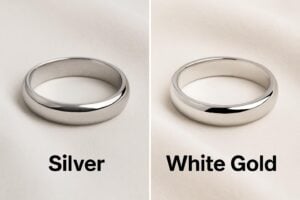
At first glance, sterling silver vs white gold can look almost identical. Both have a bright, cool-toned finish that pairs beautifully with diamonds and gemstones.
But when you look a little closer—and especially after wearing them for a while—the differences start to show.
Color and Shine
Sterling silver has a naturally bright and slightly softer shine. It often looks a bit more “white” in tone, especially when freshly polished.
White gold, on the other hand, has a more refined and slightly warmer undertone beneath its surface. Thanks to its rhodium coating, it tends to appear:
Smoother
More reflective
Slightly more polished overall
This subtle difference gives white gold a more “fine jewelry” look.
How They Age Over Time
One of the biggest differences appears with wear.
Sterling silver can:
Lose its shine over time
Develop a darker layer (tarnish)
Require regular cleaning to stay bright
White gold behaves differently.
Instead of tarnishing, it may:
Gradually lose its rhodium coating
Reveal a slightly warmer tone underneath
Need occasional replating to restore its bright finish
In everyday use, white gold generally keeps a more consistent appearance with less frequent maintenance.
Which One Looks Better
This really depends on what you prefer.
If you like a slightly softer, more natural shine, sterling silver works well
If you prefer a cleaner, more polished and high-end look, white gold tends to stand out
For many people, the difference is subtle at first—but becomes more noticeable over time.
III. Durability and Maintenance Which One Lasts Longer
Beyond appearance, durability is where the real difference between sterling silver vs white gold becomes clear.
Does Sterling Silver Tarnish
Yes—sterling silver naturally tarnishes over time.
This happens when the metal reacts with air and moisture, creating a darker layer on the surface.
The good news is:
Tarnish is not permanent
It can be cleaned and polished
Regular care keeps it looking good
However, if you wear silver jewelry daily, you may notice the need for more frequent maintenance.
Does White Gold Fade or Need Replating
White gold doesn’t tarnish in the same way, but it does require its own type of upkeep.
Over time, the rhodium coating may wear off, especially on rings that are worn every day.
When this happens, the metal underneath may look slightly warmer in color.
The solution is simple:
Rhodium replating restores the original bright finish
It’s typically done every 1–2 years depending on wear
Compared to silver, this maintenance is less frequent but slightly more specialized.
Which One Is Better for Everyday Wear
If durability is your priority, white gold generally has the advantage.
It is:
More resistant to scratches
Better suited for daily wear
More stable in appearance over time
Sterling silver is still a great option, especially for occasional wear or lighter use—but it may require more attention if worn every day.
IV. Price Comparison Sterling Silver vs White Gold
One of the biggest differences between sterling silver vs white gold comes down to price.
Sterling silver is significantly more affordable. It’s one of the most budget-friendly options for jewelry, making it ideal if you want a stylish look without spending too much.
White gold, however, is more expensive because:
It contains real gold
It requires additional processing (like rhodium plating)
It is considered a fine jewelry material
In many cases, a white gold piece can cost several times more than a similar design in sterling silver.
Is White Gold Worth the Higher Price
For many buyers, the answer is yes—but it depends on how you plan to wear the jewelry.
White gold is often chosen for:
Engagement rings
Long-term daily wear
Pieces with sentimental value
Sterling silver, on the other hand, is perfect for:
Trend-based styles
Occasional wear
Expanding your jewelry collection without a large investment
The key is not which one is “better,” but which one fits your needs.
V. Comfort and Wearability Which Feels Better
Comfort is something people don’t always think about—but it matters, especially for pieces you wear every day.
Weight and Feel
Sterling silver is typically lighter, which can make it feel more comfortable for casual wear.
White gold is slightly denser and feels more substantial. Some people prefer this because it gives a sense of durability and quality.
Skin Sensitivity
Most sterling silver is well-tolerated, but because it contains other metals (like copper), some people may notice slight skin reactions over time.
White gold can also contain alloys like nickel, depending on the composition, which may affect sensitive skin.
If you have concerns, choosing high-quality alloys or hypoallergenic options is always a good idea.
Feature
Sterling Silver
White Gold
Appearance
Bright white soft shine
Polished white with high-end finish
Durability
Softer, scratches easier
Stronger, better for daily wear
Maintenance
Tarnishes, needs regular cleaning
Needs rhodium replating over time
Price
Affordable
More expensive
Weight
Lightweight
Slightly heavier
Best For
Casual and everyday styles
Engagement rings and fine jewelry
VI. Pros and Cons of Sterling Silver and White Gold
To make things easier, here’s a quick comparison:
Sterling Silver Pros
More affordable
Lightweight and comfortable
Easy to style for everyday wear
Sterling Silver Cons
Tarnishes over time
Requires more frequent cleaning
Less durable for long-term daily wear
White Gold Pros
More durable and long-lasting
Maintains a polished, high-end look
Ideal for engagement rings and fine jewelry
White Gold Cons
Higher cost
Requires occasional replating
Slightly heavier
VII. Which One Should You Choose Based on Your Needs
If you’re still deciding between sterling silver vs white gold, the best choice comes down to how you plan to use it.
Choose Sterling Silver If
You want an affordable option
You like to switch styles frequently
You’re buying jewelry for casual or occasional wear
Sterling silver offers flexibility and great value, especially if you enjoy variety.
Choose White Gold If
You want something long-lasting
You plan to wear the piece every day
You’re buying an engagement ring or a meaningful gift
White gold is better suited for pieces that need to hold up over time while maintaining a refined look.
VIII. Best Jewelry Types for Each Metal
Different metals work better for different types of jewelry.
Sterling Silver Jewelry Ideas
Sterling silver is ideal for:
Everyday rings
Simple necklaces
Trend-driven pieces
Its affordability makes it easy to experiment with different styles.
Hint: The password should be at least eight characters long. To make it stronger, use upper and lower case letters, numbers, and symbols like ! " ? $ % ^ & ).