












Valentine’s Day Proposal Ideas Beyond the Ring
0 comments

SHOP BY STYLE ✧
SHOP BY SHAPE ✧
![]()
![]()
![]()
![]()
![]()
METAL COLOR ✧
SHOP BY STYLE ✧
![]()
![]()
![]()
SHOP BY STONE ✧
SHOP BY METAL ✧
JEWELRY FOR THE BIG DAY
NECKLACES ✧
EARRINGS ✧
BRACELETS ✧
SHOP BY SHAPE ✧
![]()
![]()
![]()
![]()
![]()
![]()
SHOP BY COLOR ✧
SHOP BY CATEGORY✧

FEATURED✧
SHOP BY CATEGORY✧
SHOP BY OCCASION✧
SHOP BY PRICE✧

Birthstone Jewelry

Valentine’s Day proposal ideas are evolving — and for good reason.
While the engagement ring remains meaningful, more couples today are focusing on how the proposal feels rather than how extravagant it looks.
Modern proposals are becoming more personal, more intentional, and more rooted in shared experiences. Instead of centering the moment entirely around the ring, many proposers are choosing to design a proposal that reflects their relationship story, values, and everyday connection.
In this guide, we’ll explore practical Valentine’s Day proposal ideas that go beyond the ring — ideas that are easier to execute than you might expect, emotionally impactful, and far more memorable than a single scripted moment.
Valentine’s Day proposal ideas that focus on experience rather than spectacle are gaining popularity for several practical reasons.
First, proposals today are often shared — whether privately with family or publicly on social media. Moments that feel authentic and emotionally grounded tend to resonate more than overly staged surprises. A proposal built around a shared memory, habit, or meaningful place naturally photographs better and feels more genuine.
Second, many couples are prioritizing emotional value over formality. A thoughtfully planned experience — such as revisiting a meaningful location or creating a quiet, intentional moment at home — often feels more romantic than a crowded restaurant or a high-pressure public setting.
Finally, a proposal that goes beyond the ring allows flexibility. The ring can be introduced at the right moment rather than dictating the entire experience. This reduces pressure, allows for better timing, and gives the proposer room to focus on connection instead of logistics.
In short, modern Valentine’s Day proposal ideas are less about impressing an audience and more about creating a moment that feels unmistakably theirs.
When people search for valentine’s day proposal ideas, they’re often looking for something meaningful — not necessarily complicated. Experience-based proposals work because they create emotional context before the question is ever asked.
One of the most effective approaches is to build the proposal around something you already do together. This could be a weekend walk, a shared hobby, or even a routine date night that feels familiar rather than performative. By elevating an existing experience instead of inventing something new, the proposal feels intentional without feeling forced.
Another popular direction is the “destination-within-reach” proposal. This doesn’t mean flying across the world. It can be as simple as a nearby coastal town, a scenic drive, or a boutique hotel stay planned specifically around Valentine’s Day. The key is timing: let the experience unfold naturally before introducing the proposal moment, instead of centering the entire trip around it.
Experience-focused Valentine’s Day proposal ideas also allow for better pacing. You’re not rushing to a single dramatic moment — you’re creating a series of small emotional beats that lead naturally to the question.
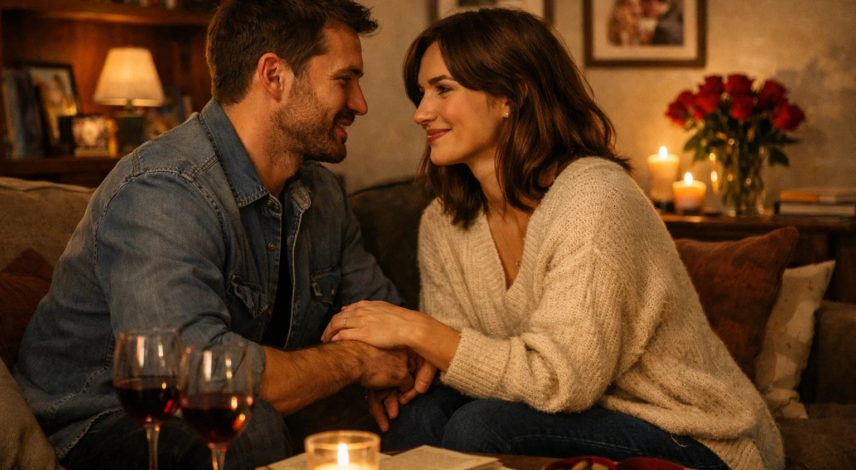
At-home proposals are often underestimated, yet they consistently rank among the most emotionally successful Valentine’s Day proposal ideas.
The reason is simple: comfort creates openness. When someone feels safe and relaxed, the moment becomes more personal — and far more memorable.
An intimate at-home proposal doesn’t require elaborate decoration. Thoughtful details matter more than scale. A handwritten letter, a curated playlist, or a home-cooked meal tied to a shared memory can transform an ordinary evening into something deeply meaningful.
Many couples also appreciate the privacy that at-home proposals offer. There’s no pressure to perform, no audience, and no expectation to react a certain way. This allows the proposal to unfold at its own pace, making the moment feel genuine rather than rehearsed.
From a practical standpoint, at-home Valentine’s Day proposal ideas are also easier to control. Lighting, timing, and environment can all be planned subtly, creating a calm setting where the focus stays on the relationship — not the logistics.
The most memorable Valentine’s Day proposal ideas are rarely copied from social media. They’re built from details only the two of you recognize.
A personalized proposal starts by identifying a shared turning point — the moment you realized this relationship was different. It might be your first trip together, a challenging period you supported each other through, or even a casual habit that became meaningful over time. When the proposal references that moment, it immediately feels intentional.
This approach doesn’t require grand gestures. A simple location tied to a shared memory, paired with a few honest words, often carries more weight than an elaborate setup. The goal isn’t to impress — it’s to resonate.
Many couples also choose to incorporate subtle personalization through timing. Proposing at a meaningful hour, anniversary date, or moment of transition (such as the end of a work week or the start of a new chapter) adds emotional depth without any visual theatrics.
Among all Valentine’s Day proposal ideas, personalized moments consistently feel the most authentic — because they’re impossible to replicate.
While rings are important, the proposal should never feel like it’s about the ring.
The most effective Valentine’s Day proposal ideas introduce the ring as a natural extension of the moment, not the centerpiece. This often means letting the emotional exchange happen first — the reflection, the story, the reason — before revealing the ring.
Timing plays a crucial role here. Instead of leading with the box, allow the conversation to build organically. When the ring appears, it should feel like confirmation of what’s already been said, not the reason the moment exists.
From a practical standpoint, choosing a ring that aligns with your partner’s style also reduces distraction. A design that feels familiar and wearable allows the focus to remain on the commitment, not the object itself.
Ultimately, the ring should support the proposal — not overshadow it. The most successful Valentine’s Day proposal ideas strike this balance naturally, ensuring the moment is remembered for how it felt, not just how it looked.
Even the most thoughtful Valentine’s Day proposal ideas can fall flat if a few common missteps aren’t considered in advance.
One frequent mistake is prioritizing spectacle over comfort. Public proposals may look impressive online, but they’re not right for everyone. If your partner prefers privacy or feels uncomfortable being the center of attention, a crowded setting can create stress rather than joy.
Another issue is over-planning every detail without leaving room for genuine emotion. When a proposal feels scripted, it can lose its emotional impact. Silence, pauses, and unscripted reactions are not flaws — they’re part of what makes the moment real.
Timing is another overlooked factor. Proposing when your partner is distracted, exhausted, or emotionally preoccupied can dilute the experience. The best Valentine’s Day proposal ideas consider not just what happens, but when it happens.
Avoiding these mistakes doesn’t require perfection. It simply requires empathy — the same quality that makes a proposal meaningful in the first place.
At its core, a proposal is a decision shared between two people — not a performance for others.
The most successful Valentine’s Day proposal ideas don’t rely on trends, grand gestures, or external validation. They focus on clarity, emotional honesty, and moments that feel true to the relationship.
Whether the proposal happens during a quiet walk, a meaningful conversation, or a carefully planned experience, what matters most is that it reflects intention. When your partner can feel the thought behind the moment, everything else becomes secondary.
A proposal doesn’t need to be perfect to be unforgettable. It only needs to feel real.
Valentine’s Day proposal ideas don’t have to revolve around a ring. Many couples choose to focus on meaningful moments instead—such as writing a heartfelt letter, planning a shared experience, or creating a private moment that reflects their relationship. A proposal centered on intention and emotion often feels more personal than a traditional ring-based approach.
Yes, proposing on Valentine’s Day without a ring is completely okay. For some couples, the proposal is about commitment rather than a physical symbol. Many people prefer to choose a ring together later or focus first on the emotional milestone of saying “yes.”
Valentine’s Day proposals can feel cliché only if they rely on generic gestures. Thoughtful Valentine’s Day proposal ideas—especially those tailored to your partner’s personality—can feel intimate and memorable rather than predictable. The key is personalization, not the date itself.
A meaningful Valentine’s Day proposal reflects shared memories, emotional connection, and mutual understanding. Whether it’s a quiet conversation at home or a carefully planned experience, proposals feel most impactful when they prioritize authenticity over spectacle.
There’s no single right answer. Private Valentine’s Day proposal ideas tend to suit couples who value intimacy and emotional depth, while public proposals work better for partners who enjoy attention and shared celebration. The best choice depends entirely on your partner’s comfort level.
Thoughtful Valentine’s Day proposal ideas don’t require a big budget. Simple gestures—like cooking a meaningful meal, revisiting a special place, or sharing written promises—often leave a stronger emotional impression than expensive setups.
One common mistake is focusing too much on what looks impressive rather than what feels right. Overly public settings, rushed planning, or ignoring your partner’s preferences can make even well-intentioned Valentine’s Day proposal ideas fall flat.
Absolutely. Many couples treat Valentine’s Day proposals as the emotional beginning of their engagement, with rings, celebrations, or formal announcements coming later. This approach allows the proposal to stand on its own as a meaningful moment.
Ideally, Valentine’s Day proposal ideas should be planned at least a few weeks in advance. This gives you time to think through logistics, timing, and personal details—especially if your proposal involves travel, experiences, or meaningful preparation.
The best Valentine’s Day proposal ideas create both. While the moment itself matters, couples often remember how the proposal made them feel long after the day has passed. Emotional resonance is what turns a proposal into a lasting memory.