
























Why More Couples Are Choosing Rings That Don’t Look Like Engagement Rings
by Lisa Jewelry US 0 comments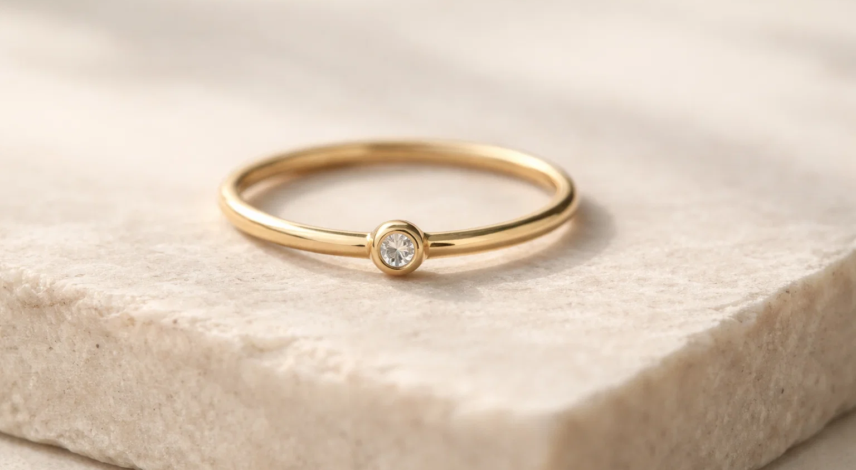
I. The Shift Is Intentional: Couples Are Choosing Rings That Reflect Real Life
More couples today are choosing rings that don’t look like traditional engagement rings—and this shift is intentional, not accidental. It’s not about rejecting commitment or tradition. It’s about choosing a ring that aligns with who they are, how they live, and what they value.
For decades, engagement rings followed a familiar visual formula: a prominent center stone, elevated settings, and a design meant to clearly signal “engaged” to the outside world. Today, that expectation no longer resonates with everyone. Many couples are moving away from rings that feel performative or symbolic for others, and toward designs that feel personal, wearable, and authentic.
These rings still represent commitment. They simply don’t announce it loudly. Instead, they blend seamlessly into daily life—designed to be worn constantly, comfortably, and confidently, without feeling like a special-occasion object.
II. What People Mean by “Rings That Don’t Look Like Engagement Rings”
When couples say they want a ring that doesn’t look like an engagement ring, they’re rarely talking about cost or importance. They’re talking about aesthetic language.
These rings often share a few defining characteristics:
- A smaller or more subtle center stone—or no center stone at all
- Low-profile or bezel settings instead of high prongs
- Clean, minimalist silhouettes
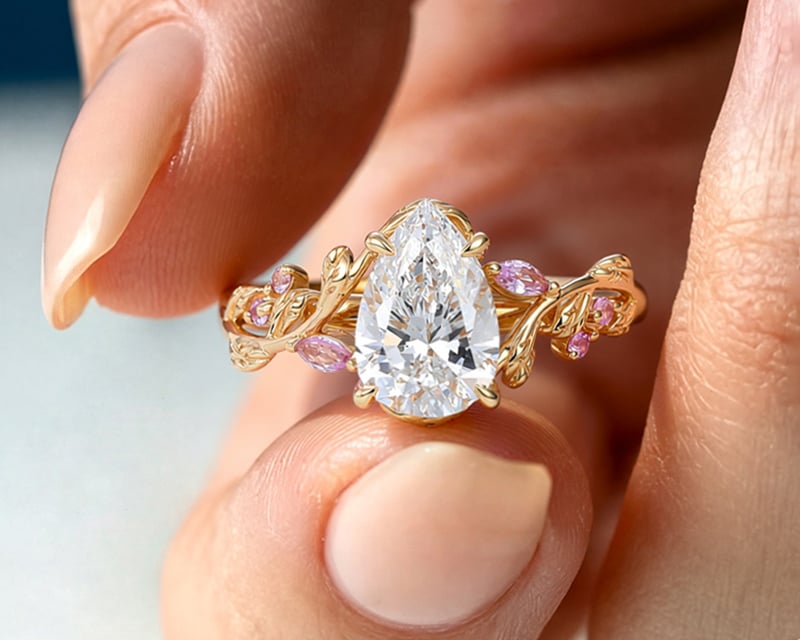
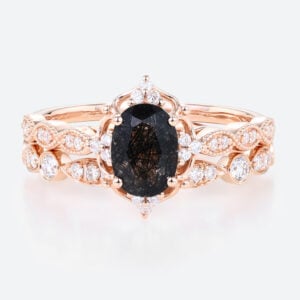
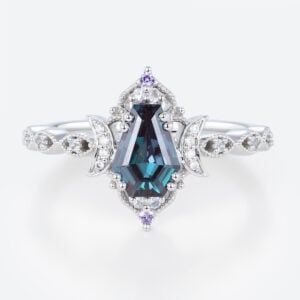
- Unconventional proportions, shapes, or orientations
- Designs that resemble everyday jewelry rather than ceremonial pieces
Importantly, these choices don’t make the ring less meaningful. They make it more wearable. More personal. More reflective of the wearer’s style and lifestyle.
In many cases, the goal is simple: a ring that feels natural on the hand, not something that constantly reminds the wearer that they’re wearing “an engagement ring.” It’s still a symbol of commitment—just one that feels private rather than performative.
III. Lifestyle Comes First: Rings Designed for Real Life
One of the strongest reasons couples are moving away from traditional engagement ring designs is simple: they want a ring that fits real life, not just a proposal moment.
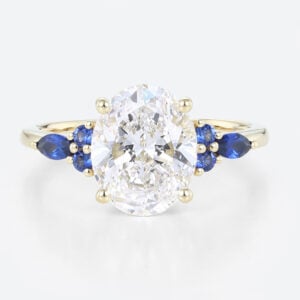
Modern lifestyles are more fluid than ever. People work with their hands, travel frequently, exercise regularly, and expect their jewelry to move with them—not restrict them. High-set center stones, sharp prongs, and large silhouettes can feel intrusive in daily routines, catching on clothing or demanding constant awareness.
Rings that don’t look like engagement rings are often designed with everyday wear in mind. They sit closer to the finger, feel lighter, and integrate seamlessly into a person’s normal style. Instead of being taken off “for practicality,” they’re worn continuously—becoming a true part of daily life rather than a special-occasion accessory.
For many couples, this practicality isn’t about convenience alone. It’s about longevity. A ring meant to be worn every day should feel effortless, comfortable, and natural—not something that requires adaptation or compromise.
IV. From Statement to Subtle: The Aesthetic Shift Behind the Trend
Beyond lifestyle considerations, there’s a clear aesthetic evolution influencing engagement ring choices. The visual language of luxury is changing—from bold statements to quiet confidence.
Younger generations, in particular, are gravitating toward minimalism, clean lines, and understated design. The appeal lies not in how loudly a ring announces its purpose, but in how well it reflects the wearer’s personal taste. Instead of “look at my ring,” the message becomes “this feels like me.”
This shift aligns closely with broader trends in fashion and design: quiet luxury, intentional simplicity, and pieces that reveal their quality through proportion and craftsmanship rather than size or sparkle alone. Engagement rings are following the same path.
Rings that don’t immediately read as engagement rings often feel more modern because they prioritize form, balance, and subtle detail. They don’t compete for attention. They invite closer looking—and in doing so, feel more intimate and self-assured.
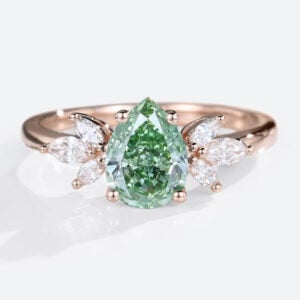
V. Emotional Meaning Over Social Signaling
For many couples, choosing a ring that doesn’t look like an engagement ring is about shifting the audience. The ring is no longer designed primarily for social recognition—it’s designed for the people wearing it.
Traditional engagement rings have long served as public symbols. Their size, sparkle, and instantly recognizable design communicate relationship status to the outside world. But not every couple feels the need—or desire—to broadcast their commitment in this way.
Instead, many are prioritizing emotional meaning over social signaling. They want a ring that represents their relationship privately, not performatively. One that feels intimate rather than declarative.
In this context, subtlety becomes a strength. A ring that doesn’t immediately read as “engaged” can still carry deep personal significance—sometimes even more so, because its meaning is understood by the couple first, and everyone else second.
As one idea often expressed in this shift:
It’s still an engagement ring—just not for everyone else.
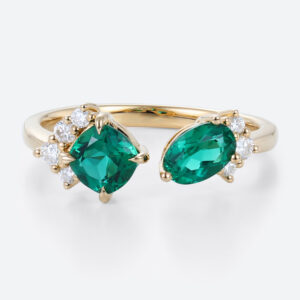
VI. Redefining What Commitment Looks Like Today
This trend also reflects a broader evolution in how commitment itself is defined. Relationships today don’t follow a single, linear script, and engagement rings are no longer expected to either.
Some couples don’t follow traditional timelines. Others value privacy. Some simply don’t see their relationship as something that needs visual validation. For them, commitment is expressed through shared decisions, daily partnership, and long-term intention—not through a universally recognized design.
Rings that don’t look like engagement rings align naturally with this mindset. They act less as social labels and more as personal symbols. Less about meeting expectations, and more about authenticity.
In this sense, the ring becomes quieter—but the commitment behind it does not. It’s simply expressed in a way that feels more aligned with modern values: individuality, intentional choice, and emotional clarity.
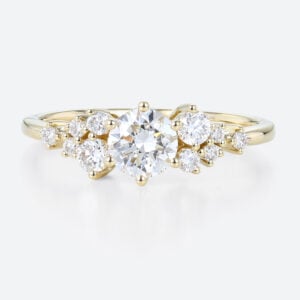
VII. Design Choices That Signal Commitment Without Looking Traditional
Rings that don’t resemble traditional engagement rings still communicate commitment—just in a quieter, more design-forward way. The signal is subtle, embedded in proportion, craftsmanship, and intention rather than obvious markers.
Common design choices include:
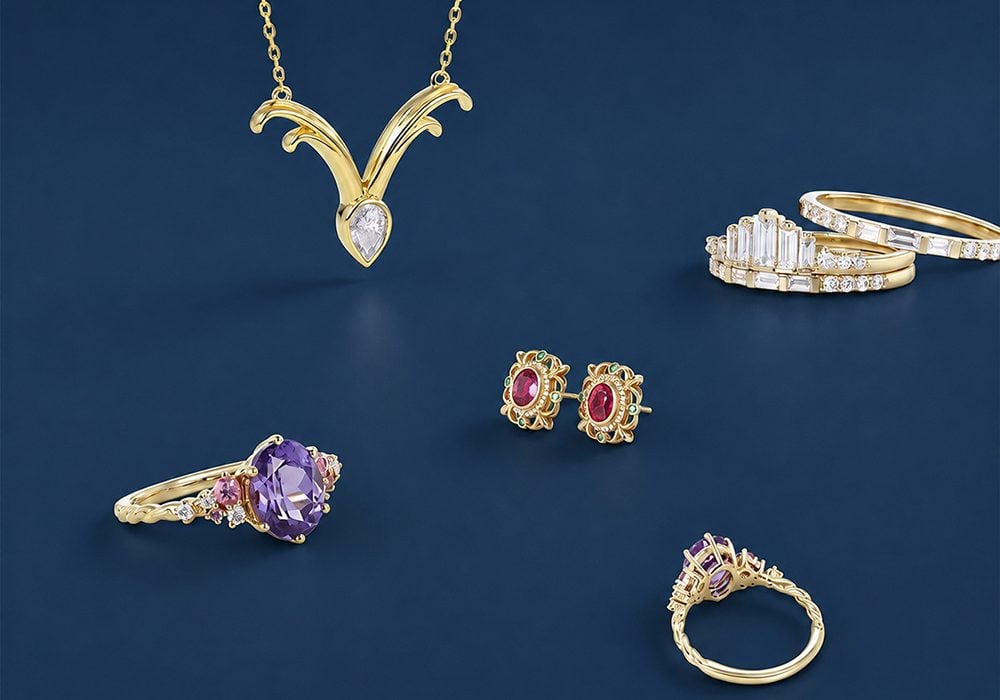
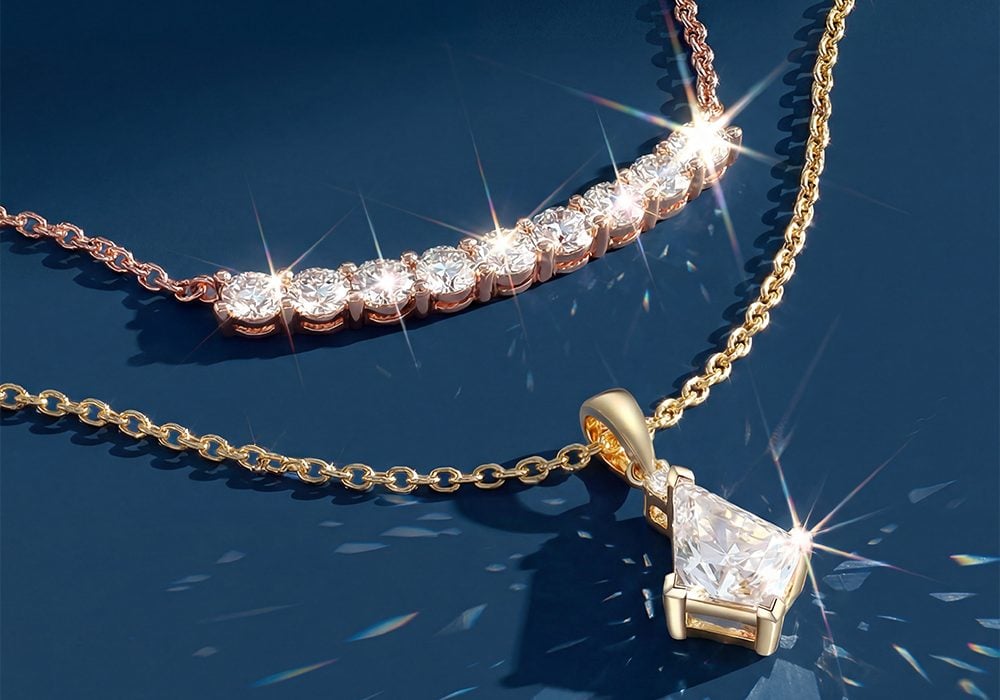
- Low-profile solitaires that sit close to the finger and feel integrated into daily wear
- Bezel settings, which protect the stone while creating a clean, modern outline
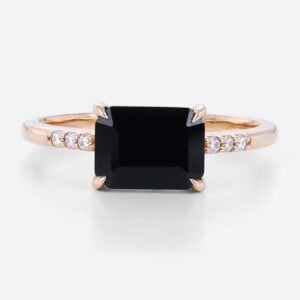
- Elongated stones set horizontally or with minimal metal presence
- Pavé or textured bands that emphasize continuity rather than a single focal point
- Plain gold bands with thoughtful detailing, where meaning comes from design rather than sparkle
These rings don’t announce engagement at a glance—but they reveal it through longevity, wearability, and personal resonance.
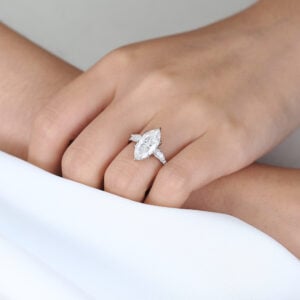
VIII. Why Lab-Grown Diamonds Fit This Movement Naturally
The rise of rings that don’t look like engagement rings also aligns naturally with the growing preference for lab-grown diamonds.
Couples choosing subtle, non-traditional designs often value:
- intentional decision-making
- transparency and rationality
- design freedom over convention
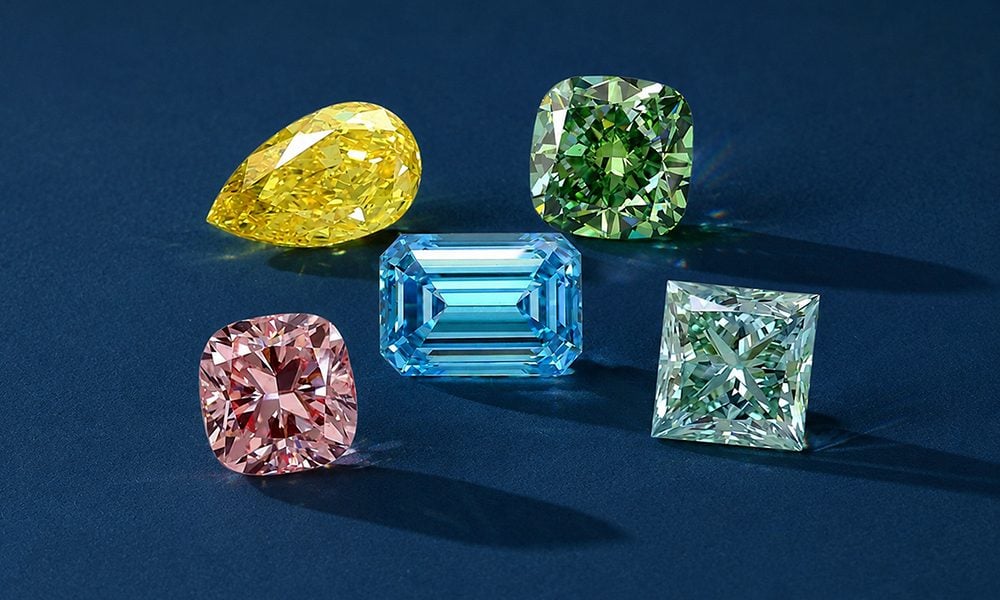
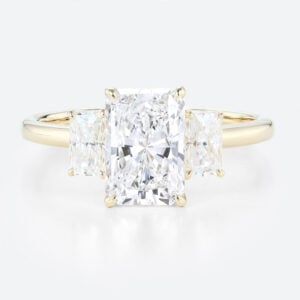
Lab-grown diamonds support this mindset by allowing couples to focus on design rather than just symbolism. With greater flexibility in size, cut, and clarity, the emphasis shifts from “how big” to “how well it fits the vision.”
Rather than being the centerpiece of attention, the diamond becomes part of a cohesive design—refined, considered, and aligned with modern values.
IX. Who This Choice Resonates With Most
Rings that don’t look like engagement rings tend to resonate most with people who:
- prefer minimalist or understated style
- rarely wear jewelry and want something natural-feeling
- work with their hands or live active lifestyles
- value privacy over public signaling
- see commitment as personal rather than performative
For these individuals, a traditional engagement ring may feel disconnected from how they actually live. A quieter design, on the other hand, feels intuitive and lasting.
X. Final Thoughts
An Engagement Ring Doesn’t Have to Look Like One
Engagement rings are evolving—not away from meaning, but toward authenticity.
There is no longer a single visual language that defines commitment. What matters now is whether a ring reflects the people wearing it, their lifestyle, and their values. For many couples, that means choosing a ring that blends into everyday life rather than standing apart from it.
A ring can still symbolize engagement without conforming to expectations. It can be subtle, personal, and deeply meaningful—without looking like what engagement rings used to look like.
In the end, the most meaningful ring isn’t the one that everyone recognizes.
It’s the one that feels right to the couple who chose it.