














You have found a wedding band you love—but when you place it beside your oval engagement ring, an unexpected gap appears between the two. Is the wedding band the wrong shape, or is your engagement ring simply not designed to sit flush with a straight band?
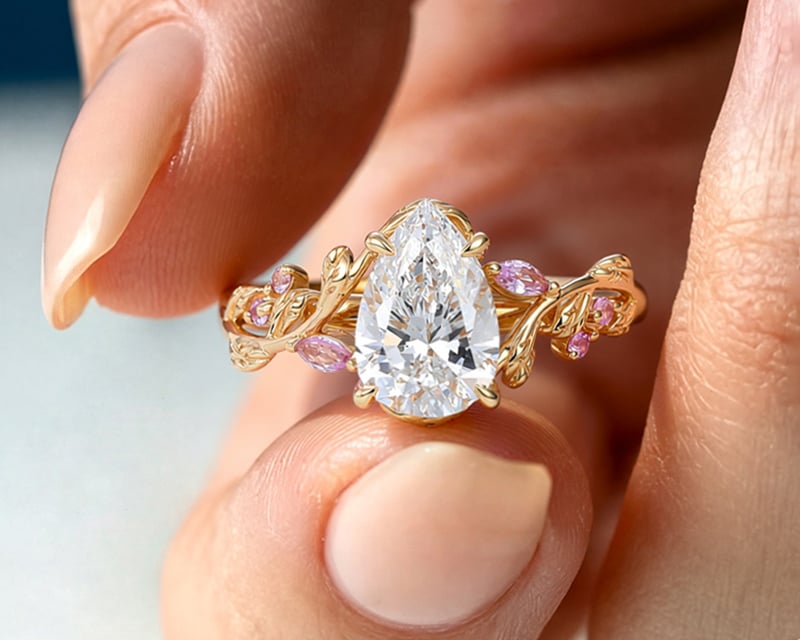
In most cases, the gap is caused by the architecture beneath the center stone rather than the oval diamond itself. A low-set basket, hidden halo, gallery rail, side stones, or outward-facing prongs can extend beyond the engagement ring’s shank and block a straight wedding band from sitting closer.
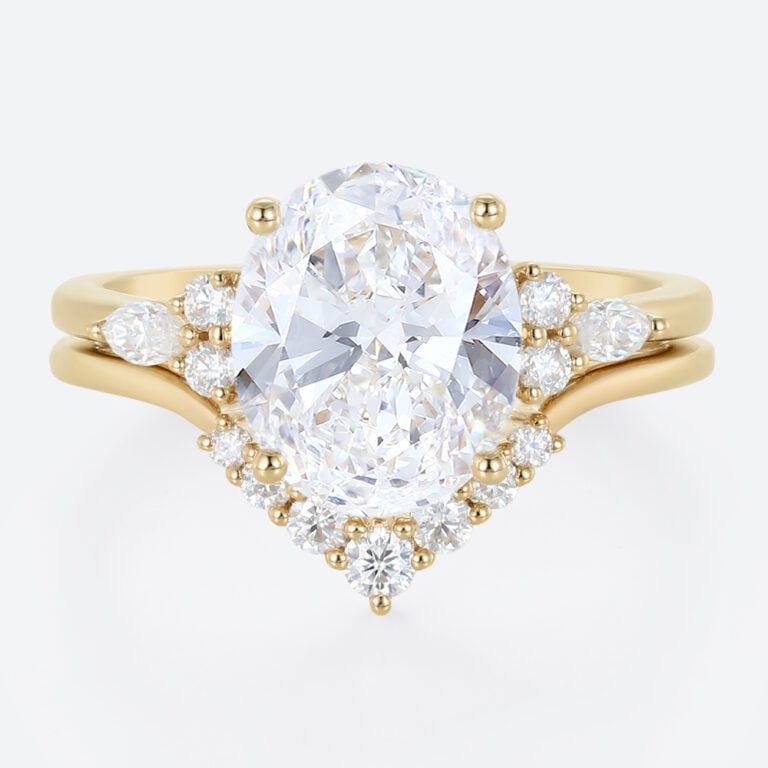
A curved wedding band solves this problem by creating space around the center setting. Depending on the shape and depth of its curve, the band may follow the outline of the basket for a more connected, coordinated appearance.
However, not every oval engagement ring requires a curved band—and not every curved band will provide a true flush fit. This guide explains how to evaluate your ring’s setting, compare different contour shapes, and choose a comfortable matching band for an oval ring.
The Quick Answer: Do Oval Rings Need Curved Wedding Bands?
Not necessarily. Whether your oval engagement ring needs a curved band depends primarily on the structure and height of its setting—not simply on the shape of the center stone.
A high-set oval ring may leave enough space beneath the basket for a straight wedding band to sit closely against the engagement-ring shank. By contrast, a low-profile setting may place the basket, hidden halo, or outer prongs directly in the wedding band’s path. In that case, a curved wedding band or contoured wedding ring can create the additional clearance needed for a closer fit.
Consider a Curved or Contoured Band If:
- The oval center setting sits close to the finger.
- The basket extends beyond the engagement-ring shank.
- A hidden halo, side stone, or outer prong blocks a straight band.
- You want to minimize the visible space between the two rings.
- You prefer the coordinated appearance of a bridal set.
A Straight Wedding Band May Work If:
- The center stone is held above a raised bridge.
- There is sufficient clearance beneath the basket.
- The engagement ring was designed for flush stacking.
- You prefer a small, intentional gap between the rings.
Lisa Jewelry Expert Note:
A “curved” label does not guarantee a flush fit. The curve’s depth, width, and position must correspond to the actual dimensions of your engagement-ring setting.
A perfectly flush stack is also a preference rather than a requirement. If the space between your rings is even, comfortable, and free from damaging contact, a small gap can be an intentional part of the design. The goal is not simply to remove every visible space—it is to find a pairing that looks balanced and protects both rings during everyday wear.
What Is a Curved or Contoured Wedding Ring?
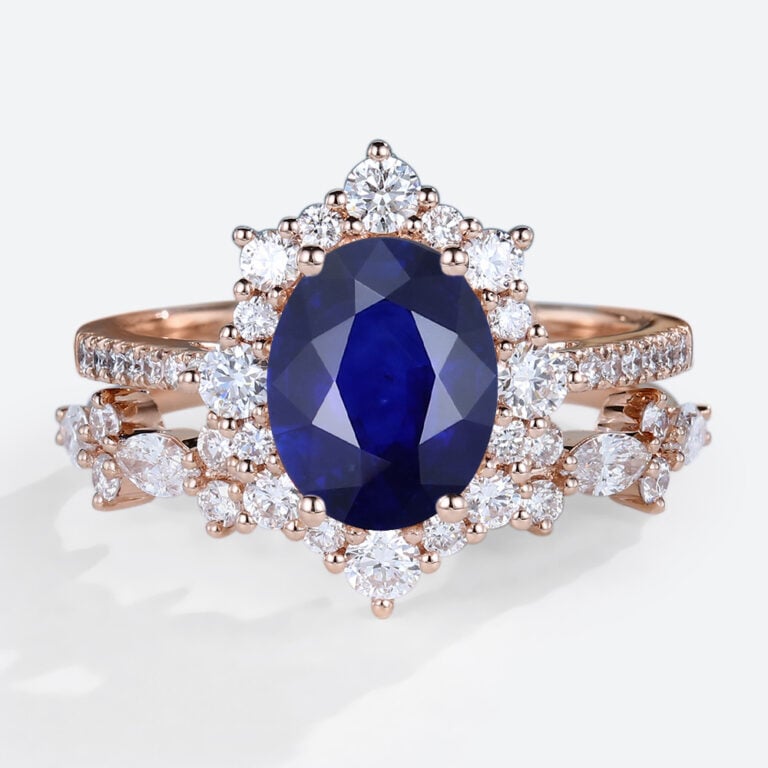
A curved wedding band includes an intentional arc, dip, or point that creates room around an engagement ring’s center setting. Instead of meeting the engagement ring in a straight line, it follows—or “nests” around—the part of the setting that extends beyond the shank.
You may encounter several related terms while shopping:
- Curved wedding band: A broad term for a band with a gentle or pronounced curve.
- Contoured wedding ring: A band shaped more closely around the outline of an engagement-ring setting.
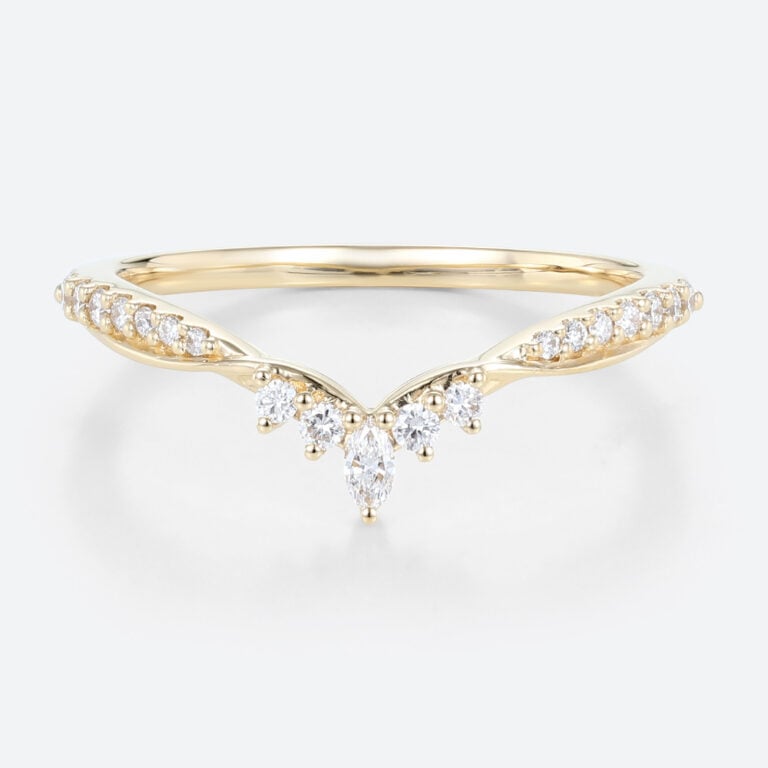
- Chevron band: A V-shaped design with a defined central point.
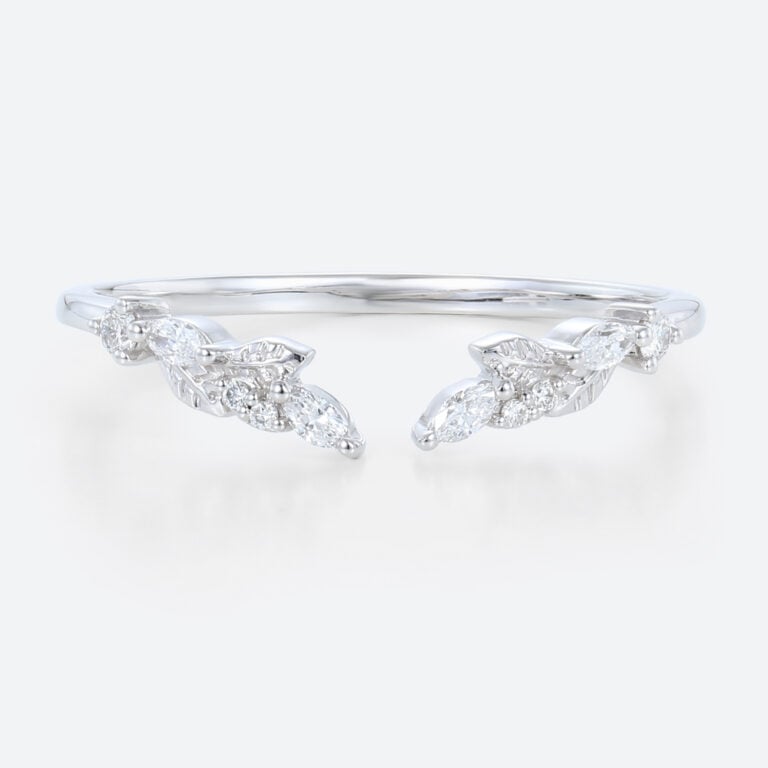
- Open wedding band: A band with a gap between its ends to accommodate a wide basket or center setting.
- Custom-fit band: A band made according to the dimensions of a particular engagement ring.
These terms are sometimes used interchangeably, so the product name alone cannot confirm compatibility. The depth, width, and location of the curve must match the actual setting.
Why Doesn’t a Straight Band Sit Flush with an Oval Ring?
A visible gap usually appears when part of the engagement-ring setting extends into the space where the wedding band would otherwise sit.
Common causes include:
A Low-Set Basket
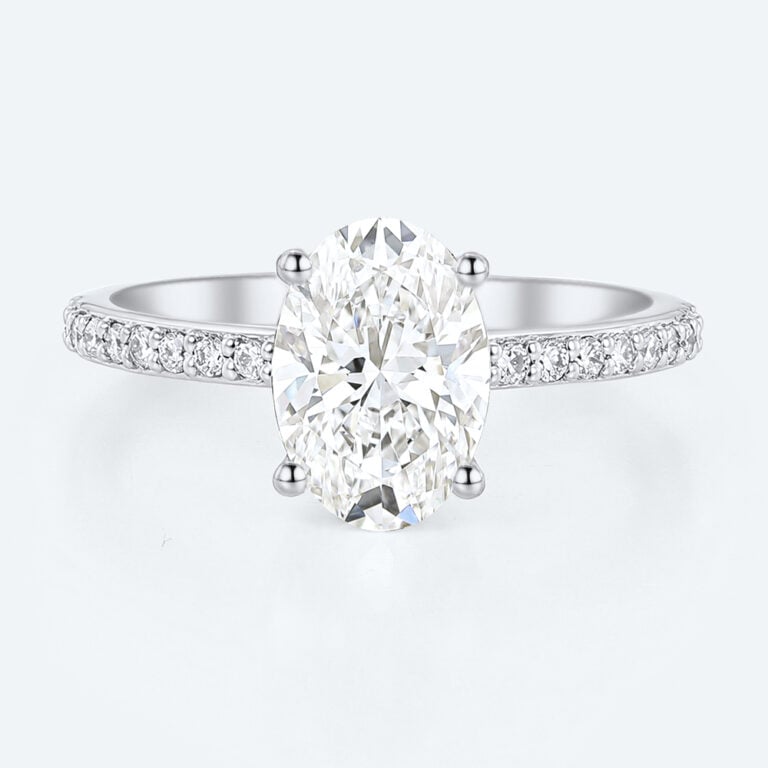
A low-profile oval ring keeps the center stone close to the finger. While this can make the ring comfortable and less prominent, it may leave too little space for a straight wedding band to pass beneath the basket.
A Basket Wider Than the Shank
Even if the diamond is moderately elevated, the basket may extend beyond the sides of the engagement-ring band. A straight wedding ring will stop at its widest point, creating space between the two shanks.
A Hidden Halo or Gallery Rail
Hidden halos and structural gallery rails can add width beneath the oval diamond. These details may be subtle from above but become important when another ring is placed beside the setting.
Side Stones or Outer Prongs
Accent stones, halo edges, and outward-facing prongs can also form contact points. In these cases, forcing the bands together may cause unnecessary friction.
Band width matters as well. A wider wedding band may touch the basket sooner than a narrow one, meaning two bands with the same curve can fit differently.
Lisa Jewelry Expert Note:
Evaluate wedding-band compatibility from the side and three-quarter views. The face-up shape of the oval diamond does not reveal how much clearance is available beneath it.
Four Wedding Band Shapes That Work with Oval Engagement Rings
The best band shape depends on how much clearance your engagement ring needs and how you want the wedding band to look when worn alone.
Gently Curved Wedding Band
A shallow curve works well when the basket extends only slightly beyond the shank. Its understated arc can complement a simple oval solitaire without making the bridal stack feel overly elaborate.
Because the curve is subtle, this style also tends to look natural when worn by itself. However, it may not provide enough space for a wide basket, halo, or very low center setting.
Deep Contoured Wedding Ring
A deeper contoured wedding ring wraps more noticeably around the engagement-ring setting. It may be suitable for low-profile oval rings, larger center stones, wide baskets, or halo designs.
This option can create a close, coordinated appearance, but the contour must correspond to the actual basket. A curve that is too shallow leaves a gap, while one that is too deep may create empty space around the setting.
Chevron or V-Shaped Band
A chevron band uses a central point rather than a rounded curve. Its directional shape can echo the elongated proportions of an oval diamond and create additional space beneath the center setting.
The angle still needs to be tested carefully. A very deep V may fit at the center but leave uneven spaces along the sides.
Open Wedding Band
An open band leaves a space between its two ends, allowing a wide basket to sit within the opening. It offers a modern alternative when a traditional curve would need to be unusually deep.
The open ends should not rub against the center stone, accent diamonds, or structural prongs. Have the contact points checked before choosing this style for everyday wear.
How to Find the Right Curve Depth
Begin by examining the side of your engagement ring. Identify the widest point of the basket, hidden halo, prongs, or gallery and note where a straight band first makes contact.
If only a small amount of clearance is needed, begin with a gently curved band. A shallow curve is often easier to wear alone and may create a more versatile look. A deeper contour is more appropriate when the basket is low or extends farther beyond the shank.
When testing a band, check that:
- The center of the curve aligns with the oval setting.
- The space is balanced on both sides.
- Neither band is pushed out of position.
- Exposed diamonds and structural prongs do not rub together.
- Both rings sit comfortably on the finger.
A reliable matching band for an oval ring should be selected using the engagement ring itself or precise measurements of its setting. Product photographs alone cannot confirm the fit.
Flush-Fit Checklist
Before ordering, ask:
- Does the wedding band clear the basket?
- Is any visible space even on both sides?
- Are metal edges rubbing against exposed diamonds?
- Does the band press against a structural prong?
- Do both rings sit flat and comfortably?
- Does the curve still look attractive when worn alone?
- Are the band widths and proportions visually balanced?
- Can either ring be resized in the future?
Lisa Jewelry Expert Note:
A small gap can be safer than forcing two diamond-set or delicate surfaces to rub against each other.
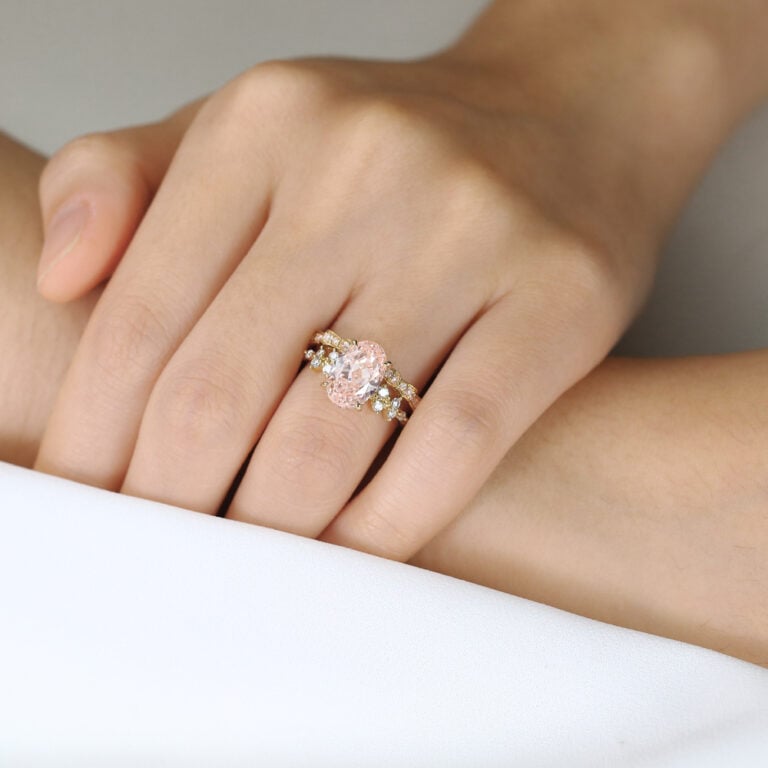
Does Your Wedding Band Have to Sit Flush?
No. A flush fit is an aesthetic preference, not a requirement.
Some wearers prefer the seamless look of a curved band nesting closely against the engagement ring. Others enjoy a small, intentional gap because it gives each ring a distinct outline. A slim spacer band can also create separation while protecting delicate pavé or decorative surfaces.
A gap does not necessarily mean that the rings are incompatible. If the spacing is even, the stack feels comfortable, and there is no damaging contact, the separation can become part of the design.
Comfort and long-term protection matter more than eliminating every visible space.
How to Style a Curved Band with an Oval Ring
Once you have found the correct contour, consider how the two rings work together as a complete bridal stack.
Balance the Band Width
A slim wedding band can preserve the light, elongated appearance of an oval solitaire. A wider band creates more contrast and visual presence, but it may also reach the basket sooner and require a deeper curve.
Choose Between Plain Metal and Pavé
A plain metal band keeps the focus on the oval center stone and usually creates a clean, understated pairing. A pavé band adds brilliance and can make the stack feel more elaborate.
If both rings contain diamonds along their sides, check that exposed stones and prongs do not rub together.
Coordinate—or Intentionally Mix—Metals
Matching metals produce a cohesive bridal-set appearance. Mixed metals create greater contrast and can make each ring more visually distinct. Either approach can work when the proportions and contact surfaces are suitable for long-term wear.
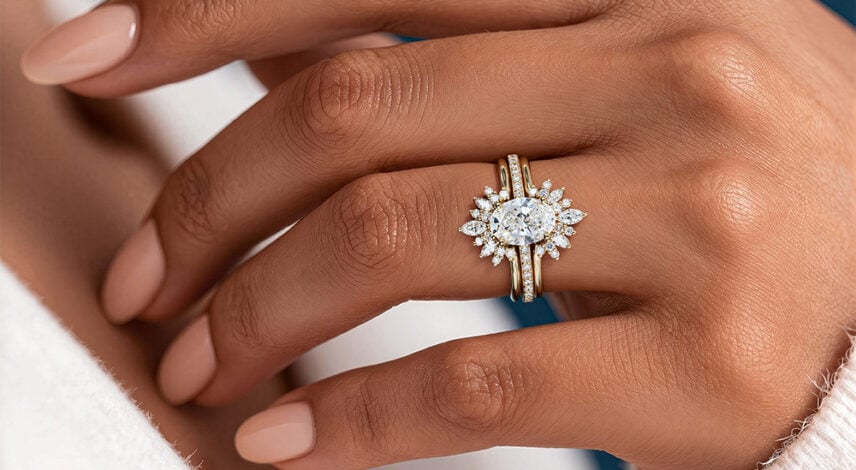
For a more dramatic look, place curved bands above and below the oval engagement ring. This symmetrical arrangement—sometimes called a ring jacket—can frame the center stone while creating a balanced outline.
Final Verdict: The Best Matching Band for an Oval Ring
The best matching band for an oval ring is determined by the architecture of the engagement-ring setting—not by the oval diamond alone.
A raised setting with sufficient basket clearance may pair beautifully with a straight wedding band. A low or wide setting may require a gentle curve, deep contour, chevron, or open design to achieve a closer fit.
Compare the rings together from the top, side, and three-quarter views. The ideal pairing should look balanced, sit comfortably, and avoid unnecessary friction. Whether you prefer a seamless stack or a small intentional gap, choose the fit that protects both rings and reflects your personal style.
Frequently Asked Questions
Not always. A high-set oval engagement ring may leave enough clearance for a straight band. A low basket, halo, side stone, or projecting prong is more likely to require a curved design.
“Curved” broadly describes a band with an arc or dip. “Contoured” often refers to a band shaped more closely around a specific engagement-ring setting. Because retailers may use the terms interchangeably, always review the band’s measurements and profile.
Yes. A gently curved band usually looks more subtle when worn alone, while a deep contour or chevron creates a more distinctive silhouette. Consider both stacked and individual wear before choosing the curve.
Yes. A small, even gap is acceptable if the rings remain comfortable and do not rub in a damaging way. Flush fit is a style choice rather than a requirement.