
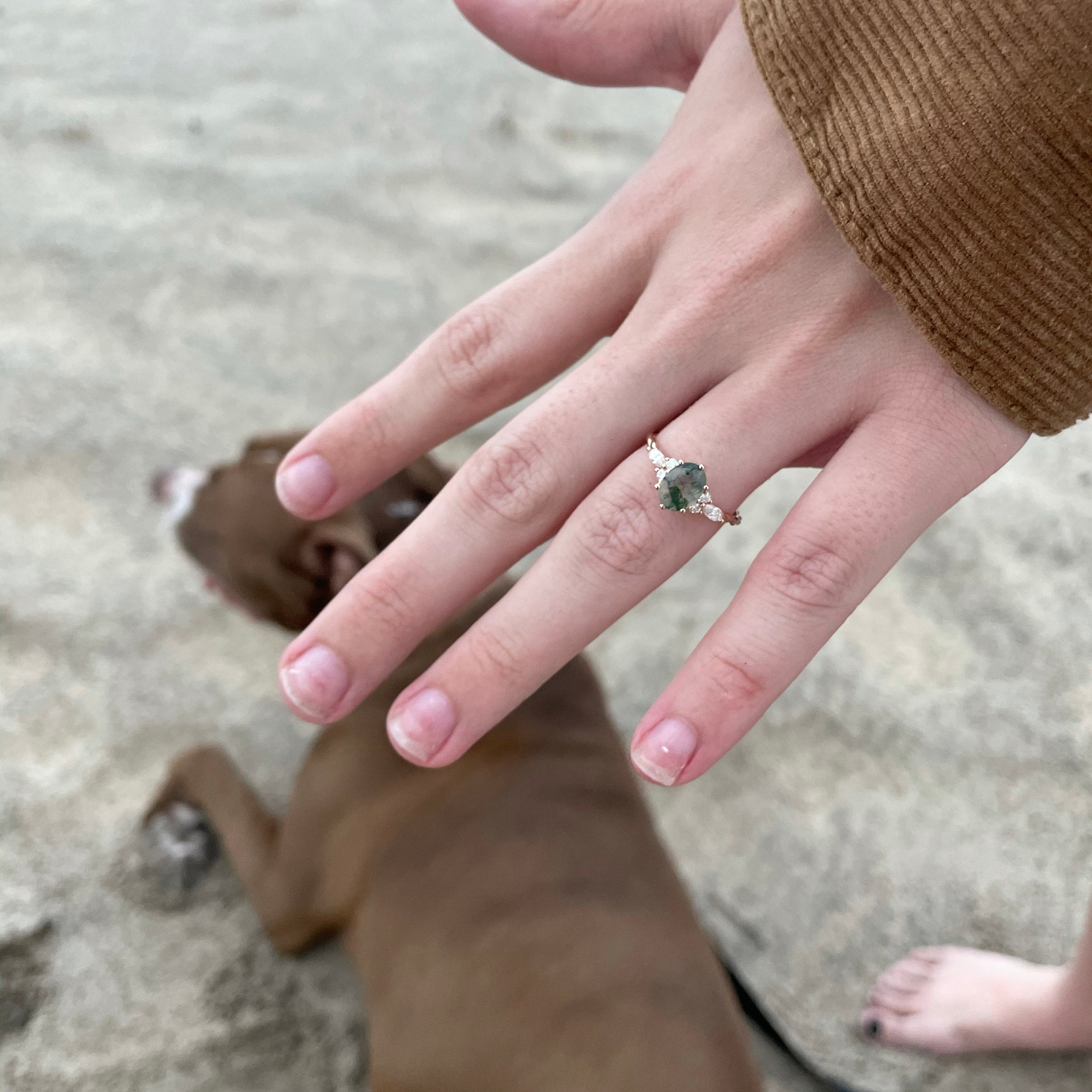
The best moss agate engagement ring is one whose individual stone, setting, metal, and profile suit both the wearer’s style and daily routine. Begin by choosing the natural pattern you love, then check the stone’s surface condition, cut, setting protection, accent stones, wedding-band fit, and care requirements. Because moss agate stones look different, buying from photos of the individual gem is especially valuable.
This guide explains each decision in practical terms. You will learn what makes moss agate rings unique, whether moss agate is good for daily wear, how it compares with a diamond engagement ring, and how to choose moss agate jewelry you can enjoy with confidence.
Moss Agate Engagement Ring Buying Checklist
| What to check | Why it matters |
|---|---|
| The exact stone | Natural mineral inclusions vary, so a sample image may not represent the ring you receive. |
| Pattern and color | Green inclusions can be delicate, dense, cloudy, or landscape-like; the best pattern is a personal choice. |
| Surface condition | Attractive inclusions are normal, but chips, deep scratches, and unstable surface-reaching fractures deserve attention. |
| Cut and shape | Shape controls how the natural patterns are framed and how exposed the stone’s edges or points may be. |
| Protective setting | Secure prongs, a halo, or a protective bezel setting can reduce exposure to everyday impacts. |
| Metal and side details | Gold color and smaller gems change both appearance and upkeep. |
| Band fit | The engagement ring’s basket and profile determine whether a straight wedding band will sit flush. |
| Daily wear and care | Moss agate is suitable for jewelry, but it needs more mindful wear than harder gemstones. |
What Is Moss Agate?
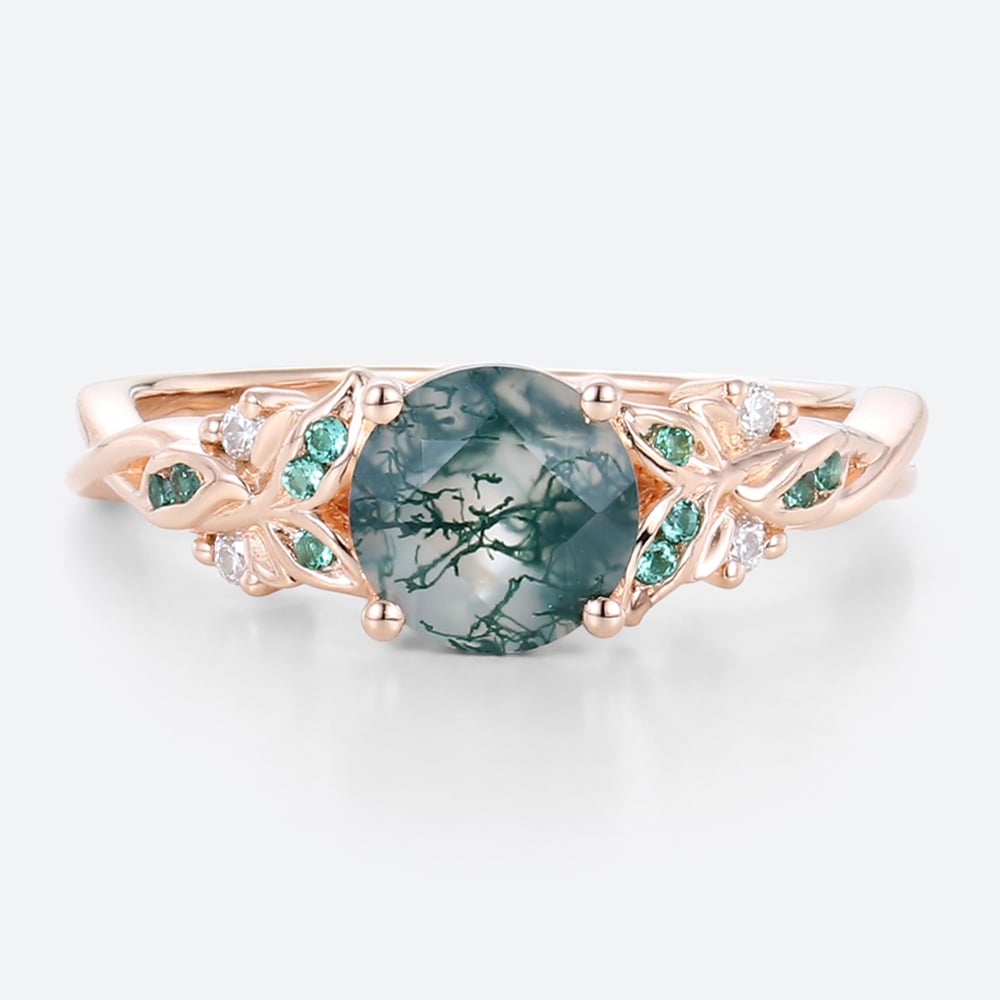
Moss agate is a variety of chalcedony quartz known for branching, plume-like, or cloud-like mineral inclusions. These inclusions may resemble moss, fern fronds, roots, trees, mist, or a miniature landscape, but the stone does not contain living plants. Its base can be nearly clear, gray, pale green, or milky white, while the inclusions may appear green, brown, black, red, or yellow.
Although it belongs to the broader agate family, moss agate often lacks the regular banding seen in many other agates. Its distinctive appearance comes instead from natural patterns that seem suspended inside the translucent material. The unique green inclusions give each finished piece its own natural beauty. Two moss agates can share a similar color palette, but they will not display the same arrangement of inclusions.
Moss agate is also called mocha stone, a historical name associated with the port city of Mocha in Yemen. In modern jewelry, however, “moss agate” is the name buyers are most likely to encounter.
For a wider introduction to its formation, symbolism, uses, and care, read everything you need to know about moss agate.
Is Moss Agate Good for an Engagement Ring?
Moss agate is good for an engagement ring when the wearer values individuality, nature-inspired beauty, and an unconventional central gem—and is comfortable using thoughtful care. With a Mohs hardness scale rating of about 6.5–7, it is durable enough for jewelry but softer than diamond, sapphire, and ruby.
That distinction does not mean a moss agate ring is automatically fragile. It means the design and the wearer’s habits matter. A low-profile protective setting is generally more practical than a high, exposed setting for someone who uses their hands frequently. The ring should also be removed before sports, gardening, heavy lifting, and work involving repeated impacts.
Moss agate offers something traditional diamond rings cannot reproduce: an individual scene created by natural mineral inclusions. A buyer who prioritizes high brilliance and maximum scratch resistance may prefer a diamond ring or sapphire. A buyer drawn to organic beauty and natural variation may find moss agate more personal.
What Does Moss Agate Symbolize in an Engagement Ring?
What does moss agate symbolize? It is commonly associated with growth, abundance, emotional balance, fresh starts, and connection to the natural world. Its green, plant-like inclusions explain why it is sometimes called the gardener's stone in modern crystal traditions.
In an engagement ring, these associations can represent a relationship that continues to grow and a couple beginning a new chapter together. The fact that no two stones look identical can also symbolize an individual love story rather than a relationship defined by convention.
These meanings are cultural and personal, not scientifically proven effects. Moss agate does not guarantee luck, prosperity, emotional healing, or relationship stability. Its symbolism is most meaningful when the couple chooses what the stone represents to them.
Explore the symbolism in more detail in our guide to moss agate engagement rings meaning.
How to Choose a Moss Agate Engagement Ring
The most important buying decisions concern the stone, cut, setting, metal, side stones, and fit with a future band. Use the following steps to narrow the options without assuming that one universal style is best.
1. Choose Moss Agate by Looking at the Individual Stone
Whenever possible, choose moss agate from photographs or video of the exact stone you will receive. Stock photos can show a general style, but they cannot guarantee identical green inclusions, transparency, or pattern placement.
Ask the seller whether the listing shows:
- the specific stone shown in the finished ring;
- the exact loose stone that will be set after purchase; or
- a representative sample whose appearance will naturally vary.
Look at the gem from the front, side, and under more than one lighting condition. A backlit photograph can make translucent material look especially dramatic, while ordinary indoor light may provide a more realistic impression of everyday appearance.
There is no standardized “best” density of moss-like inclusions. Some shoppers prefer fine dendritic inclusions with large clear areas. Others want bold green clouds or intricate patterns that fill the stone. Select the pattern whose composition continues to hold your attention.
2. Evaluate Pattern, Color, and Clarity Correctly
Traditional diamond grading language does not transfer neatly to moss agate. The visible mineral inclusions are not automatically defects; they are the feature that creates its nature-inspired appearance. A clear stone with very few inclusions is not necessarily better than a cloudy stone with an expressive landscape.
Evaluate the visual balance instead:
- Do the natural patterns sit attractively within the cut?
- Do the inclusions create a focal point or pleasing movement?
- Is there enough contrast to see the pattern in normal light?
- Do you prefer a transparent, misty, or milky background?
- Does the color complement the intended metal?
At the same time, distinguish attractive internal scenery from damage. Ask about chips, deep abrasions, cavities, and fractures that reach the surface. These features may affect durability differently from stable internal mineral formations enclosed within the gem.
3. Select a Cut That Frames the Natural Patterns
Among alternative engagement rings, cut quality influences symmetry, surface polish, and how the inclusions appear face-up. Because moss agate is often appreciated for its internal landscape rather than traditional sparkle, pattern placement may matter more than achieving the proportions used for a faceted diamond.
Popular shapes include:
- Oval: Offers a broad window for scenic patterns and suits many hand shapes.
- Pear: Creates graceful directional movement but needs protection around the pointed tip.
- Round: Gives the organic appearance a classic outline and pairs easily with many band styles.
- Hexagon: Balances geometric structure with nature-inspired beauty.
- Kite: Feels modern and distinctive, although its points benefit from a protective setting.
- Marquise: Creates an elongated look and can make the fingers appear longer.
- Cushion: Provides a generous viewing area with softer corners than sharper geometric cuts.
A professional polish should make the surface smooth and allow the inclusions to remain clearly visible. Inspect photos for obvious scratches or uneven finishing rather than judging only by shape name.
4. Choose a Protective Setting
A well-designed setting secures the moss agate without hiding the pattern. For a moss agate ring intended for everyday use, protection is especially important around corners, points, and exposed edges.
Common setting options include:
- Bezel setting: Surrounds all or part of the stone’s edge with metal. A protective bezel setting can reduce direct contact with hard surfaces.
- Prong setting: Allows more of the gem to remain visible but requires secure, well-positioned prongs. V-prongs can help cover pointed tips.
- Halo setting: Places smaller gems around the center, adding sparkle while providing some visual and physical buffering.
- Low-profile basket: Keeps the stone closer to the finger and may reduce snagging during regular wear.
- Cathedral setting: Raises and frames the stone elegantly, but the height should still suit the wearer’s routine.
As with all engagement rings, no setting makes a gemstone indestructible. Even with a protective setting, remove the ring for high-impact activities and have loose prongs repaired promptly.
5. Compare Yellow Gold, Rose Gold, and White Gold
Metal color changes the overall mood of moss agate engagement rings.
- Yellow gold brings warmth to green, brown, red, and golden inclusions. It works especially well with botanical, vintage, and woodland-inspired designs.
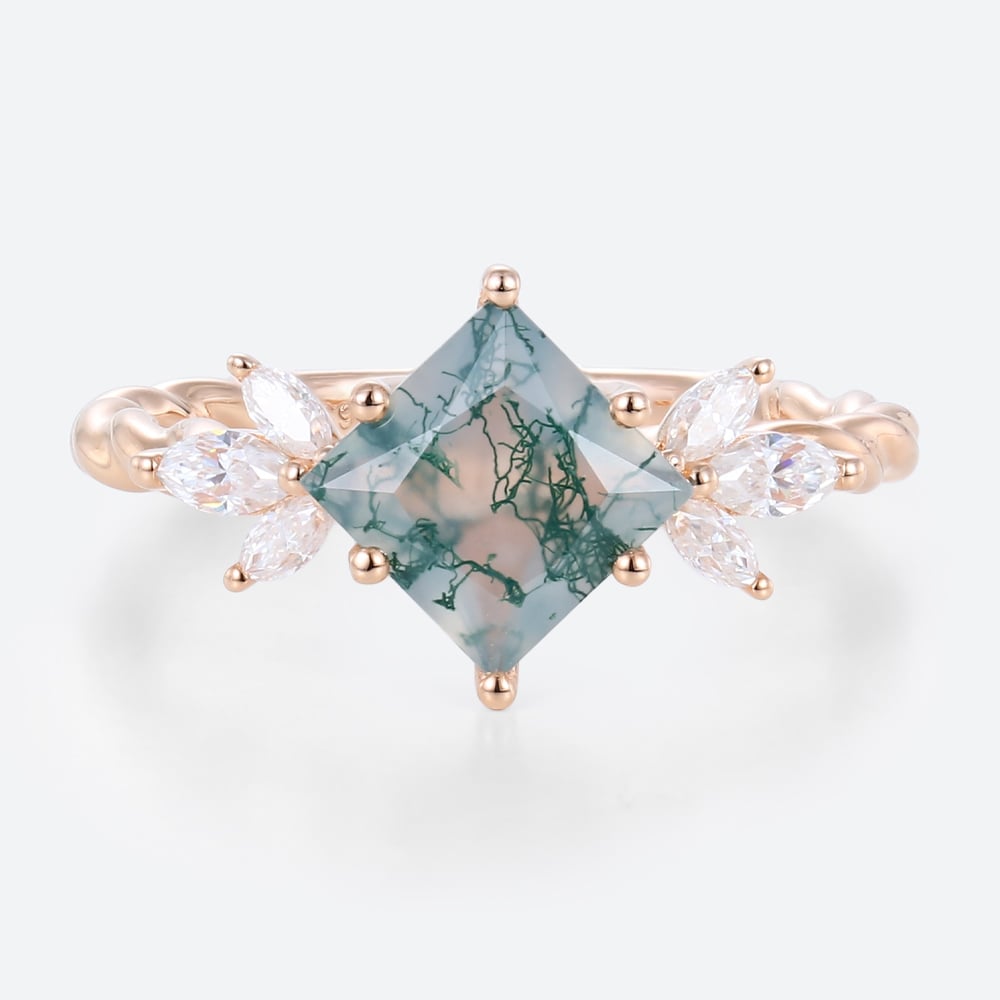
- Rose gold creates soft contrast between pink metal and green patterning. It can give alternative engagement rings a romantic, less conventional appearance.
- White gold produces a cool, crisp frame and coordinates easily with colorless diamond details. Because this metal is commonly rhodium plated, it may require replating over time.
Also consider metal purity, allergy concerns, maintenance, and the amount of metal protecting the gem. Color should not be the only deciding factor. A durable, well-constructed setting is more important than following a trend.
6. Decide Whether You Want Accent Stones
Accent stones can add familiar brilliance without taking attention away from the moss agate center stone. Small diamonds, lab-grown diamonds, moissanite, or colored precious gemstones can be used in halos, clusters, three-stone designs, or along the band.
When comparing these smaller gems, consider:
- whether you want brilliant sparkle or a softer overall appearance;
- how the side stones affect the width and height of the ring;
- whether small stones are protected by secure prongs or bead settings;
- how easy the setting will be to clean and inspect;
- whether a band can sit beside the added details.
Moss agate cluster designs can create a dramatic nature-inspired appearance, especially when small stones follow a leaf, vine, or floral arrangement. More intricate settings, however, usually contain more prongs and crevices that require maintenance.
A natural diamond and a lab-grown diamond have different origins but can both provide familiar sparkle. Choose based on budget, sourcing preferences, design, and the seller’s product information—not on the assumption that one type automatically makes the ring more meaningful.
7. Plan the Wedding Band Before You Buy
For engagement rings, the basket, gem shape, side details, and height determine how a wedding band fits. Some engagement rings allow a straight band to sit flush; others leave a gap or require a curved, chevron, contour, or open band.
Before ordering, check:
- whether the product has a matching band;
- whether the engagement ring is shown beside that band;
- whether a straight band can pass beneath the center setting;
- whether the combined width feels comfortable;
- whether the two rings may rub against each other’s stones or prongs.
There is nothing wrong with an intentional gap, but it should be a choice rather than a surprise. Browse wedding bands while selecting the engagement ring so you can evaluate the set as a whole.
8. Match the Ring to the Wearer’s Daily Routine
Think honestly about how the ring will be worn. A person who removes jewelry before exercise, cleaning, and manual work may comfortably choose a more delicate design. Someone who rarely takes off the same ring may need a lower profile, a low bezel, or a harder gemstone.
Consider work, hobbies, childcare, exercise, gardening, travel, and how often the wearer is willing to clean and inspect the ring. The perfect ring is not only visually appealing—it also fits real life.
Moss Agate vs. Diamonds
Moss agate and diamonds offer very different experiences. Neither is universally better; the choice depends on what the wearer values most.
| Feature | Moss agate engagement ring | Diamond engagement ring |
|---|---|---|
| Appearance | Green, translucent, scenic, and organic | Colorless or colored with brilliant sparkle |
| Individuality | Every arrangement of inclusions is visibly different | Unique diamonds vary, but cut and grading are more standardized |
| Mohs scale | About 6.5–7 | 10 |
| Scratch resistance | Requires more mindful daily wear | Highest among natural gemstones |
| Symbolism | Growth, nature, abundance, and new beginnings | Commitment, endurance, and traditional romance |
| Buying priority | Exact pattern, surface condition, cut, and setting | Cut, color, clarity, carat, certification, and setting |
| Best suited to | Nature lovers and buyers seeking alternative engagement rings | Buyers prioritizing traditional sparkle and maximum hardness |
Does moss agate scratch easily compared with diamond? It can scratch more easily because it is lower on the Mohs scale. Scratching is also more likely when the ring contacts harder gemstones, abrasive dust, or rough surfaces. This is why moss agate jewelry should be stored separately from diamonds and sapphires.
Traditional gemstones such as sapphire and ruby offer greater scratch resistance while still providing color. Traditional diamond rings also remain the benchmark for maximum hardness. Moss agate offers a distinctive appearance that comes from natural mineral inclusions rather than strong light return. The practical decision is whether that natural beauty is worth the additional care to the wearer.
Explore other engagement rings if you want to compare moss agate with harder central gems and more traditional designs.
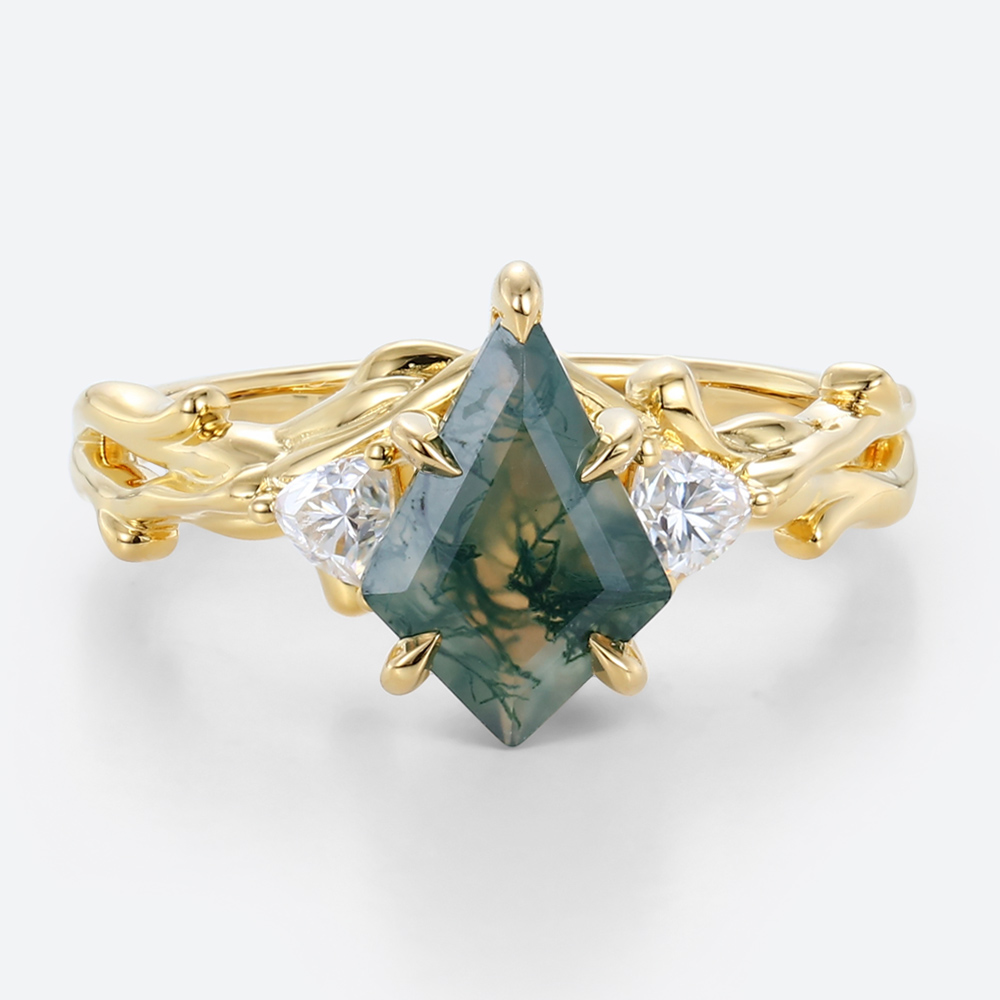
Are Cluster Moss Agate Rings a Good Choice?
Cluster moss agate rings combine a central or offset moss agate with multiple smaller stones. They are a good choice for shoppers who want nature-inspired jewelry with more texture, asymmetry, or sparkle than a simple solitaire.
They may feature a pair of gems, a three-stone layout, a floral halo, or an irregular arrangement of diamonds and colored gems. The result can be highly individual, but the extra stones also create more settings to inspect. Check each prong, ask how replacement stones are handled, and consider whether the cluster catches on clothing.
For frequent wear, a compact low-profile cluster is generally easier to manage than a very tall, widely spread design. Buyers who prefer simple cleaning and a smooth profile may be happier with a solitaire or bezel-set moss agate ring.
Is Moss Agate Durable Enough for Daily Wear?
For everyday wear, moss agate can work well in many rings, but it is not as scratch resistant as diamond, sapphire, or ruby. Its hardness rating of approximately 6.5–7 describes resistance to scratching; it does not guarantee that the stone cannot chip or fracture after a hard impact.
For safer everyday wear:
- choose a protective design suited to the stone’s shape;
- remove the ring before sports, gardening, cleaning, lifting, or using tools;
- avoid knocking it against stone counters, metal equipment, or hard floors;
- keep it away from harsh chemicals and sudden temperature changes;
- store it separately from harder gemstones;
- have the setting inspected if a prong catches or the center stone moves.
Can a moss agate engagement ring last? Yes, with realistic expectations and consistent care. Well-made engagement rings still need routine inspection. No ring is damage-proof, even one set with diamond, because metal settings and smaller gems can still loosen or wear over time.
How to Clean a Moss Agate Ring
Use gentle methods unless a jeweler who has inspected the exact ring recommends otherwise.
- Add a small amount of mild soap to a bowl of warm water.
- Let the ring sit briefly if residue needs to soften.
- Clean it gently with a soft brush or soft cloth, including accessible areas beneath the stone.
- Rinse with clean warm water while keeping the drain covered.
- Pat dry with a lint-free cloth and allow the ring to dry completely.
Avoid bleach, abrasive powder, and other harsh chemicals. Steam and ultrasonic cleaning may be unsafe for fractured, treated, glued, or delicate material, so do not use those methods unless a qualified jeweler confirms they are appropriate for the specific ring.
Place the ring in a lined box or soft pouch rather than allowing it to contact precious gemstones that are harder than moss agate. Thoughtful storage helps prevent scratches and protects the setting from tangling with other jewelry.
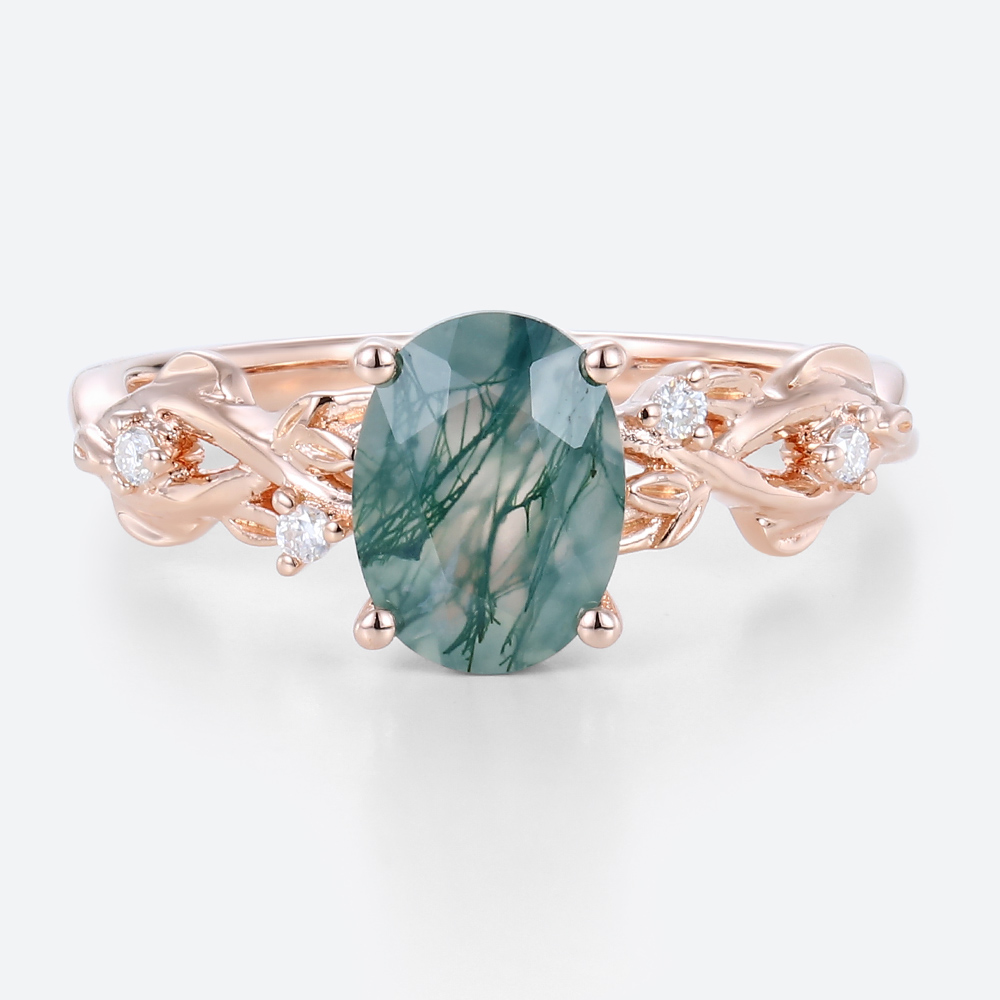
Common Moss Agate Engagement Ring Buying Mistakes
Avoid these mistakes when comparing moss agate rings:
- Assuming the sample photo shows the stone you will receive. Confirm what will vary before buying.
- Treating all inclusions as flaws. Moss-like patterns and dendritic inclusions create the stone’s distinctive appearance.
- Choosing only by color. Cut, surface condition, setting quality, and daily-wear suitability matter too.
- Ignoring pointed edges. Pear, kite, and marquise stones need appropriate protection around their tips.
- Forgetting the wedding band. Check profile and spacing before committing to one of these engagement rings.
- Expecting diamond-level hardness. These engagement rings require more mindful care than rings set with harder gemstones.
- Using aggressive cleaning methods. Warm water, mild soap, and a soft brush are safer defaults.
- Buying for a promised healing result. Select moss agate for its natural beauty and personal symbolism, not unsupported medical claims.
Frequently Asked Questions
Does Moss Agate Contain Real Moss?
No. Moss-like inclusions are mineral formations, not moss, plants, or preserved organic matter. They resemble moss because of their branching, plume-like, and cloud-like shapes.
Are Two Moss Agates Ever Identical?
No two moss agates share the exact same arrangement of inclusions. These moss agate stones may have similar colors but remain individually patterned. Even two stones cut from the same piece of rough can show different colors, transparency, and intricate patterns.
Is Moss Agate a Semi-Precious Gemstone?
Moss agate is commonly described in retail language as a semi-precious gemstone belonging to the chalcedony quartz family. “Precious” and “semi-precious” are traditional commercial categories rather than complete measures of beauty, rarity, or suitability.
Does Moss Agate Scratch Easily?
Moss agate can scratch more easily than diamond, sapphire, and ruby because it is lower on the Mohs scale. A secure design, mindful daily wear, separate storage, and avoidance of abrasive surfaces help reduce the risk.
Can I Wear a Moss Agate Engagement Ring Every Day?
Yes, many people select moss agate engagement rings for everyday wear. These nature-inspired engagement rings suit owners who are comfortable removing them for rough activities. Remove the ring for impact-heavy activities, keep it away from harsh chemicals, and inspect the setting periodically. Someone who never wants to remove a ring may prefer one of the harder gemstones.
Which Metal Looks Best with Moss Agate?
Warm gold highlights earthy tones, pink-toned metal creates romantic contrast, and a cool silvery finish provides a crisp frame. The best choice depends on the individual stone, the wearer’s style, maintenance preferences, and how the metal is constructed around the gem.
Can Moss Agate Be Paired with Diamonds?
Yes. Small diamonds can add classic sparkle around a moss agate center stone. Halos, side stones, and cluster designs are popular options, but additional stones and prongs also require regular inspection.
How Do I Choose the Perfect Moss Agate Ring?
Choose the actual stone first, then evaluate its natural patterns, surface condition, cut, setting, metal, side gems, band fit, and suitability for regular use. The best choice balances personal style with practical care.
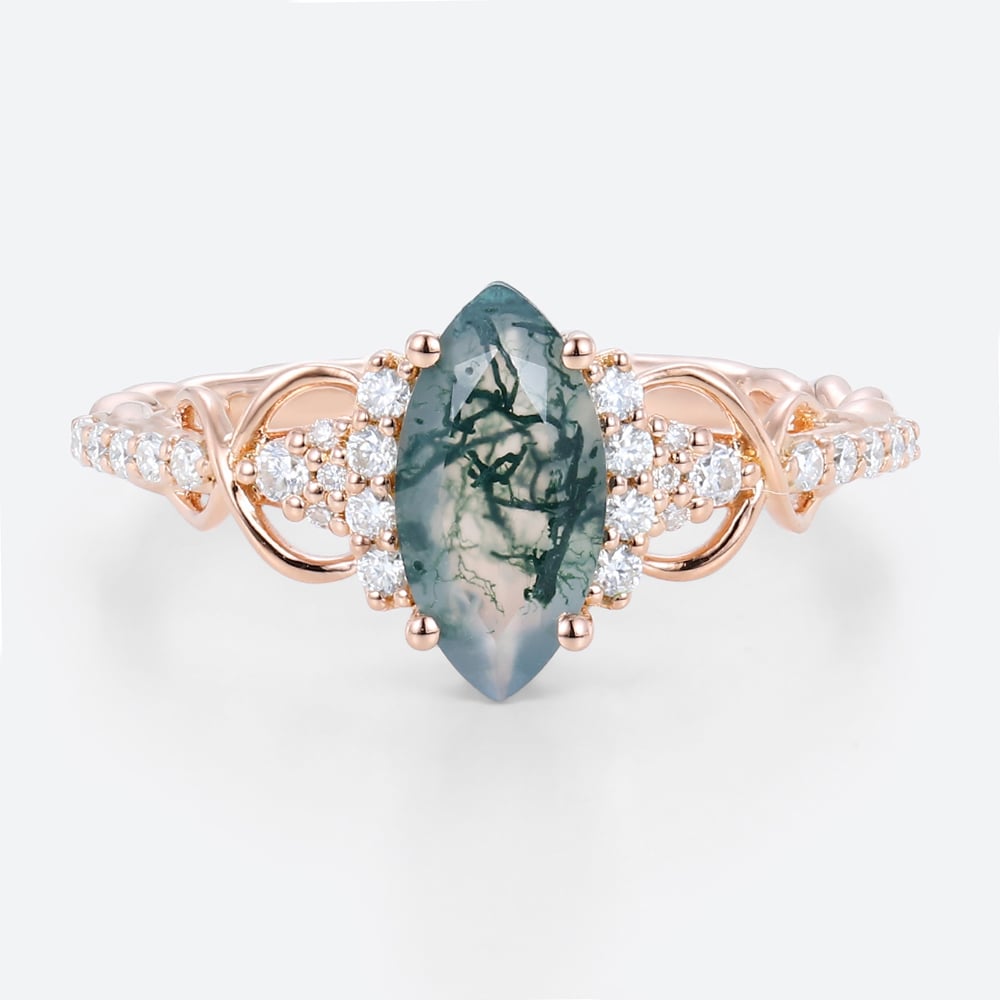
Find a Moss Agate Engagement Ring That Feels Personal
A thoughtful purchase begins with the details that make each stone different. Review the exact pattern, compare settings, consider the wedding band, and be realistic about everyday use. Moss agate does not offer the same hardness or diamond-like brilliance as diamond, but its organic appearance and one-of-a-kind inclusions give it a character that conventional stones cannot imitate.
Browse LisaJewelryUS moss agate engagement rings or use the custom engagement ring guide to create a ring around the stone, metal, and setting you prefer.