











I. Stepping Beyond the Colorless Paradigm
For decades, the classic colorless diamond has stood as the default choice for bridal jewelry. But modern couples, fashion-forward tastemakers, and fine jewelry collectors are moving past the traditional, clear aesthetic. Today’s luxury is no longer defined by fitting into a uniform mold; it is defined by self-expression, storytelling, and personality. To capture a love story that is dynamic and highly individual, standard clear stones simply cannot compete with the sheer magic of color.
Historically, choosing unique gemstone rings with saturated centerpieces meant navigating the fragile nature of emeralds, the steep price tags of natural sapphires, or the astronomical multi-million dollar auctions of mined pink diamonds.
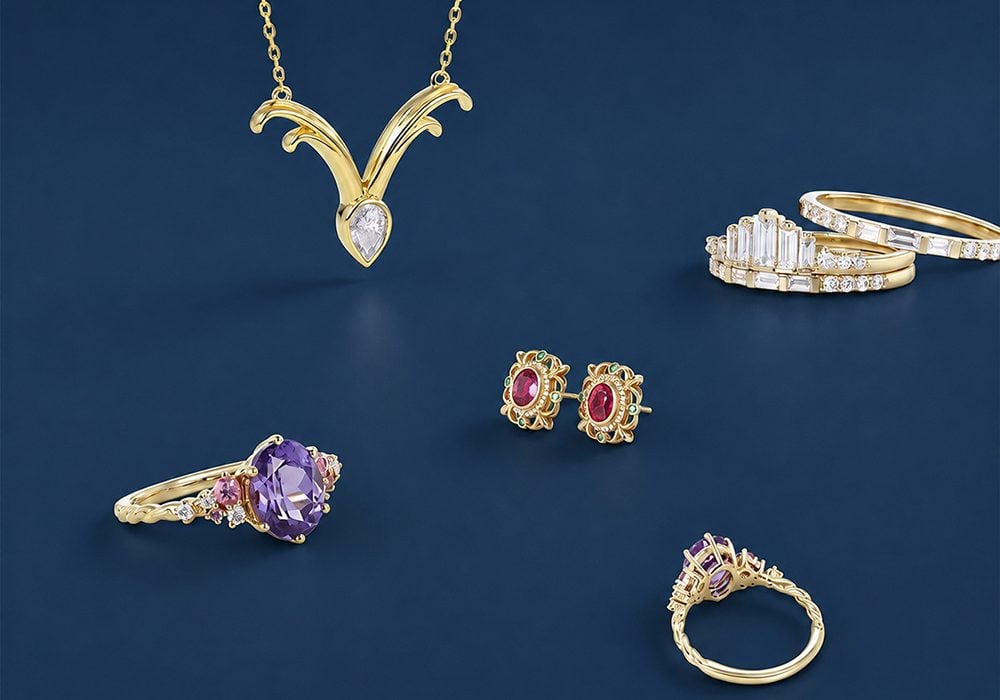
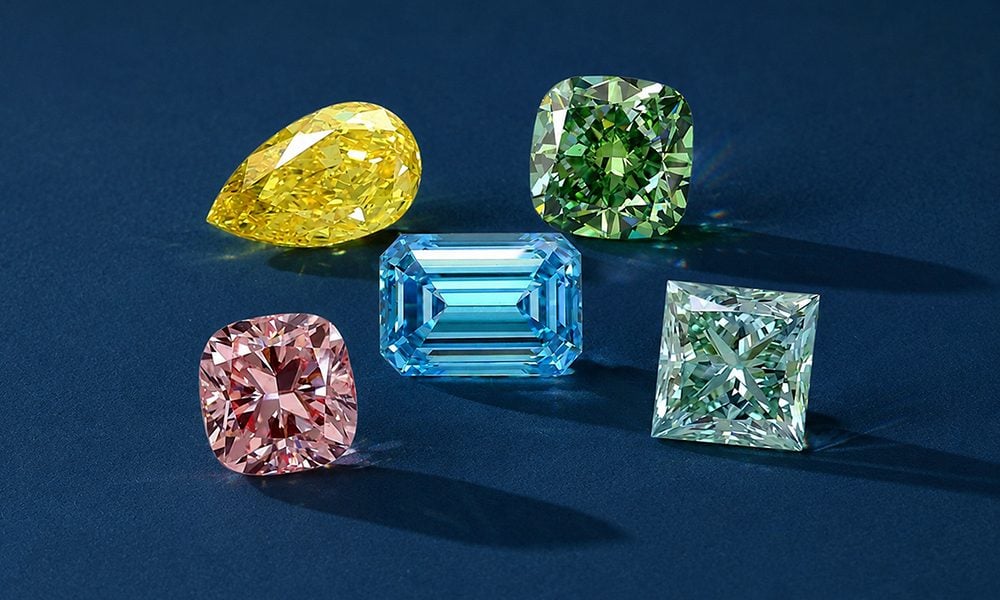
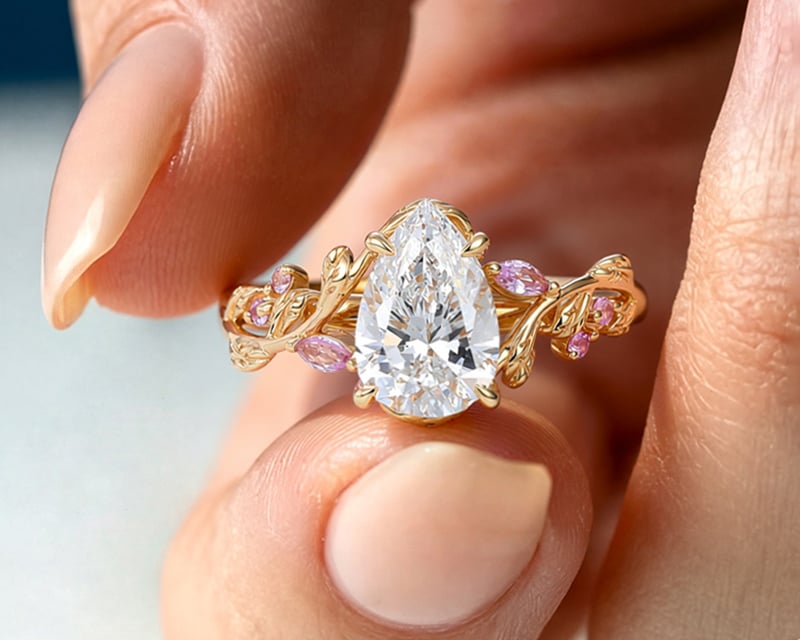
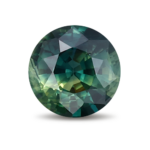
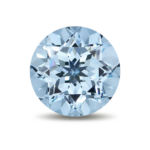
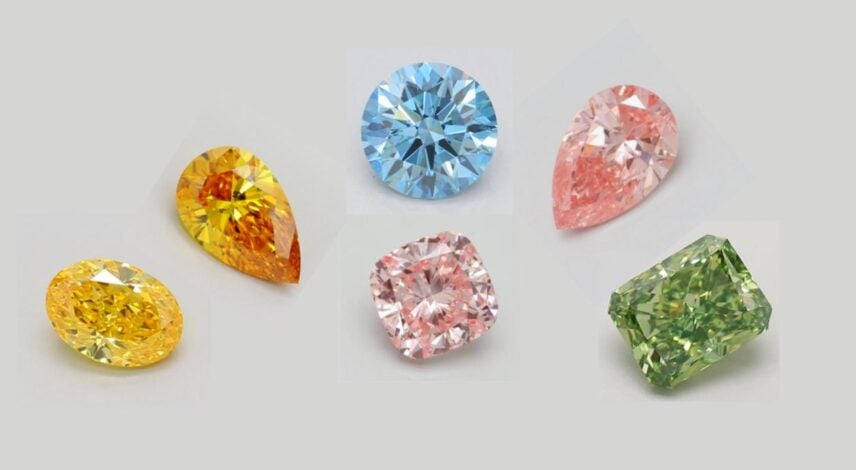
Whether you desire a romantic sakura pink, a deep moody teal, or a warm vintage champagne, these modern options serve as the raw material for breathtaking, custom colorful engagement rings. Let’s dive into the core gemology, physics, and design techniques required to master the colorful jewelry market and craft a piece that is as multi-dimensional and enduring as your own story.
II. The Core Material Duel: Fancy Color Moissanite vs. Colored Lab Diamonds
When embarking on your custom jewelry journey, your first and most critical decision is selecting the underlying crystal structure. Both colored moissanite and colored lab-grown diamonds offer incredible durability and optical performance, but they interact with light in completely different ways.
Refractive Index & The Fire Performance
The most dramatic difference between these two stones lies in their optical properties—specifically, how they bend and split incoming light.
- Fancy Color Moissanite (The Rainbow Fire): Moissanite is a gem born from the stars, possessing an incredibly high refractive index of 2.65 to 2.69 (which is higher than a diamond’s 2.42). It is also double-refractive, meaning light entering the stone splits into two separate rays. This unique physical trait produces a magnificent, highly vibrant display of dispersion (fire). A colored moissanite does not just reflect its base color; it shoots off intense, multi-colored rainbow flashes, behaving like a beautiful “disco ball” of brilliant light.
- Colored Lab Grown Diamonds (The Crisp Brilliance): Diamonds are single-refractive, which means light travels through the crystal in a clean, undivided path. Rather than the broad, rainbow-colored flashes of moissanite, a colored lab-grown diamond reflects a deeper, incredibly sharp, and crisp brilliance. The flashes of light are bright and concentrated, highlighting the pure, natural color saturation of the stone with absolute clarity.
Hardness & Practical Everyday Wear
Because an engagement ring is intended for a lifetime of daily wear, durability is a non-negotiable factor.
- Lab-Grown Diamonds score a perfect 10 on the Mohs hardness scale, making them the hardest material on Earth. They are completely scratch-resistant to everything except another diamond.
Both materials represent a spectacular, lifelong investment, allowing you to choose between the dazzling, fire-filled energy of moissanite and the prestigious, crisp legacy of a true diamond.
III. The Color Alchemy: How These Vibrant Hues Are Made
A common concern for buyers venturing into colored gemstones is the longevity of the color itself. To shop with confidence, you need to understand the physics of how these hues are woven into the very atomic architecture of the crystals.
The Trace Elements of Lab-Grown Diamonds
Colored lab diamonds do not rely on dyes or surface treatments. Their color is the result of precise chemical engineering during the growth process inside CVD (Chemical Vapor Deposition) or HPHT (High Pressure High Temperature) chambers:
Blue Lab Diamonds: Infused with trace amounts of boron, which absorbs red and yellow light to reflect a cool, regal blue.
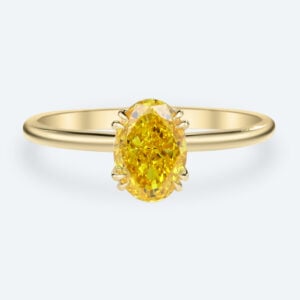
Yellow Canary Diamonds: Grown with tiny amounts of nitrogen, trapping blue light to display an intense, golden glow.
Pink Lab Diamonds: Created through post-growth lattice distortion (annealing), which slips carbon atoms slightly out of place, changing how the stone absorbs light to reflect soft cherry-blossom pinks.
Original Crystal Grown vs. High-Tech Coatings in Moissanite
When customizing fancy color moissanite, the color-creation process depends on the specific shade you select:
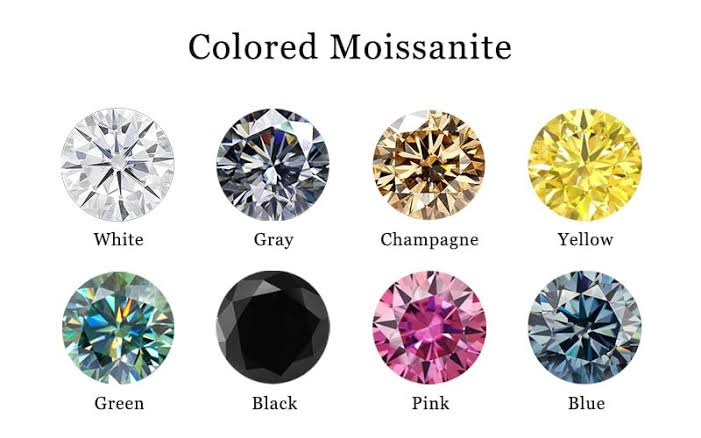
- In-Crystal Grown Hues: Modern technology allows shades like champagne, deep forest green, yellow, and smoky gray to grow directly inside the silicon carbide crystal matrix. These colors are 100% permanent, heat-resistant, and chemically stable.
- CVD Sputtered Nano-Coatings: Highly saturated, vibrant colors like bubblegum pink, deep purple, and vivid red are achieved through an advanced, microscopic CVD color coating applied to the pavilion (lower half) of the stone. At LisaJewelryUS, we utilize a specialized protective barrier over these coatings to shield the color from heat and chemical wear during daily activities.
Understanding these structural properties allows you to select the perfect combination of color intensity and durability to anchor your design.
IV. The Shopping Formula: Colored Lab Diamonds vs. Fancy Moissanite
When designing your ring, matching your budget with the right gemstone requires a strategic approach. Use this direct comparison matrix to evaluate how these two colored powerhouses perform across the key shopping metrics.
| Shopping Metric | Colored Lab Grown Diamonds | Fancy Color Moissanite | Customization Tip |
| Color Grading Standard | Strict, standardized laboratory scales (Fancy Light to Fancy Vivid). | Classified by visual color charts (e.g., Mint Green, Teal Blue, Sakura Pink). | For diamonds, aim for Fancy Intense or Fancy Vivid for maximum saturation. |
| Clarity Requirements | Saturated color camouflages inclusions; you can safely lower your target to VS2 or SI1. | Inherently highly clean (often VVS1 to Flawless) with minimal naturally occurring inclusions. | Save your budget on diamond clarity and reallocate those funds toward a larger carat size. |
| Ideal Cut Shapes | Best suited for brilliant and modified step-cuts like Radiant, Cushion, and Pear to maximize color depth. | Performs beautifully in all classic cuts, especially Round and Oval to unleash maximum rainbow fire. | Elongated shapes (ovals, radiants) offer a larger physical footprint on the finger. |
V. Trending Color Aesthetics for Modern Couples
Stepping beyond colorless diamonds opens up an endless palette of creative expression. If you are looking for design inspiration, these three curated color stories are currently dominating the custom bridal space.
Deep Sea Teal Blue: The Modern Mystic
Teal blue—a breathtaking hybrid of deep ocean blue and forest green—has become one of the most sought-after hues in contemporary jewelry.
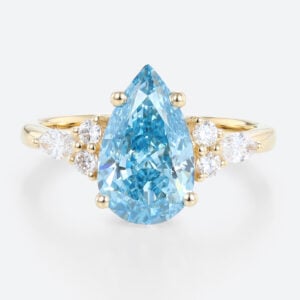
- Moissanite Expression: A teal moissanite offers an incredibly vibrant, sparkling oceanic look that shifts dynamically from green to blue depending on how the daylight hits its double-refractive facets.
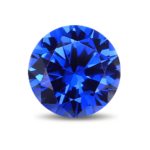
- Lab Diamond Expression: A teal or blue lab-grown diamond delivers a deeper, more aristocratic tone, reminiscent of elite sapphire-blue heirlooms but with the superior light-handling capability of a pure carbon crystal.
Romantic Sakura Pink: Soft Elegance
Nothing whispers delicate romance quite like the soft blush of a pink center stone.
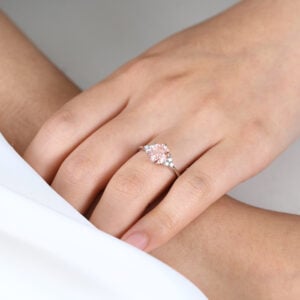
- Because pink gemstones mimic the warm flush of healthy skin, they are exceptionally flattering on all hands.
- When set as a solitaire or paired with delicate side accent stones, a pink center stone creates a highly personalized aesthetic that stands out sharply in a sea of traditional white wedding bands.

Warm Vintage Champagne: Art Deco Glamour
Champagne, cognac, and warm yellow tones carry an inherent vintage warmth that immediately elevates a design.
- These golden, sun-kissed hues harmonize beautifully with olive and warm skin undertones.
- A champagne-colored center stone is the perfect foundation if you want to build an Art Deco-inspired piece featuring geometric borders, milgrain beadwork, or step-cut baguettes.
VI. Professional Customization Tips: Making Your Color Pop
Selecting a gorgeous colored center stone is only half the battle. The surrounding metal and setting design will dictate how much that color shines. When collaborating on a custom ring layout, consider using these professional design techniques to maximize visual impact.
The Two-Tone Prong Strategy
A clever trick used by bespoke jewelry designers is color-matching the prongs to the center stone, while keeping the rest of the band in a different metal.
- For Pink Stones: Setting your pink diamond or moissanite in rose gold prongs creates a warm, uninterrupted border. The rose gold reflects inward, making the pastel pink tones appear richer and deeper.
- For Yellow & Champagne Stones: Using yellow gold prongs deepens the warm, golden saturation of the stone, preventing white metal from diluting the warm color.
High-Contrast White Halos
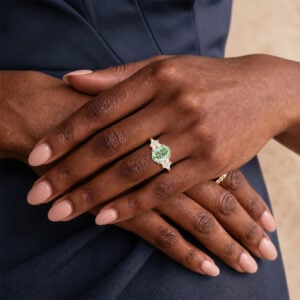
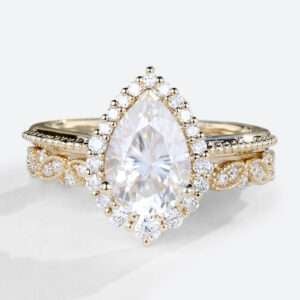
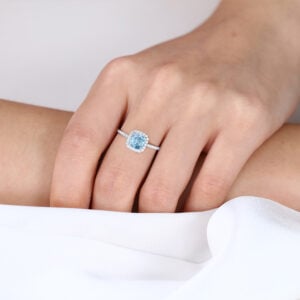
If you want to draw absolute focus to your colored center stone, wrap it in a delicate halo of small, D-color colorless accent stones. The stark, icy-white contrast of the surrounding halo acts as a visual frame, pushing the colored center stone forward and making its primary hue appear significantly darker, more concentrated, and visually larger.
VI. Blind Spots: Common Pitfalls in Colored Jewelry Customization
To ensure your custom colorful ring remains a source of joy for decades, be mindful of these three common industry pitfalls during your design and daily wear phases.
Pitfall 1: Neglecting Basic Maintenance (The Oil Magnet Effect)
Like clear diamonds, both colored diamonds and moissanites are naturally lipophilic (they attract oils and grease from hand lotions, soaps, and skin contact). Once a thin layer of oil builds up on a colored stone, it blocks light from entering the pavilion, causing a vibrant pink or blue stone to quickly look dull, flat, and grayish.
- The Fix: Keep a simple cleaning routine. Clean your ring weekly in warm water with a few drops of mild dish soap, brushing gently with a soft-bristled baby toothbrush to restore its original luster.
Pitfall 2: Judging Color Under Incorrect Lighting
Colored stones are highly reactive to their ambient light environments. Strong, cool-white fluorescent lighting (typical in retail stores or offices) can make warm colors like champagne look muddy, while washing out delicate pinks.
- The Fix: When evaluating videos or photos of your loose center stones during the customization process, always request footage taken in natural, indirect daylight (such as near a window on a clear day) to see the true, unfiltered color profile of the gem.
Pitfall 3: Subjecting Coated Stones to Heavy Abrasives
If your custom design utilizes highly vibrant coated moissanite (such as intense pinks or purples), you must protect the underside of the stone from harsh, direct abrasions. While the top face is protected by its natural hardness, sliding the ring alongside abrasive materials can wear down the protective barrier over time.
- The Fix: Always remove your jewelry before gardening, swimming in chlorinated pools, or handling heavy household cleaning chemicals.
Conclusion: Rewrite the Rules of Brilliance
The true luxury of modern jewelry design lies in the freedom to bypass traditional rules. Choosing to customize with fancy color moissanite or colored lab grown diamonds allows you to break away from standard colorless expectations and build a piece of wearable art that truly matches your spirit.
By matching your favorite color palettes with the right metal backdrops, utilizing smart two-tone prong choices, and keeping up with simple home maintenance, you can ensure your colored ring remains a brilliant masterpiece. Let your love story shine in full color with a custom ring design that represents your shared journey—uncompromised, brilliantly saturated, and entirely your own.