


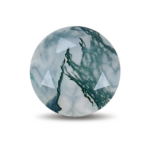













 Moss Agate
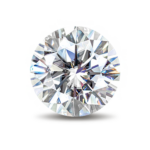
 Moissanite
 Salt & Pepper Diamond
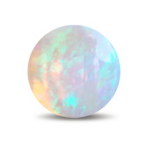
 Opal
Opal
 Moonstone
 Ruby
Ruby Morganite
 Black Rutilated Quartz
 Black Onyx
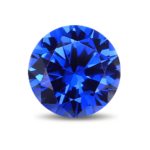
 Sapphire
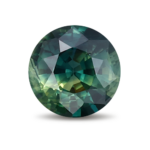
 Green Blue Sapphire
 Green Sapphire
  White Sapphire
  Pink Sapphire
  Amethyst
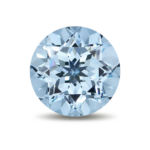
  Aquamarine
  Blue Topaz
  Blue Sandstone
 Tanzanite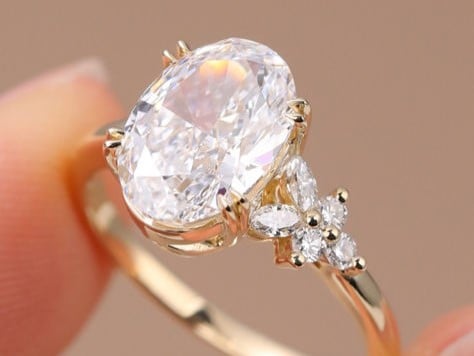
In the modern jewelry landscape, a shift is occurring. Couples and jewelry enthusiasts are no longer choosing between “luxury” and “value”—they are choosing both. At the heart of this movement is the 2 carat lab diamond ring, a centerpiece that offers the perfect balance of visual impact and ethical sourcing.
While a 2-carat diamond was once considered an unattainable milestone for many, lab-grown technology has brought this dream within reach. But with increased accessibility comes a new set of questions: Why does one 2 carat lab diamond ring price differ so drastically from another? How do you distinguish a high-value investment from a mere bargain? This guide is designed to peel back the curtain on lab diamond pricing, helping you navigate the technicalities of the “4Cs” and setting styles so you can shop with confidence and clarity.
I. The Reality of 2 Carat Lab Diamond Ring Price
When you begin your search, the first thing you’ll notice is the price gap. A natural 2-carat diamond can easily command between $15.000 and $40.000 depending on quality. In contrast, a high-quality lab diamond ring value guide reveals that you can secure a visually identical, chemically pure 2-carat stone for a fraction of that cost—typically ranging from $1.700 to $2.500 for the complete ring at specialized boutiques like LisaJewelryUS.
Why Prices Vary So Much
Even within the realm of lab-grown diamonds, price is not a flat rate. Several variables dictate the final tag:
- The Cut: Often the most overlooked “C,” the cut determines how light travels through the stone. A “Triple Excellent” cut maximizes brilliance, making the diamond look larger and more “alive,” which commands a higher price than a shallow or deep cut.
- Color and Clarity: Most premium lab diamonds are graded as “Colorless” (D-F) and “VS+” (Very Slightly Included). As seen in the LisaJewelryUS collection, staying within the Colorless VS+ range ensures a stone that is “eye-clean” and ice-white, offering the best value-to-beauty ratio.
- The Complexity of the Setting: A simple solitaire band requires less labor and metal than an intricate Floral Cluster or a Vintage-Inspired Bridal Set. The more side stones and “milgrain” (beaded) details a ring has, the more the craftsmanship adds to the final price.
Typical Price Ranges for 2 Carat Lab Diamond Rings
To give you a concrete idea of what to expect, let’s look at how design influences the 2 carat lab diamond ring cost based on current market trends and the LisaJewelryUS catalog:
| Ring Style | Typical Price Range (USD) | Example from LisaJewelryUS |
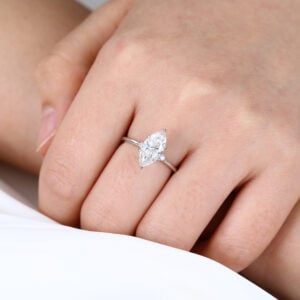
| Classic Solitaire / Simple Three-Stone | $1,700 – $1,850 | 2ct Marquise Cut Three Stone ($1,751) |
| Art Deco & Modern Solitaire | $1,800 – $1,950 | 2ct Emerald Cut Art Deco ($1,816) |
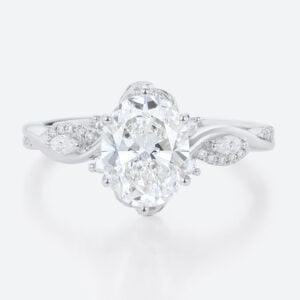
| Intricate Floral / Halo Designs | $1,950 – $2,200 | 2ct Oval Cut Vintage-Inspired Set ($2,043) |
| Luxury Bridal Sets (Double Bands) | $2,200 – $2,400 | 2ct Round Cut Luxury Floral Halo Set ($2,368) |
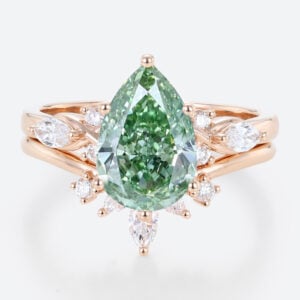
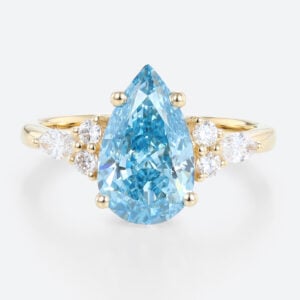
| Fancy Colored Lab Diamonds | $3,500+ | 2ct Fancy Green Pear Cut Bridal Set ($3,631) |
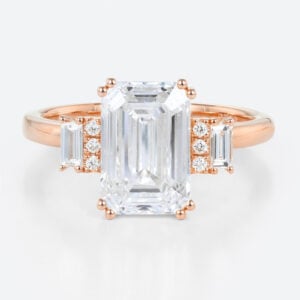
As the table illustrates, the metal choice (Yellow Gold, White Gold, or Rose Gold) and the “bridal set” configuration (where an engagement ring and matching wedding band are sold together) are significant drivers of the total price. While a 14K Gold setting is standard, opting for a Bridal Ring Set provides a cohesive, high-impact look that often offers better long-term value than buying pieces separately.
II. How to Evaluate 2 Carat Lab Diamond Ring Value
Buying a diamond is an exercise in trade-offs. To get the best lab diamond ring value guide experience, you need to know which of the “4Cs” to prioritize and where you can afford to be flexible without compromising the ring’s “wow” factor.
Cut Is Critical for Brightness
If there is one area where you should never compromise, it is the Cut. While the 2 carat lab diamond ring price is heavily influenced by carat weight, the stone’s “life”—its sparkle and fire—comes entirely from the precision of its facets.
Even a lab-grown diamond with perfect color will look “sleepy” or dark if it is cut too shallow or too deep. At LisaJewelryUS, we prioritize Excellent to Ideal cuts. A well-cut 2-carat stone will reflect light so efficiently that it can actually appear larger than a poorly cut 2.5-carat stone, giving you better visual “bang for your buck.”
Color & Clarity: What Really Matters
For a 2-carat centerpiece, inclusions (clarity) and tints (color) become more visible than they would be in a smaller 1-carat stone. However, you don’t need to pay for “Flawless” perfection to have a stunning ring.
- Color: For white gold or platinum settings, we recommend D-F (Colorless) grades to ensure a crisp, icy look. If you prefer a yellow or rose gold setting, you can safely drop to a G or H (Near Colorless) grade; the metal’s warmth will mask any slight tint in the diamond, potentially saving you hundreds on the total 2 carat lab diamond ring cost.
- Clarity: Aim for “Eye-Clean” stones. In the lab diamond world, VS1 or VS2 (Very Slightly Included) is the “sweet spot.” These stones have tiny imperfections that are invisible to the naked eye, allowing you to enjoy a flawless look without the “Internally Flawless” price tag.
Setting and Metal: Hidden Price Drivers
The “head” that holds your diamond and the band it sits on are more than just supports—they are significant cost factors.
- 14K vs. 18K vs. Platinum: Platinum is denser and rarer, typically adding a premium to the price. 14K gold is the most popular choice at LisaJewelryUS because it offers superior durability for daily wear while keeping the lab grown diamond engagement ring pricing competitive.
- Design Complexity: A solitaire setting focuses all the budget on the diamond. In contrast, a Halo or Pavé setting (like the Round Cut Luxury Floral Set pictured in our catalog) includes dozens of smaller “melee” diamonds. While this increases the price to approximately $2.368. it creates a massive visual profile that makes the 2-carat center stone look like 3 carats.
III. How LisaJewelryUS Makes Lab Diamond Value Better
At LisaJewelryUS, we believe that transparency is the ultimate luxury. We don’t just sell jewelry; we provide an ethical alternative that doesn’t ask you to choose between your conscience and your aesthetic.
Price Transparency and Certification
Every 2 carat lab diamond ring in our collection comes with a professional grading report (such as GIA certification). This ensures that the D-F color and VS+ clarity we promise are verified by independent experts. We maintain price transparency by showing exactly how a change in metal or style affects your total, ensuring there are no “hidden fees” at checkout.
Responsible Sourcing and Quality Standards
Choosing a lab-grown diamond from us means opting for a conflict-free and sustainable future. Our diamonds are grown using advanced technology that replicates the Earth’s natural heat and pressure but without the environmental toll of traditional mining.
- Style Versatility: Whether you are drawn to the vintage romanticism of a Marquise Three-Stone Ring ($1.751) or the bold, modern lines of an Emerald Cut Art Deco Ring ($1.816), our prices reflect the true cost of craftsmanship and quality materials.
- The Value Choice: We position our lab diamonds not as a “cheap substitute,” but as a value-driven choice for the modern consumer. By cutting out the traditional mining supply chain, we pass those savings directly to you, allowing for a 2-carat stone that is physically, chemically, and optically identical to a mined one—just smarter.
IV. Practical Tips Before You Buy a 2 Carat Lab Diamond Ring
Purchasing a 2 carat lab diamond ring is an emotional and financial milestone. To ensure your investment brings lifelong satisfaction, keep these practical considerations in mind before you click “buy.”
Try It On, Check Proportion
While a “2-carat” label tells you the weight, it doesn’t always dictate the visual size. Different shapes distribute their weight differently:
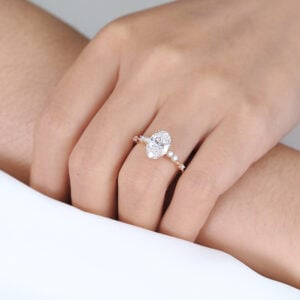
- Elongated shapes like the Marquise or Oval tend to look larger on the finger than a Round or Princess cut of the same carat weight.
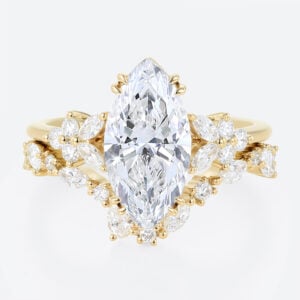
- Proportions matter: At LisaJewelryUS, our 2-carat stones are calibrated for optimal length-to-width ratios. For example, our Marquise Cut Three Stone Ring is designed to elongate the finger, providing a sophisticated “red carpet” look that feels more substantial than its price tag suggests.
Compare Multiple Settings and Styles
The setting is the personality of the ring. Within a similar 2 carat lab diamond ring price bracket, you can achieve vastly different aesthetics:
- Vintage Charm: If you love intricate details, the Art Deco Emerald Cut offers architectural beauty.
- Modern Romance: The Floral Halo designs utilize smaller accent diamonds to create a soft, blooming effect.
- Classic Elegance: A solitaire or simple three-stone setting ensures the 2-carat diamond remains the undisputed star of the show. Take the time to browse the LisaJewelryUS catalog to see how the same 2-carat center stone can be transformed by its “house.”
Ask for Return/Upgrade Policies
Confidence comes from knowing your jeweler stands behind their work. When researching lab diamond ring value guides, always verify the “after-care.” At LisaJewelryUS, we offer clear return and exchange policies. This ensures that if the ring doesn’t perfectly match your vision—or if you decide to upgrade to a different style later—you are protected.
Conclusion
Finding the perfect 2 carat lab diamond ring price isn’t just about hunting for the lowest number; it’s about discovering the intersection of quality, design, and personal values. As we’ve explored, the true value of a lab-grown diamond lies in its ability to offer “more”—more brilliance for your budget, more ethical peace of mind, and more freedom to choose a design that truly reflects your story.
Whether you are drawn to the timeless $1.816 Art Deco Emerald Cut or the luxurious $2.368 Round Cut Bridal Set, remember that the “4Cs” are your tools, and the setting is your canvas. By choosing a lab-grown diamond, you aren’t settling—you are making a savvy, modern choice for a future that is as bright as the stone on your finger.


