
2.5 Carat Diamond Rings Price and Buying Guide
0 comments
SHOP BY STYLE ✧
SHOP BY SHAPE ✧
![]()
![]()
![]()
![]()
![]()
METAL COLOR ✧
SHOP BY STYLE ✧
![]()
![]()
![]()
SHOP BY STONE ✧
SHOP BY METAL ✧
JEWELRY FOR THE BIG DAY
NECKLACES ✧
EARRINGS ✧
BRACELETS ✧
SHOP BY SHAPE ✧
![]()
![]()
![]()
![]()
![]()
![]()
SHOP BY COLOR ✧
SHOP BY CATEGORY✧

FEATURED✧
SHOP BY CATEGORY✧
SHOP BY OCCASION✧
SHOP BY PRICE✧

Birthstone Jewelry

When people search for 2.5 carat diamond ring price, they’re usually not just curious about a number.
They’re trying to answer a bigger question: “Is this size realistic for my budget, and what am I actually paying for?”
Unlike smaller diamonds, a 2.5 carat diamond ring sits in a category where price differences can feel confusing — even overwhelming. Two rings that both say “2.5 carat” may look similar at first glance, yet one costs a few thousand dollars while another reaches well into six figures. That gap isn’t random, and it isn’t marketing hype either.
The truth is, 2.5 carat diamond ring price has one of the widest ranges in the jewelry market. Weight alone tells you almost nothing about value. Factors like whether the diamond is natural or lab-grown, how it’s cut, and even its shape can matter far more than most buyers expect.
The most honest answer to “How much does a 2.5 carat diamond ring cost?” is: it depends — a lot more than most people realize.
At this size, there is no single “average” price. Instead, the market is better understood in broad ranges.
A lab-grown 2.5 carat diamond ring price often starts in the low thousands and typically stays under ten thousand dollars, depending on quality and setting. A natural 2.5 carat diamond ring, on the other hand, can begin around the mid five figures and quickly climb past $100.000 for higher-grade stones.
That enormous gap surprises many first-time buyers, but it reflects how diamond pricing actually works behind the scenes.
Carat weight measures how heavy a diamond is — not how beautiful it looks, how bright it sparkles, or how rare it is. At 2.5 carats, small differences in quality are magnified, both visually and financially.
For example, moving just one grade higher in color or clarity at this size can add thousands — sometimes tens of thousands — to the final price. The same is true for cut quality, which plays a much larger role in brilliance once diamonds reach larger sizes.
Another important factor is perception. Diamonds above two carats cross a psychological threshold in the market. They’re no longer seen as “standard engagement rings,” but as statement pieces. That alone affects demand, availability, and pricing.
When researching 2.5 carat diamond ring price, it’s tempting to fixate on the lowest number you can find. But unusually low prices often signal compromises that aren’t obvious at first glance — such as poor cut quality, visible inclusions, or weaker light performance.
This doesn’t mean affordable options don’t exist. It means understanding what makes one ring affordable and another expensive is essential before comparing prices side by side.
If there’s one decision that shapes 2.5 carat diamond ring price more than any other, it’s whether the diamond is natural or lab-grown.
Both options can look nearly identical to the naked eye. Both are real diamonds in terms of chemical composition and crystal structure. Yet their prices often differ by a factor of five — or more.
Natural diamonds are formed deep within the earth over billions of years, under extreme heat and pressure. Large, high-quality stones are genuinely rare, and rarity is a major driver of value.
At 2.5 carats, this scarcity becomes especially pronounced. Many rough diamonds simply don’t form large enough — or clean enough — to produce a finished stone of that size with good color and clarity. As a result, supply is limited, and prices rise quickly.
Natural diamonds also carry long-established market perception. Some buyers value their geological history, others consider potential resale or heirloom value. Whether or not that matters to you personally, it undeniably influences pricing in the global diamond market.
Lab-grown diamonds are created using advanced technology that replicates the natural diamond-growing process. While they are physically and visually the same material, they can be produced more efficiently and in larger quantities.
This doesn’t mean they are “cheap” or low quality — it means scarcity is no longer the main pricing factor. As production technology has improved, prices have become more accessible, especially at larger carat weights.
For many buyers, lab-grown diamonds make a 2.5 carat ring feel achievable when a natural diamond at the same size would be out of reach. That accessibility is exactly why the price difference is so dramatic.
There’s no universal right answer. A natural diamond isn’t automatically superior, and a lab-grown diamond isn’t a compromise by default.
What matters is understanding why the prices differ, and deciding which factors align with your priorities — whether that’s rarity, budget flexibility, or simply getting the size and look you want without unnecessary trade-offs.
Once you grasp this distinction, comparing 2.5 carat diamond ring prices becomes far less confusing — and far less stressful.
By the time a diamond reaches 2.5 carats, the traditional “4Cs” stop being abstract grading terms and start having a very real impact on both appearance and price. What surprises many buyers is that not all Cs matter equally at this size.
Understanding where quality actually shows — and where it doesn’t — can save you a significant amount without sacrificing visual beauty.
Cut quality has the strongest influence on how impressive a 2.5 carat diamond looks. A well-cut diamond reflects light efficiently, creating brightness, fire, and contrast. A poorly cut diamond of the same weight may appear dull or even smaller than expected.
At this size, cut quality also affects face-up size. Two diamonds can both weigh 2.5 carats, yet one looks noticeably larger due to better proportions.
From a pricing perspective, excellent or ideal cut diamonds command a premium — but this is one of the few premiums that most experts agree is worth paying. If you’re trying to control 2.5 carat diamond ring price, compromising on cut usually backfires visually.
Color grading becomes more sensitive as carat weight increases. A slight tint that’s barely noticeable in a one-carat diamond may be more visible at 2.5 carats, especially in bright lighting or white metal settings.
That said, the jump in price from one color grade to the next can be steep. Many buyers find that staying just below the “colorless” range still delivers a white-looking diamond, particularly when paired with yellow or rose gold.
This is one of the areas where thoughtful compromise can meaningfully reduce overall cost without hurting appearance.
Clarity pricing at 2.5 carats can feel intimidating, but the key concept is eye-cleanliness, not perfection under magnification.
A VS or even well-selected SI diamond can look flawless to the naked eye, while costing significantly less than higher clarity grades. Inclusions that are white, small, or positioned near the edges often disappear once the diamond is set.
For buyers focused on balancing beauty and 2.5 carat diamond ring price, clarity is often the most flexible category.
Diamonds priced at round-number weights like 2.50 are often more expensive than those just below, such as 2.40–2.45 carats, even when the visual difference is minimal.
Choosing a diamond slightly under the milestone can result in noticeable savings while maintaining nearly the same presence on the hand.
Many people assume 2.5 carat diamond ring price is driven mostly by the diamond itself. While that’s true to an extent, shape and setting choices can dramatically influence both cost and visual impact.
Round brilliant diamonds are typically the most expensive shape per carat due to higher demand and greater material loss during cutting. At 2.5 carats, that premium becomes especially noticeable.
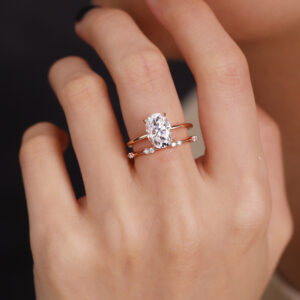
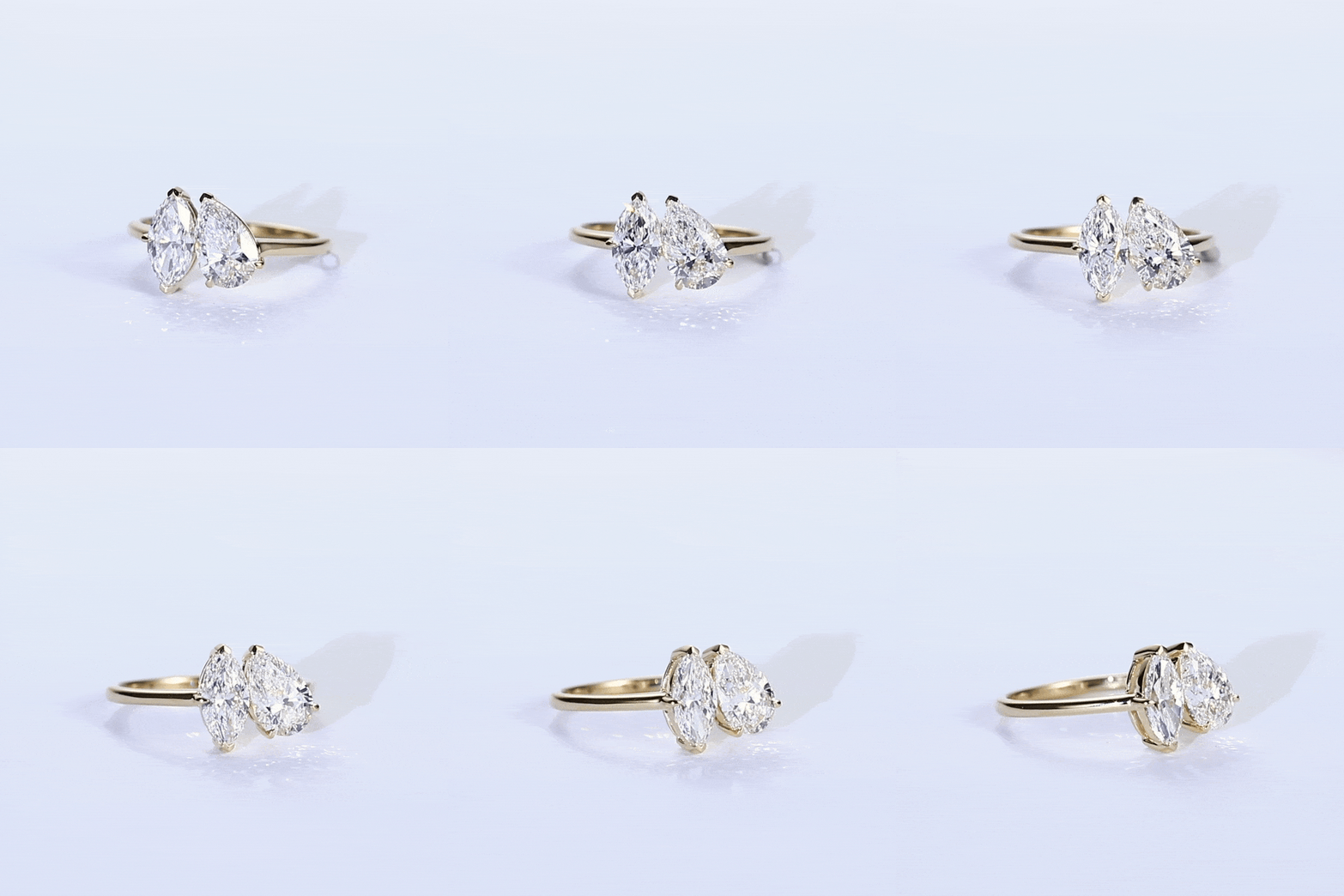
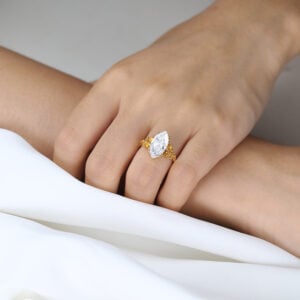
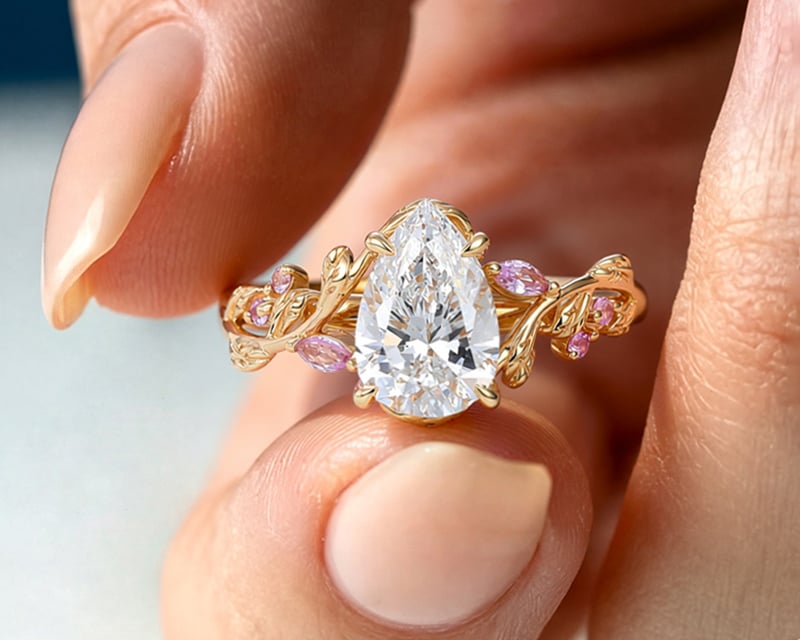
Fancy shapes — such as oval, pear, emerald, or radiant — often cost less per carat and can appear larger face-up. For buyers who care about visual presence, this can be a smart way to maximize impact without increasing budget.
Certain elongated shapes also photograph beautifully and tend to flatter the finger, making them popular choices at larger sizes.
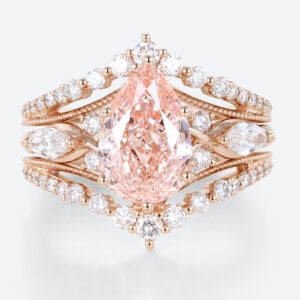
The ring setting influences both cost and how the diamond is perceived. Minimal solitaire settings are often less expensive and keep attention focused on the stone. More intricate designs with pavé, halos, or custom detailing add craftsmanship costs but can enhance sparkle and perceived size.
Metal choice also matters. Platinum typically costs more than gold, while white gold often offers a similar look at a lower price point.
Importantly, the right setting can mask minor color or clarity compromises, allowing buyers to allocate more budget toward size or cut quality instead.
A thoughtfully chosen combination of shape and setting can make a 2.5 carat diamond look larger, brighter, and more refined — without pushing the price into uncomfortable territory.
This is why experienced buyers evaluate rings as a whole, not just as a single stone with a carat number attached.
One of the most common questions buyers ask is deceptively simple: What should a 2.5 carat diamond ring actually cost?
The answer depends less on a single number and more on why prices vary so widely.
In today’s market, the price range for a 2.5 carat diamond ring can feel extreme — from what seems surprisingly attainable to eye-watering figures. This gap exists because diamonds at this size sit at the intersection of rarity, grading sensitivity, and consumer psychology.
At 2.5 carats, small changes in cut, color, or clarity can result in large pricing jumps. Two diamonds that look similar to the untrained eye may differ significantly in price due to a one-grade difference on a certificate.
Additionally, brand markup, retail overhead, and even regional demand play a role. A diamond ring sold by a legacy luxury brand may cost substantially more than a comparable ring sold by an independent jeweler or direct-to-consumer retailer.
This is why comparing prices without context can be misleading.
Rather than asking whether a 2.5 carat diamond ring price is “cheap” or “expensive,” a more useful question is whether it’s fair.
A fair price reflects:
Buyers who focus on value often feel more confident than those chasing the lowest number or the highest grade.
Prices that seem far below market averages may indicate compromises that aren’t immediately visible — such as poor cut proportions, fluorescence issues, or weak light performance.
On the other hand, extremely high prices don’t always guarantee superior beauty. In some cases, you may simply be paying for brand prestige or an unnecessary level of perfection that offers no visual benefit.
A 2.5 carat diamond ring isn’t just a purchase — it’s a statement of intention, taste, and personal values.
For some, it represents a once-in-a-lifetime milestone.
For others, it’s a celebration of achievement or commitment.
The right ring isn’t defined by the highest grade or the lowest price. It’s defined by understanding — understanding what you’re paying for, what you’re wearing, and why it matters to you.
When buyers approach the 2.5 carat diamond ring price with education rather than urgency, the experience becomes empowering instead of overwhelming.
And that confidence is what truly makes a diamond shine.
A 2.5 carat diamond ring typically costs between $25,000 and $80,000, depending on the diamond’s cut, color, clarity, shape, and setting. Exceptional stones with top grades can exceed this range, while well-balanced diamonds may fall on the lower end.
Price differences are mainly driven by cut quality, color grade, clarity, and diamond shape. Two diamonds with the same carat weight can vary dramatically in price if one has better light performance or fewer visible inclusions.
Yes. A 2.5 carat diamond is considered a large, statement-size ring. It offers strong visual presence on the hand and is noticeably bigger than the average engagement ring, especially in classic shapes like round or oval.
Absolutely. Cut has the greatest impact on how brilliant and large a diamond appears. A well-cut 2.5 carat diamond often looks more impressive than a heavier diamond with poor proportions.
Yes. Settings like halo designs, thin bands, and elongated diamond shapes can enhance finger coverage and make a 2.5 carat diamond appear even larger without increasing carat weight.
While diamonds are not guaranteed financial investments, a well-chosen 2.5 carat diamond with strong cut quality and balanced grades tends to hold value better than lower-quality stones of the same size.
Focusing on excellent cut, near-colorless grades, and eye-clean clarity can significantly reduce the 2.5 carat diamond ring price while maintaining stunning visual impact.