














I. Why Engagement Ring Proposal Photos Change How Rings Are Chosen
A proposal happens once. The photos last forever.
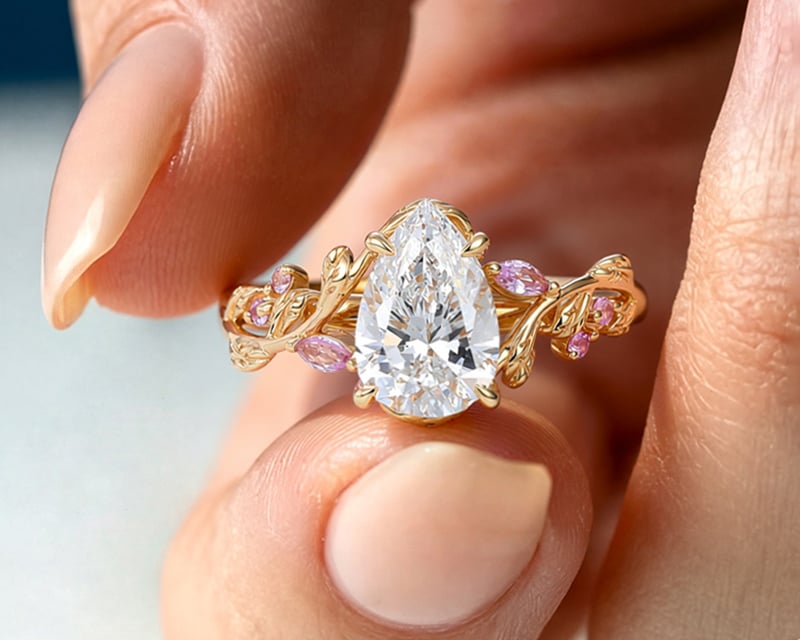
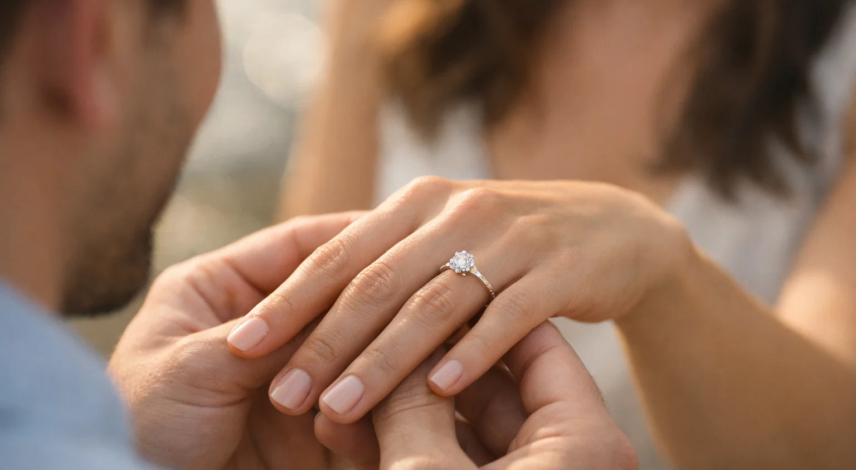
Today, engagement ring proposal photos play a bigger role in how couples remember—and evaluate—the moment. Whether captured by a professional photographer or a quick phone shot, the ring is almost always the focal point.
What many people don’t expect is how differently a ring can appear on camera. Designs that look stunning in person may lose definition, appear smaller, or feel visually unbalanced when photographed from real-life angles. For many couples, this realization only comes after they see the proposal photos.
This shift doesn’t mean engagement rings should be chosen purely for photography. But it does mean that how a ring performs in candid, real-world conditions now matters more than ever.
II. What Makes a Ring Photograph Well in Proposal Moments
A ring that photographs beautifully isn’t defined by size alone. In fact, some of the most impressive rings on camera aren’t the largest—they’re the most visually balanced.
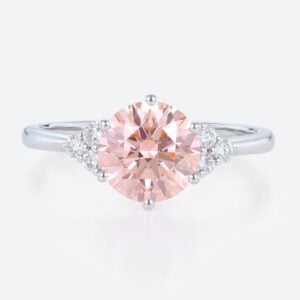
Why Camera Angles Favor Certain Ring Shapes
Most proposal photos aren’t taken straight on. They’re captured from the side, slightly above, or mid-movement as hands meet. These angles naturally favor shapes that elongate the finger and maintain a clear outline.
Shapes with strong symmetry or gentle curves tend to translate better on camera. They remain recognizable even when the photo isn’t perfectly framed. This is one reason elongated and well-proportioned designs often stand out in engagement ring proposal photos, while others can look compressed or uneven.
Light, Reflection, and Finger Coverage Matter More Than Sparkle
Sparkle alone doesn’t guarantee a good photo. What matters more is how a ring handles light.
In real proposal settings—outdoors at sunset, indoors under warm lighting, or in motion—diamonds reflect light differently than they do in controlled environments. Rings with good finger coverage and clean facet patterns tend to show depth and presence, even when lighting isn’t ideal.
Finger coverage also plays a role. Designs that visually extend along the finger create a stronger silhouette in photos, making the ring feel more prominent without overwhelming the hand.
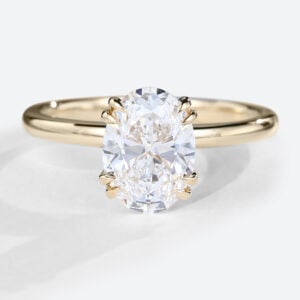
Proportion Is the Quiet Factor Most People Overlook
Proportion is often the difference between a ring that looks stunning in photos and one that feels underwhelming. Band width, setting height, and the relationship between the center stone and surrounding elements all affect how the ring appears on camera.
Well-proportioned rings photograph as intentional and refined. They don’t rely on extreme contrast or heavy detailing to stand out. Instead, they allow the eye—and the lens—to focus naturally on the center stone.
When these elements come together, the ring doesn’t just photograph well. It becomes part of the moment, rather than a distraction from it.
III. Oval Cut Engagement Rings — Soft, Elongated, and Camera-Friendly
If there’s one engagement ring shape that consistently photographs beautifully in real proposal moments, it’s the oval cut.
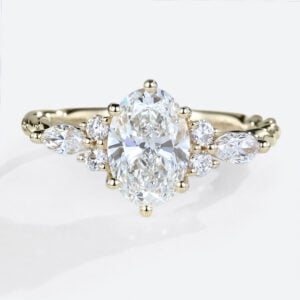
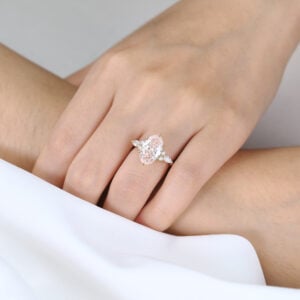
Oval diamonds have a natural advantage on camera. Their elongated silhouette creates visual flow along the finger, which helps the hand look more balanced and graceful in photos—especially from angled or candid shots.
Why Oval Rings Look Bigger and Brighter in Proposal Photos
In engagement ring proposal photos, the camera often captures the ring from slightly above or from the side. Oval cuts maintain a clear outline from these angles, which prevents the diamond from looking compressed or lost.
Because of their larger face-up appearance, oval diamonds often appear bigger than their carat weight suggests. This makes them particularly photogenic when paired with slim bands or subtle settings that don’t interrupt the stone’s shape.
Oval cuts also handle light well. Their facet pattern produces a softer, more even reflection that translates cleanly on camera—without harsh glare or dark spots.
Best Settings for Oval Rings During Proposals
Oval diamonds photograph best when the setting allows the shape to remain uninterrupted. Solitaire and hidden halo designs are especially effective, as they keep attention focused on the center stone.
A slightly elevated setting can also help the diamond catch ambient light during movement, which is common in proposal moments. The result is a ring that looks luminous without appearing overstated.
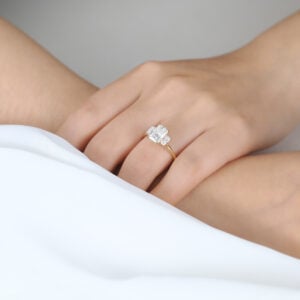
For couples who want a ring that feels romantic, timeless, and reliably photogenic, oval cut engagement rings remain one of the safest—and most rewarding—choices.
IV. Emerald Cut Rings — Clean Lines That Translate Elegance on Camera
Emerald cut diamonds offer a very different kind of beauty—and on camera, that distinction becomes a strength.
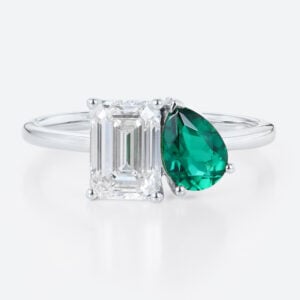
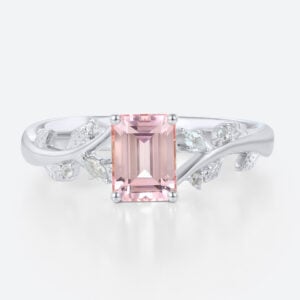
While emerald cuts don’t rely on sparkle, their long, clean facets create a polished, editorial look in photos. In engagement ring proposal photos, this often reads as quiet luxury rather than showiness.
Why Emerald Cuts Photograph as “Luxury”
Emerald cut diamonds have large, open tables that reflect light in broad flashes instead of scattered sparkle. On camera, this produces a calm, refined glow that feels intentional and composed.
This makes emerald cuts especially effective in close-up shots, where the camera captures detail rather than motion. The diamond looks crisp, structured, and confident—qualities that translate well in both indoor and outdoor proposal settings.
When Emerald Cut Rings Work Best for Proposal Photos
Emerald cuts shine in environments with softer or warmer lighting. Indoor proposals, evening moments, or intimate settings allow the diamond’s clarity and symmetry to stand out without distraction.
Simple settings are key. Minimal prongs and clean bands keep the focus on the stone’s geometry, which is what gives emerald cuts their strong visual identity on camera.
For those drawn to understated elegance, an emerald cut engagement ring doesn’t just photograph well—it elevates the entire proposal aesthetic.
V. Marquise and Other Elongated Shapes — Maximum Impact in Proposal Shots
Some engagement rings don’t just photograph well—they command attention the moment they appear in a frame. Elongated shapes like marquise, elongated oval, and radiant cuts fall squarely into this category.
These shapes are especially powerful in engagement ring proposal photos because they create instant visual direction. The eye naturally follows their length, making the ring feel dynamic rather than static.
Why Elongated Shapes Create Drama on Camera
Proposal photos often capture hands in motion—opening a ring box, covering a surprised face, or resting on a shoulder. Elongated diamonds enhance these moments by emphasizing movement.
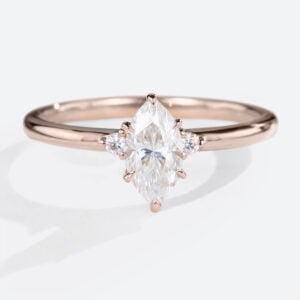
Marquise cuts, in particular, create a striking silhouette that remains recognizable even from a distance. Their pointed ends draw attention inward toward the center stone, making the ring feel bold without relying on excessive sparkle.
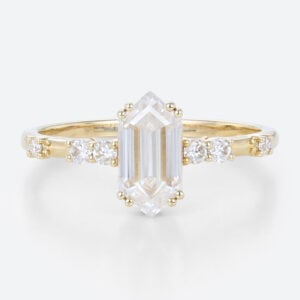
Radiant and elongated cushion cuts offer a slightly softer take on drama. They combine length with brilliance, producing strong light return that performs well in both photos and video.
Who Elongated Shapes Are Best For
These styles photograph best for people who enjoy visible presence. If the goal is for the ring to stand out clearly in proposal photos—especially in wide shots or outdoor settings—elongated shapes are hard to miss.
They’re ideal for proposals where the ring is revealed in open spaces, scenic viewpoints, or moments captured from a slight distance. The shape does the visual work, even when lighting or framing isn’t perfect.
VI. Halo Settings — Why They Still Photograph Exceptionally Well
Halo engagement rings sometimes get overlooked in conversations about modern design—but from a photography standpoint, they remain one of the most reliable choices.
In engagement ring proposal photos, halos consistently amplify light, definition, and perceived size, especially during spontaneous or fast-moving moments.
How Halo Settings Catch Light in Motion
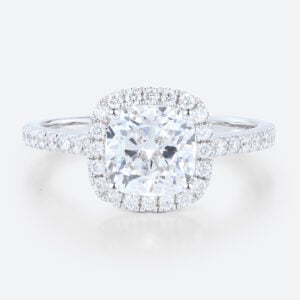
Small accent diamonds surrounding the center stone act like a light multiplier. As the hand moves, these stones reflect light from multiple angles, creating sparkle even in less-than-ideal lighting conditions.
This makes halo settings particularly effective in proposal videos and candid shots, where the ring isn’t perfectly centered or still. The visual energy remains strong regardless of movement.
Modern Halo vs. Outdated Halo Designs
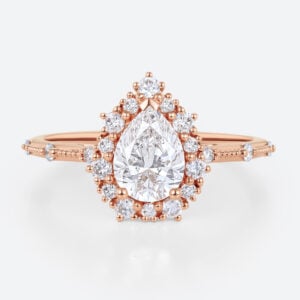
The key to a photogenic halo lies in proportion. Modern halos are delicate, precise, and integrated seamlessly into the design. Hidden halos, micro halos, and thin pavé accents enhance the center stone without overwhelming it.
Heavier or bulky halos, on the other hand, can flatten the overall look in photos. The best halo designs enhance brilliance while maintaining a clean outline—allowing the ring to photograph as refined rather than busy.
For couples who want maximum sparkle in proposal photos without choosing an oversized center stone, halo settings remain one of the most camera-friendly options available.
VII. Ring Styles That Often Look Underwhelming in Proposal Photos
Not every beautiful engagement ring photographs well—and that doesn’t mean the ring itself is flawed. It simply means some designs rely more on in-person presence than on-camera clarity.
In engagement ring proposal photos, certain styles tend to lose impact due to lighting, angle, or scale.
Rings with very thick bands can overpower the center stone on camera, making the diamond appear smaller than it actually is. Low-profile settings, while practical for daily wear, sometimes prevent the diamond from catching enough light during quick proposal moments. Highly asymmetrical or sculptural designs may look stunning in person but can feel visually confusing when captured from unexpected angles.
None of these designs are “wrong.” They simply require more controlled photography to shine. In spontaneous proposal settings—where movement, emotion, and imperfect framing are part of the charm—simpler, more defined silhouettes tend to translate better.
Understanding this distinction helps set realistic expectations. A ring doesn’t need to be the most intricate to photograph beautifully. Often, restraint is what allows the design to read clearly on camera.
VIII. How to Choose an Engagement Ring with Proposal Photos in Mind
Choosing a ring that photographs well doesn’t mean prioritizing photos over meaning. It means considering how the ring will appear during one of the most photographed moments of your relationship.
Here are a few practical questions to guide the decision:
- Does the ring maintain a clear outline from the side or at an angle?
- Does the diamond catch light naturally in both indoor and outdoor settings?
- Does the shape elongate the finger rather than compress it?
- Will the design still look balanced in candid, unposed shots?
In engagement ring proposal photos, clarity often outperforms complexity. Rings that feel visually calm and intentional tend to photograph as confident and timeless.
It’s also worth remembering that most proposal photos are taken quickly. There’s no time to adjust lighting or framing. Choosing a ring that performs well in natural conditions allows the moment to remain authentic—without worrying about how it will look afterward.
IX. Final Thoughts — When a Ring Photographs Well, the Memory Lasts Longer
A proposal isn’t staged. It’s felt.
That’s why the engagement ring you choose becomes more than a piece of jewelry—it becomes part of a memory that will be revisited again and again through photos and videos.
The best engagement ring proposal photos don’t just capture sparkle. They capture balance, emotion, and intention. Rings that photograph beautifully tend to share the same qualities that make them meaningful to wear every day:
thoughtful proportions, clear design, and confidence without excess.
When a ring looks right in the moment—and still feels right when you see it years later—you’ve chosen well.
Engagement Ring Styles That Photograph Beautifully for Proposals FAQs
What engagement ring styles photograph best for proposals?
Oval, emerald, marquise, and halo engagement rings photograph especially well in proposal moments because they maintain clear outlines and reflect light effectively.
Why do some engagement rings look better in proposal photos than others?
Rings with balanced proportions, elongated shapes, and thoughtful settings tend to perform better under natural lighting and candid camera angles.
Do bigger diamonds always look better in engagement ring proposal photos?
Not always. Visual impact in proposal photos depends more on shape, setting, and finger coverage than carat size alone.
Are halo engagement rings good for proposal photography?
Yes. Halo settings often photograph well because small accent diamonds enhance light reflection during movement and low-light conditions.
How can I choose an engagement ring that photographs well during a proposal?
Choose a ring with a clear silhouette, good light performance, and proportions that remain flattering from side angles and candid shots.