



What Makes an Engagement Ring Feel Personal Rather Than Trendy
0 comments
SHOP BY STYLE ✧
SHOP BY SHAPE ✧
![]()
![]()
![]()
![]()
![]()
METAL COLOR ✧
SHOP BY STYLE ✧
![]()
![]()
![]()
SHOP BY STONE ✧
SHOP BY METAL ✧
JEWELRY FOR THE BIG DAY
NECKLACES ✧
EARRINGS ✧
BRACELETS ✧
SHOP BY SHAPE ✧
![]()
![]()
![]()
![]()
![]()
![]()
SHOP BY COLOR ✧
SHOP BY CATEGORY✧

FEATURED✧
SHOP BY CATEGORY✧
SHOP BY OCCASION✧
SHOP BY PRICE✧

Birthstone Jewelry

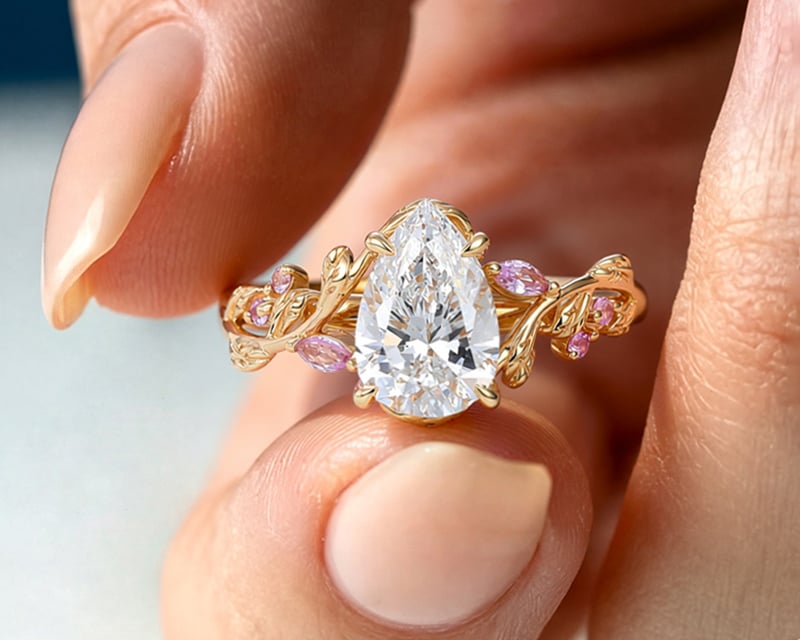
A ring feels personal when it fits the life it’s meant to live in—not the moment it was purchased. While trends come and go, personal engagement rings are defined by alignment: with the wearer’s lifestyle, personality, and the relationship itself.
Many couples assume that choosing something “different” automatically makes a ring personal. In reality, the opposite is often true. A ring becomes personal when it feels natural on the hand, familiar in daily wear, and emotionally connected to the person wearing it. That sense of belonging has very little to do with whether the design is new or popular.
When an engagement ring feels right without explanation, it usually means the choice was guided by understanding rather than trend pressure. Personal rings don’t try to impress—they quietly reflect intention.
Trends are designed for visibility. Engagement rings, however, are designed for longevity. That difference is why trend-focused rings often feel outdated faster than expected.
Most engagement ring trends are built around what looks striking in photos or stands out online. Bold proportions, dramatic settings, or highly specific design details can feel exciting at first—but they aren’t always comfortable or practical for long-term wear.
When a ring prioritizes attention over usability, it often stops feeling personal. Over time, the wearer may feel disconnected from the piece, not because the ring is flawed, but because it no longer fits her daily rhythm.
A ring rarely feels outdated because of its age alone. It feels outdated when it no longer matches the person wearing it. As style, routine, and priorities evolve, trend-driven designs can begin to feel foreign.
Personal engagement rings avoid this problem by focusing on consistency rather than novelty. Instead of chasing what’s current, they are chosen with long-term wear in mind—allowing the ring to age alongside the relationship, not against it.
One of the most reliable ways to choose a personal engagement ring is to stop thinking about the ring first—and start thinking about the person who will wear it.
A ring may look beautiful in isolation, but if it doesn’t fit seamlessly into everyday life, it rarely feels personal for long. Personal engagement rings are shaped by routine, comfort, and context just as much as by design.
Consider how she actually lives. Does she wear jewelry every day, or only on special occasions? Does her work involve frequent hand use, gloves, or physical activity? These details influence whether a ring feels natural or intrusive.
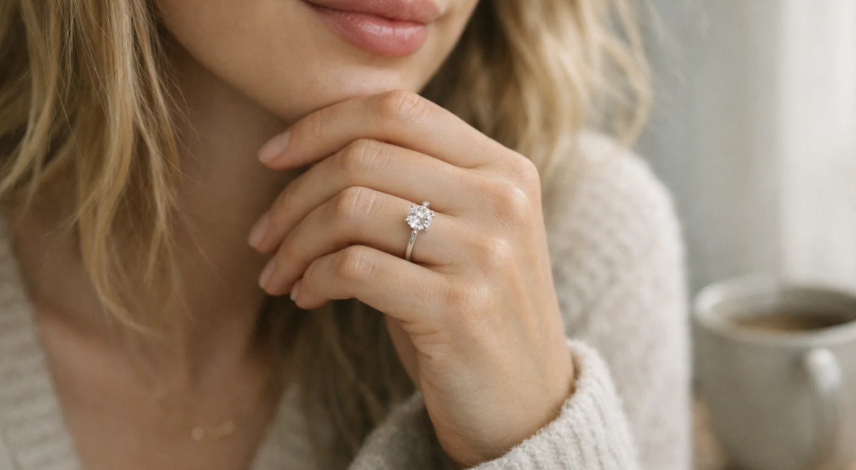
A ring that aligns with daily habits becomes part of her life instead of competing with it. Low-profile settings, balanced proportions, and practical designs often feel more personal over time because they support real use rather than occasional display.
When a ring fits her lifestyle, it rarely needs explanation. She doesn’t have to adjust how she moves, dresses, or works to accommodate it. That ease creates emotional comfort, which is a key reason personal engagement rings remain meaningful long after the proposal.
The goal isn’t to choose the safest option—it’s to choose the most appropriate one.
Personality isn’t expressed through extremes. In engagement rings, it often appears in small, deliberate decisions that feel consistent with how someone presents herself to the world.
Some people gravitate toward understated elegance. They prefer clean lines, soft proportions, and designs that don’t draw immediate attention. For them, a personal engagement ring might feature a simple setting, a modest profile, or a refined stone choice that feels calm rather than dramatic.
Others are more expressive. They enjoy jewelry that feels distinctive—whether through shape, color, or unconventional details. In these cases, personality may show up in elongated diamond shapes, subtle asymmetry, or a center stone that reflects individuality rather than tradition.
Neither approach is more personal than the other. What matters is alignment. Personal engagement rings feel right when the design language matches how the wearer already expresses herself.
It’s often the smallest elements that make a ring feel personal: the way a band curves, the height of the setting, or the balance between stone and metal. These choices are rarely noticed by others, but deeply felt by the wearer.
A ring doesn’t need to announce itself to feel meaningful. When design decisions are consistent with personality, the result is a ring that feels authentic rather than performative.
One of the most common mistakes when trying to make a ring feel personal is adding too much meaning all at once. Birthstones, engravings, symbolic settings, hidden details—when everything is meaningful, nothing stands out.
Personal engagement rings don’t rely on layered symbolism. They rely on clarity.
When a ring includes too many symbolic elements, the intention can get lost. The wearer may appreciate the thought, but struggle to emotionally connect with the piece as a whole. Instead of feeling intuitive, the ring begins to feel explained.
A personal ring shouldn’t require a story every time it’s noticed. The most meaningful choices are often the simplest ones—made for reasons that feel obvious to the person wearing it.
Ask yourself a simple question: Why this ring?
If the answer is immediate and easy to say, you’re on the right track.
That reason might be:
When the intention is clear, the ring feels personal without effort. And that clarity lasts longer than any trend or symbol ever could.
A ring that feels personal today should still feel right years from now. That’s why material and stone choices play a larger role than many people expect.
Some people genuinely love classic white diamonds. Others feel more drawn to subtle color or softer tones. Neither choice is more personal by default—the difference lies in whether the stone reflects preference or expectation.
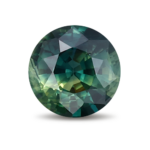
In personal engagement rings, stones are chosen because they resonate, not because they follow a rule. Subtle color variations, warmer hues, or unconventional options often feel more personal because they break away from default choices without trying to be bold.
Metal color is another long-term decision that shapes how a ring ages. Yellow gold, white gold, and mixed metals all interact differently with skin tone, wardrobe changes, and evolving style.
A personal engagement ring doesn’t lock someone into a moment in time. It allows space for growth. Choosing materials that adapt well to change helps the ring remain relevant—not frozen in the year it was purchased.
One of the most overlooked aspects of personal engagement rings is flexibility. The most meaningful rings aren’t designed to be perfect forever—they’re designed to evolve.
Life changes. Style changes. Hands change. A ring that allows for resizing, subtle upgrades, or future pairing often feels more personal because it acknowledges that growth is part of the relationship.
Instead of treating the engagement ring as a final decision, many couples now view it as the starting point of a longer story.
A ring that can grow with its wearer feels more honest than one designed to impress once. Whether it’s adding a band later, updating a setting, or simply letting the ring take on wear over time, personal engagement rings embrace change rather than resisting it.
That willingness to evolve is often what makes a ring feel deeply personal—long after trends fade.
When everything has been considered—design, material, lifestyle, meaning—there’s still one final test that helps determine whether a ring is truly personal.
It isn’t about trends. It isn’t about price. It’s about recognition.
Ask yourself a few honest questions:
If the answers come naturally, the ring is likely aligned. Personal engagement rings don’t need justification—they feel right without effort.
A personal ring often feels quietly familiar from the start. It doesn’t rely on shock value or immediate attention. Instead, it settles in quickly, becoming part of the wearer’s identity rather than an accessory she has to adjust to.
When a ring feels like something she would have chosen for herself—even if she didn’t—it’s usually a sign that the decision was made with understanding rather than influence.
An engagement ring doesn’t need to be rare, bold, or trend-defining to be meaningful. In fact, the rings that feel most personal are often the ones that don’t try to stand out at all.
Personal engagement rings are chosen with clarity. They reflect real preferences, real lives, and real relationships. They aren’t designed to impress strangers or follow timelines set by the industry. They’re designed to belong—to one person, in one relationship, over time.
Trends will continue to change. Styles will cycle. But a ring chosen with intention will age alongside the relationship it represents, carrying meaning long after the moment it was given.
In the end, a personal engagement ring doesn’t ask to be noticed. It simply feels right—and that’s what makes it last.
A ring feels personal when it aligns with the wearer’s lifestyle, personality, and long-term preferences—not when it follows trends or industry rules.
No. A personal engagement ring can be classic or unconventional. What matters is whether the design reflects the wearer’s taste rather than outside expectations.
Trend-driven rings are designed for short-term attention. Personal engagement rings prioritize daily wear and long-term comfort, which helps them age more gracefully.
Ask whether the ring fits her daily life, whether she can naturally explain why she likes it, and whether it aligns with her evolving style.
Yes. Simplicity often enhances personalization because it allows intention, proportion, and comfort to take priority over decoration.