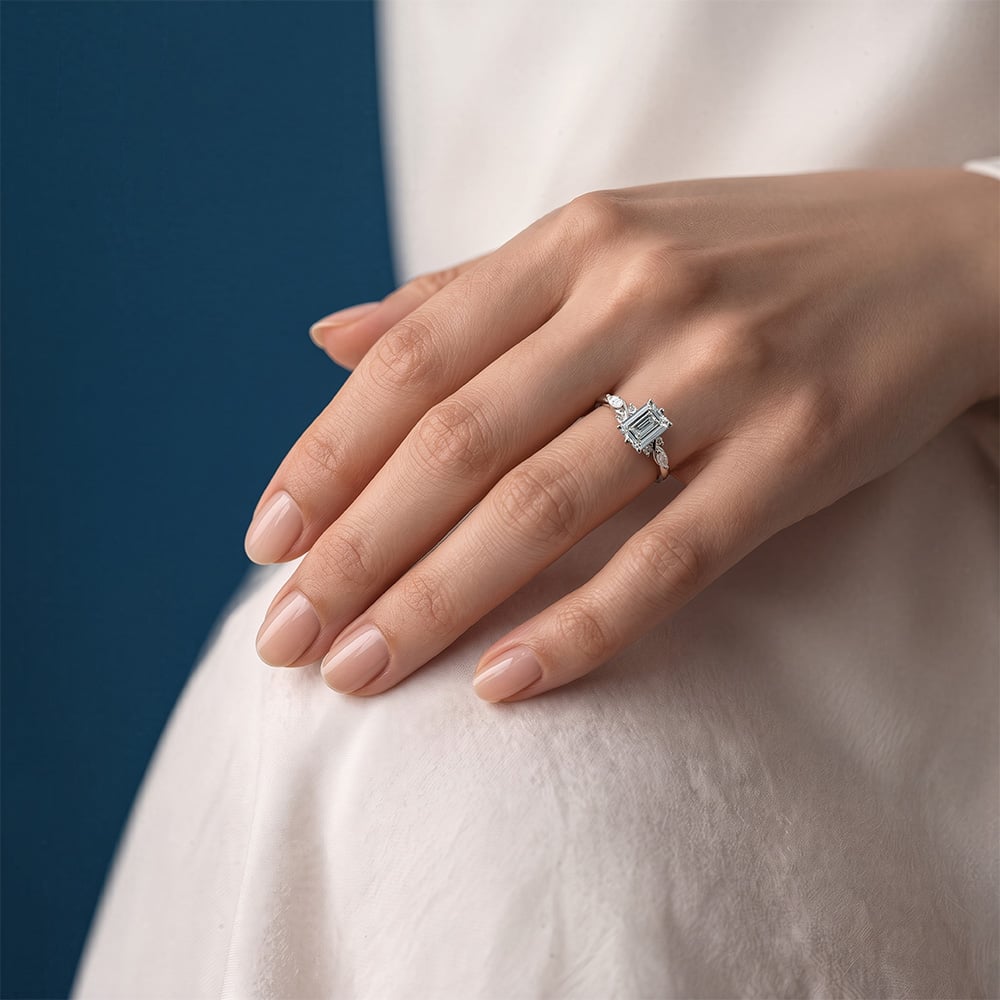
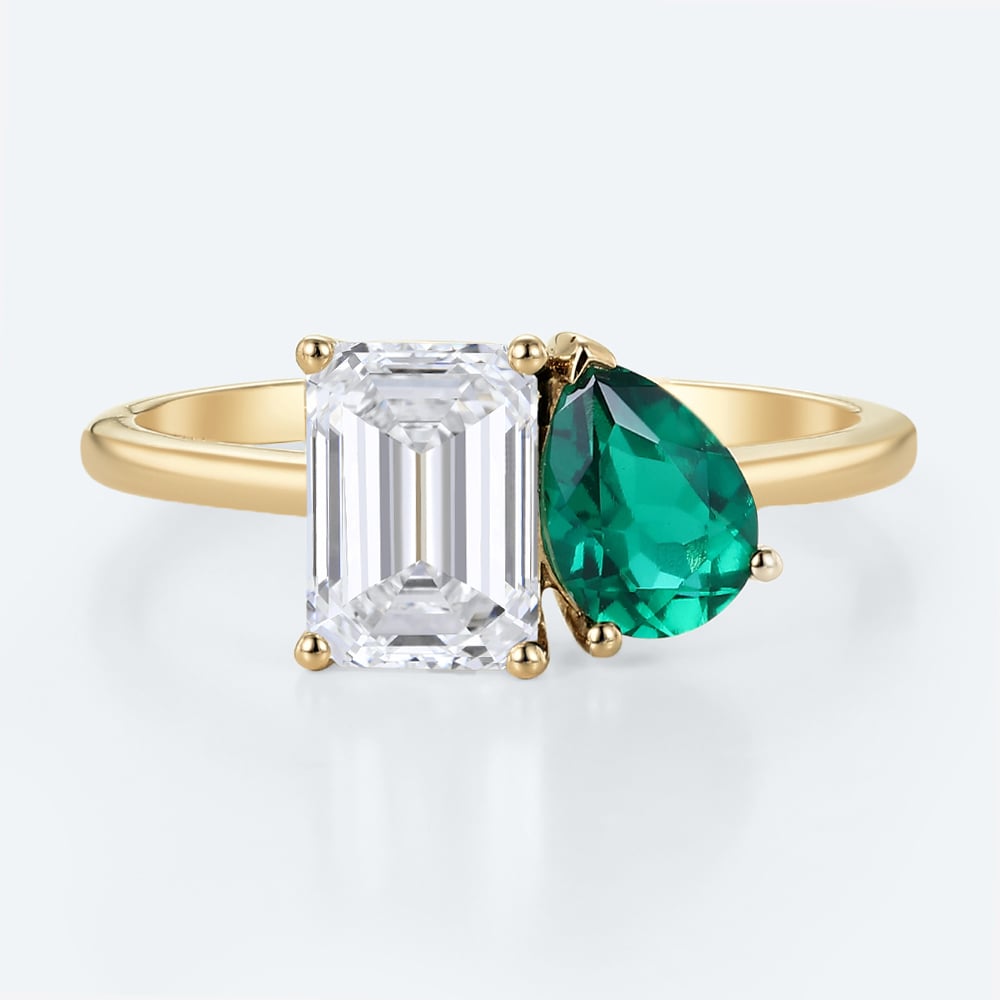
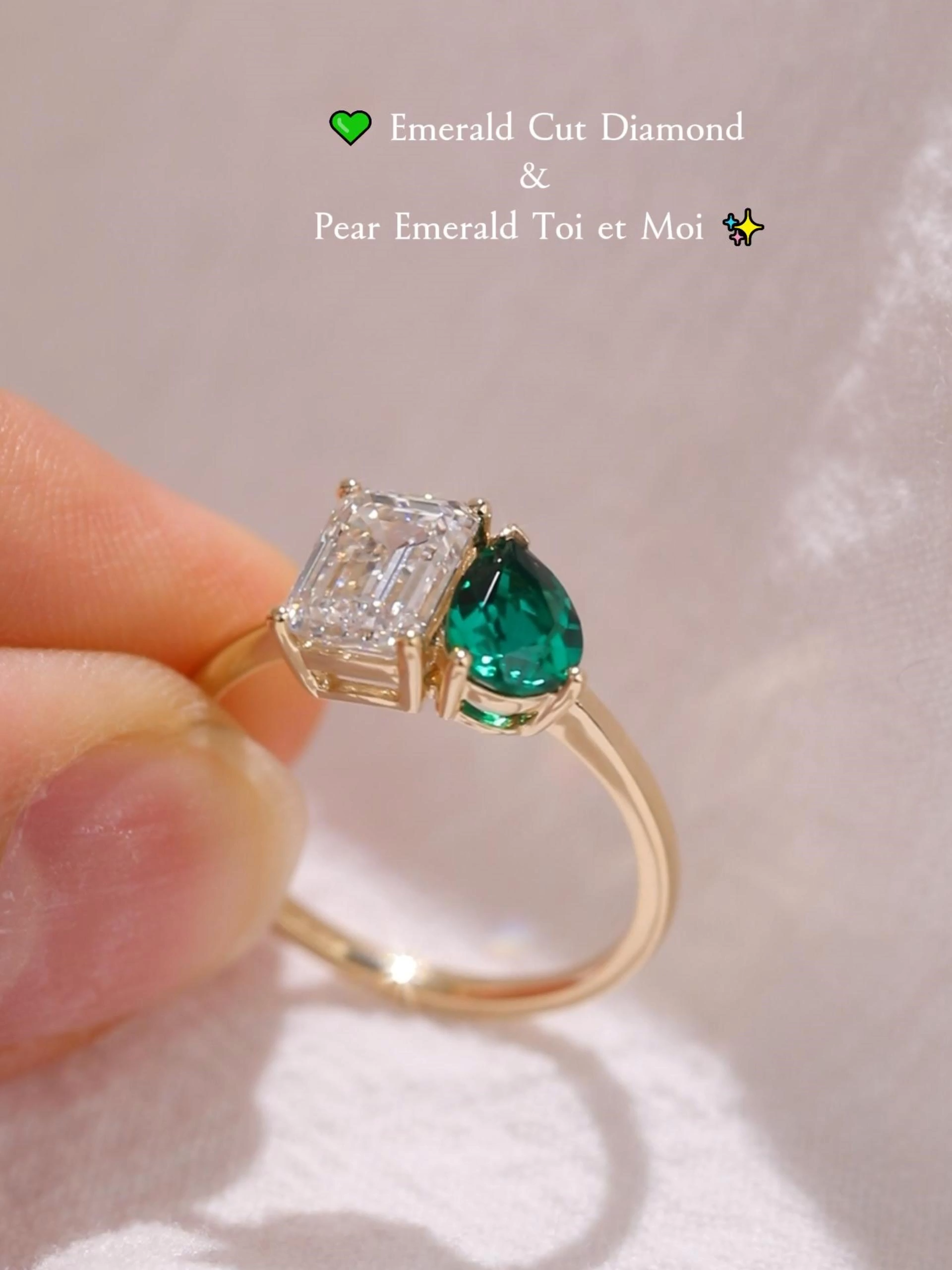
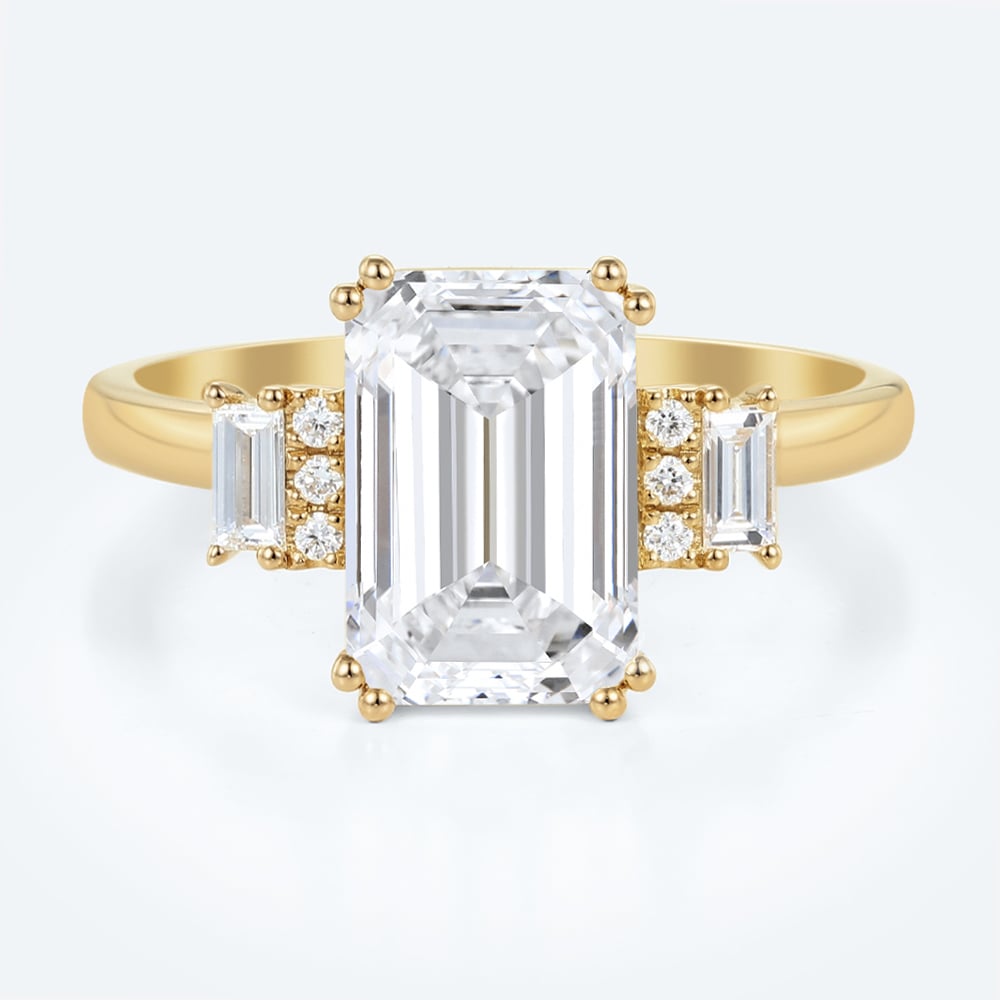
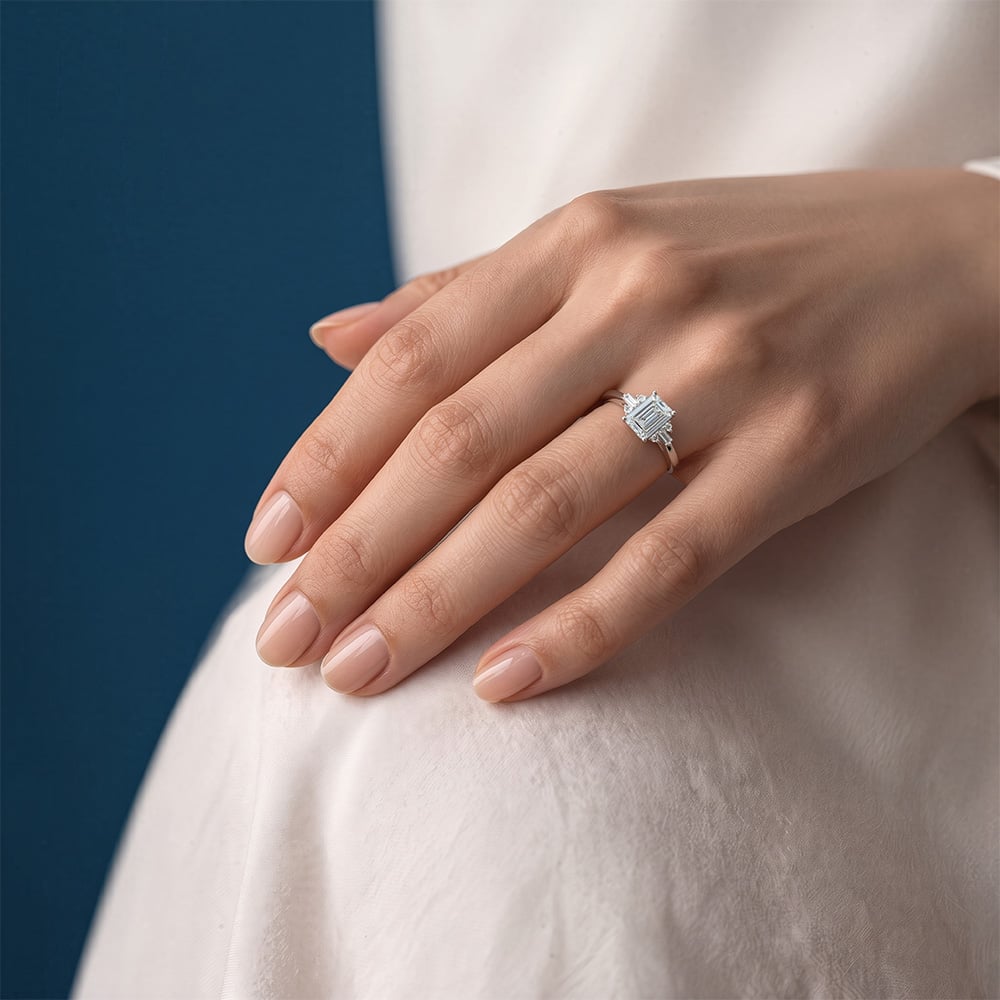
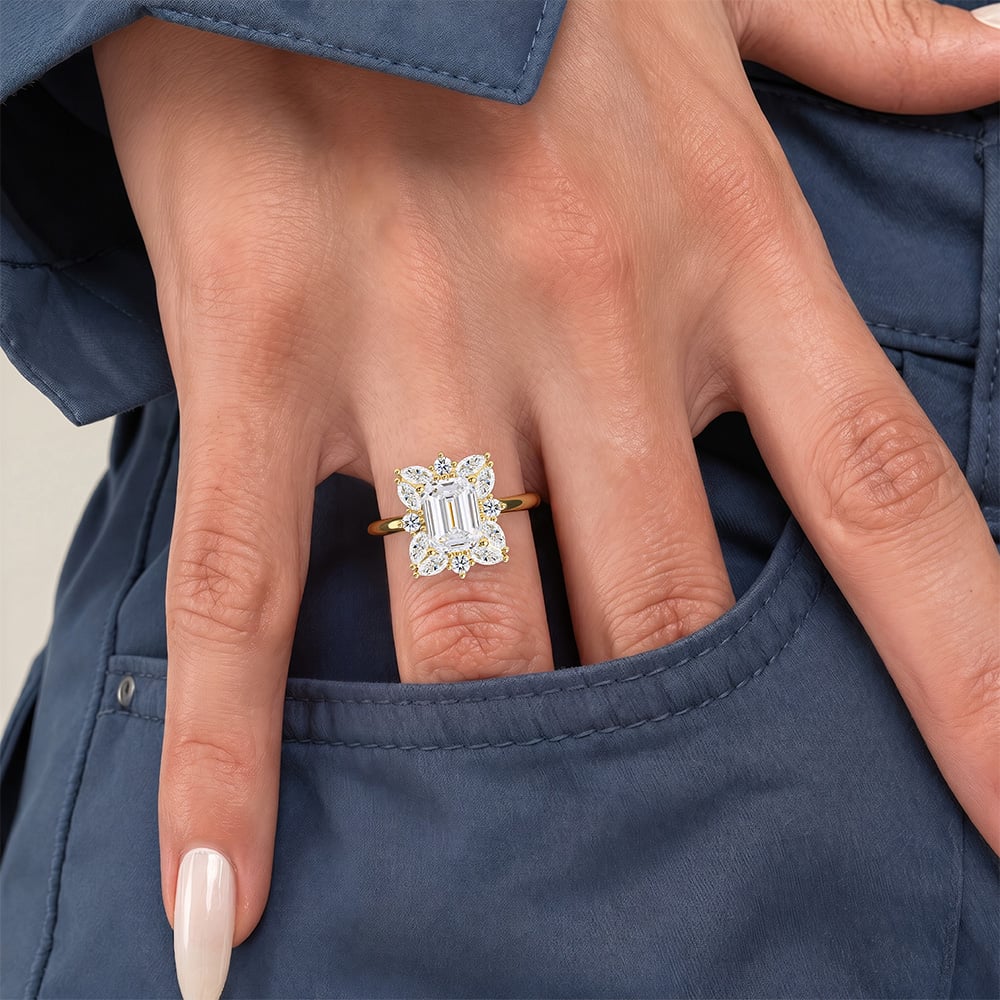
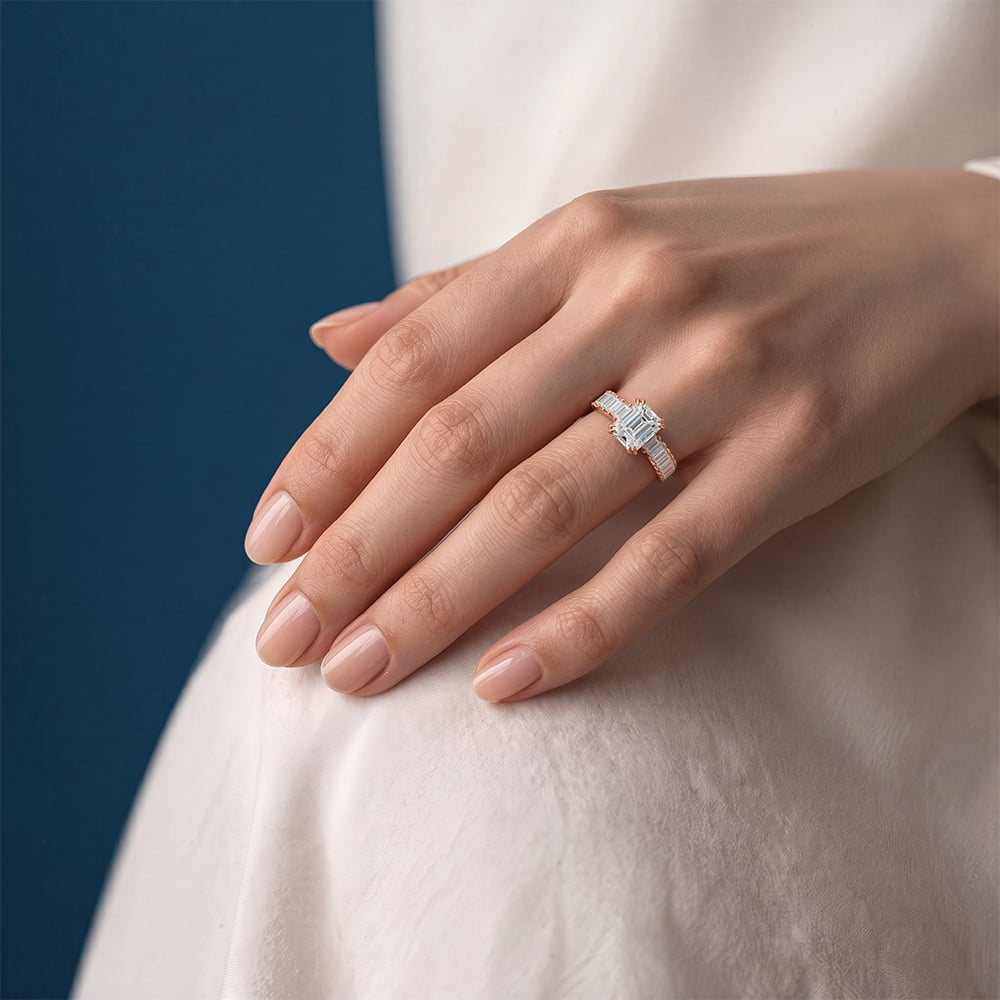
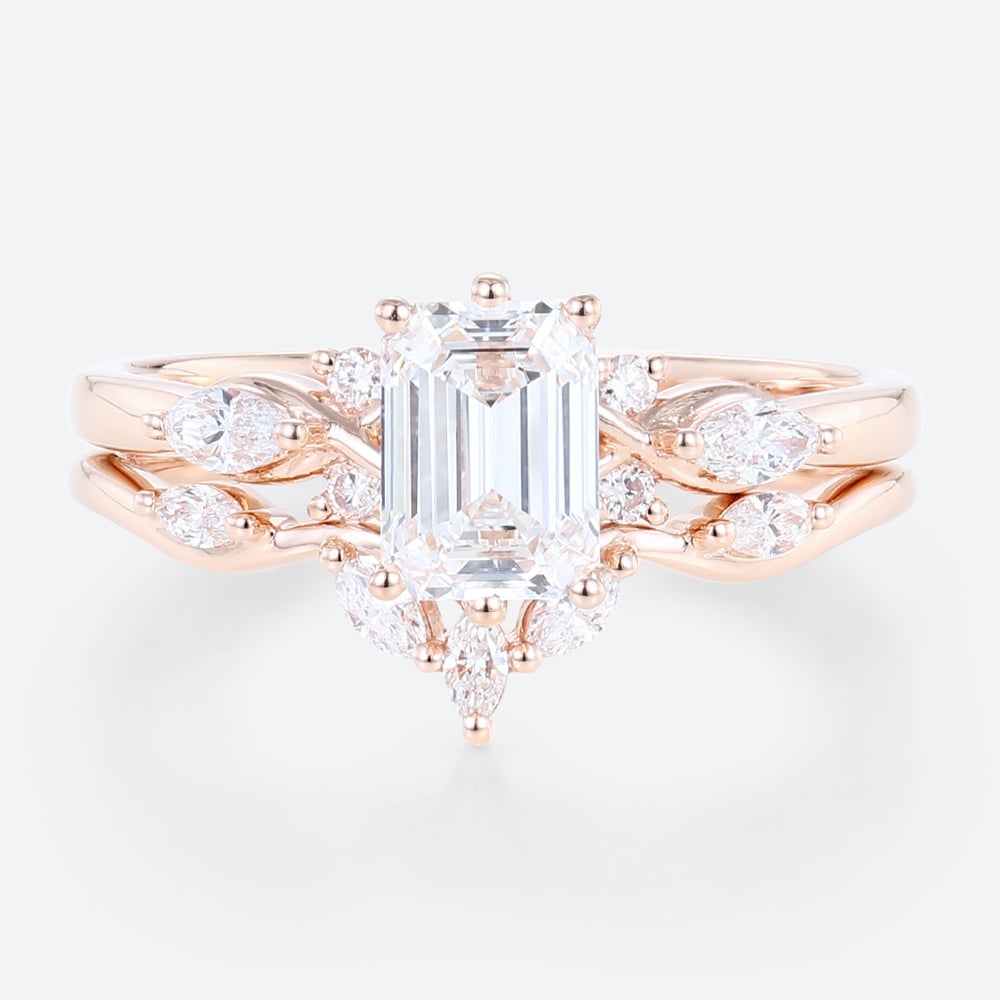
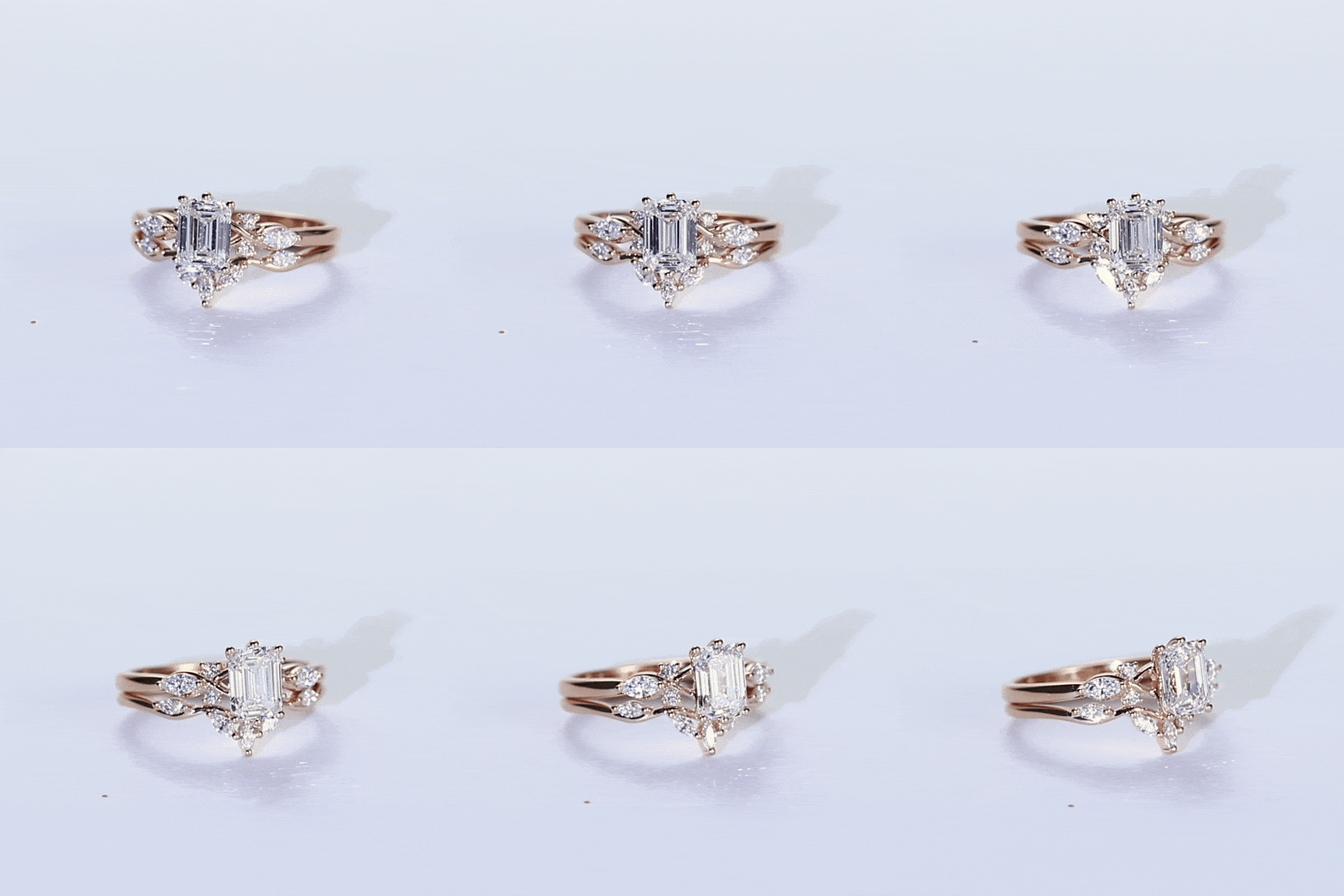
Carat weight greatly affects size perception. Because emerald cut diamonds have a larger surface area, they often appear bigger than round cut diamonds of the same carat.
Due to the step cut facets, inclusions are more visible in emerald cut diamonds. Choosing a higher clarity grade ensures maximum brilliance and a beautiful diamond.
Absolutely. Platinum offers durability and a modern shine, while yellow gold adds warmth and a classic touch to emerald cut engagement rings.
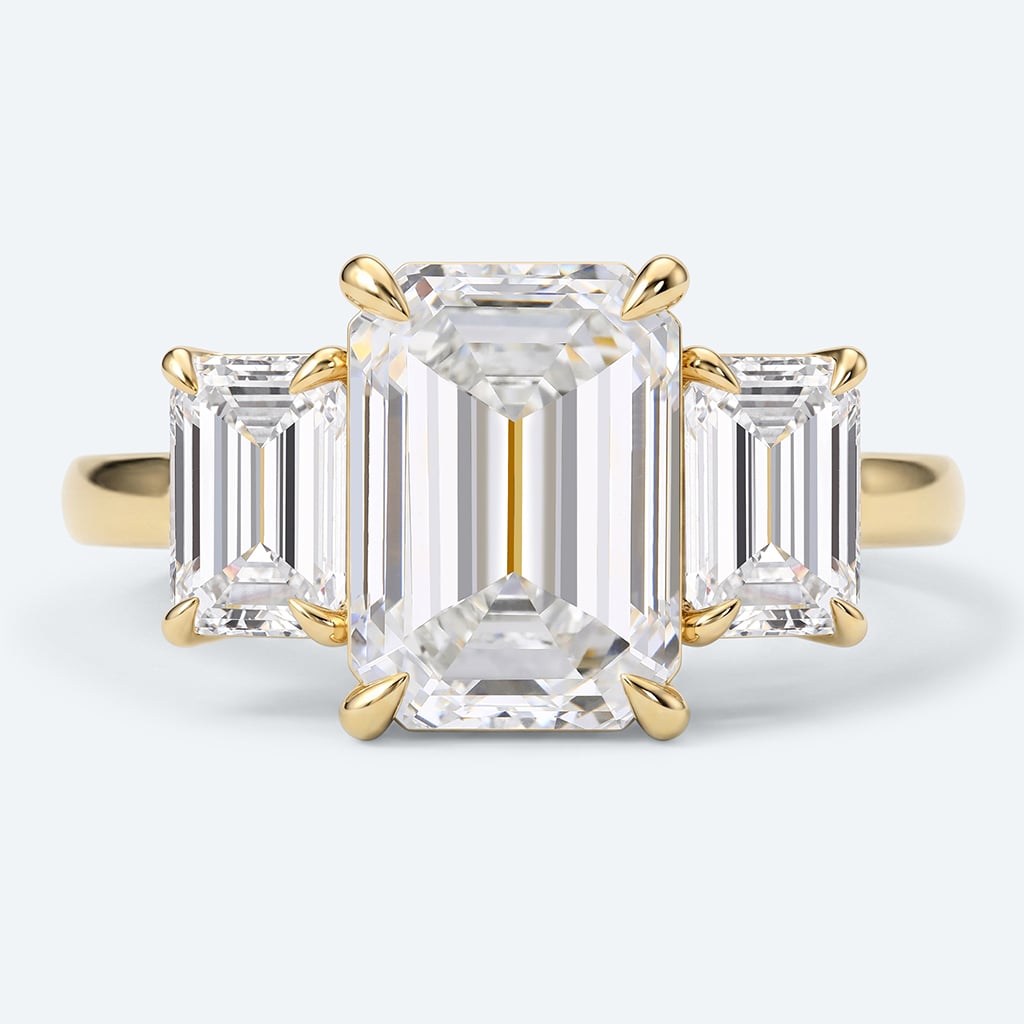
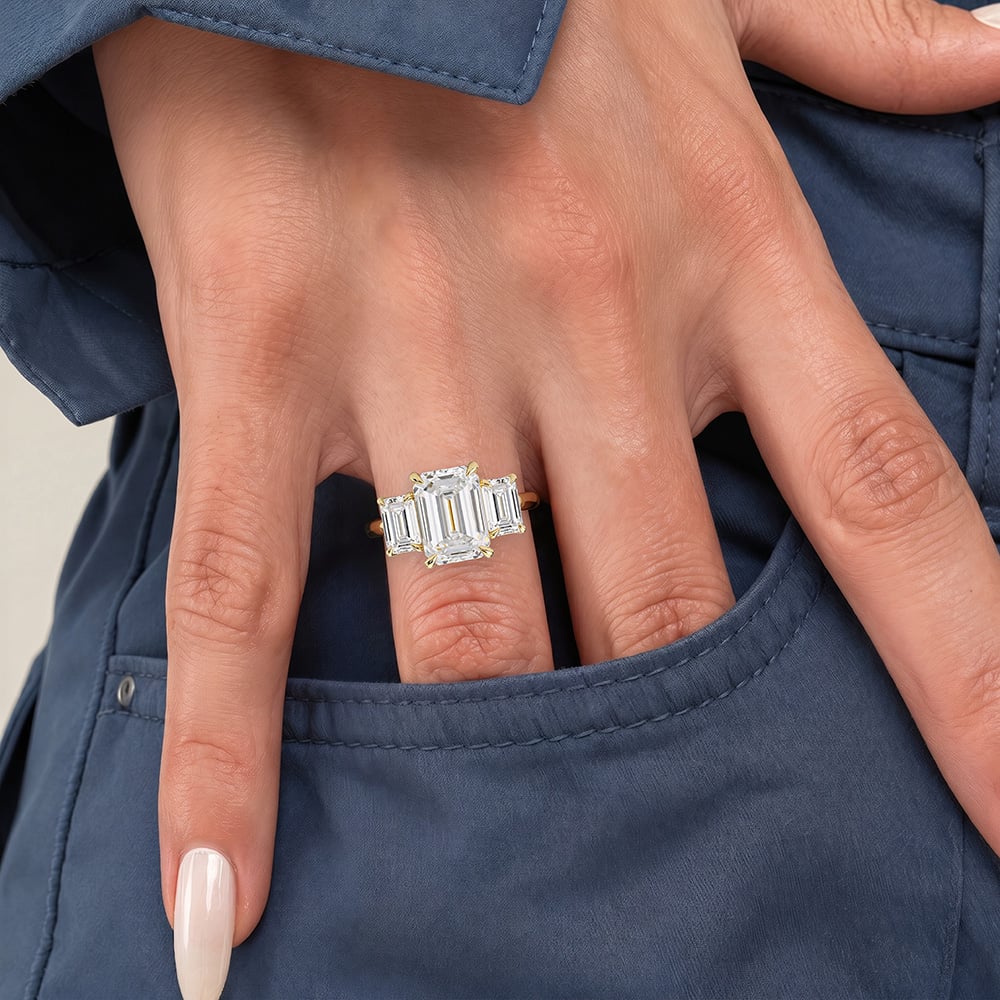
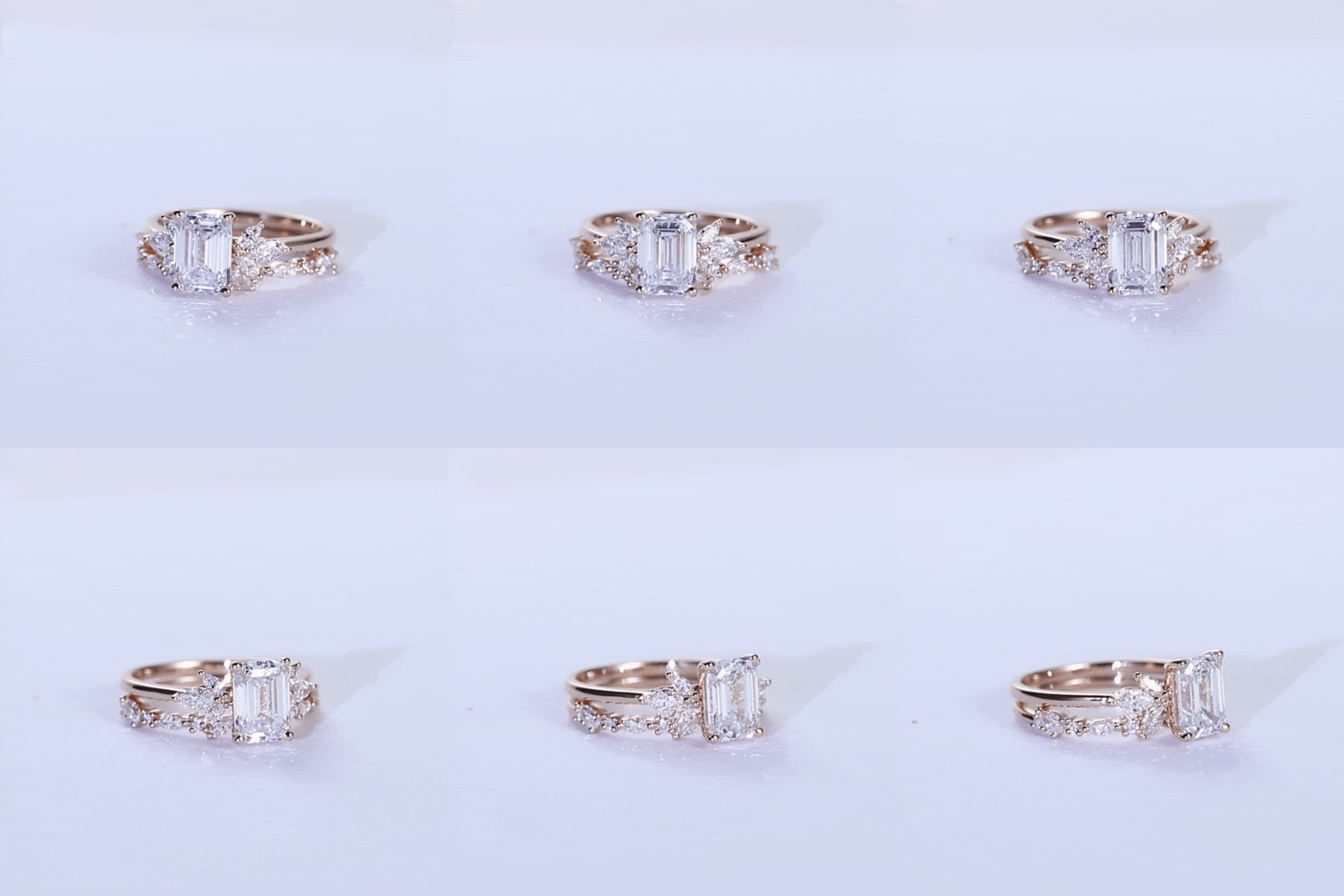
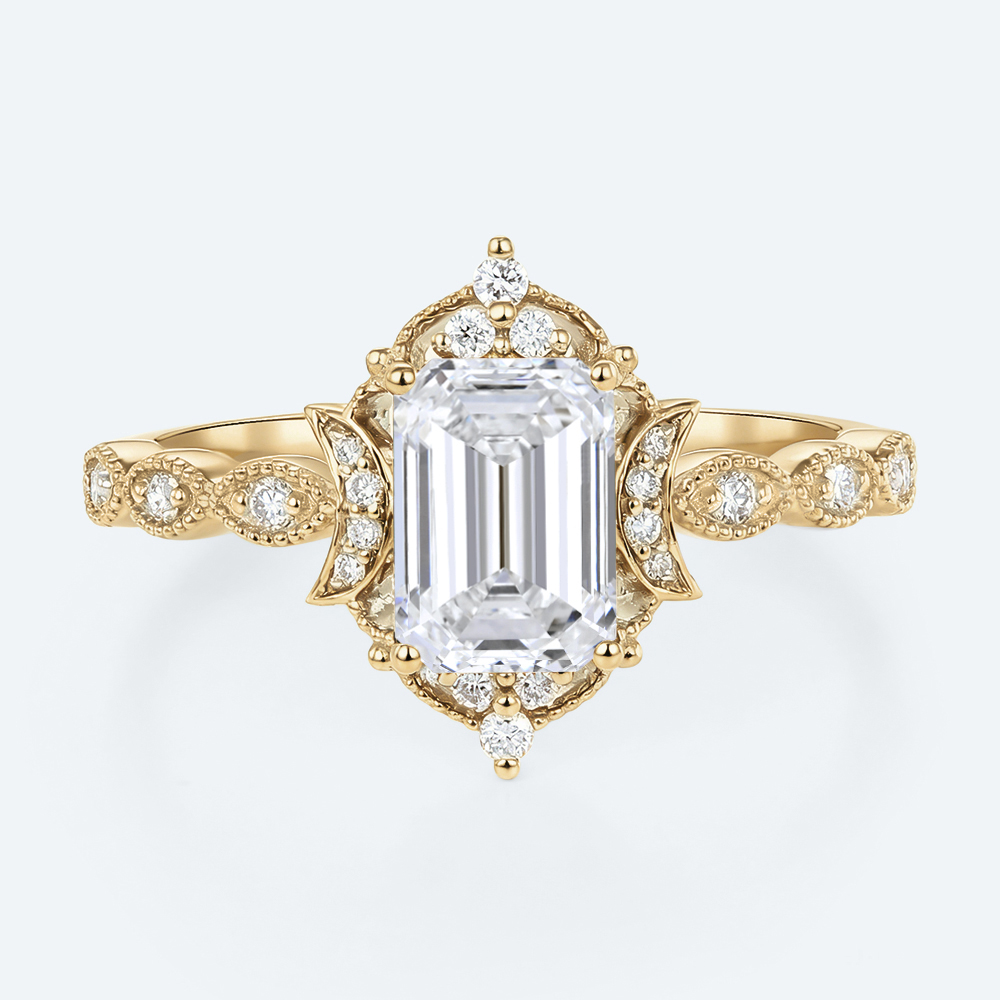
Solitaire and halo settings are popular settings, but three-stone and pavé designs also enhance the rectangular shape of emerald cut lab grown diamonds.
Emerald cut diamonds produce a subtle, hall-of-mirrors effect rather than intense sparkle. Radiant cut and princess cut diamonds tend to deliver more fire and brilliance.
These rings are ideal for those who value clean lines, classic beauty, and understated elegance, offering a sophisticated match for any personal style.
Not necessarily. While price depends on carat, clarity, and setting, emerald cut diamonds often provide better value since their surface area makes them look larger.
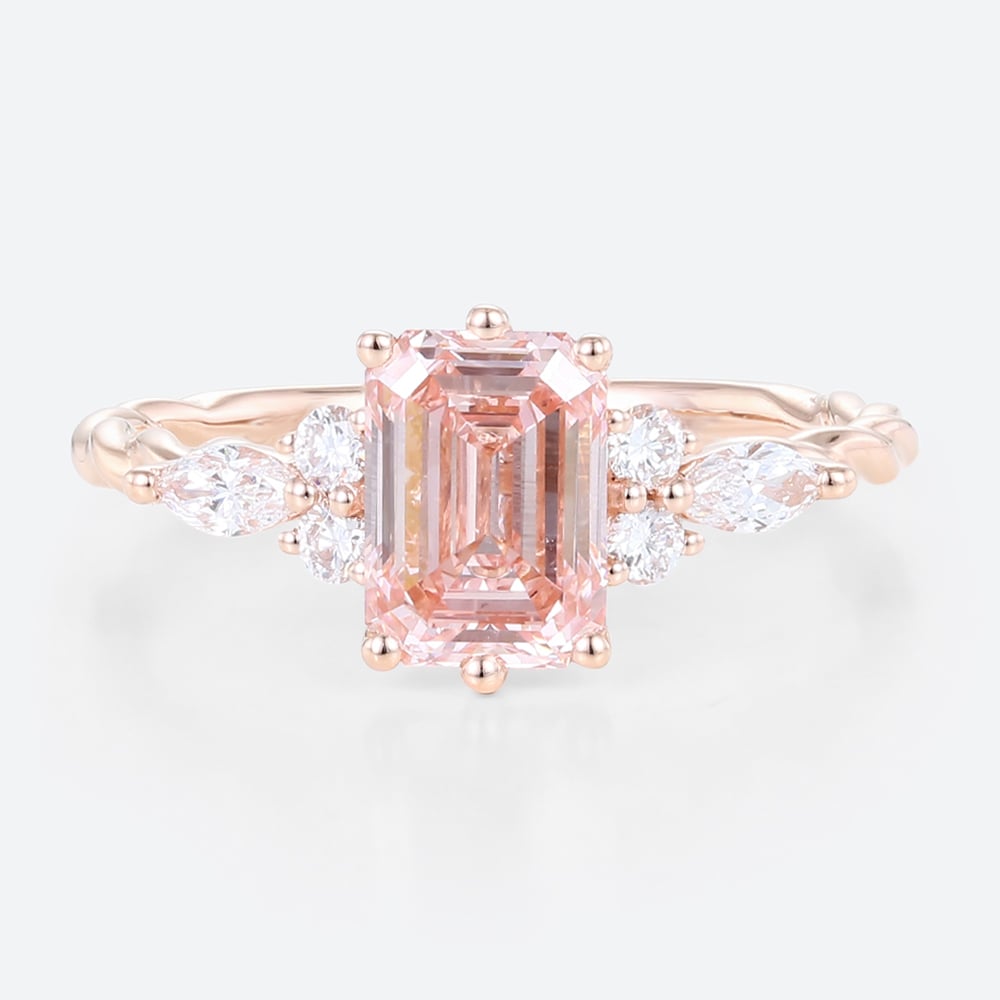
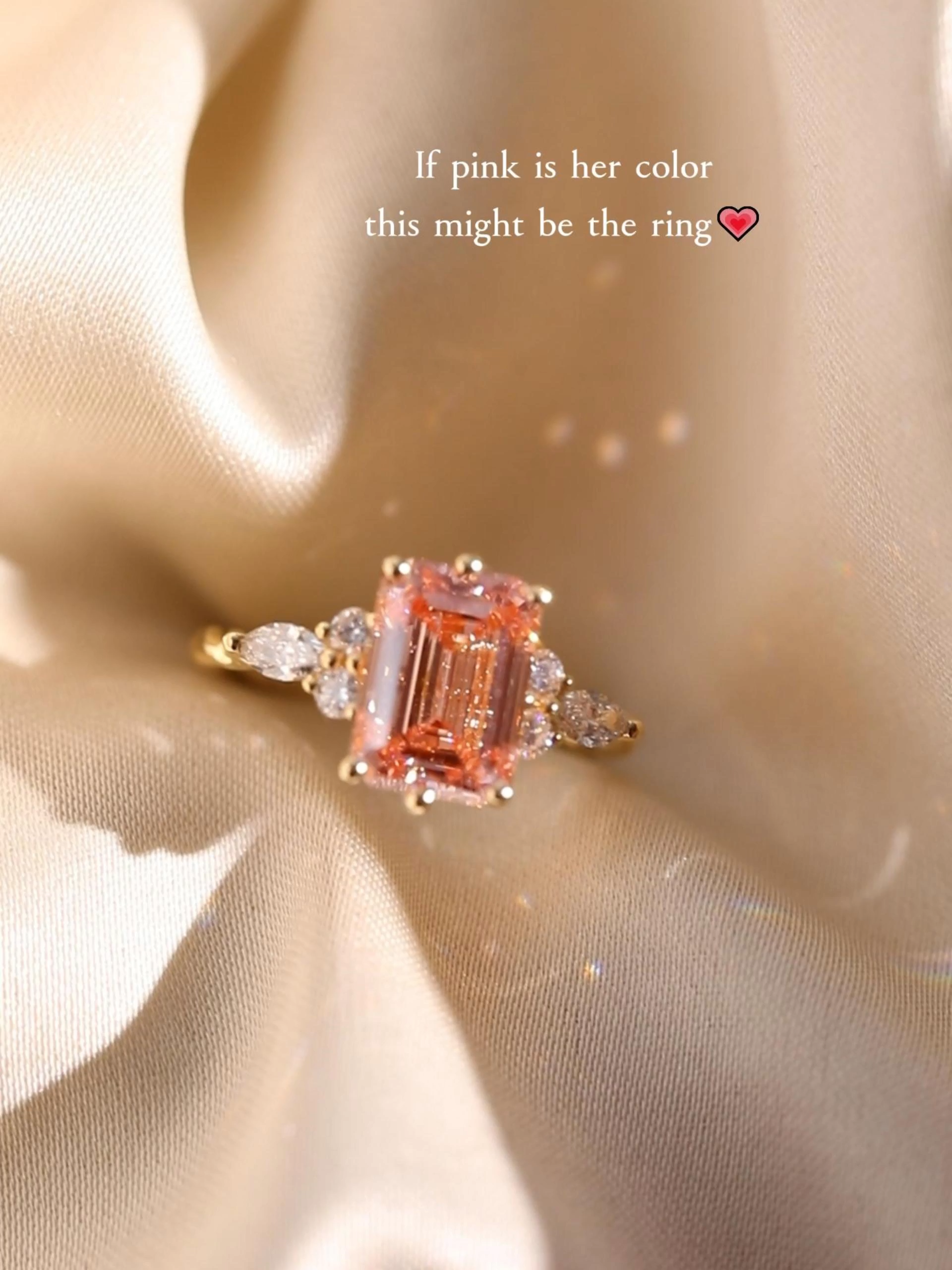
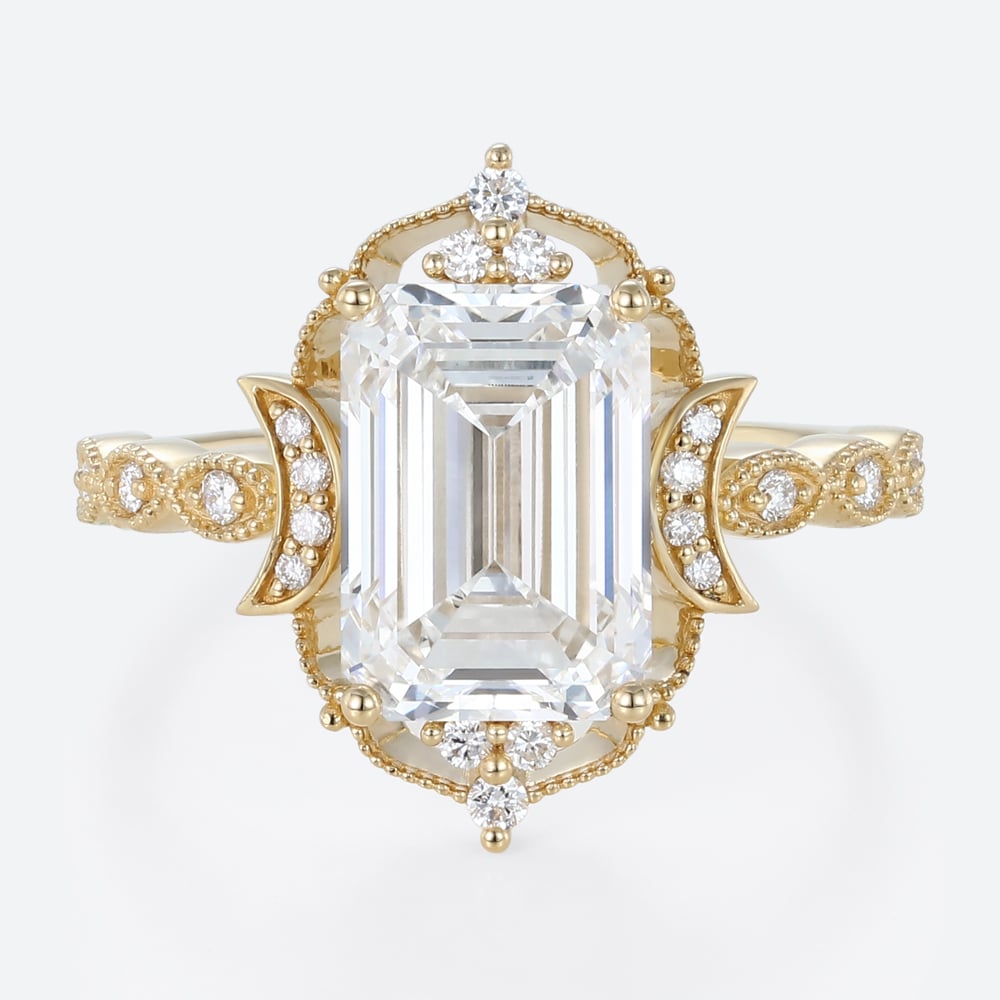
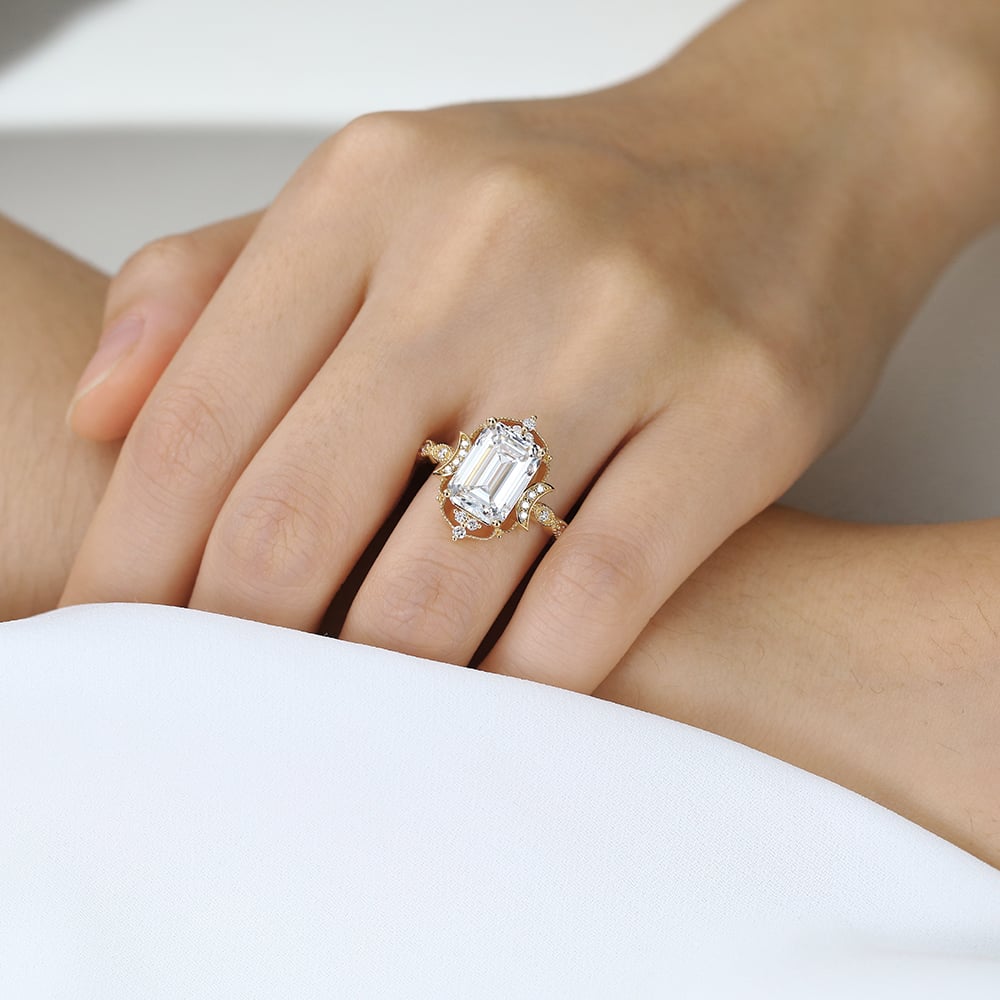
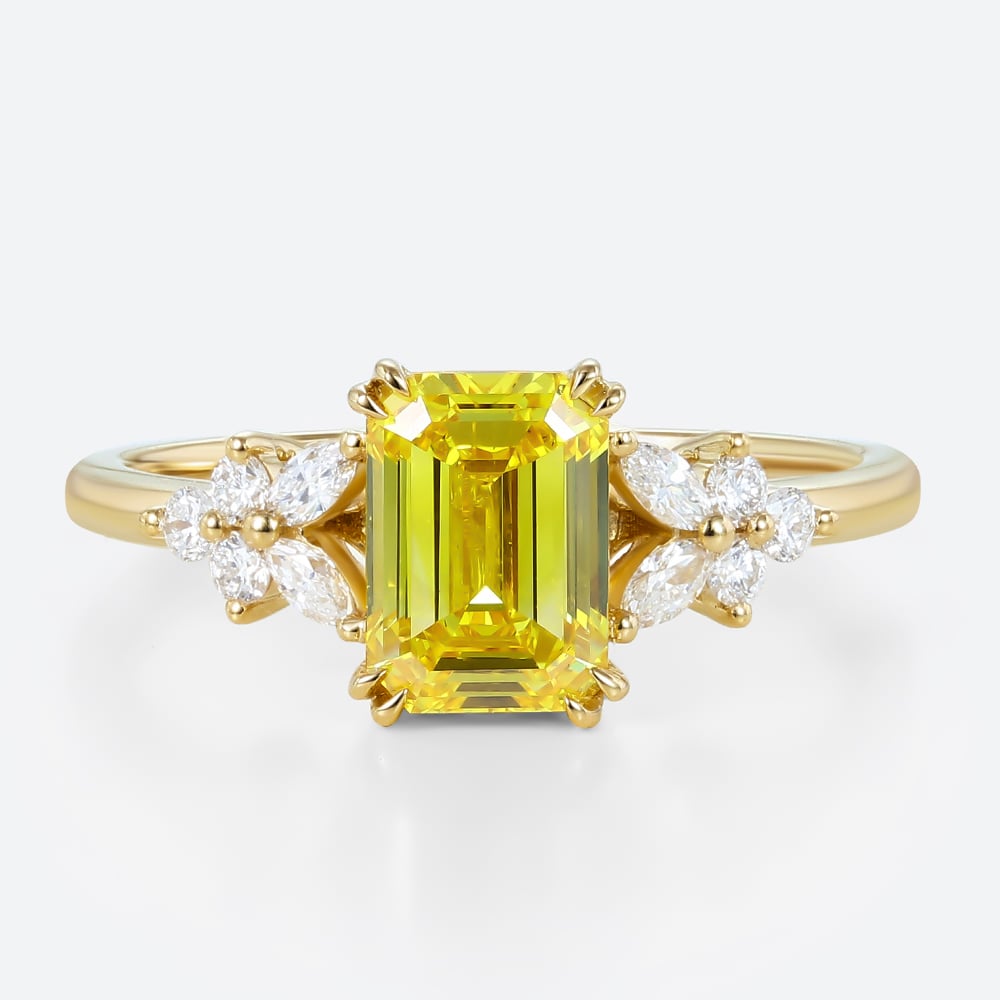
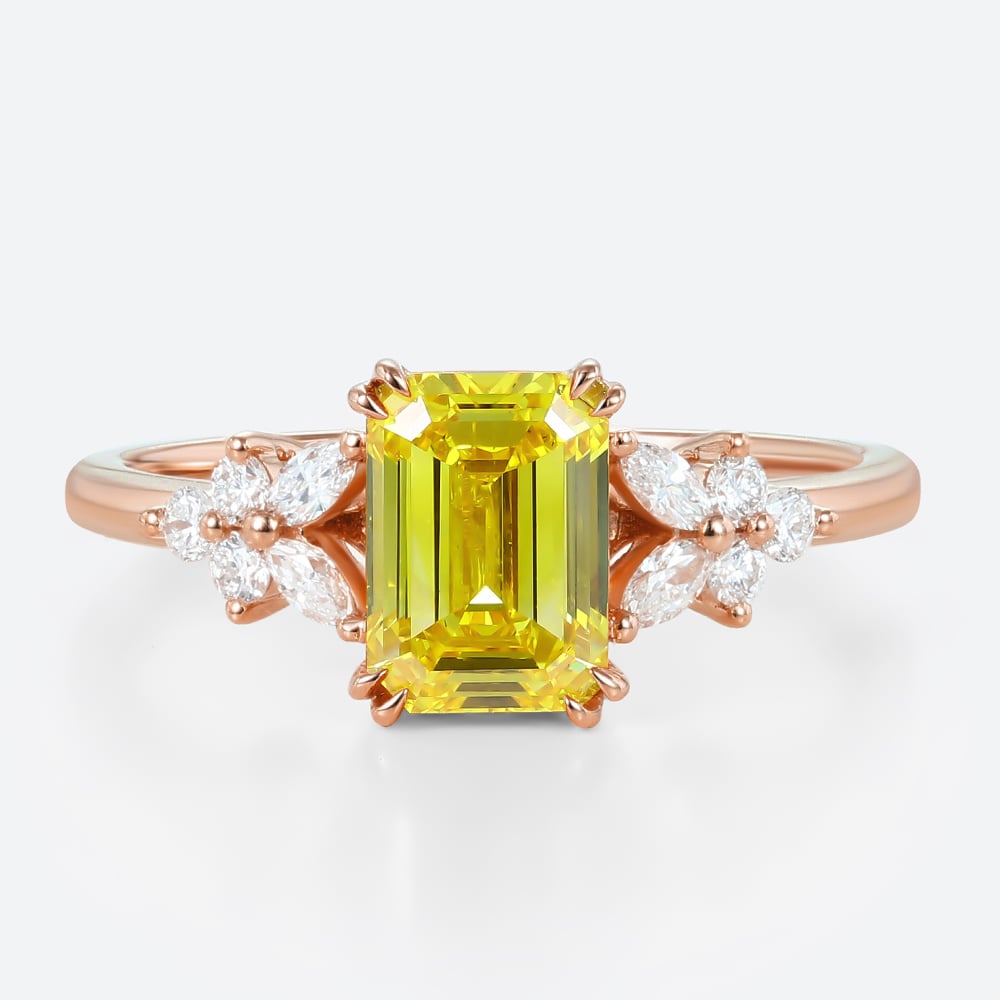
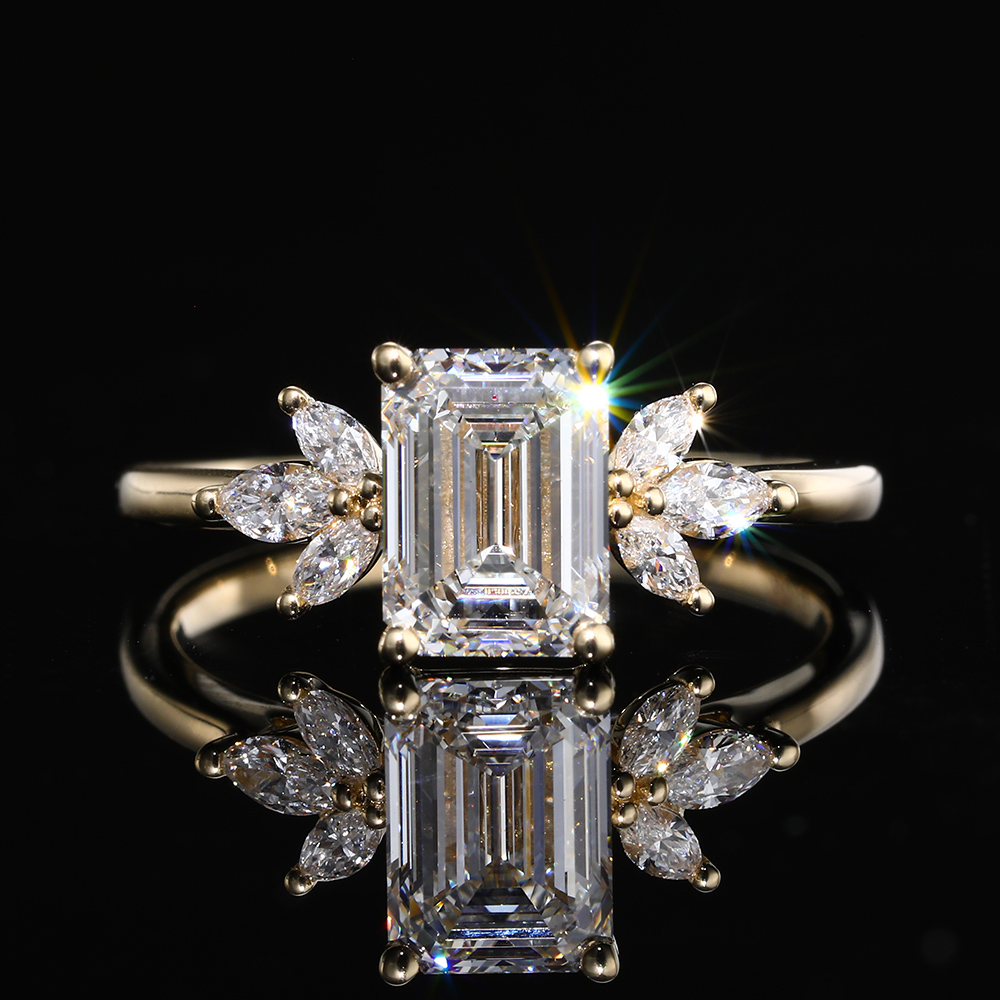
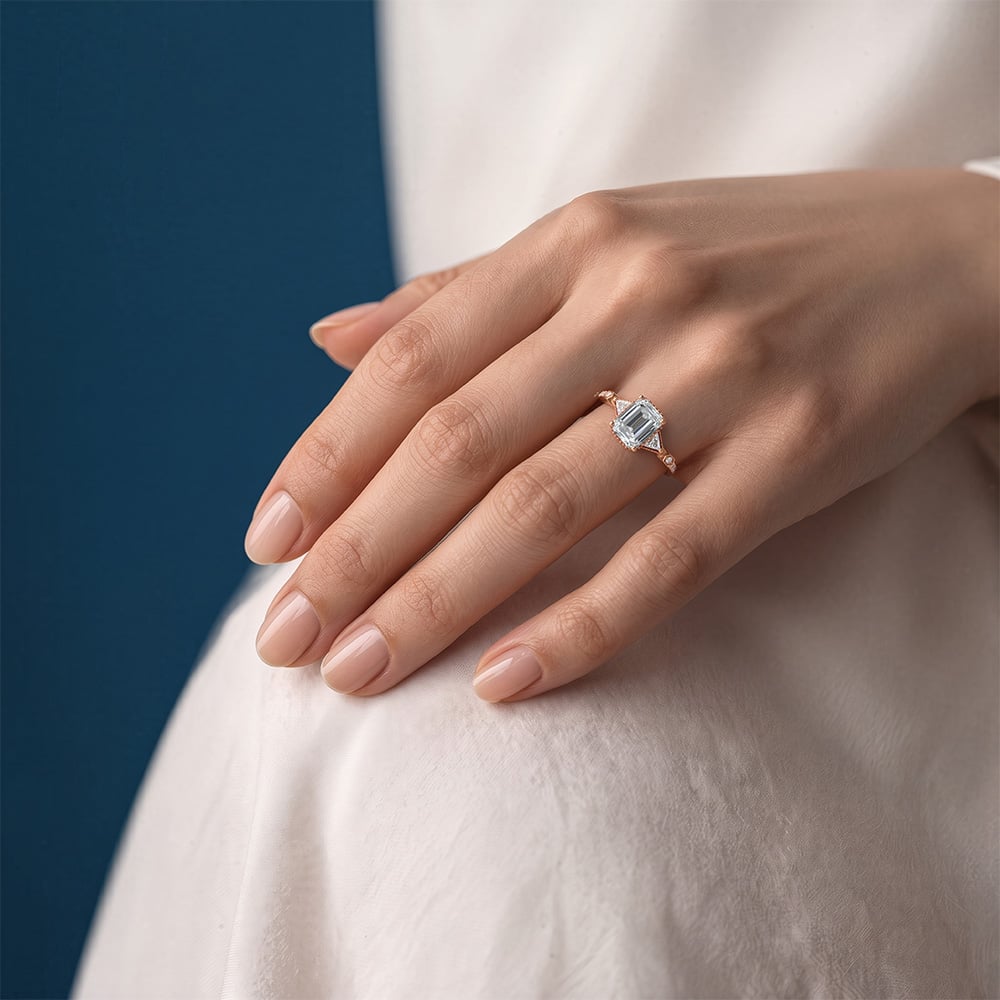
Metal settings such as platinum, yellow, or rose gold complement emerald cut diamonds differently, allowing you to customize beauty and style.
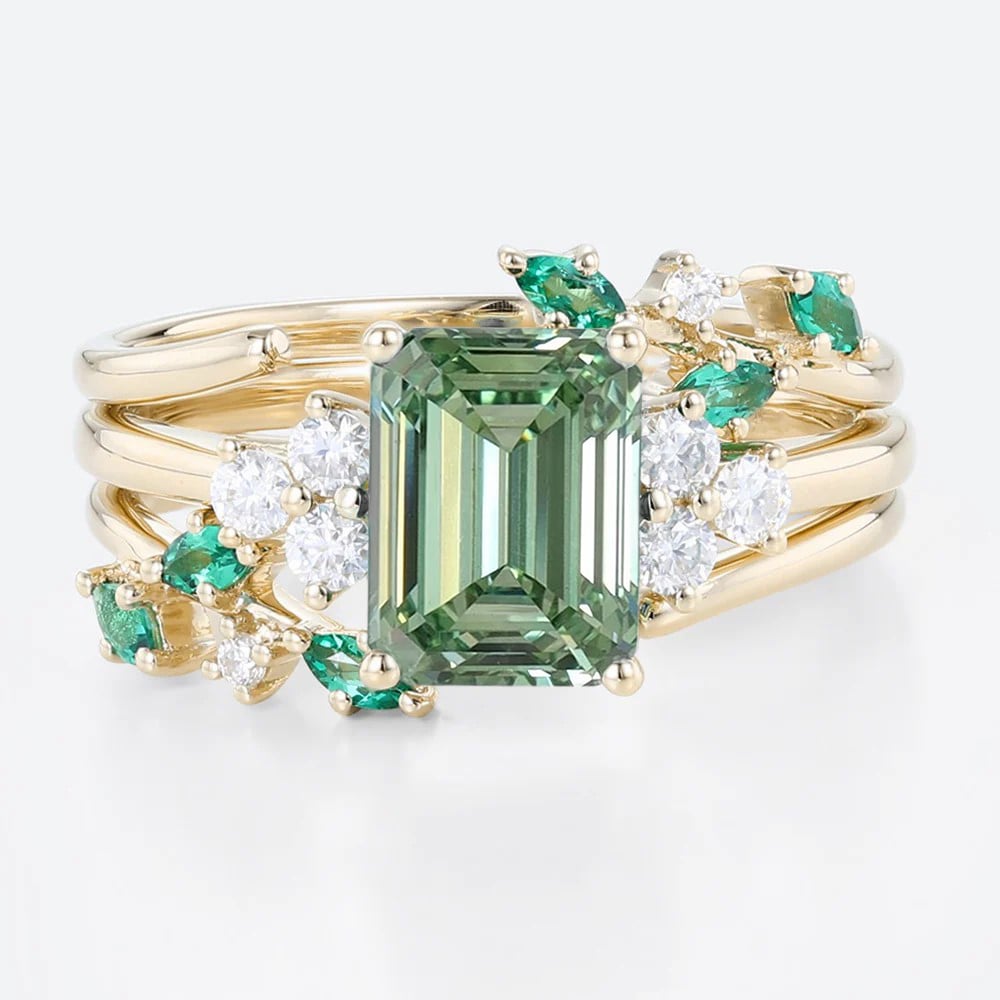
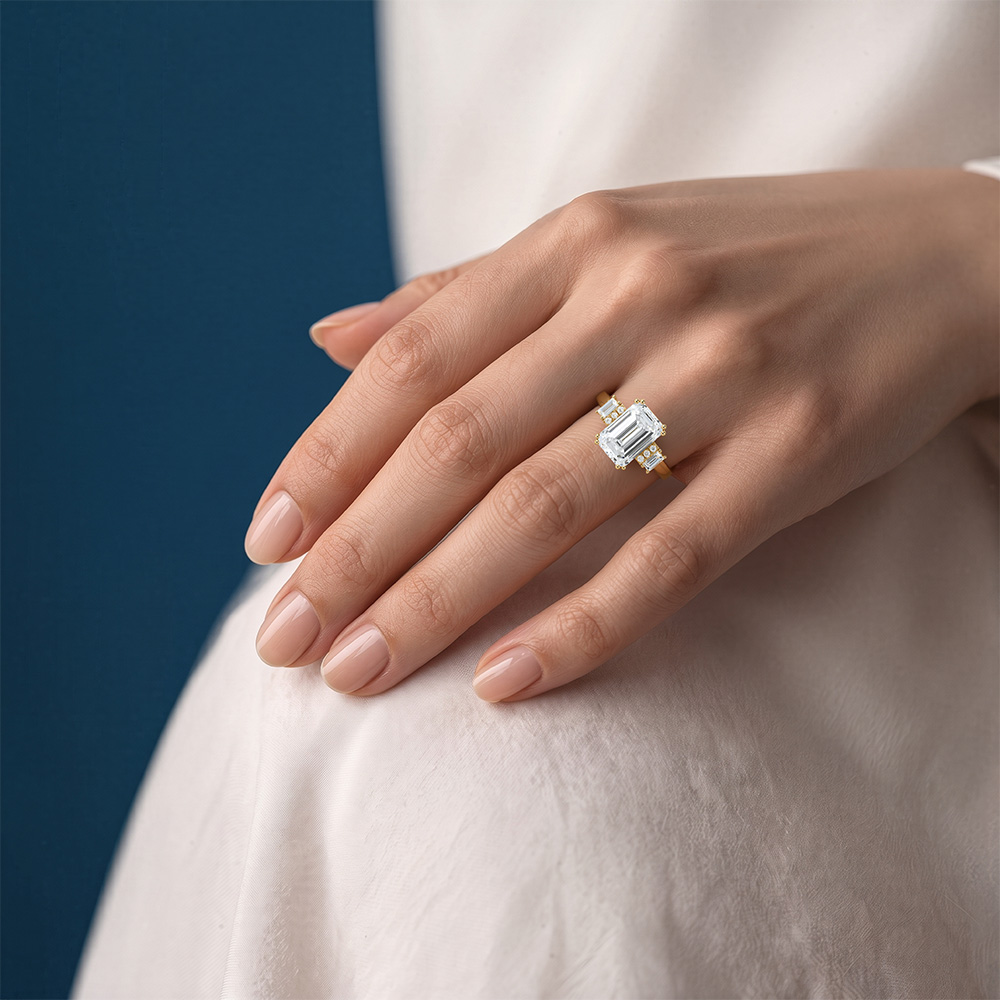
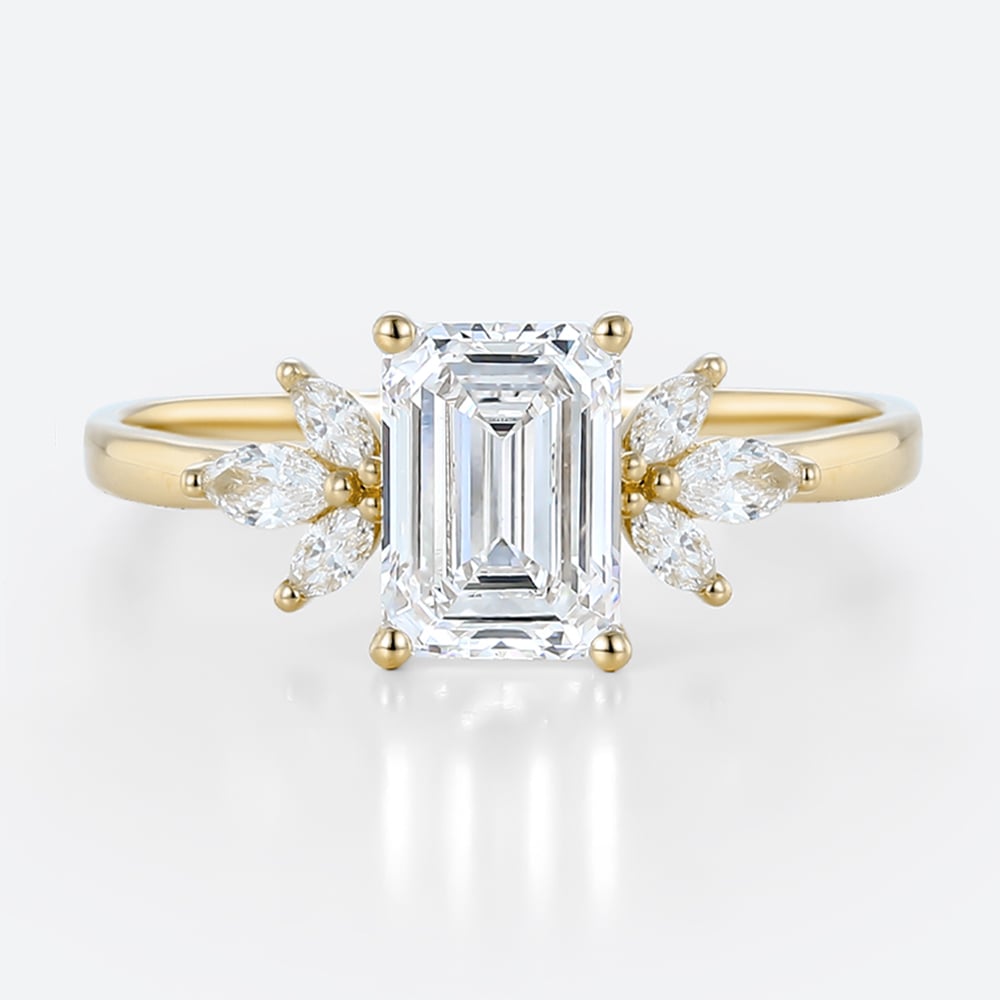
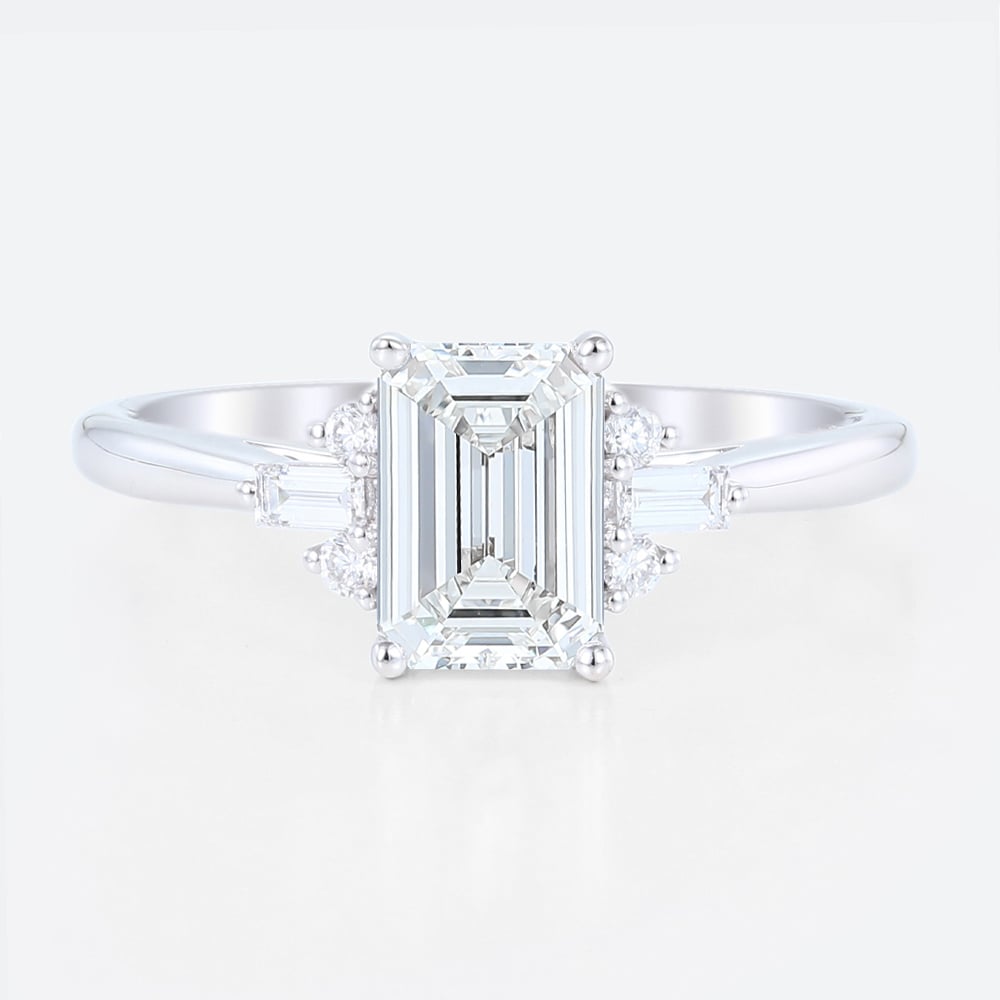
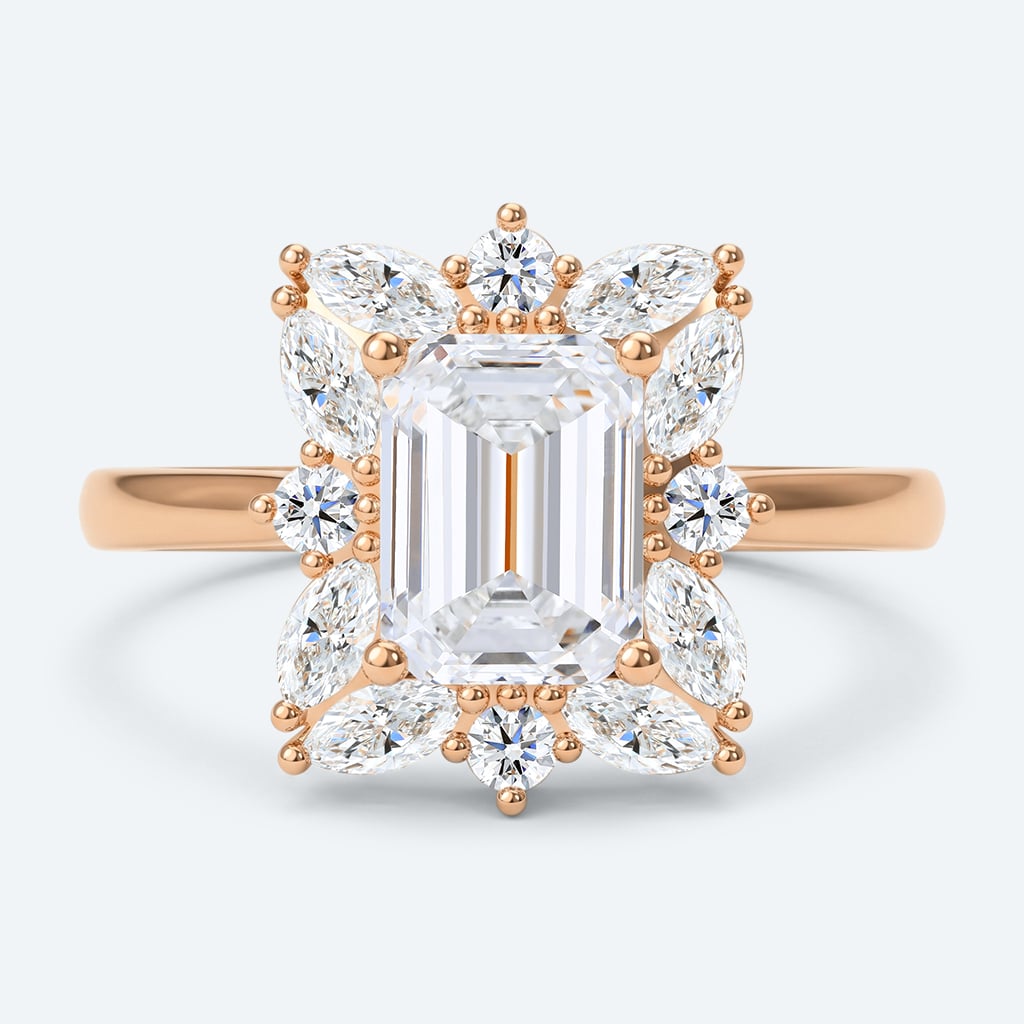
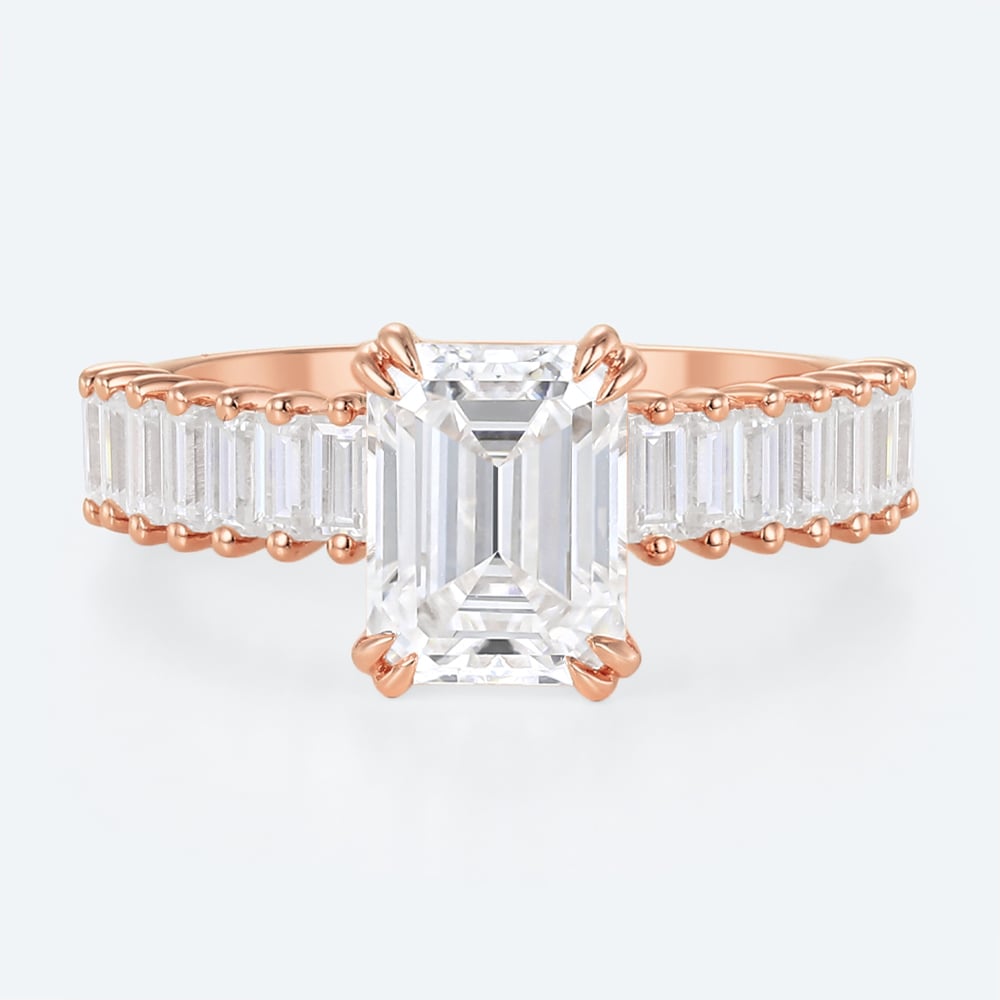
Side stones such as baguettes, sapphires, or smaller diamonds are often used to frame emerald cut diamonds, enhancing their elegance and symmetry.
Yes. They combine affordable pricing with stunning beauty, offering a responsible and sustainable purchase without compromising quality.
Review clarity grade, carat weight, and ring settings carefully. Matching these factors to your personal style ensures a perfect engagement ring.
Their geometric lines and step cut facets have been favored for generations, making them a classic style that transcends trends.
Yes. The emerald cut is known for its rectangular shape and step cut facets, giving it a vintage appeal that has remained a classic style for generations.
Absolutely. They provide exceptional value by offering larger surface area per carat, sustainable sourcing, and affordable prices compared to mined diamonds.
Not always. While price varies by carat weight, clarity, and quality, emerald cut diamonds can actually appear larger than other shapes of the same carat, making them cost-effective.
Emerald cut diamonds emphasize clarity and elegance, while other shapes like round or princess focus more on brilliance and sparkle. The difference lies in style and light performance.
The diamond cut defines symmetry and proportions. A well-executed emerald cut enhances the center stone’s beauty, clean lines, and hall-of-mirrors effect.
The center stone is the focal point, and with emerald cut diamonds, its clarity and rectangular shape make a bold and elegant statement.
Yes. Their long facets reflect light in broad flashes rather than intense sparkle, creating a sophisticated, understated brilliance.
Facets in the step cut determine how light travels through the stone. Properly aligned facets bring out the clarity, precision, and beauty of the emerald cut.
Yes. A polished finish enhances the reflective surfaces of the diamond and metal, ensuring maximum beauty and elegance.
Popular choices include platinum for durability, yellow gold for warmth, and rose gold for a romantic touch. Each metal creates a distinct style.
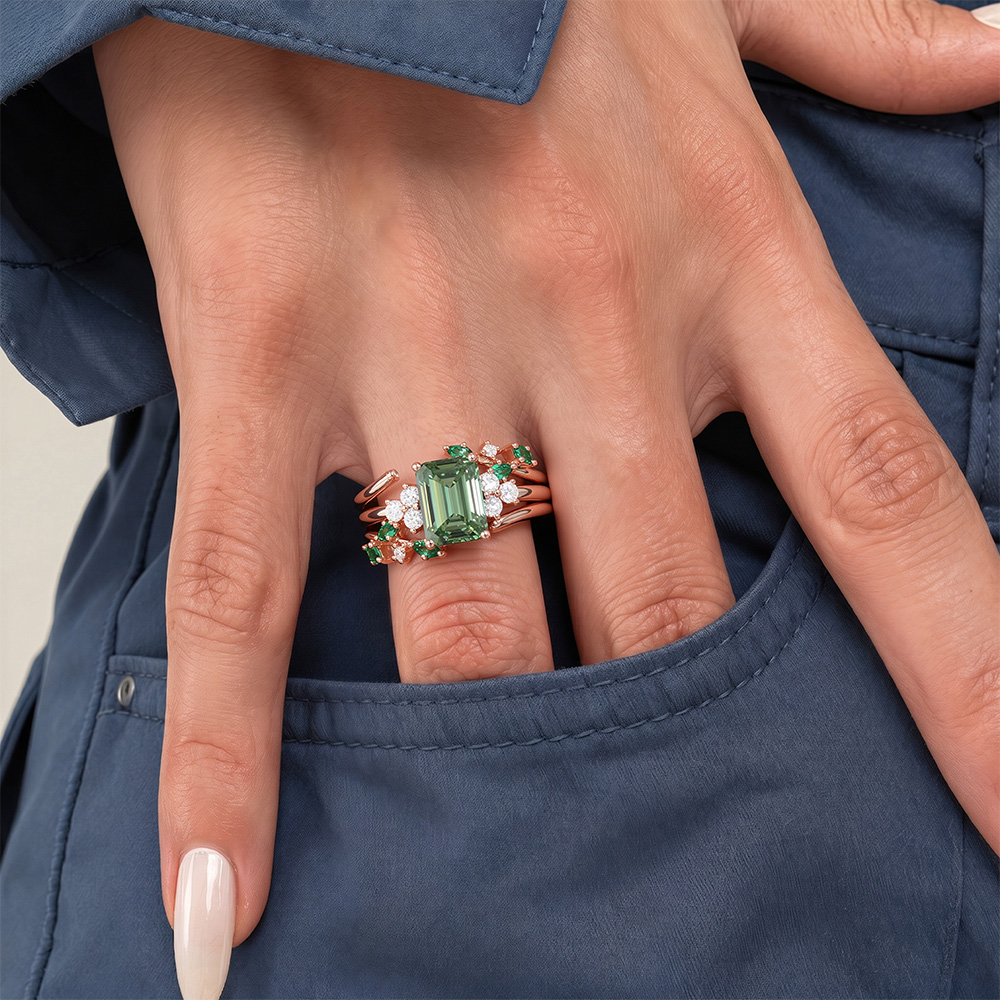
Certainly. Many emerald cut engagement rings include side gemstones like sapphires, baguettes, or smaller diamonds to enhance the center stone.
Quality depends on clarity grade, cut precision, and carat weight. Certification ensures the diamond meets high standards for durability and brilliance.
Their elongated rectangular shape and clean lines highlight elegance, making them a stunning choice for couples who want sophistication over flashiness.
Yes. You can create a personalized design by selecting your preferred carat weight, metal, ring settings, and even adding accent gemstones.
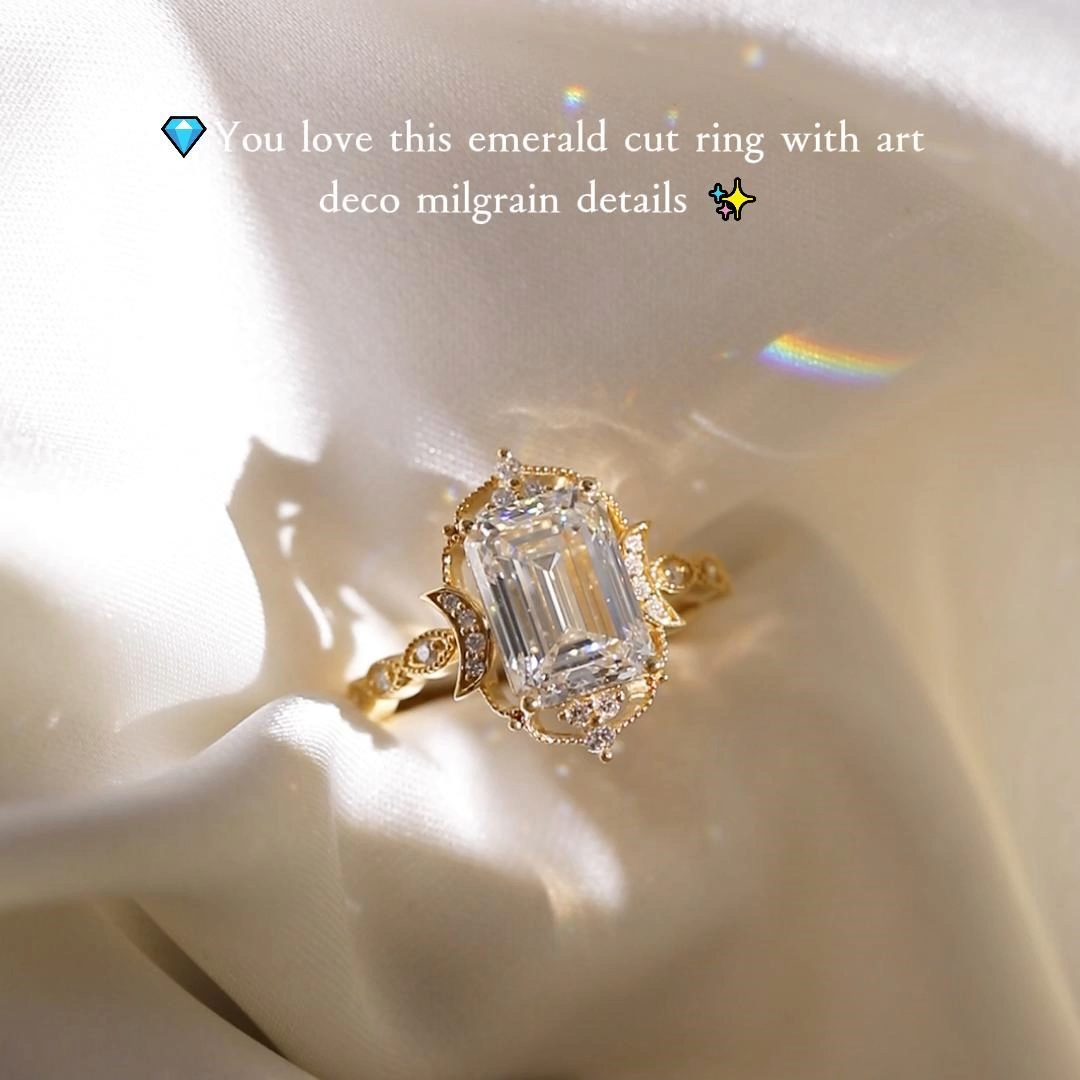
The emerald cut’s geometric design and vintage appeal combine to form a classic beauty that remains timeless in the diamond industry.
loading