
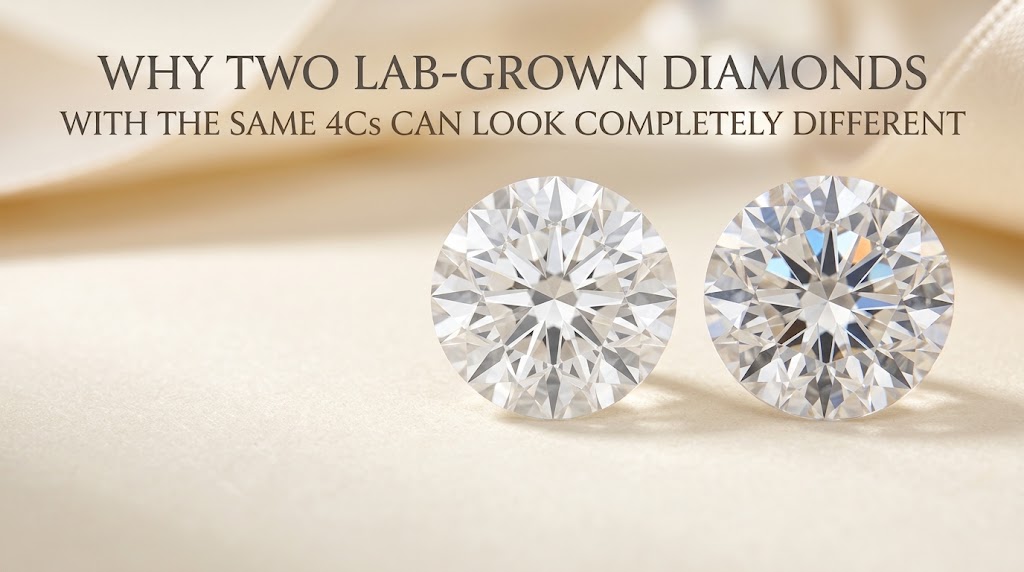
Imagine opening two IGI reports. Both stones are laboratory-grown round brilliants, and both say 1.50 carats, F color, VS1 clarity, and Excellent cut. On paper, they seem interchangeable. Side by side, however, one looks broader and lively in soft daylight; the other seems more compact or flashes differently as you move your hand. How can diamonds with the same 4Cs look different?
The answer is not that the grades are meaningless. The 4Cs are a reliable starting language, but each grade summarizes a range of physical features. A report also contains measurements and finish details, while your eyes respond to proportions, light behavior, and the surroundings. Here is how to read beyond four matching labels without getting lost in jargon.
The Short Answer
Two lab-grown diamonds with identical 4C grades may differ in exact proportions, face-up dimensions, inclusion patterns, optical behavior, and outline. Lighting and the ring setting add another layer to what you see. Compare the actual stones under consistent conditions—not just the four headline grades.
First, Make Sure You Are Comparing Like With Like
A common comparison is an oval F VS1 against a round F VS1. That is useful for choosing a style, but it is not a controlled test of the 4Cs: shape is separate from the four grades. Likewise, a close-up video of a loose diamond cannot fairly compete with a photo of a finished ring shot from farther away.
For an honest side-by-side, choose the same shape and cutting style, compare loose stones or similarly mounted rings, and use similar camera distance and lighting. Then look at the IGI report for measurements, polish, symmetry, and any applicable cut or light-performance information. The report number should correspond to the exact stone you are viewing. LisaJewelryUS has a separate guide to reading an IGI diamond report if those fields are new to you.
| Same headline grade | What may still differ | What to check |
|---|---|---|
| Cut | Exact angles, table and depth combinations, brightness and fire balance | Proportion details; comparable videos; optional light-performance information |
| Carat | How weight is distributed across width and depth | Length, width or diameter in millimeters, plus depth |
| Clarity | Type, number, location and visibility of characteristics | Clarity plot or comments where available; face-up view |
| Color | Face-up perception under different shapes, light and mounts | Neutral-light comparison before judging metal color |
1. The Same Cut Grade Is Not the Same Light Show
For a round brilliant, a cut grade evaluates craftsmanship and proportions; it does not mean every diamond in that grade has identical angles or the same balance of white brightness, colored fire, and contrast. One stone may look crisp and bright to you, while another emphasizes different flashes when it moves. Neither observation alone proves that one is universally “better.”
IGI explicitly notes that diamonds of the same shape, size, and cut grade can have different visual tendencies. Its cut-grading explanation describes an optional light-performance report for qualifying round diamonds, with scores for overall light performance, brightness, fire, and contrast. That additional report is helpful when available, but it is not a substitute for seeing the diamond move. A single frozen image misses scintillation—the changing pattern of flashes as stone, light, or viewer moves.
Practical move: ask for a face-up video in diffuse daylight-like light and another in directional light. Compare the stones under the same setup. Do not decide solely from one glamorous spotlight clip.
2. Equal Carat Weight Can Mean Unequal Face-Up Size
Carat is weight, not diameter. Two 1.50-carat round diamonds can distribute their mass differently: more in the visible face-up area, or more below it in the pavilion. Even when their cut grades match, their recorded diameters need not be identical. For ovals or marquises, compare both length and width; a longer outline is not automatically a larger-looking or more balanced diamond.
IGI explains the relationship between carat weight, spread, and brightness: physical width matters, but light return affects perceived size too. Avoid the tempting shortcut of choosing the widest measurement regardless of cut. An overly shallow stone might look broad on paper yet lose appeal in ordinary lighting. For more context, see our carat-weight-versus-size guide.
Practical move: read the “Measurements” line on both IGI reports and compare face-up dimensions in millimeters, then check how each stone performs away from spotlights.
3. Clarity and Color Grades Also Leave Room for Nuance
Same clarity grade, different inclusion map
A VS1 label is not a map of every feature in the diamond. Inclusions may differ in type, size, number, and position—even when the overall grade matches. A tiny feature near the edge can present differently from one near the center; patterns of graining or multiple features may also affect the viewing experience. These distinctions are usually subtle at higher clarity grades, so do not assume a matching VS1 pair will look dramatically different to the naked eye.
IGI grades clarity under 10× magnification and considers the characteristics’ visibility, size, number, location, and nature. It also cautions that “eye-clean” is not an official clarity grade; unaided visibility depends on eyesight, distance, angle, and light. Ask for a normal-viewing-distance face-up image, not only a magnified video that makes every inclusion look enormous.
Same color letter, different face-up impression
Color grades are assigned under standardized conditions, not in a yellow-gold ring at dinner. IGI assesses D–Z color face-down to reduce the effect of cut and shape. Viewed face-up, however, shape, cut, lighting, and mounting can influence perceived color. Compare loose stones in neutral light first; then consider how each will look in the metal you actually plan to wear. A warm reflection from a yellow-gold setting does not change the diamond’s laboratory color grade.
4. Fancy Shapes Add Outline and Bow-Tie Differences
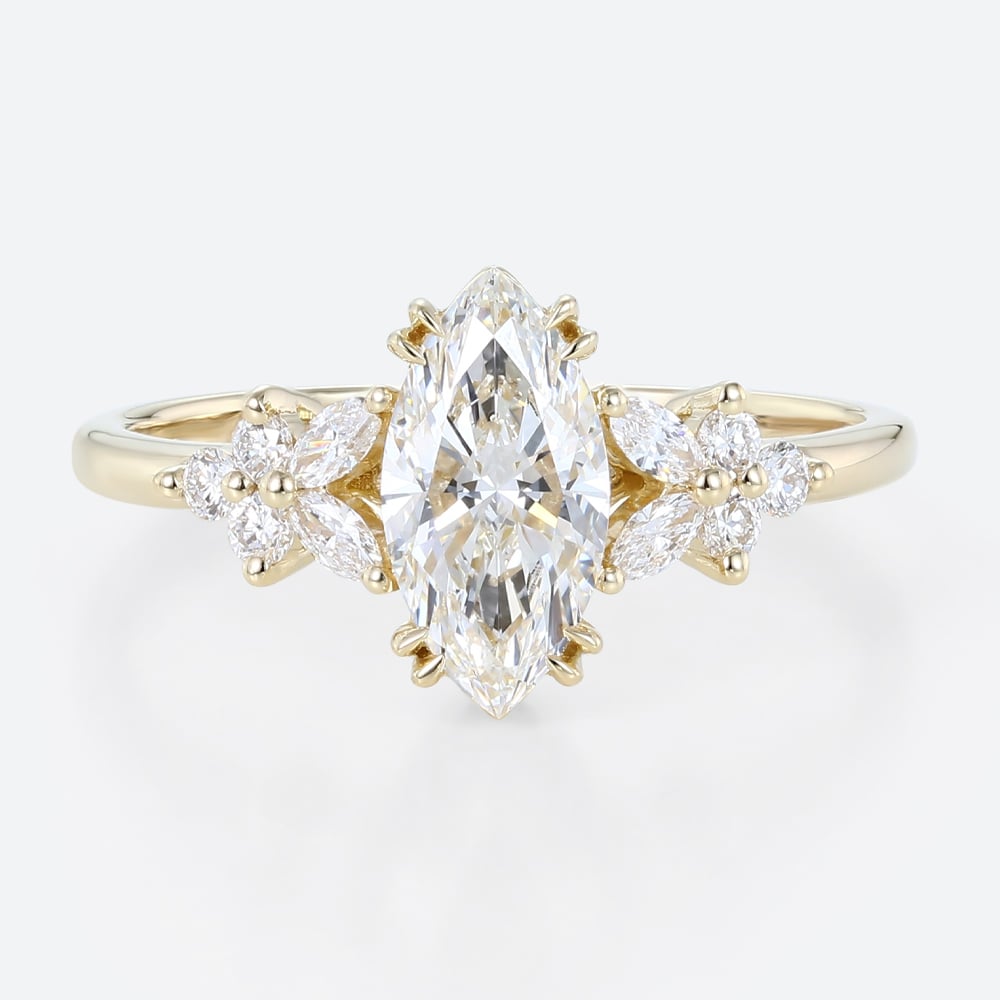
With an oval or marquise, the silhouette has personality: one oval is plumper, another more elongated; one marquise has broad shoulders, another a slimmer profile. Even when carat, color, and clarity match, these outlines can make the ring feel entirely different on a hand. Length-to-width ratio is useful descriptive shorthand, not a universal beauty score.
Some elongated brilliant cuts show a darker area across the center, often called a bow-tie. A little contrast can give a pattern definition; an overly dark or persistent bow-tie may distract. Judge it while the stone moves in more than one light. IGI’s fancy-shape cut assessment considers shape-specific factors including bow-ties and light return; fancy-shape cut grading is optional, so check what the individual report actually includes rather than assuming it has a round-style cut grade.
5. The Ring and the Room Change the View
A setting does not rewrite the center diamond’s 4Cs, but it frames what you notice. Slender prongs leave more of an outline visible; a halo adds a second border of sparkle; a wider band changes visual scale against the finger. Metal color can affect the overall color impression. Side stones and a sculptural leaf motif can draw your eye outward even if the center stone’s measurements stay unchanged.
Light matters just as much. Jewelry-store spotlights favor intense flashes; diffuse window light reveals a different, quieter kind of brightness. Ask to see a ring away from the brightest display and, if shopping online, request images with consistent exposure. Do not compare a polished campaign shot with a handheld video as though they were controlled measurements.
See How Shape and Setting Change the Impression
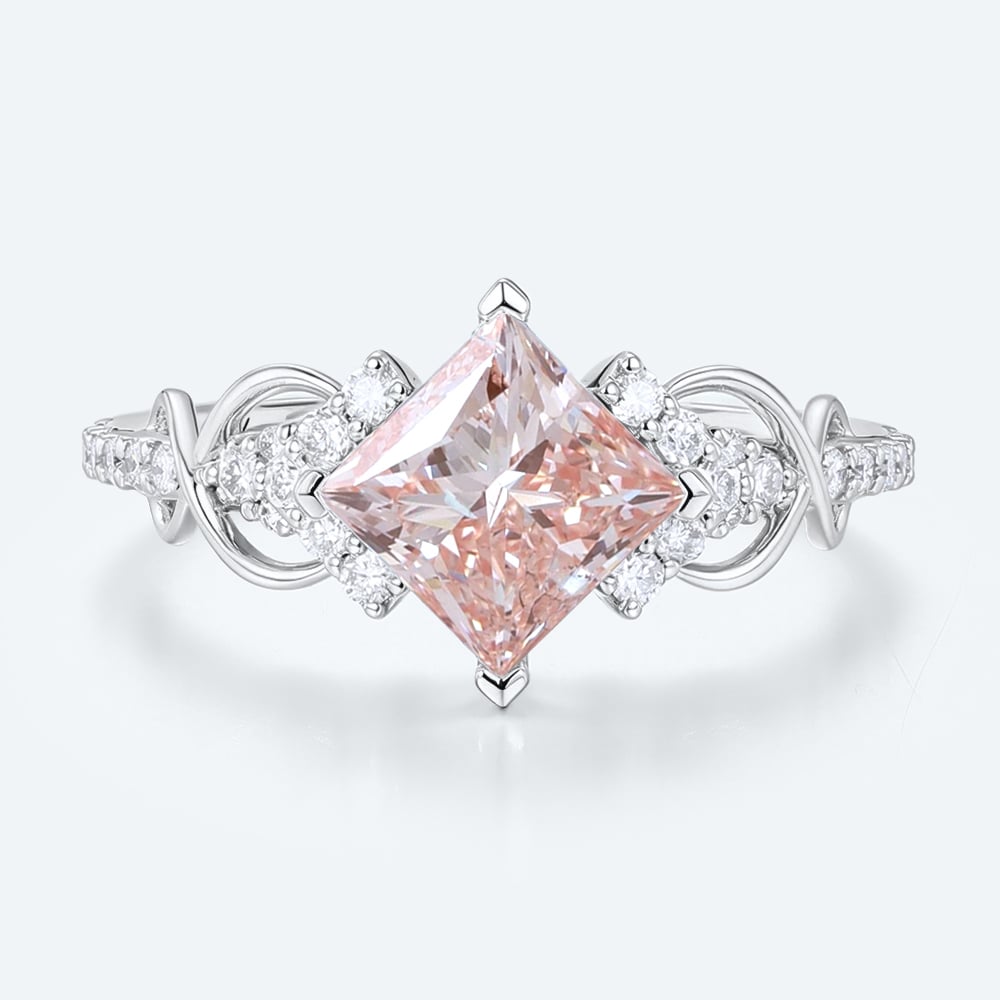
These real LisaJewelryUS designs show how a round, oval, and marquise center can create distinct silhouettes. They are style examples, not a same-4Cs side-by-side experiment. For a scientific comparison, request the specific center-stone reports and comparable imagery.
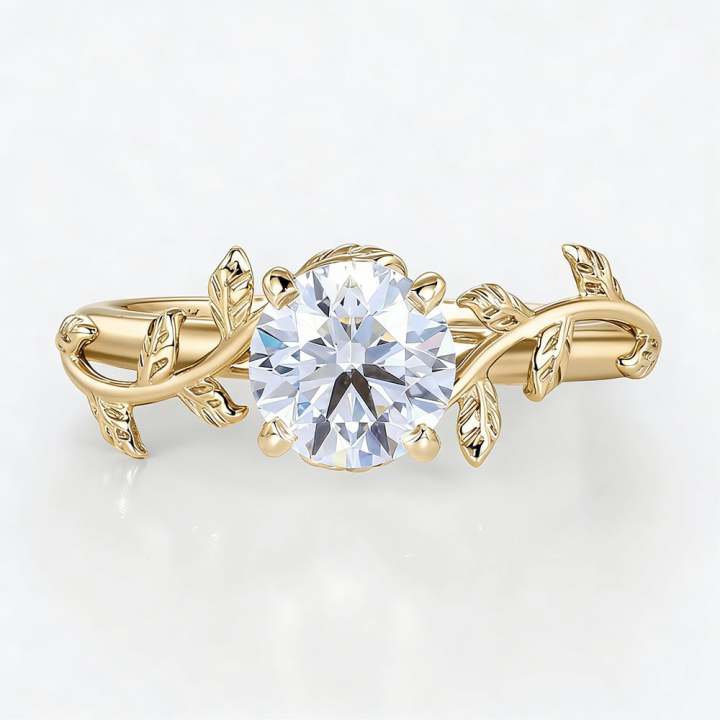
Rounded outline with an organic yellow-gold frame.
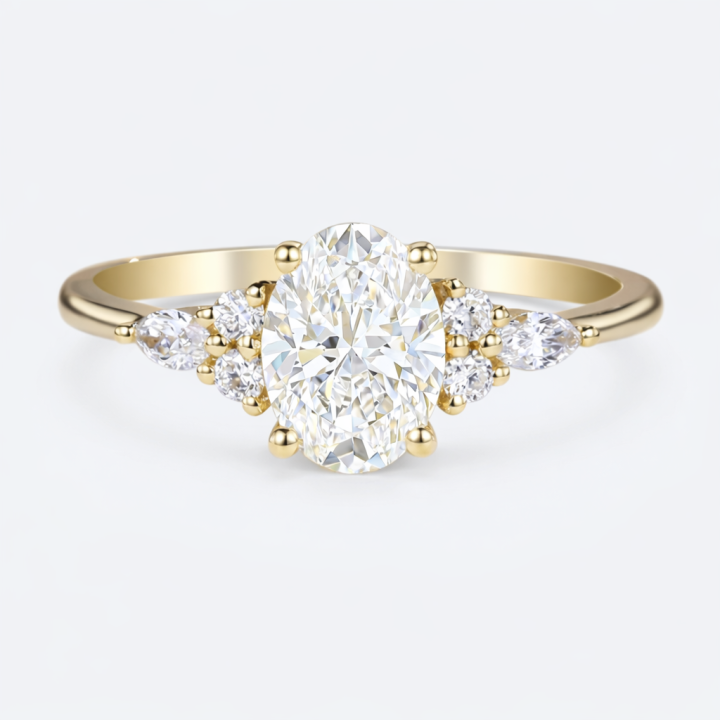
Elongated center with accents that extend its visual line.
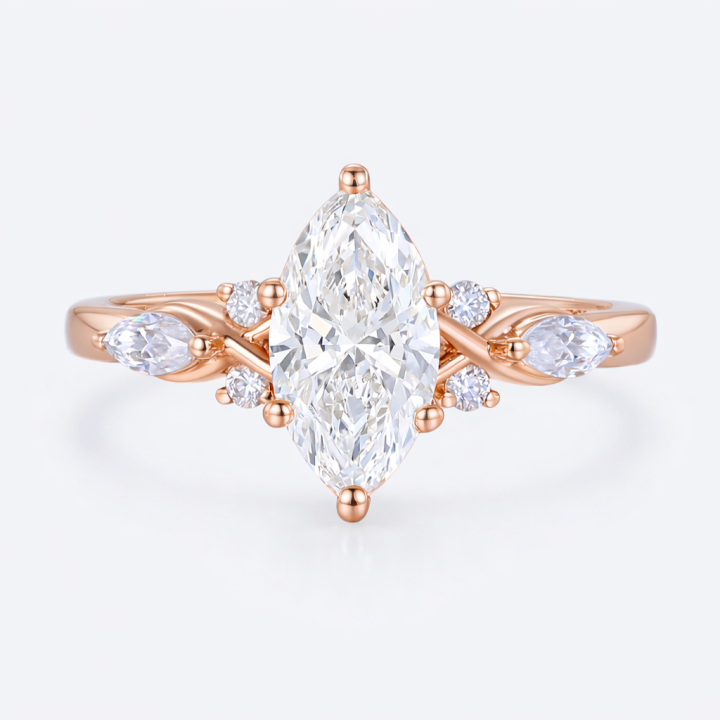
Pointed silhouette and side details create a different presence.
Product photography illustrates ring design. Stone specifications, options, availability, and images should be confirmed on each product page before purchase.
A Five-Step IGI Report Checklist Before You Choose
- Verify identity. Confirm the report number and laboratory-grown designation for the exact diamond offered; consult IGI’s lab-grown diamond report guide to understand its fields.
- Match the comparison. Start with the same shape and cutting style before treating four identical grades as a fair match.
- Read measurements and finish. Compare face-up length and width or diameter, depth, polish, symmetry, and any cut information actually shown.
- Inspect the visual evidence. Review matched-angle videos in at least two lighting environments; look for edge-to-edge brightness, pleasing contrast, and a bow-tie if applicable.
- Choose the whole ring. Consider how the setting and metal frame the stone, then pick the combination you enjoy wearing—not merely the one with the most impressive line on a certificate.
The 4Cs help you narrow a search; your final decision should combine the report with measurements and an honest view of the actual stone. Two diamonds can both be well graded and still suit different tastes. The best choice is the one whose look, proportions, and ring design make sense together.
Find the Diamond That Looks Right to You
Explore LisaJewelryUS lab-grown diamond rings, or start a conversation about the shape, setting, and details you want to compare.
Frequently Asked Questions
Can two lab-grown diamonds with identical 4Cs really look different?
Yes. The grades summarize ranges, not identical stones. Exact proportions, face-up dimensions, inclusion details, and light behavior can differ.
Does an Excellent cut grade guarantee identical sparkle?
No. Diamonds within the same cut grade can show different balances of brightness, fire, and contrast. Compare the actual stones in consistent lighting.
Can two 1.50-carat diamonds look different in size?
Yes. Carat measures weight. Check each report’s millimeter measurements and how bright the stone appears face-up.
Is a bow-tie always a problem in an oval diamond?
Not necessarily. Some contrast is normal; judge whether the darker area dominates or stays distracting as the diamond moves in different light.
Does an IGI report say whether a diamond is eye-clean?
No. Clarity is graded under 10× magnification. Eye-clean appearance depends on the viewer and viewing conditions, so request a normal-distance face-up view.
What should I compare after the 4Cs?
Start with shape, exact dimensions, finish, and any available cut or light-performance details. Then view the actual stones under matched lighting and consider the final setting.
Educational information reflects IGI’s published grading guidance. Individual stone characteristics and report fields vary; use the report for the exact diamond and verify current product details with the seller.