

I. Decoding the Tiny Stamp Inside Your Ring
When you flip over a beautifully crafted gold ring or inspect the clasp of a luxury necklace, your eye will inevitably catch a tiny, laser-etched stamp. Usually, it reads something like "14K," "18K," or perhaps a three-digit number like "585" or "750."
For many jewelry lovers, these markings are treated merely as a pricing tier—we instinctively know that 18K costs more than 14K, but we often can't explain exactly why. Does a higher number mean it's shinier? Does it mean it lasts longer? Or are you simply paying a premium for a luxury label?
To make matters more confusing, the jewelry industry uses terms that sound identical but mean entirely different things. The word "Karat" (with a 'K') measures the purity of gold, while the word "Carat" (with a 'C') measures the physical weight of a diamond.
If you want to protect your finances and shop with absolute confidence, mastering the fundamentals of what is k gold is your greatest weapon. It is the master key to understanding exactly what you are paying for. In this educational guide, we will break down the mathematical formulas behind these tiny stamps, compare the world’s most popular gold tiers, and help you choose the exact karat gold that matches your daily lifestyle and budget.
II. The Alchemy of "K": The 24-Point Gold Purity Scale
To truly understand gold grading, we have to look past the glitz and look at the physical physics of the metal.
If a jewelry brand were to hand you a piece of jewelry crafted from 100% pure gold—known commercially as 24-Karat gold—you would be deeply disappointed by its real-world performance. Pure, unalloyed gold is incredibly soft. It possesses a structural density akin to modeling clay; you could easily bend a 24K gold ring out of shape with your bare hands, and a diamond secured by pure gold prongs would quickly dislodge and become lost.
To transform this beautiful, sun-kissed metal into a durable medium capable of holding gemstones and enduring decades of daily wear, it must be mixed with stronger "alloying" metals like silver, zinc, nickel, palladium, or copper.
The "K" in gold jewelry stands for Karat, which is a standardized system that divides the chemical purity of metal into 24 equal parts.
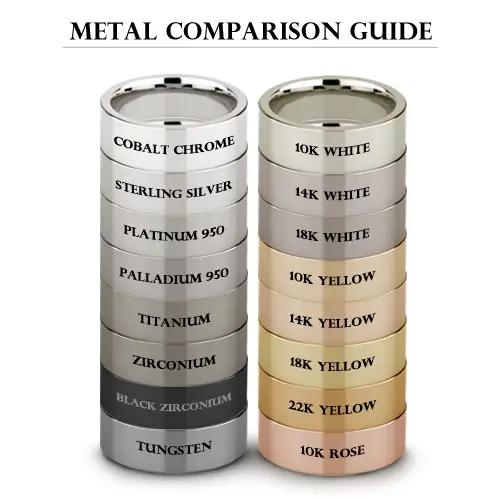
Therefore, when we evaluate a piece of jewelry, the Karat rating tells us exactly how many parts out of 24 are pure yellow gold, and how many parts are composite alloy metals. The added alloys don't just provide incredible structural strength; they also allow master bench jewelers to alter the color of the metal, shifting it from classic yellow to icy white or warm blushing pink.
III. The Main Event: What Does 14K Gold Mean vs. What Does 18K Gold Mean?
While gold can be alloyed into various purity levels, the global fine jewelry market is overwhelmingly dominated by two premier standards: 14K and 18K. Let’s strip away the marketing jargon and analyze what these two tiers actually mean for you as a buyer.
14K Gold: The Rugged Everyday Hero
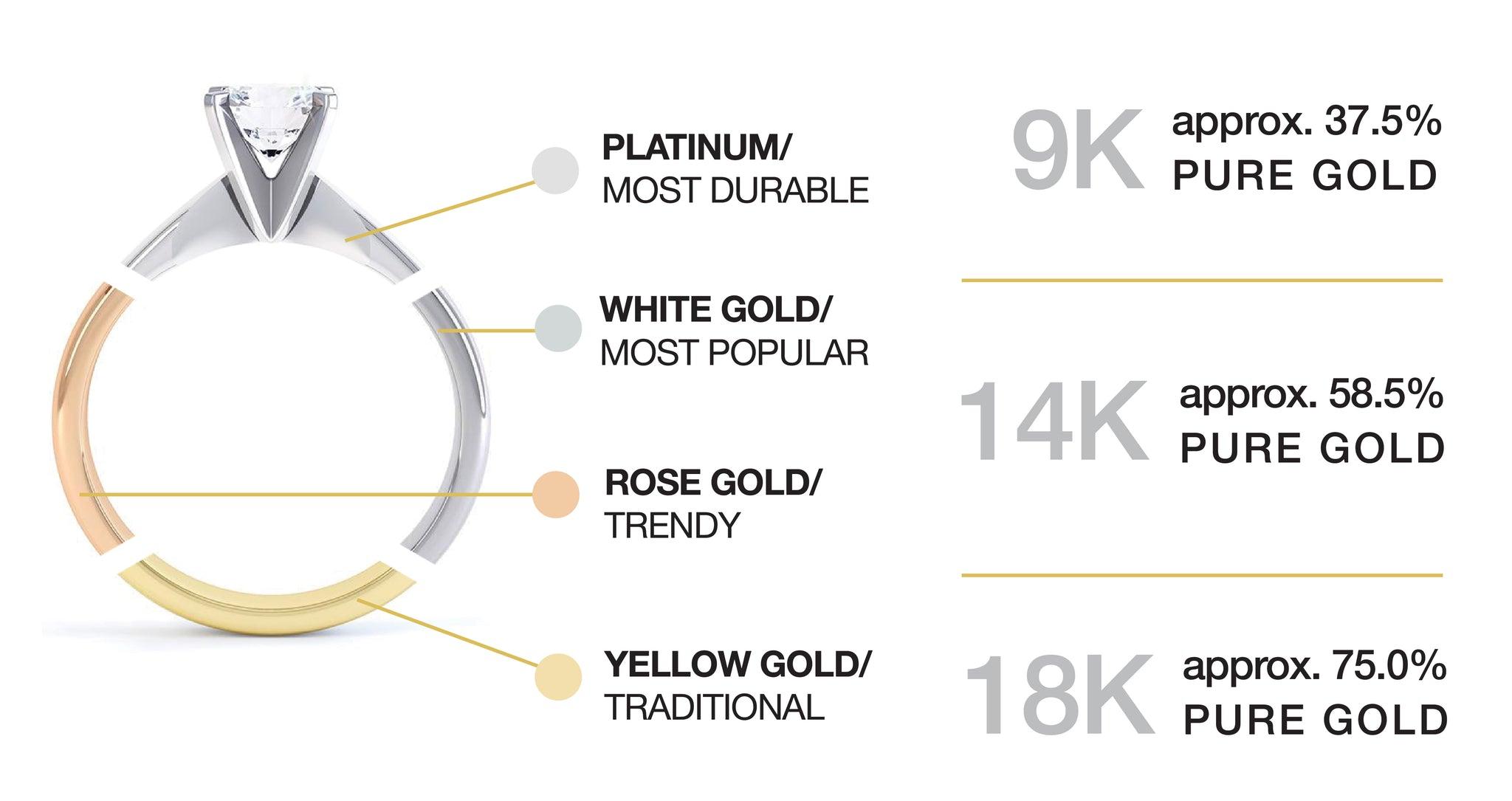
When answering the question, what does 14k gold mean, it all comes down to a perfect balance of utility and value. A piece of jewelry stamped with 14K or the European hallmark "585" indicates that the metal consists of 14 parts pure gold and 10 parts alloy metals.
The Exact Math: 14 divided by 24 equals 58.3% pure gold mixed with 41.7% structural alloy metals.
The Visual Profile: Because it contains a higher percentage of white or warm alloy metals, 14K yellow gold possesses a beautiful, soft, champagne-like yellow hue. It is highly elegant without feeling overly intense.
The Durable Advantage: Because nearly 42% of its composition consists of ultra-hard base metals, 14K gold is exceptionally rigid, scratch-resistant, and resilient. It is the ultimate choice for engagement rings, wedding bands, and jewelry meant to be worn through workouts, hands-on work, and frantic daily life. Furthermore, because it contains less raw gold, it is highly budget-friendly.
18K Gold: The Rich, Luxurious Elite
Conversely, exploring what does 18k gold mean takes us into the realm of traditional heritage and high luxury. A stamp of 18K or "750" means the piece contains 18 parts pure gold and only 6 parts alloy metals.
The Exact Math: 18 divided by 24 equals 75% pure gold mixed with only 25% alloy metals.
The Visual Profile: The high 75% concentration of raw gold gives 18K jewelry an incredibly deep, rich, and unmistakably warm golden color. It radiates a heavy, old-world luxury aesthetic that instantly elevates the presence of any design.
The Premium Advantage: Because it contains a much lower percentage of non-gold alloys, 18K gold is highly hypoallergenic. If you have sensitive skin that breaks out or turns green from common metals like nickel or zinc, the pure purity of 18K gold acts as a gentle, non-irritating shield for your skin. While it is slightly softer than 14K gold and requires a bit more care to avoid deep scratches, its premium weight, heirloom quality, and rich tone make it the choice of elite jewelry houses worldwide.
IV. The Ultimate Showdown: 14K vs. 18K Gold Comparison Matrix
To help you visualize the real-world tradeoffs between these two premier metal standards, let's look at a head-to-head comparison. When choosing between what does 14k gold mean and what does 18k gold mean, your decision should align with your personal physical needs and stylistic preferences.
| Comparison Feature | 14K Gold (58.3% Pure) | 18K Gold (75% Pure) | The Winner & Ideal Match |
| Gold Purity & Value | ⚖️ Moderate (Great value) | 👑 High (75% Pure) | 18K Gold (Best for investment & prestige) |
| Physical Hardness | 📈 Excellent (Highly scratch-resistant) | 📉 Moderate (Softer, prone to fine scratches) | 14K Gold (Best for active, hands-on lifestyles) |
| Hypoallergenic Performance | ⚖️ Standard (Contains more alloy trace metals) | 👑 Exceptional (Very gentle on skin) | 18K Gold (The absolute champion for sensitive skin) |
| Color Intensity | Subtle, bright champagne yellow | Rich, deep, warm honey yellow | Tie (Depends entirely on your design aesthetic) |

V. Lifestyle & Design: How to Match Your Karat to Your Reality
Now that you are armed with the mathematical facts, let’s apply them to your everyday life. Choosing the right karat gold is an art of matching the metal’s physical properties to your daily habits and the design of your jewelry piece.
Choose 14K Gold If: You Lead a High-Activity Lifestyle
If you are someone who hits the gym regularly, loves gardening, works heavily with your hands, or finds yourself constantly knocking your hands against car doors and office desks, 14K gold is built for you.
Because it contains a higher volume of reinforcing structural alloys, a 14K gold setting provides incredible security for everyday engagement rings and pave-set diamond bands. The prongs are remarkably rigid, ensuring your precious center stones remain locked tightly in place through all of life's unexpected bumps. As a beautiful bonus, its lower price point allows you to allocate more of your budget toward maximizing your diamond's carat size or cut grade.
Choose 18K Gold If: You Want Heirloom Quality and Gentle Skin Comfort
If you are purchasing a piece of jewelry for a monumental milestone—such as a formal wedding ceremony, a major anniversary, or an heirloom piece meant to be passed down through generations—18K gold delivers that irreplaceable prestige. Its heavy, rich golden tone instantly elevates complex jewelry designs, giving them a luxurious weight you can physically feel on your skin.
More importantly, 18K gold is the ultimate luxury solution for anyone who experiences skin discoloration, rashes, or itchiness from cheaper base metals. Because 75% of the alloy is naturally inert, hypoallergenic pure gold, it acts as a soothing, irritation-free shield that you can comfortably wear 24/7.

VI. Setting Sorcery: How Karat Gold Interacts with Diamonds
A final insider secret to consider when shopping is how your choice of karat gold affects the optical performance of your center gemstones.
If you are setting an icy, colorless diamond (D-F color grades) into a yellow gold ring, the rich, deep yellow of 18K gold will naturally cast a warm reflection into the diamond's bottom facets. To prevent this, master jewelers often construct the ring's band out of warm 18K yellow gold, but forge the actual 4-prong or 6-prong head out of white gold. This clever architectural trick keeps your diamond looking exceptionally white and crisp, while allowing you to enjoy the rich, traditional warmth of high-karat gold around your finger.
Conclusion: Balancing Beauty, Budget, and Durability
At the end of the day, understanding what is k gold frees you from the trap of thinking that a higher number always means a better purchase. The jewelry industry offers different karats not to create a hierarchy of quality, but to provide practical options tailored to different human lives.
14K gold is the practical, ultra-durable, and budget-friendly champion of everyday wear, offering a soft elegance that can withstand the elements. 18K gold is the luxurious, velvety, and hypoallergenic elite standard, offering unparalleled color richness and heirloom prestige for your most sacred milestones.
Evaluate your daily habits, test your skin sensitivity, and listen to your personal design aesthetic. The right karat gold isn't the one that costs the most on paper—it's the one that beautifully protects your gemstones, flatters your skin, and shines effortlessly alongside your unique life story.