
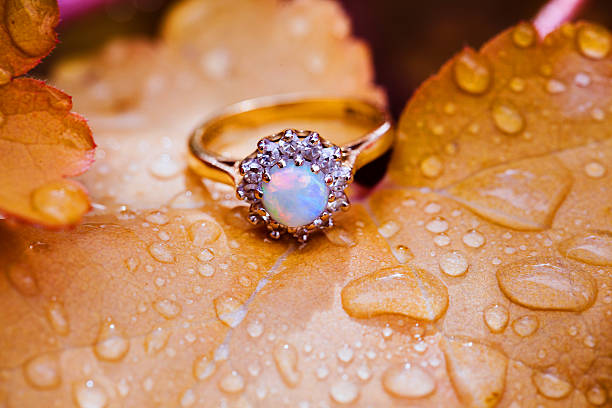
Vintage engagement rings are loved for their character, craftsmanship, and connection to design history—but “vintage” does not always mean the ring itself is old. An authentic antique ring, a true vintage ring, an estate ring, and a newly made vintage-inspired ring are different things. Knowing that difference helps you compare condition, materials, price, and everyday practicality without losing the romance that drew you to the style.
This guide explores the Victorian, Edwardian, Art Deco, Retro, and mid-century periods, explains details such as milgrain and old cut diamonds, and provides a practical checklist for choosing antique and vintage engagement rings. If you prefer historic charm with a newly made setting, it also shows how to choose a vintage-inspired design that fits your life and love story.
In This Guide
- Antique, vintage, estate, or vintage-inspired?
- Why choose a vintage engagement ring?
- A guide to the major jewelry periods
- Design details that create a vintage look
- Metals and gemstones
- How to evaluate an authentic antique or vintage ring
- How to choose a vintage-inspired ring
- Frequently asked questions
Antique, Vintage, Estate, or Vintage-Inspired?
These terms are related, but they are not interchangeable. The Gemological Institute of America’s guide to antique and vintage engagement rings defines antique jewelry as more than 100 years old, vintage jewelry as older jewelry that is not yet antique, and estate jewelry as any preowned jewelry, whether antique, vintage, or contemporary.
“Vintage-inspired” or “antique-inspired” describes a new ring that borrows details from an earlier era. It may feature Art Deco geometry, Edwardian-style openwork, Victorian floral motifs, or a Retro rose gold palette while using modern manufacturing and newly selected stones.
| Term | What it usually means | What to verify |
|---|---|---|
| Antique engagement ring | A ring made more than 100 years ago | Approximate date, provenance, repairs, replaced stones, condition, and seller documentation |
| Vintage engagement ring | An older, non-contemporary ring that is not yet antique | Era, ownership history when available, alterations, wear, and current condition |
| Estate ring | Any preowned ring | Age, because “estate” alone does not mean antique or vintage |
| Vintage-inspired ring | A newly made ring using historical design language | Materials, stone details, construction, warranty, sizing, and which era inspired the design |
This distinction matters most when listings use broad phrases such as “authentic antique,” “true vintage,” or “heirloom quality piece.” Ask what evidence supports the description. A hallmark, an old-looking cut, or a romantic story can be useful context, but no single clue automatically proves a ring’s date or authenticity.

Why Choose a Vintage Engagement Ring?
The appeal of vintage rings is not only age. It is the way detail, proportion, and symbolism give a small object a distinct personality.
- A connection to design history: Each era had its own approach to line, color, metals, and ornament.
- Distinctive craftsmanship: Hand engraving, pierced openwork, milgrain edges, and carefully arranged accent stones can make a ring feel richly detailed.
- A less conventional look: Antique and vintage engagement rings often differ from today’s classic solitaire, even when they use a familiar center stone.
- A personal love story: Some couples value a ring that has already passed through time; others prefer to begin with a new vintage-inspired piece that can become part of their own family history.
- More ways to express style: Romantic floral forms, delicate lace-like settings, bold geometry, colored gemstones, and warm gold tones offer a wide range of choices.
Age, however, is not the same as quality. An older ring may be beautifully made, heavily repaired, altered, or too fragile for daily wear. A new vintage-inspired ring may offer easier sizing and aftercare, but it should not be marketed as an authentic antique. The best choice is the one whose history, construction, and practical limits are clearly explained.
Vintage Engagement Ring Eras and Their Signature Styles
Jewelry periods overlap, and dates can vary by country and historian. Use the ranges below as a guide rather than a substitute for professional dating of a specific piece.
Georgian: Approximately 1714–1837
Surviving Georgian engagement rings are uncommon. Jewelry from this broad period was often made by hand in gold or silver-topped gold, with closed-back settings, foil-backed stones, botanical forms, clusters, and early diamond cuts. Because authentic Georgian pieces are now antique and can be delicate, condition and later alterations deserve close attention.
A newly made Georgian-inspired ring may echo floral clusters or irregular old-world proportions without duplicating historical construction methods. If a seller calls a piece Georgian rather than Georgian-style, ask for dating evidence and an explanation of any restoration.
Victorian: 1837–1901
Victorian jewelry covers several decades and a broad range of moods. Romantic motifs included flowers, hearts, bows, serpents, and symbolic gemstone arrangements. Yellow gold was prominent, while diamonds became more common later in the era. Cluster rings, halos, colored stones, and carved or engraved details can all suggest Victorian style.
A Victorian engagement ring may feel soft and sentimental, but not every floral or yellow gold ring is an antique Victorian piece. Look for documentation, construction clues, and an expert opinion if historical authenticity affects the price.
Edwardian: Approximately the 1890s–1915
Edwardian rings are associated with light, refined designs made possible by platinum. Delicate openwork, garlands, ribbons, scrolls, bows, milgrain, and diamond-set surfaces created a lace-like effect. White-on-white combinations of platinum and diamonds are especially recognizable, though surviving pieces and modern interpretations vary.
Because Edwardian-style work can be intricate, inspect the fine detail. On an old ring, thin platinum, worn beadwork, or weak stone settings may require skilled restoration. On a new ring, ask whether the decorative areas are designed for regular wear and how they should be cleaned.
Art Deco: The 1920s–1930s
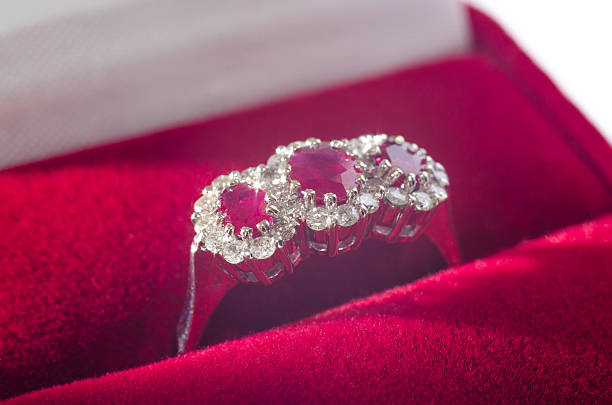
Art Deco engagement rings favor geometry, symmetry, strong outlines, and contrast. Emerald cuts, baguettes, step cuts, squares, triangles, and calibré-cut colored accents fit the streamlined look. Platinum and white gold support the cool palette, while ruby, sapphire, emerald, onyx, and diamond combinations can add graphic color.
The GIA overview of Art Deco engagement ring style highlights geometric forms, contrasting colors, platinum, and distinctive diamond shapes. Today, many engagement rings borrow these elements. A geometric halo or baguette side stones can be Art Deco-inspired without being a vintage ring from the 1920s.
Retro and Mid-Century: Mid-1930s–1950s and Beyond
Retro jewelry kept some geometric energy but added curves, volume, and bolder gold. Rose gold and yellow gold became important, and rubies, sapphires, aquamarine, citrine, topaz, and smaller diamonds appeared in dramatic arrangements. Mechanical-looking links, sweeping forms, and illusion settings are also associated with the period.
Mid-century engagement rings often moved toward cleaner lines and increasingly familiar diamond-centered designs. The modern round brilliant became dominant during the twentieth century, while white gold and platinum remained popular. When a listing says “mid century,” ask for an approximate date and supporting details rather than relying on the phrase alone.
Design Details That Create a Vintage Look
A ring does not need every historical feature to feel vintage. Usually, a few well-chosen details establish the era and keep the design coherent.
Milgrain, Filigree, and Engraving
Milgrain is a row of tiny bead-like metal details along an edge. It can soften the outline of a halo or emphasize geometric sections. Filigree and pierced openwork create an airy, lace-like effect, while hand or machine engraving adds texture to the shoulders and band.
These details are beautiful but collect lotion and debris. Fine edges can also wear over time. Ask how the piece should be cleaned and whether worn ornament can be restored without changing its character.
Halos, Clusters, and Framed Centers
Clusters and halos arrange smaller stones around a center, adding visual spread and decorative interest. Floral clusters can suggest Georgian or Victorian charm; highly structured frames and stepped halos often feel more Art Deco. Check that small stones are secure and that the design does not catch excessively on clothing.
Old Mine and Old European Cuts
Old mine cut diamonds generally have a cushion-like outline, a high crown, a small table, and a visible culet. Old European cuts are rounder but typically have a high crown, small table, and deeper proportions compared with many modern round brilliants. Their broader flashes and individual cutting patterns can give antique engagement rings a distinctive presence.
An old-style cut does not by itself date the ring. A historic diamond may have been reset into a newer mounting, and modern stones can be cut to antique-inspired proportions. If the age or identity of the stone matters, request an independent laboratory report or qualified appraisal.
Geometry, Color, and Negative Space
Strong symmetry, step-cut stones, contrasting color, and repeating geometry point toward Art Deco. Curves and warm rose gold can suggest Retro design. Delicate negative space, scrolls, and bows feel more Edwardian, while flowers and symbolic motifs may lean Victorian. Choose details that work together instead of adding every vintage cue to one piece.
Metals and Gemstones in Antique and Vintage Styles
Metal changes both the mood and the maintenance of vintage engagement rings.
- Yellow gold brings warmth and suits many Victorian and Georgian-inspired designs. Its exact color and durability depend on karat and alloy.
- Rose gold has a pink tone that works especially well for romantic or Retro-inspired rings. Copper in the alloy contributes to its color.
- White gold creates a bright neutral setting and is common in modern vintage-inspired jewelry. It may be rhodium plated, so ask about replating and care.
- Platinum supports crisp detail and white-on-white Edwardian or Art Deco looks. In older rings, inspect thin areas, previous repairs, and worn prongs.
Diamonds are only one option. Sapphire, ruby, emerald, moonstone, aquamarine, and other colored stones appear in historic jewelry and modern interpretations. Durability varies: a ring intended for daily wear should match the wearer’s habits, and some gemstones need gentler cleaning or more protective settings.
Do not assume the stones in an old ring are natural or original to the mounting. Laboratory-grown gems and simulants have existed for many decades, and stones may have been replaced during repair. A qualified gemologist can help identify materials, treatments, and replacements that are not obvious to the eye.
How to Evaluate an Authentic Antique or Vintage Engagement Ring
Buying an old ring is partly a design decision and partly a condition assessment. Use this checklist before you purchase.
- Ask how the ring was dated. Request the estimated era, the evidence used, and any known provenance. Original receipts, archival references, maker information, construction methods, and hallmarks can contribute to the conclusion.
- Separate the age of the stone from the age of the setting. An old mine or old European cut diamond may have been reset. A newer stone may also have replaced an original one.
- Review a gem report or independent appraisal. For a significant center stone, verify identity, treatments, and grading through an appropriate independent report. An appraisal can also describe the entire piece, condition, and replacement value, but it is not the same as a laboratory grading report.
- Inspect prongs, bezels, and small stones. Worn prongs, missing beads, loose accents, or earlier repairs can affect security. Ask whether restoration is recommended before daily wear.
- Check the shank and sizing limits. A thin or heavily engraved band may need repair. Rings with stones around the full circumference, delicate filigree, or mixed metals may be difficult to resize.
- Ask what has been repaired or replaced. Restoration is not automatically negative, but it should be disclosed. Find out whether stones, prongs, the shank, or decorative sections are original.
- Understand the return policy and warranty. Confirm the inspection period, return conditions, repair coverage, and whether resizing changes eligibility.
- Plan for insurance and care. Obtain documentation appropriate to the value and ask which cleaning methods are safe. Ultrasonic or steam cleaning is not suitable for every antique piece or gemstone.
A carefully vetted ring should come with specific information, not just atmospheric language. If the seller cannot support an “authentic,” “rare,” or “one of a kind” claim, evaluate the ring for what can actually be verified.

How to Choose a Vintage-Inspired Engagement Ring
A vintage-inspired ring offers historical style in a newly made piece. It can be a practical option when you want a specific size, metal, gemstone, or wedding-band fit without the uncertainty of an older setting.
1. Start With One Era
Choose the design language you respond to most:
- Victorian-inspired: flowers, clusters, hearts, colored stones, and warm yellow gold.
- Edwardian-inspired: delicate openwork, milgrain, scrolls, platinum or white-metal color.
- Art Deco-inspired: symmetry, geometric halos, step cuts, baguettes, and contrasting accents.
- Retro-inspired: rose gold, sculptural curves, bold color, and a sense of volume.
Mixing periods can work, but a clear starting point keeps the ring intentional rather than overly busy.
2. Match the Setting to Daily Wear
Consider how often you use your hands, whether you wear gloves, and whether a high setting will catch. A lower profile, bezel or protective halo, sturdy shoulders, and accessible cleaning areas may be helpful for an active routine. Delicate does not have to mean fragile, but small details still need maintenance.
3. Choose Metal and Stone Color Together
Warm yellow gold can make colorless stones appear softer and richly contrast blue or green gems. Rose gold creates a romantic palette. White gold and platinum emphasize cool contrast and crisp geometry. View the complete combination—not only the center stone—under different lighting.
4. Look Beyond Carat Weight
Face-up dimensions, cut quality, color, clarity, setting proportions, and the visual spread created by a halo all affect appearance. Old-style and modern cuts reflect light differently; neither is automatically better. Choose the pattern and personality you enjoy rather than trying to make one cut imitate another.
5. Plan the Wedding Band Before You Buy
Some vintage engagement settings have low baskets, sculpted shoulders, or wide halos that prevent a straight band from sitting flush. Ask to see the engagement ring with a matching, curved, contoured, or open band. Planning the set early avoids an awkward gap unless that gap is part of the look you want.
6. Verify the Product Details
For a new ring, confirm metal type and karat, stone identity and treatment disclosures, measurements, sizing range, production time, return policy, warranty, and care guidance. “Vintage-inspired” describes the style; it does not replace the product specifications.
If you want the look of antique and vintage engagement rings in a newly made piece, explore the LisaJewelryUS vintage-inspired engagement ring collection. Review each product page for its exact metal, gemstones, dimensions, and service terms before choosing.
Frequently Asked Questions
What makes an engagement ring vintage?
A vintage engagement ring is an older, non-contemporary ring that is not yet old enough to be antique. “Vintage-inspired” means the ring is newly made with details associated with an earlier jewelry era. Ask the seller which meaning applies.
How old does a ring have to be to be antique?
A commonly used jewelry definition, including GIA’s, is more than 100 years old. Because that threshold moves with time, a ring made in 1926 would pass the 100-year mark during 2026, but its exact manufacturing date still needs evidence.
What is the difference between antique and vintage engagement rings?
Antique engagement rings are more than 100 years old. Vintage engagement rings are older and non-contemporary but not yet antique. Estate rings are simply preowned, while vintage-inspired rings are new designs that borrow historical details.
Are vintage engagement rings suitable for daily wear?
Some are, but suitability depends on condition, gemstone durability, setting height, prong strength, shank thickness, and the wearer’s routine. Have an older ring inspected before daily wear and follow care advice for its specific materials.
Can antique and vintage engagement rings be resized?
Many can be resized within limits, but full-eternity stones, engraving, filigree, unusual construction, previous repairs, or very thin metal can make resizing difficult. Ask a jeweler experienced with older pieces before purchasing.
What are old mine cut and old European cut diamonds?
They are historical diamond cutting styles. Old mine cuts are usually cushion-like with varied proportions; old European cuts are rounder. Both often have higher crowns, smaller tables, and visible culets compared with many modern brilliant cuts. A cut style alone does not prove the age of the entire ring.
Is a vintage-inspired engagement ring an authentic antique?
No. A vintage-inspired ring is newly made and references an older style. It can offer historic character, modern sizing, and new construction, but it should be described clearly rather than presented as a true vintage or antique piece.
Which vintage era is best for an engagement ring?
There is no single best era. Choose Victorian romance, Edwardian delicacy, Art Deco geometry, or Retro color and volume according to your taste and lifestyle. Then compare the ring’s actual construction, condition, materials, and fit—not just the era label.
The Bottom Line
Vintage engagement rings bring history, craftsmanship, and personal expression into a symbol of love. The key is knowing whether you are buying an authentic antique, a true vintage or estate piece, or a newly made vintage-inspired ring. Learn the signature periods, verify claims, inspect condition, and choose a design that feels beautiful on your hand as well as meaningful in your story.