I. Introduction
Understanding lab grown diamond certification is one of the most important — yet often overlooked — steps when buying a modern engagement ring.
Many buyers assume that all lab diamonds are evaluated the same way. In reality, the diamond certification behind a stone plays a major role in how its quality, value, and long-term confidence are perceived.
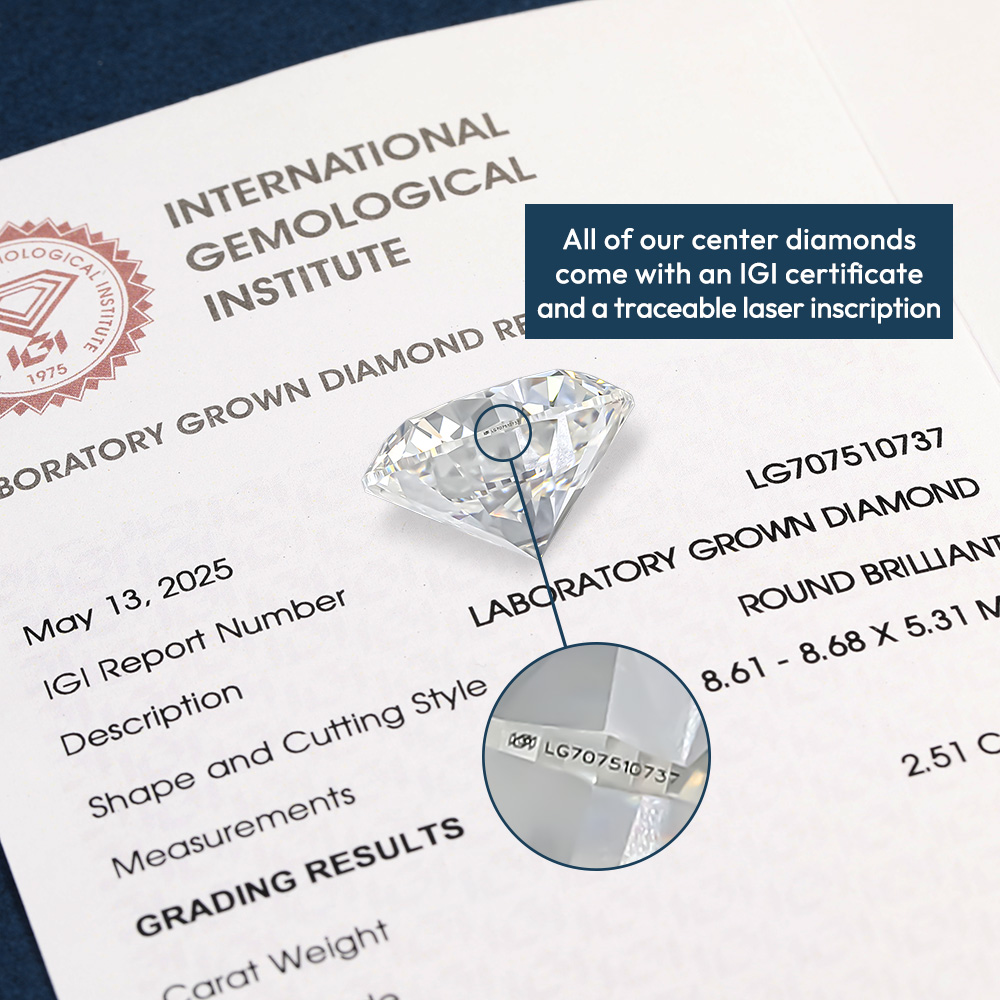
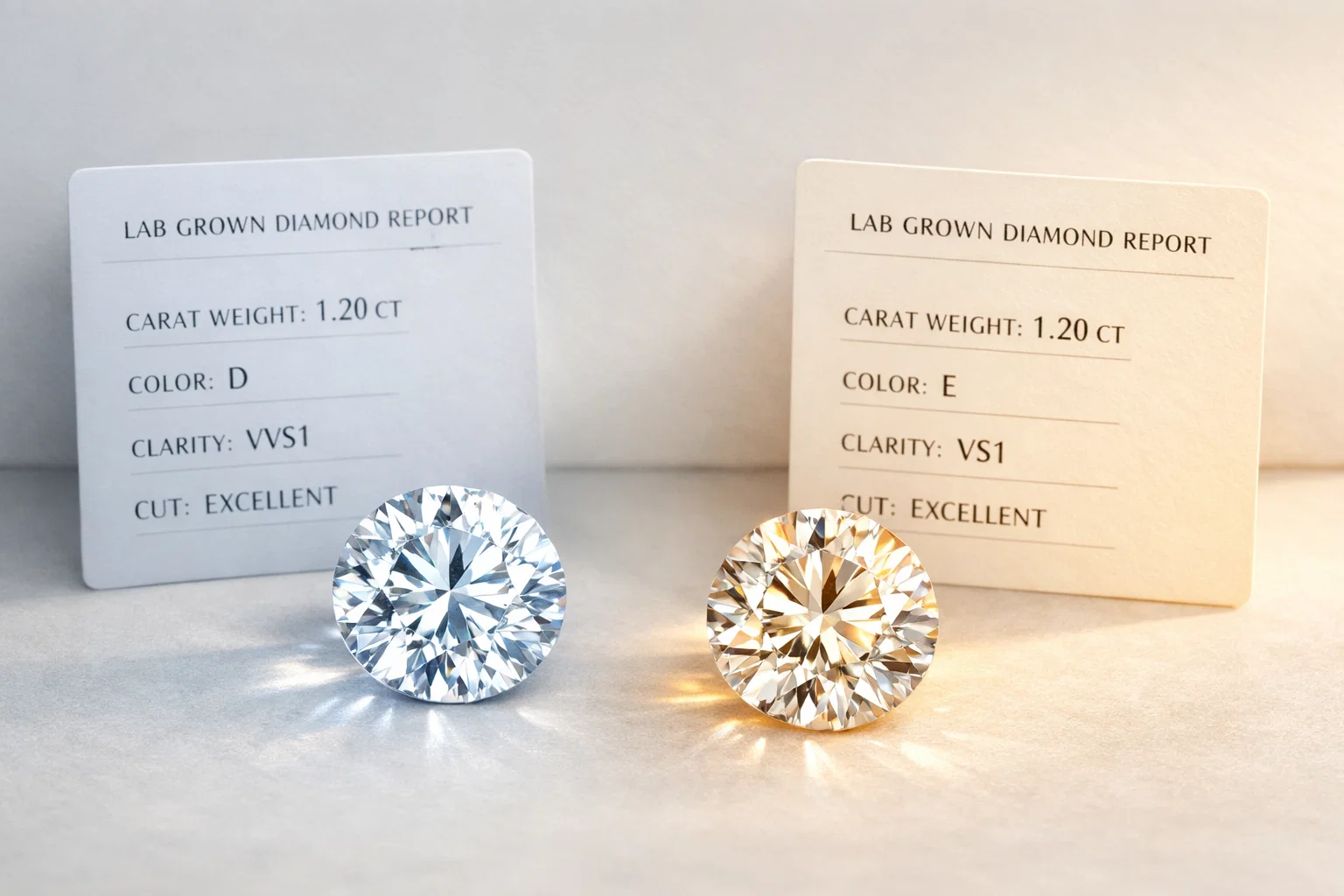
Just like natural diamonds, a grown diamond should come with a trusted grading report from a respected gemological institute. This report confirms key factors such as carat weight, cut grade, color grade, and overall diamond grading standards.
Today, the two most recognized organizations providing grown diamond certification are:
GIA certification (from the Gemological Institute of America)
IGI certification (from the International Gemological Institute)
Both issue a detailed grading report for certified diamonds, but they approach the certification process slightly differently.
For buyers comparing lab grown diamonds for fine jewelry or engagement rings, understanding these differences can help ensure you're choosing a stone with transparency — not just sparkle.
II. GIA vs IGI: Why Certification Matters for Lab Diamonds
When purchasing a certified diamond, the certification is not just paperwork — it’s an independent confirmation of the diamond’s measurable characteristics.
A reliable lab grown diamond grading report evaluates:
Carat weight
Color grade
Cut grade
Clarity characteristics
Overall diamond’s quality
This is particularly important for lab diamonds, as the market has grown rapidly and production methods vary.
Unlike natural diamonds, which are formed deep within the earth over billions of years, grown diamonds are created using advanced technology that replicates natural conditions.
Despite their different origin, both must meet the same gemological evaluation standards.
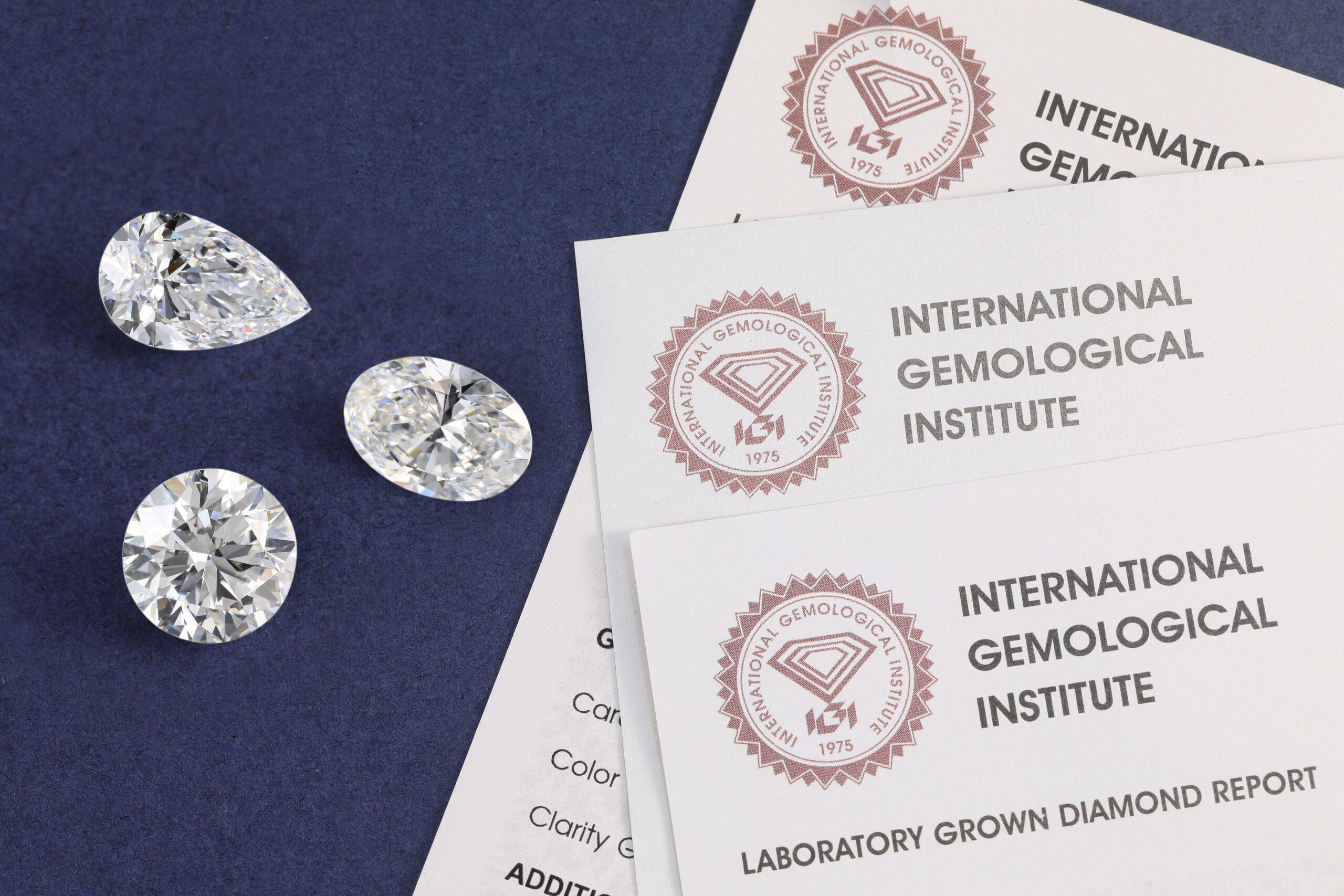
This is where institutions like:
the Gemological Institute of America (GIA)
and the International Gemological Institute (IGI)
play a crucial role.
Their grading reports provide:
Objective quality assessment
Verification of origin (natural vs lab grown)
Consistency in diamond grading
Buyer confidence in the certification process
Without proper grown diamond certification, it becomes difficult to compare stones accurately — even if they appear visually identical.
And in today’s market, where lab grown diamonds are increasingly used in engagement rings and fine jewelry, that clarity matters more than ever.
III. How HPHT and CVD Diamonds Affect Certification
Not all laboratory grown diamonds are created the same way — and the growth method can influence how they are evaluated during the certification process.
Today, most lab diamonds are produced using one of two technologies:
HPHT (High Pressure High Temperature)
CVD (Chemical Vapor Deposition)
The chemical vapor deposition method grows diamonds layer by layer from carbon-rich gas, while HPHT mimics natural formation using intense heat and pressure.
From a certification perspective, both methods produce real diamonds — but subtle differences may appear in:
Color tendencies (for example, some stones may show faint tones such as light yellow)
Growth patterns
Internal characteristics affecting cut grade and clarity
That’s why a trusted grading report includes detailed information beyond appearance — helping buyers understand:
Diamond’s shape
Proportions such as the diamond’s girdle
Optical performance in round brilliant cut diamonds and other shapes
Leading institutes such as the International Gemological Institute (IGI) and GIA analyze these traits carefully to ensure consistency in lab grown diamond grading.
IV. IGI Certification: The Most Common Standard for Lab Diamonds
The IGI certification is currently the most widely used grading system for lab grown diamond certification.
Because IGI specializes in evaluating laboratory grown diamonds, their reports often provide:
A very narrow range of grading tolerance
Clear distinction between natural and lab origin
Detailed assessment of cut grade, color, and structure
An IGI grading report typically includes:
Confirmation of lab origin
Full diamond grading metrics
Laser inscription (in many cases)
Transparency in ethical sourcing
For buyers comparing multiple certified diamonds, IGI offers a practical and widely trusted benchmark.
This is why IGI-certified stones are common in engagement rings and fine jewelry collections — especially when precision and consistency matter.

V. GIA Certification: The Traditional Benchmark
The Gemological Institute of America (GIA) remains one of the most respected names in diamond certification.
Historically known for grading natural diamonds, GIA now also provides reports for grown diamond certification.
A GIA certification focuses heavily on:
Structural accuracy
Conservative grading standards
Long-term consistency
Because GIA applies strict evaluation criteria, its reports are often viewed as a traditional benchmark — particularly for buyers who want alignment between lab-grown and natural grading expectations.
While IGI dominates the lab space, GIA certification offers:
Recognition across global markets
Reliable comparison between natural diamonds and lab-grown stones
Strong authority in the broader diamond grading ecosystem
VI. Conclusion: Which Certification Should You Trust?
Whether a diamond is mined or laboratory grown, certification is what turns beauty into confidence.
Both IGI and the Gemological Institute of America provide an accurate assessment of a diamond’s quality — evaluating:
Diamond’s cut
Color grade
Clarity and carat weight
For modern buyers, the key takeaway is simple:
Today’s lab grown diamonds are:
Created using advanced technology in controlled environments
Structurally and visually optically identical to natural stones
Graded through a comprehensive analysis of color clarity and carat
A professional grading report gives:
Detailed information about structure
A clear color range
Consistency across different fancy shapes
This transparency helps buyers compare diamonds fairly — whether choosing traditional stones or modern lab-grown options.
At the end of the day, certification isn’t about the origin — it’s about understanding the quality behind the sparkle.