
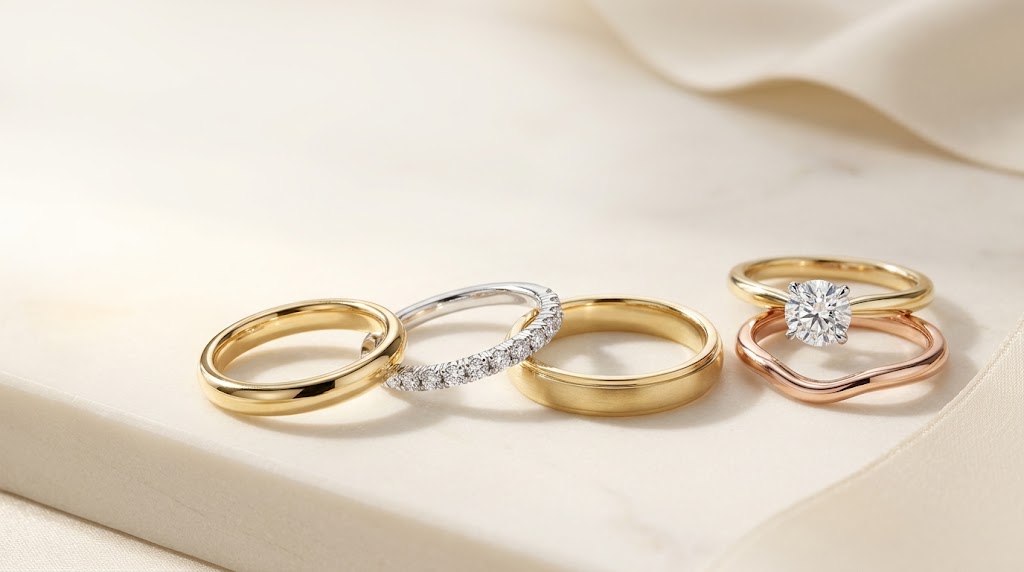
To find your ideal wedding band, start with how it feels on your hand, how it sits beside your engagement ring, and how much maintenance you are comfortable with. Then compare metal, shape, diamond coverage, and price. The best choice is not necessarily the closest visual match: it is a wedding ring you will enjoy wearing on ordinary days as well as your wedding day.
Whether you want a simple gold band, a curved diamond design, or an eternity ring, this guide will help you narrow the options without sacrificing comfort or personal style.
How to Choose a Wedding Band: Start with These Five Decisions
Before you choose a wedding band, decide what it needs to do and which wedding band designs suit that purpose. Will you wear your wedding ring alongside your engagement ring every day, or mainly on its own? Do you want an understated look, more sparkle, or a shape that frames your center stone?
Use these five questions to build your shortlist:
- Fit: Does the wedding ring feel comfortable alone and as part of a stack?
- Shape: Do you prefer a straight band, a contoured band, or a deliberate gap?
- Metal: Do you want coordinated colors or a mixed-metal look?
- Stones: Would you prefer plain metal, half eternity, or a full circle of diamonds?
- Practicality: What are the resizing, cleaning, delivery, and return requirements?
A photo can show the style of a wedding ring, but it cannot tell you whether a setting presses into your finger or catches on clothing. Compare measurements and side views before deciding that two rings are the perfect pair.
Pairing a Wedding Band with Your Engagement Ring
Start with the shape and height of your engagement ring. Look at the center stone, the gallery underneath it, and any side stones. Compare how the pair sits from the side, not only from above. These details determine where a neighboring band can sit.
A raised setting may leave room for a straight wedding band underneath the center stone. A lower setting may need a curve, a notch, or an open design. Neither outcome is guaranteed by the stone shape alone: two oval rings can have very different profiles.
Try the two rings together whenever possible. For an online wedding band purchase, send clear top and side photographs and ask the jeweler which measurements are needed. Do not assume that a band pictured beside a similar engagement ring will fit yours identically.
Straight, Curved, or Open: Finding a Perfect Match
Decide whether you want your wedding ring to sit flush or whether a small gap suits your style. A gap is not automatically a fitting problem, and a tight-looking stack is not automatically comfortable.
The important check is contact. A diamond edge, exposed stone, or projecting prong should not repeatedly rub against the neighboring ring. Have a jeweler assess the stack if anything catches or appears to press against a vulnerable part of the setting.
For proportion and styling ideas, GIA's ring stacking guide discusses balancing widths, mixing metals, and checking the fit of stacked jewelry.

Wedding Band Designs: Classic, Contoured, Curved, and Open
When comparing women's wedding bands, no single shape works for every hand or every bridal stack. Compare wedding band designs by both their style beside your engagement ring and their style when worn alone.
Classic Straight Wedding Bands
A classic straight wedding band is a useful starting point for a simple solitaire or a ring with enough clearance beneath its setting. Plain gold, platinum, and diamond-set versions can each produce a different look.
Opt for a smooth metal wedding ring to keep the focus on the center stone. A slim diamond wedding ring adds texture and sparkle. A wider wedding ring creates a stronger standalone statement, but check the combined width before ordering.
Contoured Wedding Bands
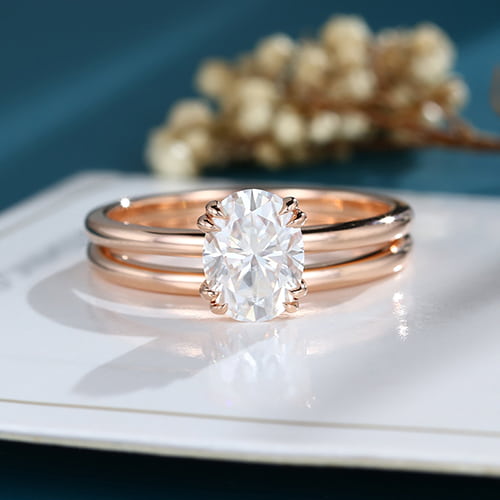
A contoured wedding ring follows a specific outline, such as the edge of a center setting or a cluster of side stones. It can help frame an engagement ring that does not accommodate a straight band.
The contour must suit the actual dimensions of the ring, not just similar stone shapes. A band designed for one pear-shaped stone may not fit another pear-shaped ring with a different gallery or halo. Ask for a fit assessment rather than a promise based only on a product name.

Curved and Chevron Wedding Bands
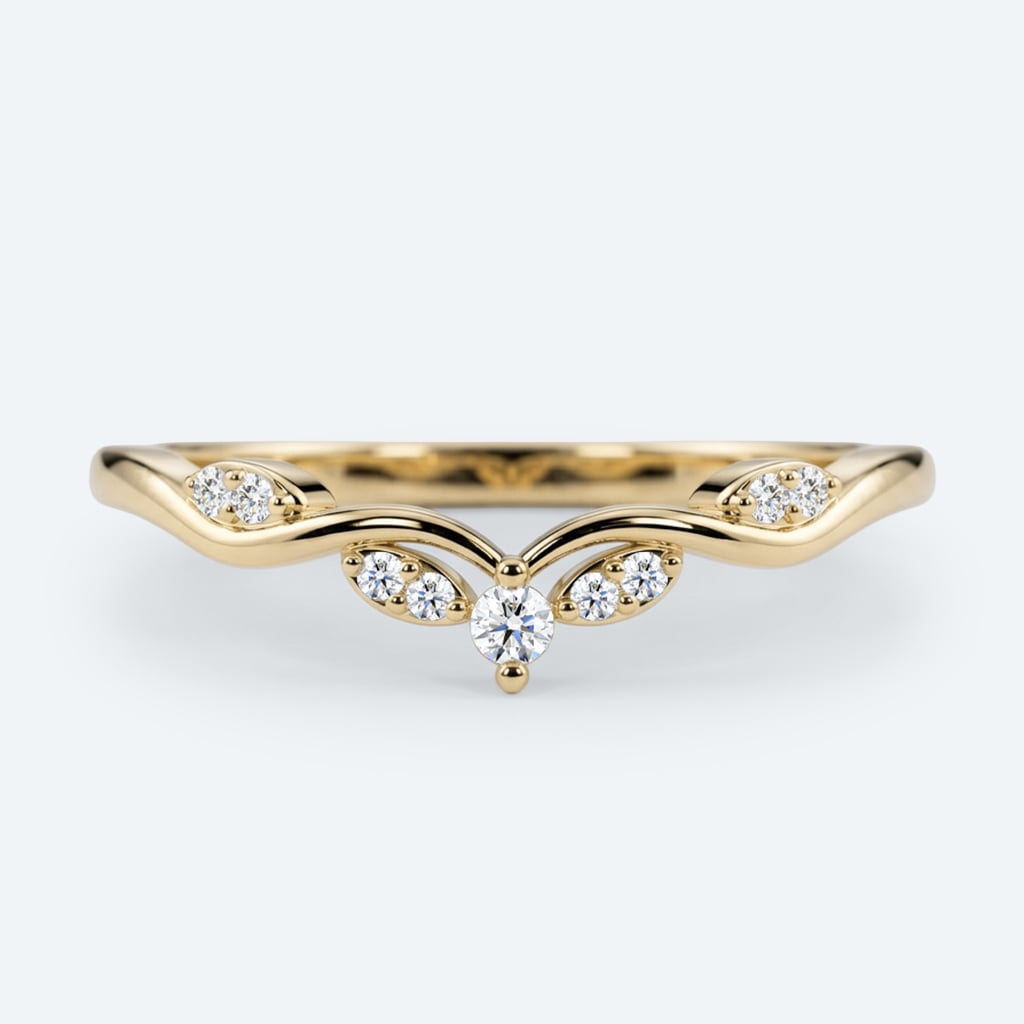
A curved wedding band has a gentle arc, while a chevron forms a more pointed V. Both can frame an elongated center stone or leave room around a lower setting.
Look at the depth of the curve, the ring height, and the position of any diamond accents. A shallow curve may leave a gap; a deep curve may look more pronounced when worn alone. Choose the wedding ring shape and style you like in both situations, not only in the styled product photo.
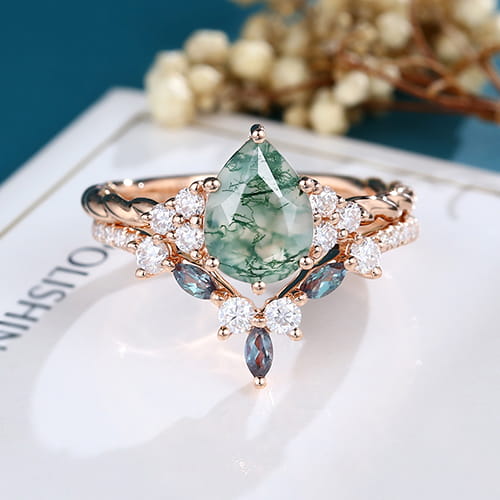
Open and Notched Wedding Bands
An open wedding band has a break between its ends; a notched band has an indentation that accommodates part of another ring. These are different constructions, so check the design rather than relying on the label.
An open wedding band may provide room for a prominent center setting, but the opening must be appropriate for your ring. Ask whether the ends feel smooth, how the band is sized, and whether adjustments are possible. Do not bend an open wedding ring at home to make it fit.
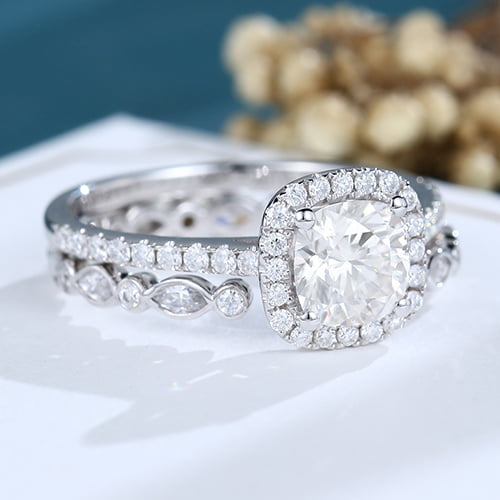
One Metal or a Mixed-Metal Stack?
Choosing the same metal and karat can help create a consistent look. However, a wedding band does not have to match your other jewelry. You may prefer a contrasting color or a finish that makes each piece of jewelry stand out.
The same metal is a visual starting point, not a guarantee against wear. Different alloys, stone positions, and points of contact still matter. If you mix gold with platinum, ask the jeweler to assess the actual pair rather than judging compatibility by color alone.
Yellow Gold, White Gold, Rose Gold, or Platinum?
| Metal | Appearance | What to check before buying |
|---|---|---|
| Yellow gold | Warm color with a classic feel | Karat, alloy, finish, and how the shade compares with your existing jewelry |
| White gold | A bright white-metal look, often achieved with rhodium plating | Alloy ingredients and whether replating will be needed |
| Rose gold | A pink-toned gold alloy | The exact shade and alloy ingredients; rose gold colors can vary |
| Platinum | A naturally grayish-white precious metal | Purity marking, weight, price, and the finish you prefer |
Yellow gold can complement a warm-toned center stone or a vintage-inspired design. White gold offers a lighter-colored backdrop for a diamond band. Rose gold provides a contrasting blush tone, while platinum is worth comparing if you prefer a white metal without relying on rhodium plating for its color.
Do not opt for a precious metal only because it is described as the strongest or most luxurious. A well-made yellow gold wedding ring may suit your preferences better than a heavier platinum ring. Compare the complete design, not just the material name.
If you have a known metal sensitivity, ask about the full alloy composition. White gold can contain nickel or palladium; do not assume every gold or platinum alloy will suit you. GIA's guide to gold colors explains how alloys and rhodium plating influence appearance.
Read the Metal Description of Your Ring, Not Just the Color
Confirm whether the wedding ring is solid gold, gold-plated, or another construction. A gold-colored wedding ring photograph does not establish the precious metal content. The karat mark describes gold purity: 14K means 14 parts gold out of 24, not a diamond weight.
The FTC's guide to buying platinum, gold, and silver jewelry explains quality markings and why clear material descriptions matter. Check the selected product variant before paying; not every wedding band is available in every metal shown in a general guide.
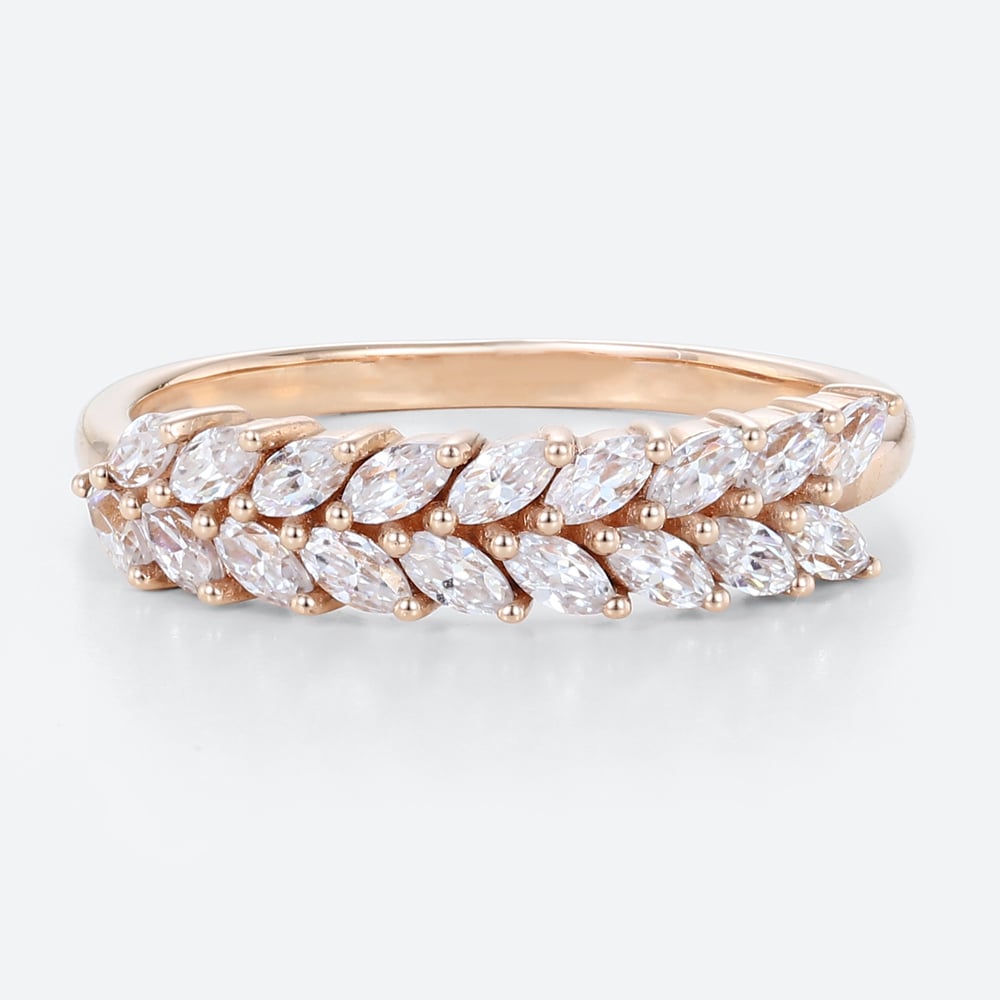
Half Eternity Rings vs. a Full Eternity Ring
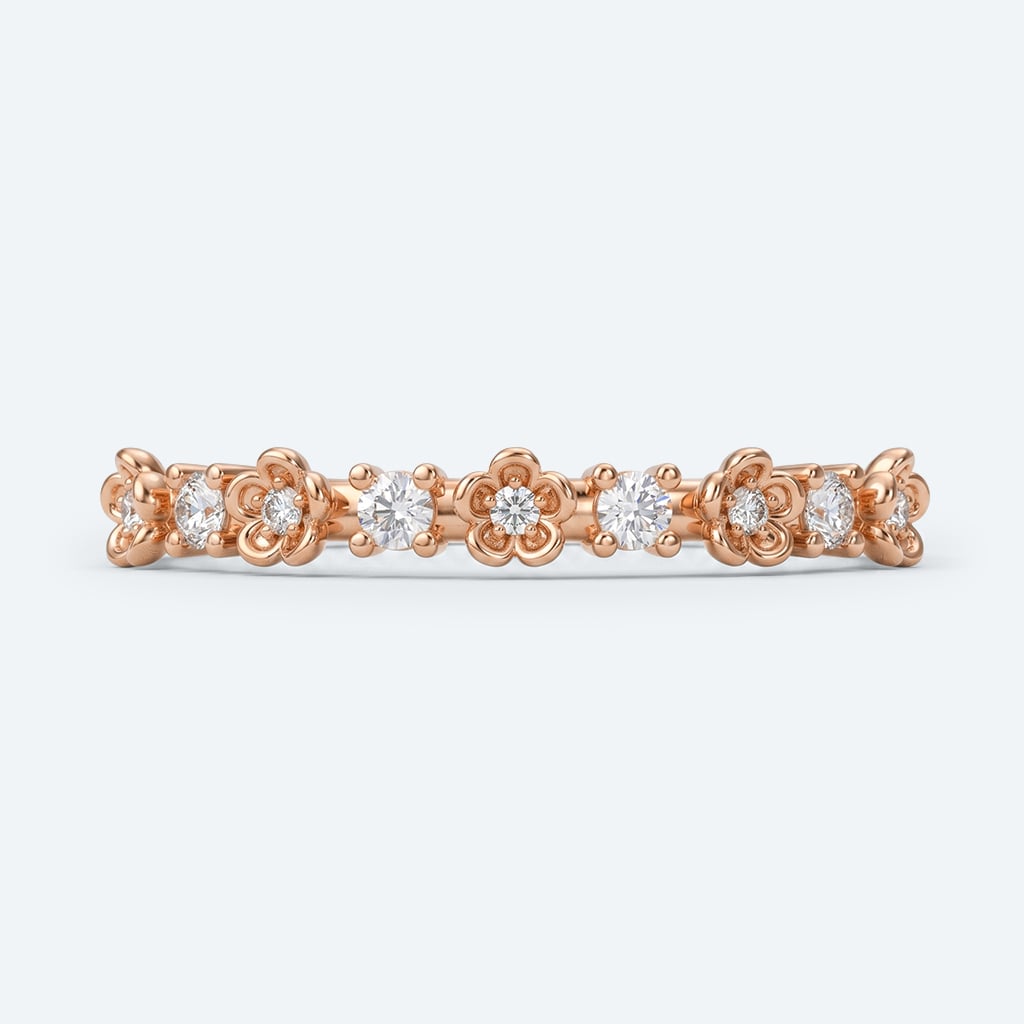
An eternity ring has a repeating line of diamonds or other stones. In a full eternity design, the stones continue around the band; half eternity rings have stones across approximately the upper half, leaving a plain section underneath.
Both can serve as a wedding band. The difference is not just how much sparkle you see: it also affects the underside of the ring, how rotation looks, and the options for later size changes.
| Design | Why consider it? | What to check |
|---|---|---|
| Plain metal wedding band | An understated look without stone settings | Finish, thickness, comfort, and resizing options |
| Half eternity band | Diamond detail across the visible upper portion | Coverage, rotation, and whether the plain section permits resizing |
| Full eternity band | A continuous circle of stones | Exact fit, comfort between fingers, and any resizing restrictions |
When Half Eternity Rings Make Sense
Half eternity rings are worth trying if you want diamond detail with a plain underside. Some wearers prefer that surface against the palm, especially when gripping everyday objects.
A half eternity wedding band may offer more resizing flexibility than a full eternity ring, but this depends on the construction. Ask how much adjustment is possible for the exact band. A plain section does not guarantee that every size change is safe.
If the wedding ring rotates, some of that plain section may become visible. Decide whether this matters to you before choosing the amount of diamond coverage.
When a Full Eternity Band Makes Sense
A full eternity band keeps its diamond pattern visible as the ring turns. It can look striking by itself or beside a simple solitaire.
For this wedding band, the trade-off is a continuous stone setting, including underneath and between the fingers. Many full eternity rings cannot be resized through the usual process, so confirm the seller's policy and measure carefully. If future adjustment is important, compare a half eternity design before committing.
A continuous circle can symbolize continuing love, but neither full nor half coverage makes one wedding band more meaningful than another. Choose the design that fits your life.
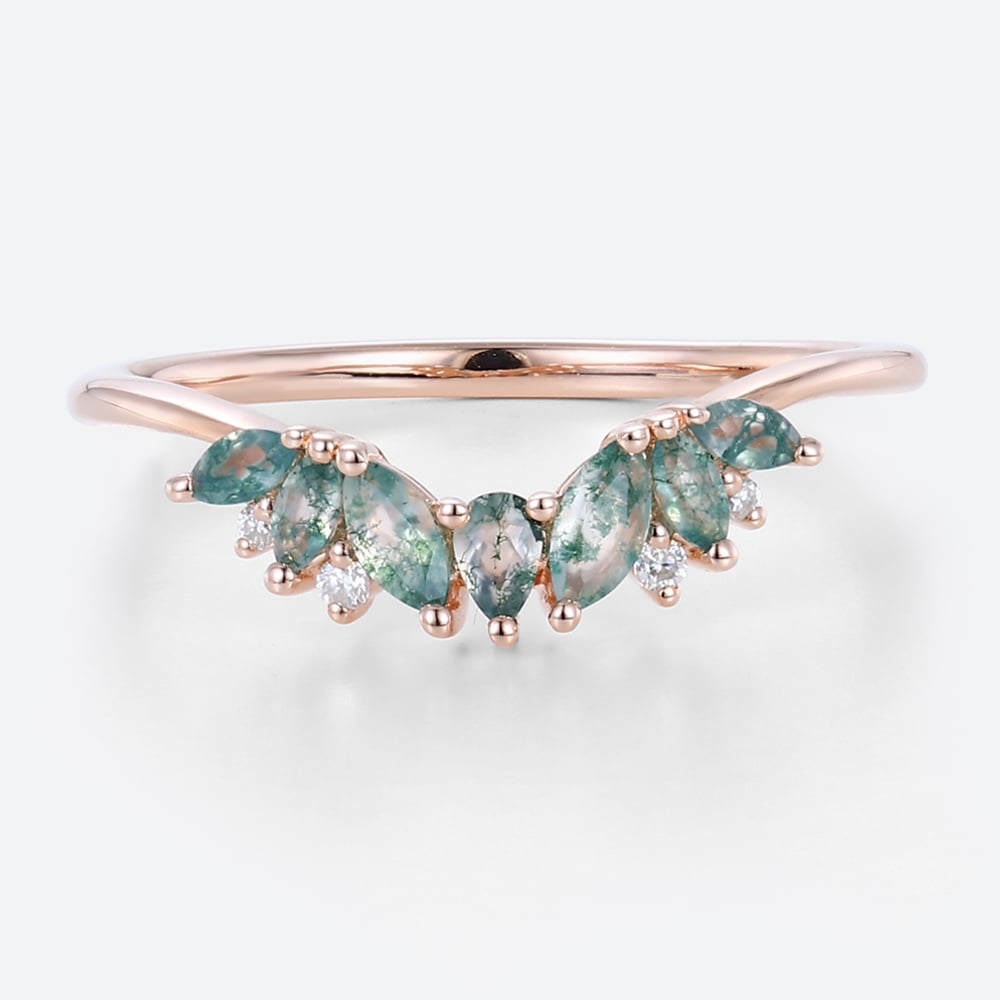
Eternity Band Settings: Is a Single Prong Eternity Band Right for You?
The setting affects how a diamond band looks and how much of each stone is exposed. A single prong eternity band uses a minimal shared-prong arrangement for an open, delicate appearance. Exact construction varies, so inspect close-up photographs and ask how the stones are secured.
A single prong eternity band may appeal to you if you prefer less visible metal around the diamonds. That does not make it automatically more secure, brighter, or more comfortable than other designs.
Compare it with other setting options:
- Pavé: Small diamonds create a closely set, textured surface.
- Shared prong: Neighboring stones share parts of the retaining structure.
- Channel: Stones sit between metal walls along the band.
- Bezel: A metal rim surrounds each stone for a more defined outline.
More light around a diamond is not a reliable buying rule by itself. Stone quality, proportions, cleanliness, and the complete setting all influence appearance. Judge the diamond band under ordinary lighting as well as bright display lighting.
For any diamond wedding ring, ask about inspection and repair. If a prong catches fabric or a stone moves, stop wearing the band until a jeweler checks it.
Prioritize Comfort: Ring Size, Width, and Interior Profile
Prioritize comfort before choosing the final design. A wedding ring should feel secure without painful pressure and should pass over the knuckle with some resistance. If it feels uncomfortable, do not accept the fit simply because the size matches another ring you wear.
Measure Ring Size for the Complete Stack
Have your ring size checked on the hand and finger where you plan to wear the band. Finger size can vary between hands, and a wider stack may feel tighter than a single narrow ring.
If you plan to wear the wedding ring on your left hand, measure that ring finger. If you prefer your right hand, measure there instead. Avoid assuming the same ring size will work equally well on both hands.
Use a physical sizer and, where possible, compare a sample with a similar width and interior. Recheck the fit under normal conditions rather than immediately after unusual heat or cold. For online orders, follow the seller's sizing instructions and confirm which sizing system is used.
Compare Ring Width and Thickness
Ring width is the measurement across the band; thickness describes how much it rises from the finger. Both affect the feel of a wedding band.
For a useful comparison, try several sample widths, such as 2 mm, 3 mm, and 4 mm. These are comparison points, not universal recommendations. Consider the total space occupied by the stack and whether you can bend your finger comfortably.
A delicate diamond band can complement a detailed engagement ring without competing with it. A broader gold band may suit someone who wants to wear the wedding ring alone. Your hand, routine, and preferred style matter more than a rule about proportions.
Flat Ring Exterior vs. Flat Interior
A flat ring usually describes a flat outer surface. It does not necessarily mean the inside is flat. A standard-fit band can have a flat interior, while a comfort-fit band has a rounded inner profile.
Ask about both surfaces. Two wedding bands with the same listed width and ring size can feel different because of their interior, edge shape, and thickness. A comfortable fit comes from trying the actual profile, not choosing a label.
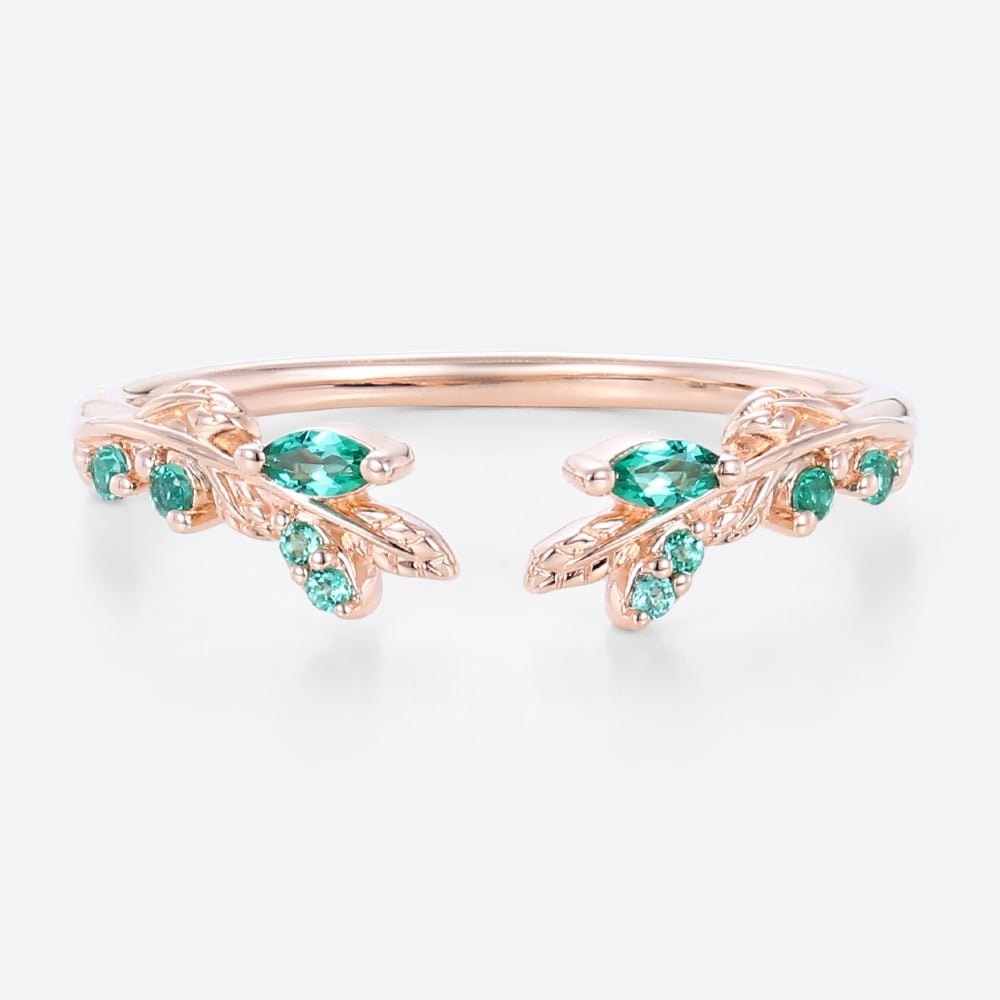
Women's Wedding Bands: Choose the Look You Want to Wear Alone
When browsing women's wedding rings, compare each wedding ring both with and without your engagement ring. A deep contour may look balanced in a bridal stack but feel more sculptural on its own. A straight wedding ring may be easier to style separately.
Women's wedding bands do not have to be narrow, diamond-set, or conventionally feminine. A plain gold wedding ring, a geometric band, or a textured design can be the right choice if it suits your taste. Choose a style you can picture wearing forever, rather than one you like only in a wedding photograph.
Many couples choose coordinated details rather than identical rings. Matching rings might share yellow gold, an engraving, or a matte finish while differing in width and stone coverage. You can create a connection without making either partner compromise on comfort or personal style.
For a personal touch, ask whether the band supports engraving. An engraving with a date, initials, or a short phrase can add meaning, but confirm space, character limits, and any effect on returns before ordering.
Polished Finish or Brushed Finish for a Diamond Ring?
A polished finish gives the metal a reflective appearance; a brushed finish creates a more textured, less mirror-like surface. Either can change with wear and may require professional refinishing.
Compare the finish beside your existing jewelry. A polished wedding band may complement a diamond ring, while a brushed gold band can introduce contrast. Choose the look you enjoy rather than assuming one finish eliminates scratches.
Budget, Wedding Date, and Questions to Ask Before Ordering
Set a budget for the complete wedding band purchase, including any customization, engraving, shipping, or likely maintenance. There is no required percentage of your wedding budget to spend on a wedding ring.
Compare like-for-like specifications. A diamond band's price can change with stone origin, total carat weight, metal, and construction. Confirm whether diamonds are natural or laboratory-grown and whether the listed weight describes all the stones together. Moissanite is a different gemstone, not a laboratory-grown diamond.
Clear disclosure matters more than vague descriptions such as premium sparkle. The FTC's jewelry advertising guidance explains the distinction between laboratory-grown diamonds and diamond imitations.
Work backward from your wedding date. Ask for production time, shipping estimates, and room for a fit check before the big day. Do not assume a custom wedding band will be available on the same schedule as an in-stock item.
Before buying the wedding ring, confirm:
- The selected metal, karat or purity, ring size, width, and thickness.
- The type of diamond or gemstone and the amount of stone coverage.
- Whether the wedding band has been assessed beside your existing ring.
- Resizing limits, costs, and whether a remake would be necessary.
- Return conditions for standard, engraved, and custom jewelry.
- Inspection, repair, and delivery arrangements.
If you have not purchased either ring, a coordinated wedding ring set can be a useful place to compare pairings. Still confirm the measurements and fit of the selected set rather than treating the matching label as a guarantee that the rings will match your fit preferences.
Caring for Your Wedding Band in Everyday Life
Choose a wedding ring whose care requirements fit your everyday life and the way you wear jewelry. A plain gold band has no diamond settings to inspect, while a stone-set wedding band needs attention to both the metal and the stones.
For diamond jewelry without special treatment or material restrictions, follow the jeweler's instructions for gentle cleaning with mild soap, warm water, and a soft brush. Rinse carefully and dry with a lint-free cloth. Check with the jeweler before using this method on other gemstones or mixed-material jewelry.
GIA's diamond care guide notes that diamonds can chip under impact and that ultrasonic or steam cleaners can loosen stones. Do not assume diamond hardness makes the entire wedding ring damage-proof.
Remove jewelry for heavy lifting, work with tools, and exposure to harsh cleaning chemicals. Store jewelry separately so a diamond does not scratch another ring. Keep each piece of jewelry in its own soft compartment or pouch. Have the setting checked if you notice catching prongs, a loose stone, or a change in how the band sits.
Frequently Asked Questions
Does My Wedding Band Have to Match My Engagement Ring?
No. A wedding ring can match the metal and details of your engagement ring, or introduce contrast. Choose a combination that looks intentional, feels comfortable, and does not cause damaging contact between stones, prongs, and metal surfaces.
Which Wedding Band Looks Best with a Solitaire Diamond Ring?
A plain metal wedding ring keeps the focus on a solitaire diamond ring, while a diamond band adds sparkle. A straight, curved, or contoured shape may work depending on the setting height. Compare the actual pair rather than choosing by stone shape alone.
Are Half Eternity Rings Better for Daily Wear?
Half eternity rings may suit someone who prefers a plain underside and wants potential resizing flexibility. They are not automatically better for everyone. Check the setting, fit, diamond coverage, and resizing limits for the exact wedding band.
Can an Eternity Ring Be Resized?
Many full eternity rings cannot be resized through standard methods because stones continue around the band. A partially stone-set ring may allow adjustment, depending on its design. Ask about the exact ring before buying; a remake may be necessary for some styles.
Is a Single Prong Eternity Band a Good Wedding Band?
A single prong eternity band can be an appealing choice for a delicate, open diamond look. Assess the actual construction, comfort, and contact with neighboring rings. Ask the jeweler about inspection and repair rather than assuming minimal metal means superior performance.
Should My Wedding Ring Be the Same Ring Size as My Other Ring?
Not necessarily. Width, interior profile, and stacking can change how a ring feels. Measure the intended finger and check the complete ring stack. Follow product-specific sizing advice instead of automatically copying another ring's size.
Can I Mix Rose Gold with White Gold or Platinum?
Yes, mixed colors can create a distinctive look. However, gold and platinum alloys and setting details differ, so have the actual stack assessed for contact and wear. Matching colors alone do not establish compatibility either.
How Early Should I Choose a Wedding Band?
Choose a wedding band early enough to allow for production, shipping, a fit check, and any adjustment. Ask the seller for current timing for your selected design, especially if it is custom or engraved. Leave a buffer before the wedding rather than relying on a general estimate.
Find a Wedding Band That Fits Your Style and Your Life
The right wedding band should complement your engagement ring without making everyday wear complicated. Start with fit and shape, compare metal and diamond coverage, and choose a wedding ring whose style feels like yours when worn alone as well as in a stack.
Explore LisaJewelryUS wedding bands to compare current styles. If you need help pairing a band with your engagement ring, contact LisaJewelryUS with photographs and the measurements you have, and ask which additional details are needed to assess the fit.