
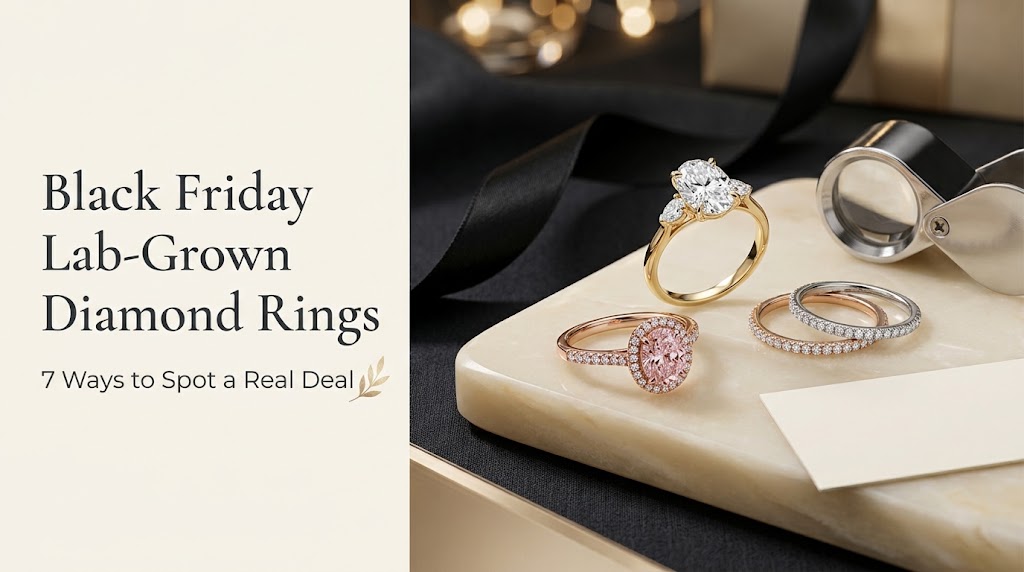
Black Friday can be a smart time to purchase a lab-grown diamond ring—but the largest discount on the screen is not necessarily the best value.
Two rings may look similar in product photos while differing significantly in diamond cut, face-up size, gold purity, setting construction, grading documentation, and after-sales service. A dramatic percentage also means very little if the “original” ring and the discounted ring do not share comparable specifications.
When shopping for Black Friday lab-grown diamond rings, look beyond the sale banner. A genuine deal should offer the right combination of diamond quality, thoughtful craftsmanship, transparent information, practical policies, and a final price that makes sense for your budget.
Here are seven checks to complete before placing your order.
How Do You Know If a Black Friday Diamond Ring Is a Real Deal?
A strong Black Friday diamond ring deal should clearly identify the center stone as lab-grown, provide enough information to evaluate its quality, and explain exactly what is included in the price.
Before buying, confirm:
- The diamond’s carat weight, measurements, color, and clarity
- Whether an independent grading report is included
- The gold purity and setting specifications
- Whether the listed carat weight refers to the center stone or the entire ring
- The final cost after upgrades, taxes, and other charges
- The return, resizing, warranty, and production terms
- Whether you would still love the ring without the discount label
A lower price can be valuable, but only when the ring still meets your standards in the areas that matter most.
I. Compare the Exact Ring—not Just the Discount Percentage
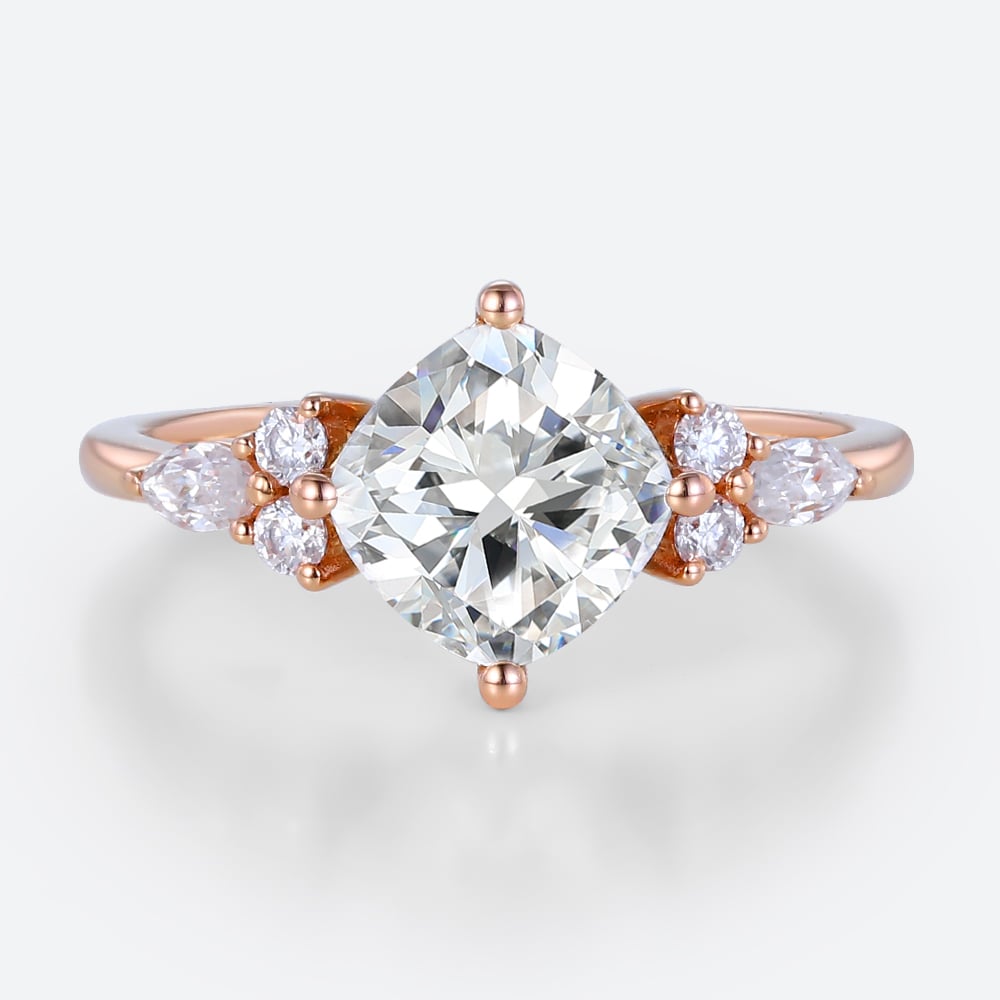
A percentage alone does not tell you whether two rings offer comparable value. To make a useful comparison, begin with the complete configuration.
Match the Center-Stone Specifications
Compare diamonds with similar characteristics, including:
- Diamond shape
- Carat weight
- Length, width, and depth measurements
- Color grade
- Clarity grade
- Cut information
- Polish and symmetry
- Colorless or fancy-colored appearance
- Included grading documentation
For example, a 1.5-carat oval lab-grown diamond with a high color grade cannot be directly compared with another 1.5-carat oval that has different proportions, clarity, or face-up measurements. They may share the same weight while presenting very differently on the hand.
Check What the Advertised Price Includes
Some listings show the price of a loose center diamond, while others display the price of a completed ring. Before deciding that one option is less expensive, check whether the price includes:
- The center stone
- The gold setting
- Side diamonds or halo stones
- Metal and gold purity
- The selected ring size
- Custom design modifications
Also look carefully at carat descriptions. Center-stone weight refers only to the main diamond, while total carat weight may include every diamond in the ring. A 1.5-carat solitaire and a ring with 1.5 carats distributed across the center and side stones are not the same product.
FTC consumer guidance recommends comparing full product descriptions, total costs, shipping terms, and return conditions rather than relying only on the advertised price.
II. Verify the Lab-Grown Diamond Report
A meaningful discount should not require you to accept unclear diamond information.
An independent grading report provides a structured description of the diamond at the time it was examined. If the selected ring includes an IGI report, compare the report details with the product listing before completing your purchase.
What to Check on an IGI Report
Look for the following information:
- Clear laboratory-grown diamond identification
- Report number
- Diamond shape and cutting style
- Measurements
- Carat weight
- Color grade
- Clarity grade
- Cut grade, when applicable
- Polish and symmetry
- Fluorescence
- Comments regarding growth method or post-growth treatment, when reported
IGI laboratory-grown diamond reports document the stone’s laboratory-grown origin and its relevant grading characteristics. Depending on the report format and diamond, additional information such as growth method or treatment details may also appear.
Verify the Report Number
Do not stop at seeing the word “certified” on a product page. If a report is included, use the grading laboratory’s official report-verification service to confirm that the report number and diamond details correspond.
Some diamonds may also carry a laser inscription on the girdle—the narrow outer edge of the stone. Under appropriate magnification, this inscription may include a report number that can be compared with the accompanying documentation.
A report is an important comparison tool, but it does not replace an evaluation of the entire ring. The report describes the diamond; it does not automatically tell you whether the setting is well constructed, whether the proportions appeal to you, or whether the ring suits your lifestyle.
III. Look at Cut and Face-Up Appearance Before Chasing Carat Weight
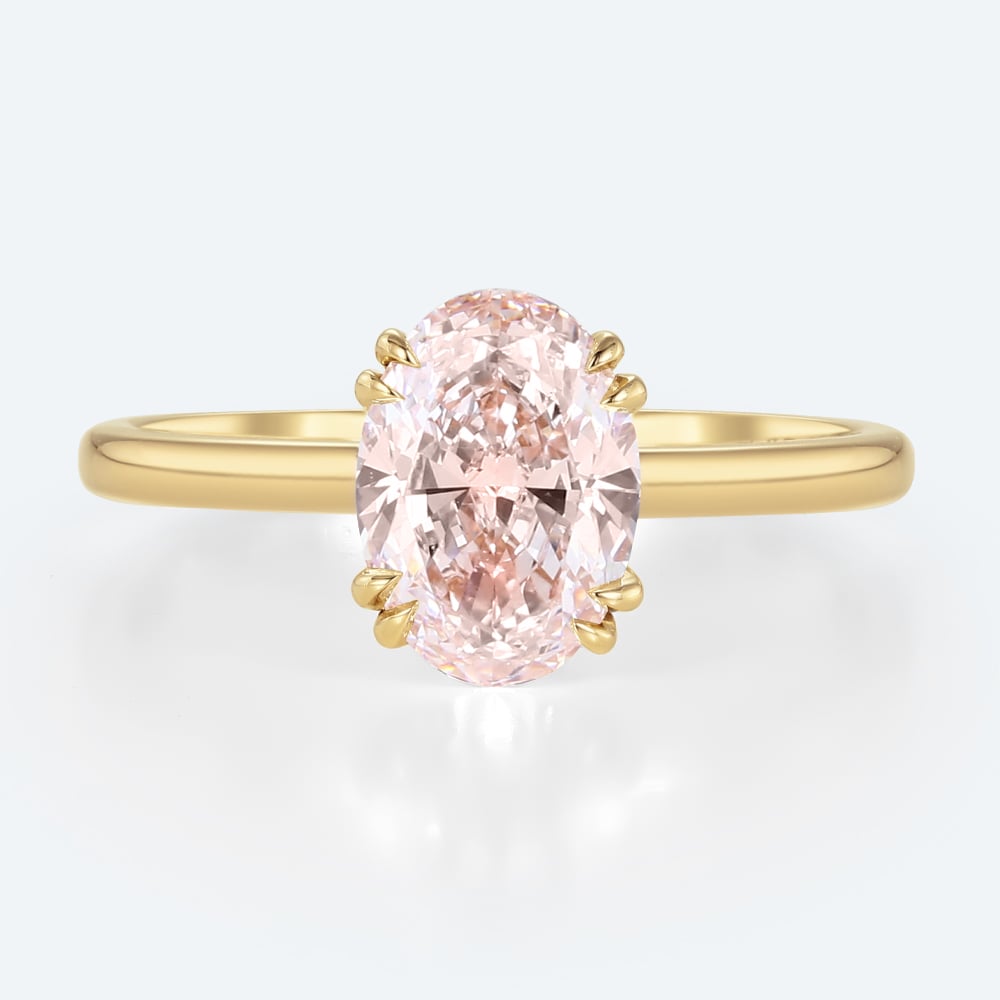
Black Friday promotions often emphasize carat weight because it is an easy number to advertise. However, carat measures weight—not the exact size a diamond appears when viewed from above.
Carat Weight Is Not the Same as Visual Size
Two diamonds with the same carat weight may have different:
- Length and width
- Depth
- Outline
- Proportions
- Face-up surface area
One diamond may carry more of its weight below the girdle and appear smaller from the top. Another may have a wider outline and appear larger, even though both diamonds have the same stated carat weight.
This distinction is particularly important when comparing oval, pear, marquise, emerald, radiant, and other fancy-shaped diamonds. Always review the measurements rather than assuming that identical carat weights will create identical visual results. IGI likewise notes that diamonds of the same weight do not necessarily look the same size.
Examine the Diamond’s Appearance
When videos or detailed images are available, consider:
- Whether the diamond appears bright across most of its face
- Whether the outline looks balanced
- Whether the shape is too narrow or too wide for your preference
- Whether there are distracting dark areas
- Whether an oval, pear, or marquise diamond has an overly prominent bow-tie effect
- Whether the diamond’s proportions complement the setting
A slightly smaller diamond with an attractive outline and lively appearance may be a better purchase than a heavier stone selected mainly for the carat number.
Cut should still be evaluated alongside color, clarity, measurements, and personal taste. There is no single proportion that guarantees every diamond will look beautiful to every buyer.
IV. Inspect the Gold Setting and Craftsmanship
The center diamond may attract the most attention, but the setting determines how the ring looks, feels, and performs in daily wear. A Black Friday deal loses much of its appeal if the setting is too delicate for the stone, uncomfortable on the hand, or inconsistent with the wearer’s lifestyle.
Confirm the Metal and Gold Purity
Check whether the product page clearly identifies:
- 10K, 14K, or 18K gold
- White, yellow, or rose gold
- Available metal upgrades
- Whether changing the metal affects the final price
Do not compare a 10K gold setting directly with a 14K or 18K gold design without accounting for the difference in material and price.
The best option is not automatically the highest gold purity. The right choice depends on budget, preferred color, design, wear habits, and the construction of the ring.
Examine How the Ring Is Built
Look closely at the details surrounding the center stone:
- Are the prongs balanced and positioned appropriately?
- Are pointed ends protected on pear and marquise diamonds?
- Does the band appear proportionate to the center stone?
- Are pavé or side stones arranged evenly?
- Is the setting height practical for everyday wear?
- Can a wedding band sit beside the engagement ring?
- Does the design appear suitable for future resizing?
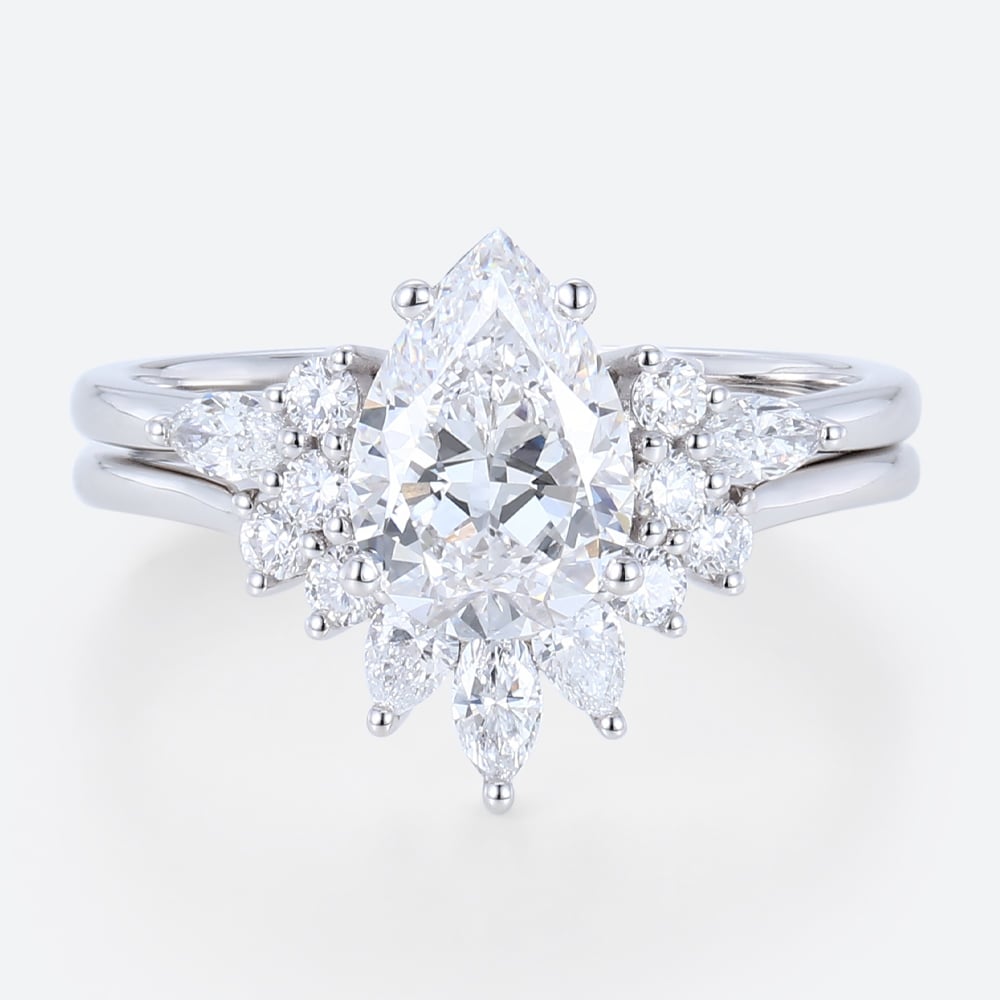
LisaJewelryUS currently organizes its lab-grown diamond collection around styles such as solitaire, halo, side-stone, pavé, twisted, cluster, Art Deco, and nature-inspired rings. Rather than selecting a style only because it is discounted, consider how its construction fits the wearer’s routine and aesthetic preferences.
A solitaire can highlight the shape of the center diamond, while a halo may add visual presence. Side stones can create additional brilliance, and a nature-inspired or twisted band may offer greater design individuality. None is universally better—the strongest deal is the setting she will enjoy wearing long after Black Friday ends.
V. Calculate the Total Value at Checkout
A ring’s advertised price is not always the amount you will ultimately pay. Before judging a Black Friday offer, configure the ring as closely as possible to the version you actually want.
Potential additions may include:
- A larger or higher-grade center diamond
- A different gold purity
- Side stones or a matching band
- An extended ring-size range
- Engraving or custom design changes
- Expedited production or shipping
- Taxes and other location-based charges
Also check whether a promotional code applies to the entire ring or only to selected stones, settings, or collections. Some discounts cannot be combined with other offers, while a gift-with-purchase promotion may require a minimum order value.
Decide Where Your Budget Matters Most
If you are shopping within an $800–$1,500 range, identify the feature that should lead the design.
If visual size is the priority, a clean solitaire setting may allow more of the budget to go toward the center diamond. If individuality matters more, consider allocating funds to a colored lab-grown diamond, side stones, a distinctive gold setting, or custom details.
A lower starting price may lose its advantage if every desired option adds to the final cost. Compare the fully configured ring—not only the number shown on a collection page.
FTC shopping guidance similarly recommends reviewing the complete cost, shipping information, return conditions, and promotional terms before ordering online.
VI. Read the Sale, Return, Resizing, and Delivery Terms
A genuine deal should come with terms you can understand before purchasing. Do not assume that a Black Friday item automatically follows the store’s standard policies.
Review the Return and Resizing Conditions
Before checkout, confirm:
- Whether discounted items can be returned or exchanged
- Whether a restocking fee applies
- How many days you have to request a return
- Whether return shipping is included
- Whether resized rings remain returnable
- Which ring sizes can be adjusted
- Whether engraving affects eligibility
- Whether custom and made-to-order designs follow different rules
- What happens to promotional gifts if the ring is returned
If the ring is a surprise, sizing deserves particular attention. A temporary size adjustment may be possible for some designs, but pavé bands, eternity bands, intricate settings, and unusually shaped shanks may be more difficult to resize.
Ask about the specific ring rather than relying on a general assumption.
Confirm Production and Delivery Timing
Black Friday is close to the holiday and proposal season, making timing especially important. A ring displayed online may be:
- Ready to ship
- Made after the order is placed
- Produced in the selected metal and size
- Customized through a separate design process
These options may have different production schedules. If you need the ring for a holiday proposal, anniversary, or trip, confirm the current estimate before ordering and allow time for unexpected shipping delays.
Do not treat an estimated delivery window as a guarantee unless the retailer explicitly provides one for your order.

VII. Choose a Ring You Would Still Want Without the Sale Tag
A Black Friday discount should help you purchase the right ring—not persuade you to settle for the wrong one.
Before ordering, temporarily ignore the crossed-out price and ask:
- Would I still choose this diamond shape?
- Does the metal match the jewelry she already wears?
- Is the setting suitable for her daily routine?
- Will the ring coordinate with a future wedding band?
- Does the design reflect her style?
- Am I choosing this ring because I love it or because the discount feels urgent?
These questions help separate long-term value from short-term excitement.
Colorless or Colored Lab-Grown Diamond?
A colorless lab-grown diamond is a versatile choice for someone who prefers a traditional diamond appearance. Round and oval solitaires feel timeless, while halos, side stones, twisted bands, and nature-inspired settings can add more personality.
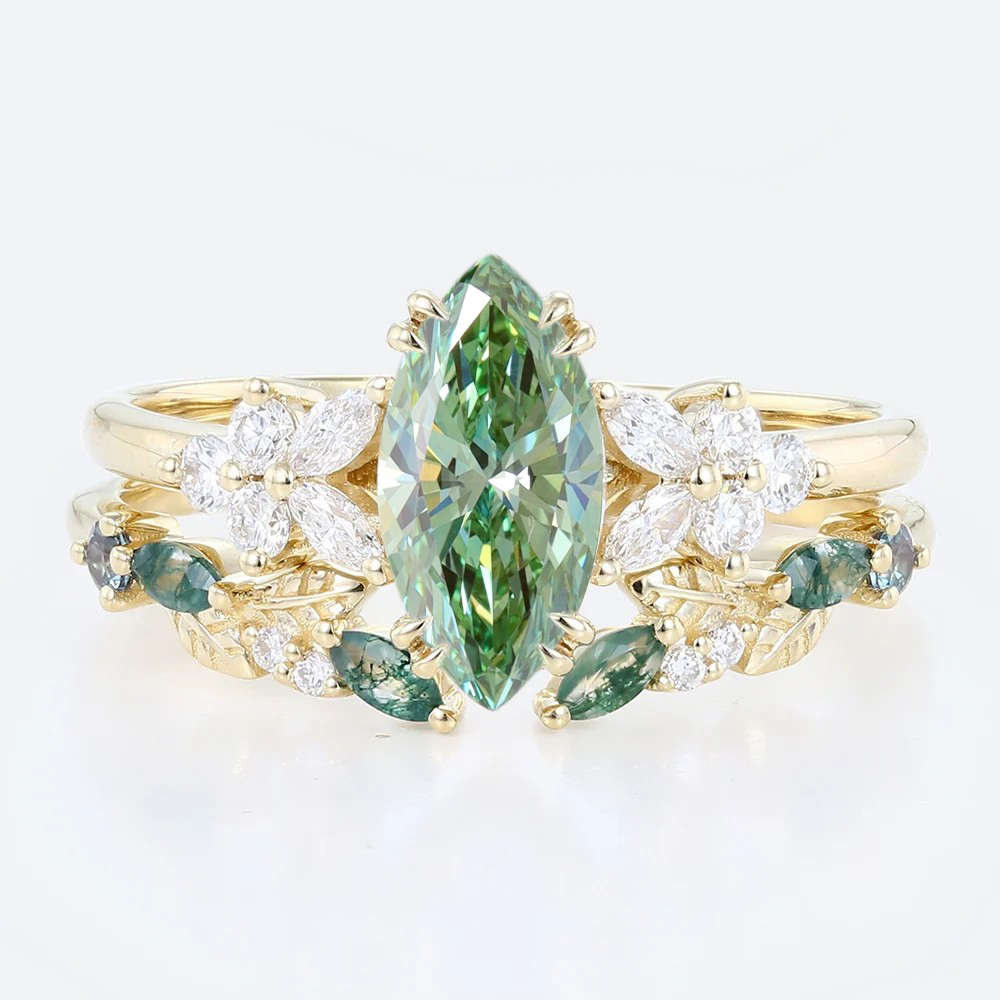
A colored lab-grown diamond offers a more distinctive alternative. Pink may feel romantic, yellow brings warmth, blue creates a cool contemporary look, and green can complement a nature-inspired or unconventional design.
LisaJewelryUS currently gives Colored Lab Diamonds their own primary navigation area, with shopping paths for pink, yellow, blue, and green lab-grown diamonds. This makes color an important part of the brand’s design direction rather than a minor seasonal trend.
However, color should still be selected for the wearer—not simply because it appears unusual in a sale. Consider her wardrobe, existing jewelry, favorite colors, and comfort with nontraditional diamond rings.
Consider the Ring’s Future Pairings
For an engagement ring, think beyond the proposal. A high-set solitaire may leave room for a straight wedding band, while a low-profile or irregularly shaped setting may require a curved or custom-contoured band.
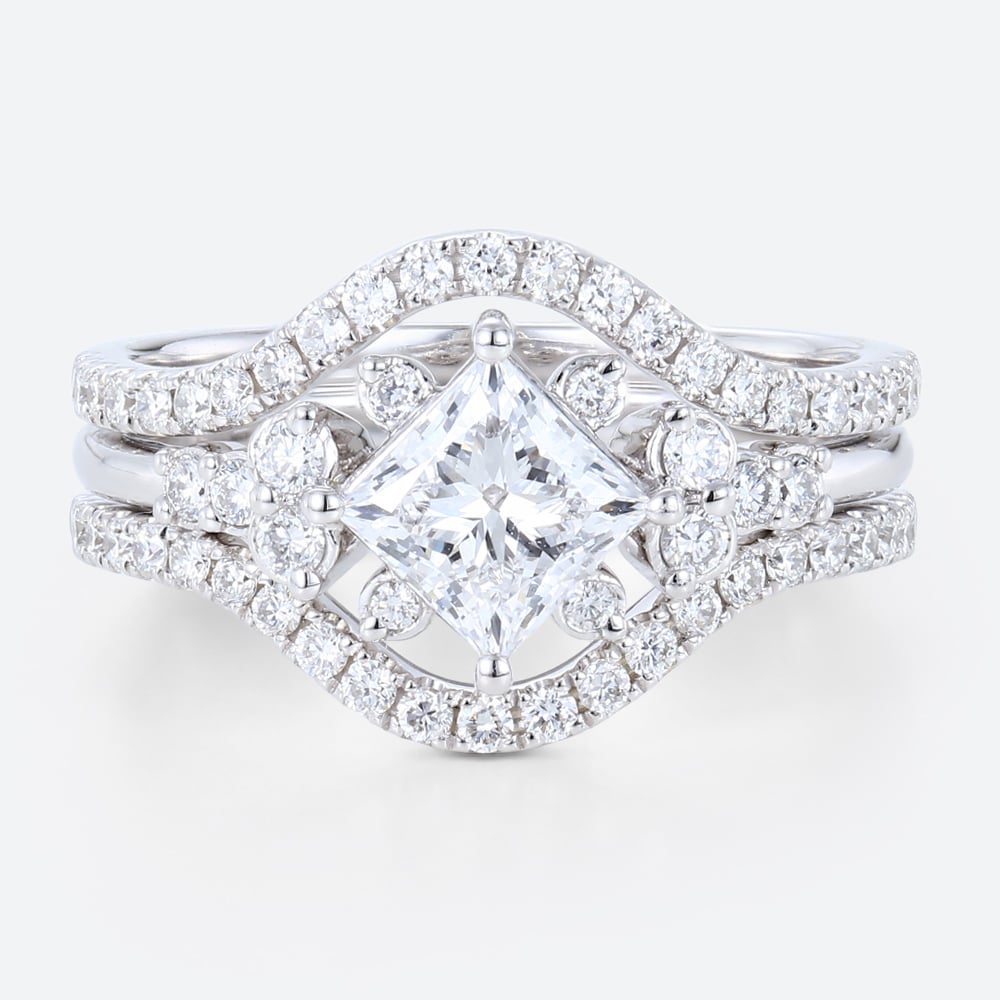
A bridal set can remove some of this uncertainty because the rings are designed to coordinate. If purchasing the engagement ring separately, review side-profile images and ask whether the desired wedding band can sit flush.
A ring that works with future jewelry can provide more practical value than a deeply discounted style that later requires an expensive custom match.
VIII. A Quick Black Friday “Real Deal” Checklist
Use this checklist before placing the ring in your cart:
| What to Check | Signs of a Strong Deal | Reason to Pause |
|---|---|---|
| Diamond identity | Clearly described as lab-grown | Origin is vague |
| Grading information | Verifiable report details | Only says “certified” |
| Carat description | Center and total weight are clear | Weight description is confusing |
| Measurements | Length and width are provided | Only carat weight is shown |
| Metal | Gold purity and color are listed | Described only as “gold” |
| Setting | Construction can be inspected | Limited images or details |
| Final price | Desired configuration is discounted | Upgrades remove most of the value |
| Policies | Return and resize terms are accessible | Sale conditions are unclear |
| Personal fit | Style suits long-term wear | Chosen mainly for the discount |
If several important details are missing, pause and request clarification. A limited-time banner should not pressure you into purchasing a ring you cannot properly evaluate.
IX. How to Shop LisaJewelryUS During Black Friday
The LisaJewelryUS navigation provides several ways to narrow the collection without comparing every ring at once.
1. Begin with Lab-Grown Diamonds
Start by deciding whether you need an engagement ring, wedding band, bridal set, or another diamond ring. This prevents unrelated styles from distracting from the purpose of the purchase.
2. Choose a Diamond Shape
If you already know her preferred shape, browse options such as round, oval, pear, marquise, emerald, radiant, cushion, or hexagon.
Shape influences more than appearance. It can affect face-up size, setting style, wedding-band compatibility, and how the ring visually elongates or widens the finger.
3. Use Carat as a Starting Point
Carat-based browsing can help establish a budget range, but return to the diamond measurements before making a final decision. A 1-carat oval and a 1-carat round diamond will not necessarily create the same visual presence.
4. Explore Colored Lab Diamonds
If she prefers expressive fine jewelry, compare pink, yellow, blue, and green lab-grown diamonds. Look at how the color interacts with white, yellow, and rose gold rather than evaluating the loose stone alone.
5. Consider Customization
A custom ring can be appropriate when you like the foundation of a design but want to change the center-stone shape, diamond color, carat weight, gold tone, setting, or matching band.
LisaJewelryUS presents customization as a guided process involving design inspiration, stone selection, metal and setting choices, and design confirmation. Custom timelines and policies may differ from standard products, so confirm the details before using a Black Friday deadline to plan the order.
Final Thoughts: Shop the Ring, Not the Red Tag
The best deal on Black Friday lab-grown diamond rings is not necessarily the one with the largest percentage beside it. It is the ring whose diamond, proportions, setting, documentation, policies, and final price continue to make sense after the sale banner disappears.
Compare complete configurations, verify any included grading report, and consider how the ring will fit into the wearer’s life. Whether you select a timeless colorless solitaire, a nature-inspired setting, a coordinating bridal set, or a colored lab-grown diamond ring, the design should remain meaningful long after Black Friday is over.
Frequently Asked Questions
Are lab-grown diamond rings usually discounted on Black Friday?
Some retailers offer seasonal promotions, but the discount, eligible products, and terms can change each year. Review the current promotion rather than relying on offers published during a previous Black Friday.
How can I verify a lab-grown diamond?
Check whether the diamond includes an independent grading report. Review its laboratory-grown identification, report number, measurements, and 4C grades, then verify the number through the grading laboratory’s official system.
Is an IGI report important for a lab-grown diamond?
An IGI report can help confirm the diamond’s laboratory-grown origin and provide standardized grading information. It is useful for comparison, but you should also evaluate the ring setting, appearance, and purchase policies.
Is a larger-carat diamond automatically a better Black Friday deal?
No. Carat measures weight rather than visible size. Compare measurements, proportions, shape, cut quality, and overall appearance before deciding that a heavier diamond offers better value.
Can a Black Friday ring be returned or resized?
It depends on the retailer, promotion, and ring construction. Discounted, engraved, resized, or custom pieces may follow different terms, so check the specific policy before purchasing.
Are colored lab-grown diamonds real diamonds?
Laboratory-grown colored diamonds are diamonds created in a controlled laboratory environment rather than mined from the earth. Their laboratory-grown origin should be clearly disclosed in product descriptions and marketing.
Are colored lab-grown diamond rings included in Black Friday sales?
That depends on the current promotion. Do not assume that every diamond color or collection is included; check the eligible products and discount conditions once the sale is officially announced.
When should I order a ring for a holiday proposal?
Order as early as practical, especially if the ring is made to order, requires resizing, or includes custom changes. Confirm the current production and delivery estimate before choosing a proposal date.